 PuroClean Home Savers
 Executive Summary
The aftermath of a traumatic incident leaves families and property owners facing overwhelming questions about what happens next and who handles the cleanup. In Columbus, Ohio, trauma scene remediation requires certified professionals who understand biological hazards, legal requirements, emotional sensitivity, and proper restoration procedures. This guide walks you through the complete trauma cleanup process, explains why certification matters, details what happens during professional remediation, and helps you understand your options after incidents ranging from unattended deaths to violent crimes. When you need immediate assistance in Columbus, PuroClean Home Savers provides certified, compassionate trauma cleanup services 24 hours a day.
Understanding Trauma Scene Cleanup: What Actually Constitutes a Trauma Scene?
Trauma scenes involve any location where injury, death, or biological hazard exposure has occurred, creating contamination that poses health risks to anyone who might enter the space. These situations range from violent crimes and suicides to accidents and unattended deaths.
What makes these scenes particularly dangerous is the presence of bloodborne pathogens and other biological materials that can transmit serious diseases. Standard cleaning products and typical household cleaning knowledge are completely inadequate for addressing these hazards safely.
Columbus residents often don’t realize that trauma cleanup is a specialized field requiring specific certifications, training, equipment, and disposal protocols. The work goes far beyond what janitorial services, maid services, or general restoration companies can provide.
A Story of Unexpected Crisis: The Martinez Family’s Experience
Rachel Martinez received a call no parent ever wants to get. Her 24-year-old son David had been involved in a serious accident at his Columbus apartment. By the time she arrived at the hospital, doctors were doing everything possible to save his life.
David survived, but the trauma didn’t end when he was stabilized. Rachel needed to return to his apartment to gather essentials he’d need during recovery. When she opened the door, she was completely unprepared for what she encountered.
The accident had occurred in the bathroom. Blood covered the floor, splattered the walls, and had soaked into the bath mat and under the vanity. The sight brought Rachel to tears, both from relief that David had survived and horror at how close she’d come to losing him.
Her first instinct was to clean everything immediately. She didn’t want David returning to this scene during his recovery. Rachel went to the store, bought industrial-strength cleaners, rubber gloves, and a mop, and returned determined to restore the apartment.
Three hours into her cleaning efforts, Rachel felt increasingly unwell. The cleaning fumes in the enclosed bathroom space triggered severe respiratory distress. She had also inadvertently spread contamination from the bathroom into the hallway and living room on her shoes and cleaning equipment.
A neighbor found Rachel disoriented in the hallway and called 911. At the emergency room, Rachel learned she’d experienced chemical exposure from improperly mixing cleaning products and had also come into direct contact with her son’s blood through a small cut on her hand she hadn’t noticed.
The doctor explained the exposure risks and recommended testing for bloodborne pathogens. Rachel was horrified. She’d been trying to help David and instead created additional medical concerns for both of them.
After discharge, Rachel’s insurance agent recommended PuroClean Home Savers for proper cleanup. The certified technicians arrived within hours, properly equipped and trained. They remediated the apartment completely in a single day, something Rachel’s three-hour attempt hadn’t even begun to accomplish safely.
“I had no idea what I was doing,” Rachel later reflected. “I saw blood and thought I could just clean it like any other mess. I didn’t understand the health risks, the proper procedures, or that my insurance would have covered professional help from the beginning. I put myself in danger unnecessarily and made the situation worse.”
The professional cleanup cost $1,800, fully covered by David’s renter’s insurance. Rachel’s emergency room visit and subsequent medical monitoring cost over $3,000 out of pocket.
What Happens Immediately After a Traumatic Incident?
Understanding the sequence of events after a trauma helps Columbus residents navigate these situations with less confusion and stress.
Who Responds First and What Do They Do?
Emergency medical services and law enforcement respond first to any traumatic incident. EMTs focus on treating injured parties and transporting them to hospitals. Police officers secure the scene, investigate the circumstances, and document evidence if criminal activity is involved or suspected.
If the incident results in death, the coroner’s office becomes involved. They remove the deceased and conduct necessary examinations. This process can take several hours or longer depending on circumstances.
Once official responders complete their work and release the scene, the property owner or responsible party faces the cleanup responsibility. Police, EMTs, and coroners do not clean up biological materials. This surprises many Columbus residents who assume authorities handle this aspect.
How Quickly Does Cleanup Need to Happen?
Time is critical in trauma cleanup situations. Biological materials begin degrading immediately, and the contamination spreads and penetrates deeper into materials with every passing hour. Bacteria multiply rapidly in blood and bodily fluids, creating increasingly hazardous conditions.
In summer months or heated indoor environments, decomposition accelerates dramatically. What might be a manageable cleanup within the first 24 hours can become an extensive remediation project requiring structural removal if delayed several days.
Beyond the health and contamination concerns, the emotional toll of leaving a trauma scene unaddressed is severe. Every moment the scene remains creates additional psychological trauma for those who encountered it.
What Should You Absolutely Not Do After Discovering a Trauma Scene?
Do not enter the scene without proper protective equipment, even briefly. Do not touch or move anything unless emergency responders specifically instruct you to. Do not attempt any cleaning with household products. Do not dispose of any contaminated materials in regular trash.
These actions seem obvious in retrospect, but people in crisis often react instinctively rather than strategically. The desire to “do something” or to protect loved ones from seeing the scene drives well-intentioned but dangerous cleanup attempts.
Why Professional Certification Matters in Trauma Cleanup
Certification isn’t just bureaucratic red tape. It represents specific training, knowledge verification, and accountability that protects both cleanup workers and property occupants.
What Certifications Should Trauma Cleanup Technicians Hold?
Legitimate trauma cleanup professionals complete OSHA bloodborne pathogen training that teaches proper handling of potentially infectious materials, use of personal protective equipment, and exposure prevention protocols. This training is mandatory for anyone handling biological hazards professionally.
Technicians should also hold certifications in biohazard remediation that cover contamination assessment, appropriate cleaning chemical selection, proper application techniques, verification procedures, and waste disposal compliance.
Many reputable companies require additional certifications in areas like crime scene cleanup, suicide cleanup, and death cleanup that address the specific challenges and protocols relevant to each scenario.
How Does Certification Translate to Better Outcomes?
Certified technicians understand contamination patterns that untrained individuals miss entirely. They know that blood doesn’t just contaminate where it’s visible but seeps into porous materials, travels along grout lines and floorboard seams, and spreads through air handling systems.
Training teaches proper chemical selection. Different pathogens require different disinfectants with specific contact times and application methods. Using the wrong product or applying it incorrectly leaves contamination behind even when surfaces appear clean.
Certified professionals also understand cross-contamination prevention. Improper technique spreads contamination from affected areas to previously clean spaces, making a bad situation worse.
What Regulatory Compliance Do Certified Companies Maintain?
Ohio has specific regulations governing biohazard waste disposal, transportation, and documentation. Certified companies maintain licenses and permits required for legal compliance.
They maintain relationships with approved medical waste disposal facilities and follow chain-of-custody documentation procedures. This protects you from liability if contaminated materials are improperly handled after leaving your property.
Certified companies carry appropriate insurance including general liability, professional liability, and pollution liability coverage. If something goes wrong during cleanup, their insurance protects you from financial responsibility.
Can Companies Without Proper Certification Perform Trauma Cleanup?
Legally and safely? No. But some companies without appropriate certifications claim they can handle trauma cleanup, often at lower prices. These services create serious risks.
Uncertified cleaners might not properly protect themselves, exposing workers to serious health risks and creating liability for property owners. They may use inappropriate cleaning products that don’t eliminate pathogens. They probably don’t properly dispose of biohazard waste, potentially violating regulations and creating legal problems.
Insurance companies increasingly verify certification before covering cleanup costs. Using an uncertified service might result in denied claims, leaving you financially responsible for both the failed cleanup and proper professional remediation.
What Actually Happens During Professional Trauma Scene Cleanup?
Understanding the professional process helps Columbus residents appreciate the complexity and thoroughness required for safe remediation.
How Do Professionals Assess and Document the Scene?
Certified technicians begin with comprehensive scene assessment. They identify all contaminated areas, including hidden contamination where biological materials have traveled beyond obvious visible stains.
They document everything through photographs and detailed written reports. This documentation serves multiple purposes: insurance claims processing, legal compliance, liability protection, and baseline establishment for verification testing.
Assessment includes identifying which materials can be cleaned versus which must be removed. Porous materials like carpet, upholstered furniture, and drywall often cannot be adequately decontaminated and require removal and disposal.
What Safety Measures Are Implemented Before Cleanup Begins?
Professionals establish containment zones using physical barriers and negative air pressure systems. This prevents airborne pathogens and odors from spreading to unaffected areas during cleanup.
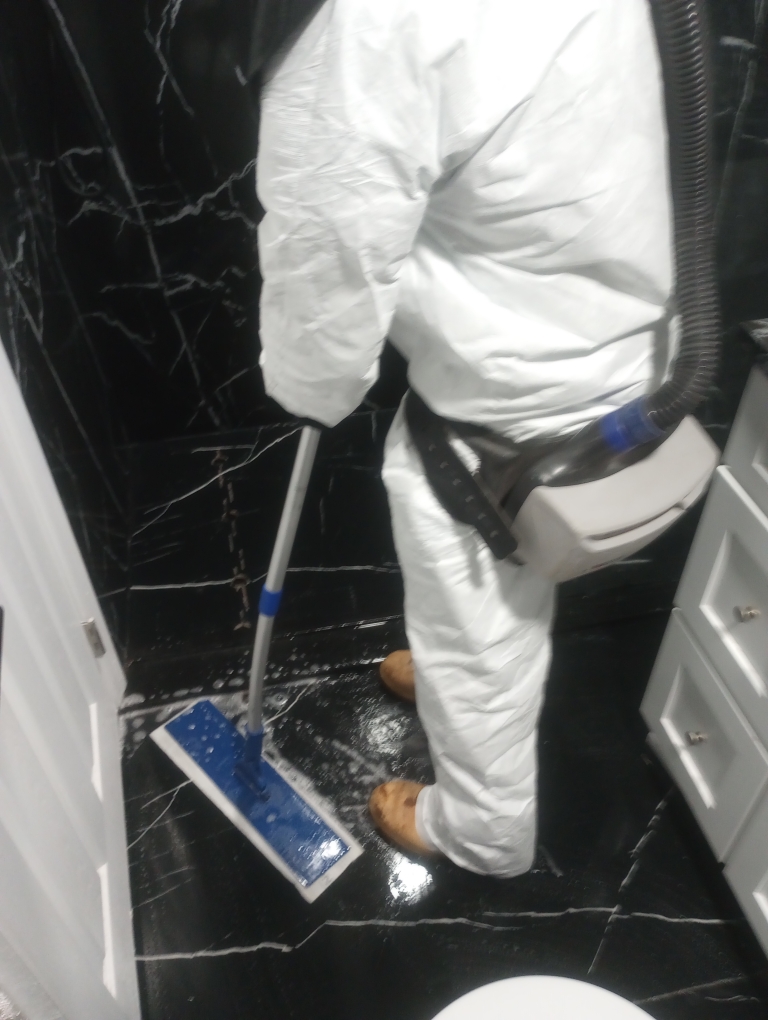
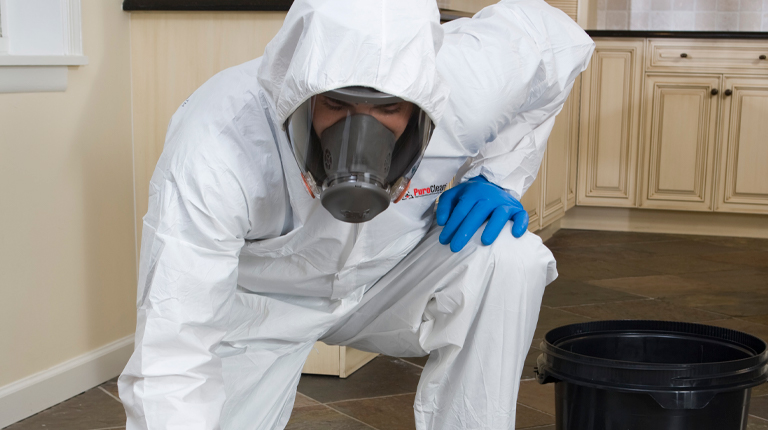
Technicians don full personal protective equipment including respirators, puncture-resistant gloves, fluid-resistant suits, boot covers, and eye protection. This equipment protects workers and prevents cross-contamination.
They set up designated decontamination zones where equipment and technicians are decontaminated before leaving the work area. This prevents contamination from being carried out on tools, shoes, or clothing.
How Is the Actual Cleaning and Disinfection Performed?
The process begins with removal of grossly contaminated materials. Items that cannot be salvaged are carefully packaged in approved biohazard containers for proper disposal.
Technicians then apply appropriate cleaning agents to remove visible contamination from surfaces that will be salvaged. This step prepares surfaces for disinfection by removing organic materials that can shield pathogens from disinfectants.
Multiple applications of EPA-registered disinfectants proven effective against bloodborne pathogens follow. Each application requires specific contact time for the chemicals to work properly. Rushing this step compromises effectiveness.
For porous structural materials like subflooring or wall cavities affected by contamination, professionals may need to remove drywall, insulation, or flooring materials. These items are properly packaged as biohazard waste.
What Advanced Techniques Are Used for Odor Elimination?
Trauma scenes, particularly those involving decomposition, create persistent odors that penetrate deeply into materials. Surface cleaning and air fresheners provide only temporary masking.
Professional odor elimination uses ozone generation that oxidizes odor-causing molecules at the molecular level. Hydroxyl generation provides similar results without requiring property evacuation during treatment.
Thermal fogging applies odor-neutralizing compounds in vapor form that penetrates materials where liquid applications cannot reach. These combined approaches eliminate odors at the source rather than covering them temporarily.
How Do Professionals Verify Complete Decontamination?
Reputable companies don’t rely solely on visual inspection to confirm cleanup completion. They use scientific verification methods that detect contamination invisible to the naked eye.
ATP (adenosine triphosphate) testing measures biological residue on surfaces. This technology, used in hospitals and food service, confirms surfaces have been properly cleaned and disinfected.
Final inspection includes checking for any remaining odor, visual contamination, or areas that might have been missed. Professionals provide documentation certifying the property meets health and safety standards.
What Types of Incidents Require Professional Trauma Cleanup in Columbus?
Understanding when professional services are necessary helps Columbus residents respond appropriately to various situations.
When Is Professional Cleanup Required After Unattended Deaths?
Any unattended death where the deceased remained undiscovered for more than a few hours typically requires professional cleanup. Human decomposition begins immediately after death, releasing fluids that contaminate surfaces extensively.
Even when the deceased is discovered relatively quickly, bodily fluids may have been released. Professional assessment ensures all contamination is identified and properly addressed.
What About Suicides and Violent Incidents?
Suicides and violent crimes create traumatic scenes that family members should never attempt to clean themselves. The emotional trauma of cleaning up after a loved one’s suicide or violent death can cause lasting psychological harm.
These scenes often involve extensive blood contamination spread across multiple surfaces. The volume and distribution of biological materials require professional expertise and equipment.
Do All Accidents Require Professional Trauma Cleanup?
Not all accidents require professional services, but many do. The determining factors include the volume of blood or bodily fluids involved, the types of surfaces contaminated, and whether the injured person has known bloodborne diseases.
Significant accidents involving head injuries, deep lacerations, or other trauma producing substantial blood loss should be professionally cleaned. When in doubt, consultation with a trauma cleanup company helps you make an informed decision.
What About Infectious Disease Situations?
When someone with a serious infectious disease has contaminated a property with bodily fluids, professional decontamination protects future occupants. Diseases like tuberculosis, MRSA, COVID-19 in severe cases, and other communicable illnesses can leave viable pathogens on surfaces.
How Do Hoarding Situations Connect to Trauma Cleanup?
Severe hoarding situations often involve biological hazards including animal waste, human waste, decomposing food, and vermin. These scenarios require the same expertise and equipment as trauma scene cleanup.
Many trauma cleanup companies handle hoarding remediation, particularly when biohazards are present. The overlap in required skills, equipment, and disposal procedures makes this a natural service extension.
How Does Insurance Coverage Work for Trauma Cleanup in Columbus?
Insurance questions create significant stress during already difficult times. Understanding coverage helps Columbus residents access professional services without overwhelming financial burden.
What Insurance Policies Typically Cover Trauma Cleanup?
Homeowner’s insurance policies frequently cover trauma cleanup costs under various provisions. Dwelling coverage may apply when the contamination affects the physical structure. Personal property coverage might apply to contaminated belongings.
Some policies include specific biohazard cleanup riders. Others cover trauma cleanup under liability provisions when the incident affects others beyond the homeowner.
Renter’s insurance often includes biohazard cleanup coverage. Many Columbus renters don’t realize their policies cover these situations. Always check your policy or contact your agent before assuming coverage doesn’t exist.
Does Coverage Depend on How the Incident Occurred?
Coverage often depends on the specific circumstances. Natural deaths and accidents are typically covered. Suicides may be excluded under some policies, though many insurers do cover these situations.
Homicides and violent crimes are usually covered under homeowner’s and renter’s policies. Some coverage may come from victim assistance programs rather than personal insurance.
How Do Professional Cleanup Companies Work with Insurance?
Reputable trauma cleanup companies work directly with insurance providers regularly. They understand policy language, know what documentation insurers require, and can streamline the claims process.
Many companies handle direct billing, submitting claims on your behalf and waiting for insurance payment. This service removes significant administrative burden during crisis situations.
PuroClean Home Savers works with all major insurance carriers serving Columbus. They can contact your insurance company immediately to verify coverage and begin the authorization process.
What If I Don’t Have Insurance Coverage?
Several assistance programs may help Columbus residents without insurance or with denied claims. Crime victims can access funds through the Ohio Attorney General’s Victim Compensation program.
Some municipalities offer emergency assistance for trauma cleanup in specific situations. Nonprofit organizations occasionally provide grants for families facing genuine financial hardship.
Professional companies sometimes offer payment plans or reduced rates for uninsured individuals facing crisis situations. Discussing your financial circumstances honestly often reveals options you didn’t know existed.
What Happens to the Property After Trauma Cleanup?

Cleanup removes biohazards, but restoration may require additional steps before the property returns to normal use.
Does Trauma Cleanup Restore Everything to Original Condition?
Trauma cleanup focuses specifically on biohazard removal and decontamination. If contamination required removing carpet, padding, sections of drywall, or other structural materials, these items must be replaced.
Some trauma cleanup companies offer restoration services including installing new flooring, repairing drywall, repainting, and other repairs. Others focus solely on the biohazard remediation and refer you to contractors for restoration work.
Clarify what’s included in the cleanup service and what will require additional contractors. This prevents surprises and helps you understand the complete timeline for returning the property to normal condition.
How Long Before the Property Can Be Used Again?
Simple trauma scenes contained to small areas might be ready for use within 24 hours. More extensive contamination requiring structural removal and advanced odor treatment might need several days before the property is ready.
If restoration work beyond cleanup is necessary, the timeline extends based on the scope of repairs. Installing new flooring, repairing drywall, and repainting might add several days or weeks.
Proper cleanup doesn’t require extended waiting periods for chemicals to dissipate. When professionals use appropriate products correctly, the property is safe immediately upon completion.
Do I Need to Disclose the Incident When Selling the Property?
Ohio law requires disclosure of deaths that occurred on the property within specific timeframes. Property sellers must complete a Residential Property Disclosure Form that asks specifically about deaths on the property.
Failure to disclose can result in lawsuits and financial liability. Buyers who later discover undisclosed deaths or traumas may sue for damages or rescind purchases.
Proper professional cleanup with documentation can help mitigate concerns for potential buyers. Certificates showing proper remediation demonstrate that health hazards have been eliminated.
How Can Family Members and Property Owners Protect Themselves?
Understanding self-protection measures helps Columbus residents navigate trauma situations safely.
What Should You Do Immediately Upon Discovering a Trauma Scene?
Call 911 immediately if there’s any possibility someone needs medical attention or if a crime may have occurred. Secure the scene to prevent anyone, especially children and pets, from accessing contaminated areas.
Do not attempt to clean anything yourself. Contact your insurance provider to report the incident and ask about trauma cleanup coverage. Call a certified professional trauma cleanup company as soon as possible.
How Do You Choose a Reputable Trauma Cleanup Company?
Verify certifications and training. Ask specifically about OSHA bloodborne pathogen certification, biohazard remediation training, and company licensing.
Check insurance coverage. The company should carry general liability, professional liability, and pollution liability insurance protecting you from liability during cleanup.
Look for 24/7 emergency response capability. Trauma cleanup is time-sensitive and emergencies don’t follow business hours.
Ask about their process for working with insurance companies. Companies experienced in trauma cleanup routinely handle insurance coordination and can streamline this aspect.
Request references or check online reviews. While understanding that most people don’t publicize trauma cleanup needs, reputable companies should be able to provide some verification of their reputation.
What Questions Should You Ask Before Hiring a Company?
Ask how quickly they can respond to your specific location. Columbus-area companies should be able to reach most locations within a few hours.
Inquire about what’s included in their service. Does it cover only biohazard removal or also restoration? What verification do they provide that cleanup is complete?
Ask about their waste disposal procedures. They should use licensed medical waste facilities and provide documentation of proper disposal.
Clarify billing and payment procedures. Will they bill insurance directly? What happens if insurance doesn’t cover the full cost?
Frequently Asked Questions About Trauma Cleanup in Columbus
How long does professional trauma cleanup typically take?
Cleanup duration varies based on contamination extent, affected materials, and required procedures. Small, contained scenes might be completed in 4 to 8 hours. Extensive contamination affecting multiple rooms or requiring significant structural removal can take several days. Companies provide time estimates after completing the initial assessment.
Will people know what happened when cleanup crews arrive?
Reputable companies prioritize discretion. They use unmarked or subtly marked vehicles, avoid obvious uniforms with large company logos, and work efficiently to minimize time on site. Technicians maintain confidentiality about the circumstances they’re addressing.
Can I keep any personal items from a trauma scene?
Non-porous items like glass, metal, sealed plastics, and hard surfaces can usually be thoroughly cleaned and disinfected. Porous materials including fabric, paper, books, and upholstered items are difficult to decontaminate completely. Professional cleaners assess items individually and can sometimes salvage items with significant sentimental value using specialized techniques.
What if the trauma occurred in my vehicle?
Auto trauma cleanup requires the same expertise as property cleanup. Vehicle interiors contain numerous porous materials that readily absorb biological fluids. Professional companies handle vehicle cleanup, and auto insurance often includes biohazard cleanup coverage.
Do I need to be present during cleanup?
Your presence isn’t required, though some people prefer to be available for questions. Many people choose to stay elsewhere during cleanup for emotional comfort. Professionals can work independently once you’ve provided access and necessary information.
How do I know the cleanup was thorough enough?
Professional companies use ATP testing to verify biological material removal, provide visual confirmation that no contamination remains, and issue completion certificates documenting the work performed. These verification steps confirm thorough decontamination.
What happens if I already started cleaning before calling professionals?
Inform the company immediately about any cleanup attempts. This helps them assess potential contamination spread and identify areas needing additional attention. Prior amateur cleanup doesn’t disqualify you from professional services or insurance coverage.
Are there situations where trauma cleanup isn’t legally required?
Ohio doesn’t legally mandate professional trauma cleanup in most situations. However, landlords must provide safe, habitable properties, which effectively requires proper cleanup. Property sellers face disclosure requirements creating practical necessity for proper cleanup even without explicit legal mandates.
Can I hire any cleaning service for trauma cleanup?
No. Regular janitorial services, maid services, and general cleaning companies lack the training, certifications, equipment, and legal authorizations required for trauma cleanup. Using unqualified services creates health risks and legal liability.
What if I can’t afford professional cleanup even with insurance?
Discuss your situation honestly with the cleanup company. Many offer payment plans for uninsured portions of costs. Explore victim assistance programs, municipal emergency assistance, and nonprofit resources. Professional companies often work with families to find solutions during crisis situations.
Conclusion
Trauma scenes represent some of the most challenging situations Columbus residents might face. The combination of health hazards, emotional trauma, legal requirements, and technical complexity makes professional intervention essential rather than optional.
Rachel Martinez’s experience demonstrates how well-intentioned cleanup attempts can create additional problems. Her attempt to help her son resulted in her own medical emergency, spread contamination, and ultimately cost more than professional services would have from the beginning.
Professional trauma cleanup provides certified expertise, industrial equipment, thorough decontamination, proper waste disposal, and compassionate support during impossible moments. The technicians who do this work understand both the technical requirements and the emotional weight these situations carry.
When trauma affects your Columbus property, you’re facing enough already without adding the burden of dangerous cleanup attempts. Certified professionals handle the technical aspects while you focus on healing and supporting loved ones.
PuroClean Home Savers brings extensive certification, advanced equipment, and genuine compassion to every trauma cleanup situation in Columbus. Their technicians understand Ohio regulations, work seamlessly with insurance providers, and treat every property with the care and respect it deserves.
If you’re dealing with a traumatic situation in Columbus, don’t attempt cleanup yourself and don’t delay calling for help. Contact PuroClean Home Savers at (614) 689-0012 immediately for 24/7 emergency response. Their certified team will handle everything with professionalism, discretion, and the expertise these situations demand.


 PuroClean Home Savers