Reviewed for technical accuracy by PuroClean Home Savers’ IICRC-certified restoration team.
Professional water damage restoration follows the ANSI/IICRC S500 Standard for Professional Water Damage Restoration, the industry reference for assessing, drying, and verifying a water-damaged structure. Mold work falls under IICRC S520, and fire and smoke work falls under IICRC S700. The eight warning signs below show when a Columbus property has moved past what a homeowner can safely handle. Between three rivers, aging combined sewers, and homes built across more than a century, Franklin County properties meet water in many different ways.
Key Takeaways for Homeowners
- Building materials that stay wet for more than 24 to 48 hours can start to grow mold, according to EPA guidance.
- A musty smell that returns after cleaning usually means moisture is trapped in a wall, ceiling, or crawl space.
- The EPA suggests professional help when mold covers more than about 10 square feet.
- A basement flood in a pre-1970 Columbus neighborhood may carry sewage and should be treated as Category 3 (black water) until proven otherwise.
- Bubbling paint, warped flooring, and soft subfloor point to moisture that has been present for some time.
- Soot and smoke odor keep damaging surfaces after a fire is out, even a small one.
Water damage gets worse by the hour. If you suspect moisture behind a wall, under a floor, or in a basement, call PuroClean Home Savers at (614) 689-0012. A fast assessment can keep a drying job from becoming a rebuild.
Why Columbus Properties Face Unusual Water Risk
Columbus is shaped by its rivers. The Scioto runs north to south through the city and is joined near downtown by the Olentangy. Big Walnut Creek flanks the east side, and Alum Creek runs through the southeast. FEMA Flood Insurance Rate Maps identify significant Special Flood Hazard Areas in Franklinton, the Bottoms, and along Alum Creek on the near east side. The Griggs and O’Shaughnessy dams provide flood control, but intense urban rainfall can still overwhelm drainage.
Summer thunderstorms add flash flooding. During major Central Ohio storms, the city’s sewer maintenance operations center has logged hundreds of flooded-basement reports from a single event. Spring brings its own pattern: river overflow near Franklinton and the Bottoms, and sump pump failures during storm season in finished basements across Clintonville, Bexley, and the Near East Side.
Construction era matters as much as location. Pre-1970 neighborhoods such as German Village, Old North, and parts of Franklinton use combined sewer systems that can overflow in heavy rain. Newer construction in places like Dublin generally has better engineered drainage, though development near the Scioto has put some newer neighborhoods in flood-prone zones too.
Action step: Before storm season, test your sump pump, clear gutters, and confirm downspouts drain well away from the foundation.
Sign 1: A Musty Smell That Keeps Coming Back
A persistent musty odor means moisture and microbial growth are probably hiding somewhere in the structure. The smell comes from compounds released by growing mold and bacteria. Air fresheners and surface wiping do not remove the source.
Technicians trace it with a moisture meter and a thermal imaging camera. Thermal imaging shows temperature differences that suggest wet material behind a surface, and meter readings confirm it. Hygrometer readings of relative humidity add context, because humidity that stays high despite a running dehumidifier points to a hidden source.
Action step: Run a dehumidifier in the room for 24 hours. If the odor and humidity return, request an inspection.
Sign 2: Stains, Bubbling Paint, or Peeling Wallpaper
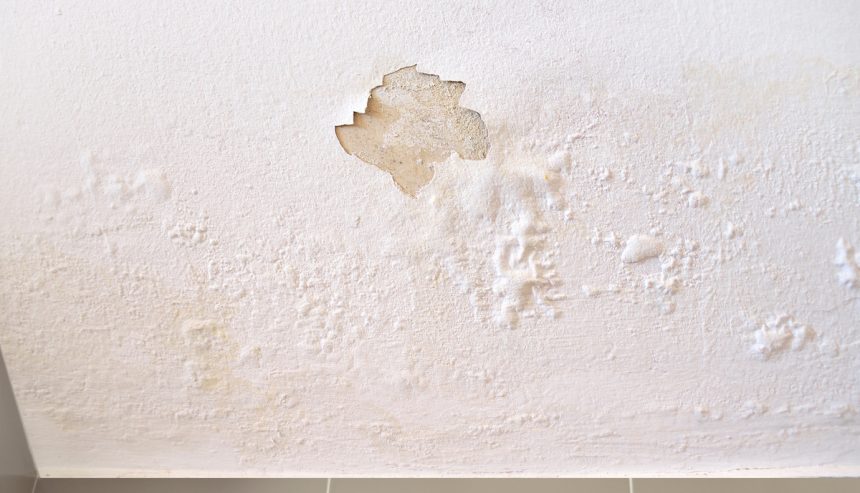
Discolored patches and bubbling paint are visible proof that water has been inside the material for days or longer. Brown rings on a ceiling often mean a slow roof or plumbing leak, and bubbling paint means moisture is pushing outward through the wall.
The visible stain is usually smaller than the wet area behind it. In older plaster walls, moisture can spread laterally before anything shows on the surface. A moisture map shows the real boundary.
Action step: Trace a pencil line around the stain and note the date. If it grows, the leak is active.
Sign 3: Warped Floors and Soft Subfloor
Cupped hardwood, lifting laminate, and spongy floors indicate moisture beneath the surface. Water travels under flooring and spreads wider than you can see from above.
Plywood and OSB subfloors can swell and separate into layers, called subfloor delamination. Once the layers separate, the panel usually cannot regain strength and needs replacement. Catching moisture early can mean the difference between drying the subfloor and tearing it out.
Action step: If a floor feels soft or bouncy, stop walking on it and call a professional.
Sign 4: Basement Water After Storms or Spring Runoff
Water in a Columbus basement after heavy rain means groundwater, river overflow, or a failed drainage system has reached the home. The source depends on the neighborhood.
Scioto and Olentangy overflow can affect Franklinton, the Bottoms, and Grandview-adjacent properties. In Clintonville, Bexley, and the Near East Side, a failed or overloaded sump pump is a common culprit in finished basements. Here is how a PuroClean crew typically works a water loss:
- Assess and stop the source. Technicians identify the water category and class and address the source.
- Extract standing water. Truck-mounted or portable extraction removes bulk water quickly.
- Map the moisture. Moisture meters and thermal imaging build a map of walls, floors, and ceilings, so drying targets what is actually wet.
- Set drying equipment. Air movers and low grain refrigerant (LGR) dehumidifiers are placed based on room volume and water class. Deep saturation of framing, block, and subfloor may qualify as Class 4 water damage, which needs specialty drying.
- Monitor with psychrometrics. Daily readings of temperature, relative humidity, and grains per pound show whether the air is pulling moisture out of the materials.
- Verify the dry standard. Structural drying ends when readings match a dry reference for each material, not when the surface feels dry.
Drying commonly takes several days, depending on materials and water class.
Action step: Photograph the water line and note when you found it. Your adjuster will ask for both.
Stop and call a professional if the water is dark, smells like sewage, or rose through a floor drain. Do not walk through it or run fans. PuroClean Home Savers is available at (614) 689-0012.
Sign 5: Sewage Backup or Dirty Water
Sewage backup is Category 3 (black water), and it should never be cleaned with household methods. It can carry bacteria, viruses, and parasites. Anything it touches, including carpet, drywall, and insulation, is contaminated.
In aging combined sewer systems on the Near South Side, in Linden, and in Olde Towne East, heavy rain can push Category 2 or Category 3 water back through lateral lines and floor drains. The same risk applies in older pre-1970 areas like German Village and Old North. For how combined sewer overflows are regulated in Ohio, the Ohio EPA is the state authority. Category 3 protocol means personal protective equipment, controlled removal of porous materials, and disinfection of the remaining structure. Without careful containment, cross-contamination can spread the problem to clean areas of the home.
Action step: Keep children and pets away, avoid contact with the water, and shut off fans that could spread contamination.
Sign 6: Mold Larger Than About 10 Square Feet, or Mold Behind Walls
Mold covering more than roughly 10 square feet, or mold that keeps returning, calls for professional remediation, according to EPA guidance. Scrubbing can release spores into the air, and repeat growth means moisture is still present.
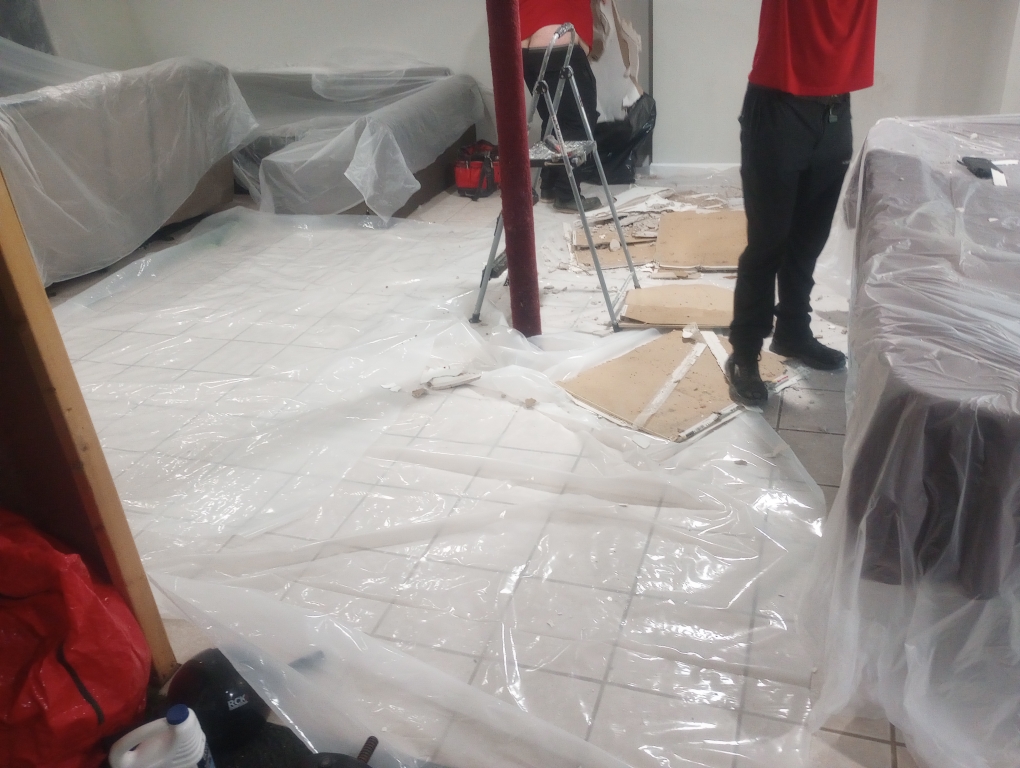
Craftsman-era homes in Clintonville and the Short North can hide mold behind plaster walls and in basement crawl spaces. Under IICRC S520, remediation starts with containment. Technicians build a containment barrier from polyethylene sheeting and run a negative air machine so air flows into the work area and not out of it. HEPA filtration captures airborne spores, and air scrubbers keep cleaning the air during the job. Contaminated porous material is removed and bagged, remaining surfaces are HEPA-vacuumed and cleaned, and an antimicrobial biocide is applied where appropriate.
Some molds produce mycotoxins, and reactions vary by person. Anyone with asthma, allergies, or a weakened immune system should stay away from the area.
Action step: Leave visible mold alone. Close the door, turn off any fan moving air through the room, and call a professional.
Sign 7: Burst Pipes, Supply Line Leaks, or Unexplained Water Bills
A water bill that rises with no change in use, or the sound of water when fixtures are off, suggests a hidden leak. Slow leaks inside walls can run for weeks and keep framing and drywall wet without ever flooding a room.
Burst pipes and supply line failures are common in pre-1960 construction, including German Village, Victorian Village, and Italian Village. Older materials wear out, and a single failed joint can soak a wall cavity. Professionals use moisture meters, thermal imaging, and psychrometric readings to find the wet zone and set structural drying equipment accordingly.
Action step: Turn off all fixtures and see whether the water meter still moves. If it does, call a plumber and a restoration professional.
Sign 8: Smoke Odor, Soot, or Residue After a Fire
Smoke odor and soot keep damaging a property after the fire is out, even if the fire was small. Soot is acidic and can etch and stain surfaces, and smoke particles settle deep into porous materials. IICRC S700 matches cleaning methods to the type of residue.
Wiping soot with a wet cloth can smear it deeper. Professionals test the residue, choose dry or wet cleaning methods, and use HEPA filtration and air scrubbers to clear particles from the air. Firefighting water adds a second job, since wet materials need drying in the same window. For safety questions after a fire, the local fire marshal and fire department are the right contacts.
Action step: Keep the HVAC system off after a fire, since it can spread soot throughout the building.
What Sets PuroClean Home Savers Apart
PuroClean Home Savers offers 24/7 emergency dispatch, IICRC-certified technicians, and direct insurance billing, with local response across Columbus and Franklin County. A trained crew can start moisture mapping and extraction quickly while you handle the call to your insurer.

Frequently Asked Questions
Does homeowners insurance cover water damage in Columbus?
Standard policies often cover sudden and accidental water damage, such as a burst pipe. They commonly exclude flood and groundwater seepage, and sewer backup usually needs an added endorsement. Policies differ, so read yours and call your insurer. The Ohio Department of Insurance offers consumer guidance on coverage questions.
How much does water or fire restoration cost?
Cost depends on the type of damage, the area affected, the materials involved, and how long they stayed wet or exposed. Early calls tend to mean smaller scopes. A professional assessment provides a written scope for your property, and many insurance claims can be billed directly.
How long does restoration take?
Extraction and equipment setup take hours. Structural drying commonly takes several days, depending on water class and materials. Mold remediation and fire cleanup timelines depend on the size of the affected area. Technicians check readings daily and remove equipment only after materials reach the dry standard.
When can I handle damage myself, and when should I call?
Small, clean-water spills on hard surfaces that dry within 24 hours are usually safe for DIY. Call a professional for sewage, water inside walls or subfloors, mold over about 10 square feet, water that has sat longer than 48 hours, or any smoke and soot residue.
Can water damage or mold make my family sick?
Yes. Mold can trigger allergy and asthma symptoms, and sewage can carry harmful microorganisms. Children, older adults, and people with asthma or weakened immune systems are more sensitive. If anyone has symptoms after a water event, leave the affected area and talk to a healthcare provider.
Why do Columbus basements flood during summer thunderstorms?
Intense rain can overwhelm urban drainage and sewer systems faster than they can carry water away. In older neighborhoods on combined sewers, wastewater can back up through floor drains. Near the Scioto and Alum Creek, rising rivers add to the risk. Because sewer water is Category 3, it needs a different cleanup plan.
Ready for Next Steps?
If you notice any of these eight warning signs, call PuroClean Home Savers at (614) 689-0012. We serve Columbus and Franklin County. Our IICRC-certified technicians are available 24/7, and we can bill your insurance directly.