


Quick Answer Summary: Water mitigation stops ongoing damage and stabilizes your property within 24-48 hours through emergency actions like water extraction and drying. Complete water restoration is the comprehensive process that follows, rebuilding and repairing your home to pre-damage condition. Most Columbus homeowners need both services after flooding, but knowing the difference helps you respond faster and communicate better with your insurance company.
What Exactly Is Water Mitigation and Why Does It Matter in Columbus?
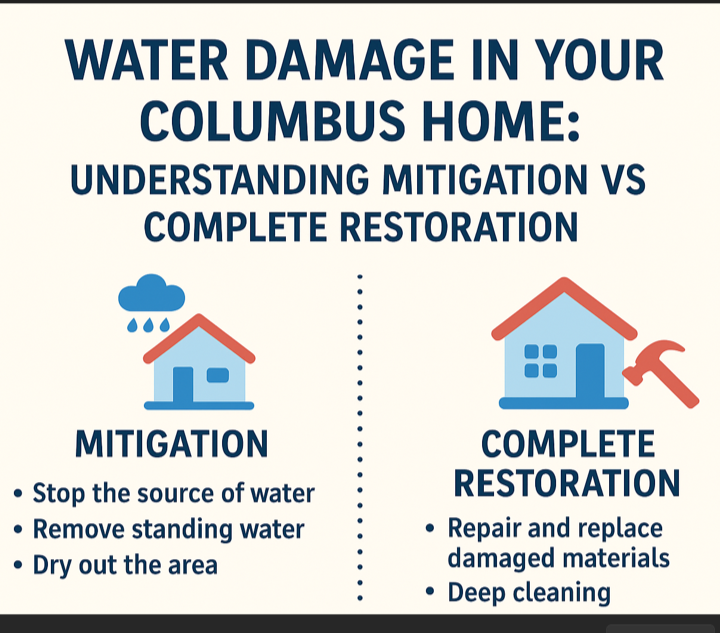
Water mitigation is the emergency response phase after water damage occurs in your home. Think of it as the critical first aid your property needs immediately after a pipe burst, sewage backup, or storm flooding.
The process focuses on three urgent goals: stopping the water source, removing standing water, and preventing additional damage. In Columbus, where we experience everything from basement floods during spring storms to frozen pipe disasters in January, quick mitigation can save you thousands of dollars in repairs.
Professional mitigation typically includes water extraction using industrial pumps, moisture detection with thermal imaging, structural drying with commercial dehumidifiers, and antimicrobial treatment to prevent mold growth. The entire process usually takes 3-5 days depending on the extent of damage.
How Does Full Water Restoration Service Differ from Mitigation?
Complete water restoration picks up where mitigation ends. Once your home is dry and stabilized, restoration involves rebuilding everything the water damaged or destroyed.
This comprehensive service includes replacing drywall, installing new flooring, repainting walls, reconstructing damaged structures, replacing insulation, and restoring your home’s appearance and function. Restoration can take anywhere from one week to several months depending on damage severity.
The key difference: mitigation prevents further damage, while restoration returns your home to its original condition. You can’t skip mitigation and jump straight to restoration because attempting repairs on wet structures leads to mold problems, structural weakness, and wasted money.
Why Columbus Homeowners Can’t Skip Either Service
Sarah Thompson learned this lesson the hard way last March. After discovering water pooling in her German Village basement during a heavy rainstorm, she waited three days before calling professionals, thinking she could handle it with fans and towels.
“I thought I was saving money,” Sarah recalls. “I mopped up the visible water and ran every fan I owned. The carpet felt dry after a few days, so I figured we were good.”
Two months later, black mold covered her basement walls. The “dry” carpet pad underneath had stayed damp, creating perfect conditions for microbial growth. Her insurance company denied the mold claim because she hadn’t taken immediate mitigation steps. What started as a $3,000 mitigation job became a $15,000 remediation and restoration nightmare.
Sarah’s story illustrates a painful truth: Columbus homes need both services, performed in the correct order, to truly recover from water damage. The humid Ohio climate makes our region particularly vulnerable to secondary damage when mitigation gets delayed or skipped entirely.
When Should Columbus Homeowners Call for Water Mitigation Services?
Time matters critically with water damage. Every hour you wait increases the damage exponentially and raises your restoration costs.
Call for immediate mitigation services when you discover standing water from any source, notice wet carpets or drywall even without visible flooding, smell musty odors indicating hidden moisture, experience sewage backups requiring immediate sanitation, or find water stains spreading on ceilings or walls.
Columbus homes face unique challenges. Our clay-heavy soil doesn’t drain well, making basement flooding common in neighborhoods like Clintonville, Bexley, and Worthington. The Scioto and Olentangy rivers create flood risks for nearby properties. Older homes in areas like Victorian Village and Italian Village often have aging plumbing that fails without warning.
Don’t wait to see how bad it gets. Water migrates through walls, under floors, and into areas you can’t see. Professional moisture meters detect problems invisible to homeowners.
What Does the Complete Water Restoration Timeline Look Like?
Understanding the full timeline helps Columbus homeowners set realistic expectations and plan accordingly.
Days 1-2 (Emergency Mitigation): Professionals arrive within hours of your call, assess damage severity, extract standing water, and begin drying procedures. They document everything for insurance purposes and may remove unsalvageable materials like soaked carpet padding.
Days 3-5 (Continued Drying): Industrial equipment runs continuously while technicians monitor moisture levels in walls, floors, and structural elements. They adjust equipment placement and may need to create controlled ventilation.
Week 2 (Damage Assessment): Once structures are completely dry, restoration specialists assess what needs replacement versus repair. They provide detailed estimates and work with your insurance adjuster.
Weeks 3-6+ (Restoration Work): Contractors rebuild damaged areas, install new materials, paint, and complete finish work. Complex projects involving multiple rooms or structural repairs take longer.
The biggest mistake Columbus homeowners make is pressuring companies to skip the drying phase and start repairs immediately. Rushing this process guarantees future problems.
How Much Does Water Mitigation Cost Compared to Full Restoration in Columbus?
Cost varies dramatically based on water source, affected square footage, and damage severity, but understanding typical ranges helps you budget and evaluate estimates.
Basic mitigation for a small area (under 500 square feet) typically runs $2,000-$4,000 in the Columbus market. This covers water extraction, drying equipment, antimicrobial treatment, and monitoring. Medium-sized projects affecting 500-1,500 square feet cost $4,000-$8,000. Large-scale mitigation for whole-home flooding can exceed $10,000.
Restoration costs depend entirely on what needs replacing. New drywall and painting for one room might cost $1,500-$3,000. Replacing flooring throughout a basement runs $3,000-$8,000 depending on materials. Extensive structural repairs or complete room reconstructions can cost $15,000-$50,000+.
Most Columbus homeowners pay $5,000-$15,000 total for combined mitigation and restoration on moderate water damage events. Insurance typically covers both services when you act quickly and document everything properly.
Does Homeowners Insurance Cover Both Mitigation and Restoration Services?
Insurance coverage depends on your policy terms and the water damage cause, making it essential to understand your coverage before disaster strikes.
Most Columbus homeowners insurance policies cover sudden and accidental water damage like burst pipes, appliance malfunctions, roof leaks from storms, and accidental overflows. They typically cover both mitigation and restoration when damage results from covered perils.
However, policies generally exclude gradual damage from poor maintenance, flood damage (requiring separate flood insurance), sewage backups (without additional coverage), and damage from neglected repairs. Many Columbus homeowners don’t realize they need separate flood insurance despite our region’s flooding history.
Here’s what insurance companies expect: immediate action to prevent further damage (mitigation), detailed documentation with photos and videos, professional water damage assessment, itemized estimates from licensed contractors, and cooperation with insurance adjusters throughout the process.
Filing a claim works best when you call professionals immediately, have them document everything, notify your insurance company within 24 hours, keep all receipts and communications, and don’t throw away damaged items until the adjuster approves.
What Happens If You Only Do Mitigation Without Complete Restoration?
Some Columbus homeowners stop after mitigation, thinking they’ll save money by living with cosmetic damage or doing repairs themselves later. This approach backfires in multiple ways.
Incomplete drying leaves hidden moisture that causes delayed mold growth, wood rot in structural elements, pest infestations attracted to damaged areas, decreased property value, and future buyers discovering problems during inspections.
Marcus Chen, a Westerville homeowner, experienced this firsthand. After a water heater failure, he paid for professional mitigation but decided to postpone replacing his damaged basement drywall and flooring to save money.
“We were planning to sell in two years anyway,” Marcus explained. “I figured we’d do the restoration work right before listing.”
When buyers had the home inspected eighteen months later, inspectors found moisture damage and mold behind the temporary patches Marcus had installed. The buyers walked away. Marcus ended up completing the restoration anyway, losing three months of marketing time during peak selling season and accepting a lower offer from the next buyer who negotiated hard after learning the home’s history.
Professional restoration isn’t optional cosmetic work. It’s structural necessity that protects your investment and ensures your family’s health and safety.
How Do You Choose the Right Water Damage Company in Columbus?
Columbus has numerous water damage companies, but quality varies significantly. Choosing the wrong company costs you time, money, and peace of mind.
Look for IICRC (Institute of Inspection, Cleaning and Restoration Certification) certification proving technicians have proper training. Verify they carry appropriate insurance and bonding protecting you from liability. Check their response time, since 24/7 emergency availability matters critically with water damage.
Ask whether they handle both mitigation and restoration or only one service. Companies offering both provide seamless transitions and better coordination. Confirm they have in-house capabilities rather than subcontracting everything to unknown providers.
Review their insurance claim experience. The best companies work directly with adjusters, understand documentation requirements, and help maximize your coverage. They should provide detailed written estimates, transparent pricing, and clear timelines.
PuroClean Home Savers has served Columbus homeowners for years with certified technicians, comprehensive mitigation and restoration services, and direct insurance company coordination. Their local team understands Columbus-specific challenges from basement flooding patterns to our region’s mold risks.
What Should Columbus Homeowners Do Immediately After Discovering Water Damage?
Your actions in the first few hours significantly impact the final damage extent and restoration costs. Follow this emergency protocol to protect your property and family.
Step one: Ensure safety by shutting off electricity to affected areas if you can safely reach the breaker box. Avoid standing in water with electrical outlets or appliances nearby. If you smell gas or suspect contaminated water, evacuate immediately and call emergency services.
Step two: Stop the water source if possible. Shut off the main water valve for pipe bursts, turn off appliance water supply lines, or place containers under active leaks. Don’t attempt repairs beyond simple shut-off valves.
Step three: Document everything with photos and videos showing water sources, standing water depth, and all affected areas. Include timestamps and capture damage to belongings. This documentation proves essential for insurance claims.
Step four: Remove valuable items from water’s path including electronics, important documents, family photos, and furniture you can safely move. Don’t risk injury moving heavy items or entering dangerous areas.
Step five: Call professional water mitigation services immediately, even if damage seems minor. Hidden moisture causes problems you can’t see without professional equipment. Every hour matters.
Step six: Contact your insurance company to report the claim and ask about required documentation or immediate steps. Some policies require professional mitigation within specific timeframes to maintain coverage.
What you shouldn’t do matters equally. Never use household vacuums on standing water since electrical shock risks exist. Don’t delay calling professionals hoping the problem resolves itself. Avoid turning on HVAC systems that might spread contaminated air through your home.
Why Does Columbus’s Climate Make Water Damage Particularly Problematic?
Columbus’s location and weather patterns create specific challenges for water-damaged homes that homeowners must understand.
Our humid continental climate means hot, humid summers perfect for mold growth after water events. Summer humidity regularly exceeds 70%, making structural drying difficult without professional dehumidification. Winter brings freeze-thaw cycles that burst pipes and cause ice dam roof leaks.
Spring storms dump heavy rainfall overwhelming drainage systems and causing basement flooding, especially in older neighborhoods with combined sewer systems. The flat terrain in many Columbus suburbs means poor natural drainage and standing water after storms.
Clay-heavy soil throughout Franklin County doesn’t absorb water well, directing it toward foundations and into basements. Many Columbus homes have inadequate sump pumps or systems that fail during power outages accompanying severe storms.
These factors mean Columbus water damage requires aggressive professional mitigation and can’t be handled with DIY approaches that might work in drier climates. The combination of humidity, soil conditions, and weather extremes makes our region particularly vulnerable to secondary damage when mitigation gets delayed.
Can You Handle Water Mitigation as a DIY Project to Save Money?
This question tempts many Columbus homeowners facing unexpected water damage expenses, but attempting DIY mitigation usually costs more than hiring professionals from the start.
Homeowner equipment lacks the power for proper water extraction and drying. Shop vacuums and residential dehumidifiers can’t match industrial-grade equipment that removes moisture from inside wall cavities and under flooring. You can’t see hidden moisture without thermal imaging cameras and moisture meters that cost thousands of dollars.
Most homeowners underestimate drying time and declare surfaces dry while structural elements remain wet. This hidden moisture causes the exact problems professional mitigation prevents: mold, rot, and structural damage.
Insurance coverage creates another critical issue. Many policies require professional mitigation to maintain coverage. DIY attempts may void your coverage entirely, leaving you paying for everything out of pocket.
Professional mitigation also includes proper documentation, antimicrobial treatment, mold prevention, structural assessment, and coordination with insurance adjusters. You’re not just paying for water removal but comprehensive damage prevention and recovery planning.
The time investment matters too. Professional teams complete mitigation in days while DIY projects drag on for weeks as you work around your schedule. Delays multiply damage and costs.
Save DIY efforts for minor issues like small, contained spills you clean immediately. Anything involving significant water volume, contaminated water sources, or structural penetration requires professional help.
How Long Does Mold Take to Develop After Water Damage in Columbus Homes?
Mold timeline concerns every homeowner dealing with water damage, and Columbus’s humid climate accelerates growth compared to drier regions.
Mold spores exist everywhere naturally, waiting for the right conditions: moisture, organic material, and temperatures between 40-100°F. Columbus homes provide ideal temperatures year-round. Water damage supplies the critical moisture component.
Mold can begin growing within 24-48 hours after water exposure in favorable conditions. Visible growth often appears within a week but can start sooner in humid environments. Hidden mold behind walls or under flooring may develop unnoticed for weeks or months.
Summer humidity in Columbus creates particularly high risk. A July water event can produce visible mold within 48 hours while winter incidents might take slightly longer due to lower temperatures and indoor heating reducing moisture.
This rapid timeline explains why water mitigation professionals emphasize immediate response. The 24-hour window isn’t arbitrary; it’s based on the biological timeline of mold development. Every hour of delay increases contamination risk.
Certain mold types pose serious health risks, especially for children, elderly residents, and people with respiratory conditions or compromised immune systems. Black mold (Stachybotrys) can develop in damp areas and produces mycotoxins affecting health.
Professional mitigation includes antimicrobial treatment specifically preventing mold establishment. If you wait too long and mold develops, you’ll need additional mold remediation services adding thousands to your total costs.
What Questions Should You Ask Water Damage Companies Before Hiring Them?
Asking the right questions protects you from inexperienced companies and ensures you receive proper service for both mitigation and restoration.
Certification and licensing: Are your technicians IICRC certified? Do you carry proper insurance and bonding? Can you provide your license numbers and insurance certificates?
Services and capabilities: Do you provide both mitigation and restoration or only one? What equipment do you use for water extraction and drying? Do you have in-house capabilities or subcontract work?
Emergency response: Do you offer 24/7 emergency service? What’s your typical response time? Can someone arrive within 2-3 hours of my call?
Insurance coordination: Do you work directly with insurance companies? Will you help with claim documentation? Can you provide detailed estimates and reports for adjusters?
Timeline and process: What’s the typical mitigation timeline for my situation? When can restoration work begin? What happens if more damage is discovered during the process?
Cost and payment: Can you provide written estimates? What payment terms do you offer? Do you require payment upfront or bill insurance directly?
References and reviews: Can you provide local references? How long have you operated in Columbus? Are you affiliated with professional organizations?
Companies hesitant to answer these questions directly or providing vague responses should raise red flags. Professional water damage companies expect these questions and answer them confidently with specific information.
How Can Columbus Homeowners Prevent Future Water Damage?
Prevention costs far less than mitigation and restoration combined, making proactive maintenance essential for every Columbus homeowner.
Inspect your roof annually, especially after severe storms. Replace damaged shingles immediately and ensure proper flashing around chimneys and vents. Clean gutters twice yearly and install gutter guards to prevent clogs that overflow and damage foundations.
Test your sump pump before spring storms by pouring water into the pit. Consider battery backup systems since power outages often accompany storms. Replace pumps older than seven years before they fail during critical moments.
Inspect plumbing regularly for leaks, corrosion, or damage. Replace aging water heaters before they fail (typical lifespan is 8-12 years). Install water leak detectors near water heaters, washing machines, and under sinks for early warning.
Maintain proper grading around your foundation, sloping away from your home at least six inches over ten feet. Seal foundation cracks immediately and consider professional waterproofing for homes with recurring basement moisture.
Insulate pipes in unheated areas including crawl spaces, attics, and exterior walls. During extreme cold, leave cabinet doors open under sinks and let faucets drip slightly to prevent freezing.
Know your main water shut-off valve location and ensure everyone in your household can operate it. Consider installing an automatic shut-off system that detects leaks and stops water flow.
Schedule annual HVAC maintenance to prevent condensate line clogs and drain pan overflows. Clean your dryer vent regularly to prevent moisture buildup and fire hazards.
These preventive measures require minimal investment compared to water damage recovery costs, making them some of the smartest money Columbus homeowners can spend.
Frequently Asked Questions About Water Mitigation and Restoration in Columbus
How quickly must mitigation start after water damage occurs?
Mitigation should begin within 24-48 hours maximum to prevent mold growth and secondary damage. Columbus’s humid climate makes immediate response even more critical than in drier regions. Many insurance policies require prompt professional mitigation to maintain coverage, so calling experts immediately protects both your property and insurance claim.
Will my insurance rates increase after filing a water damage claim?
Rate impacts vary by insurance company, claim frequency, and damage cause. Single claims for sudden accidents typically cause minimal rate increases. However, multiple claims within three to five years may significantly impact rates or policy renewal. Some companies offer claims-free discounts you might lose. Discuss potential rate impacts with your insurance agent when deciding whether to file smaller claims.
Can I stay in my home during water mitigation and restoration?
This depends on damage extent, affected areas, and water contamination level. Clean water damage affecting limited areas often allows you to remain home. However, sewage backups, extensive flooding, or mold contamination may require temporary relocation for health and safety. Restoration noise, dust, and equipment also factor into this decision.
How do I know if water damage is covered by my insurance policy?
Coverage depends on the water source and your specific policy terms. Most policies cover sudden, accidental damage from burst pipes, appliance malfunctions, and roof leaks from storms. They typically exclude flood damage (requiring separate flood insurance), gradual damage from poor maintenance, and sewage backups without additional coverage. Review your policy declarations page or contact your agent for specific coverage details.
What’s the difference between clean water, gray water, and black water damage?
Clean water comes from supply lines, rain, or condensation and poses no immediate health threat. Gray water contains some contaminants from sources like washing machines or dishwashers. Black water is highly contaminated from sewage backups, flooding, or standing water more than 48 hours old. Black water requires extensive sanitization and specialized handling, significantly increasing mitigation costs.
Should I replace or repair water-damaged drywall?
This depends on exposure duration, water type, and extent of damage. Clean water briefly contacting drywall can sometimes be dried and saved. However, drywall saturated for over 48 hours, exposed to contaminated water, or showing signs of deterioration should be replaced. Trying to save badly damaged drywall risks future mold problems and structural issues.
How long should industrial drying equipment run in my home?
Professional drying typically requires 3-5 days of continuous equipment operation, though complex situations may need longer. Technicians monitor moisture levels in structural elements using specialized meters and adjust equipment accordingly. Turning off equipment prematurely because of noise or energy costs leaves hidden moisture that causes future problems.
Can water damage affect my home’s resale value even after restoration?
Properly completed restoration following professional mitigation should not impact resale value if all work meets code and appears in home inspection reports. However, DIY repairs, inadequate mitigation, or undisclosed damage history can significantly reduce value and create legal issues. Always maintain complete documentation of professional work and permits for future buyers.
Conclusion
Water damage in Columbus homes requires both immediate mitigation and comprehensive restoration to protect your property investment and your family’s health. Mitigation stabilizes your home by removing water and preventing further damage within the critical 24-48 hour window. Restoration rebuilds and repairs your home to pre-damage condition once structures are completely dry.
Attempting to skip either service, delay professional help, or handle complex water damage as a DIY project typically multiplies costs and creates long-term problems including mold growth, structural damage, and decreased property value. Columbus’s humid climate and unique weather patterns make professional intervention even more essential than in drier regions.
When water damage strikes your Columbus home, immediate professional help from certified experts protects everything you’ve worked to build. Every hour matters when water invades your property.
Don’t wait for water damage to worsen. Call PuroClean Home Savers at (614) 689-0012 for fast, reliable mitigation and restoration services throughout Columbus. Our certified technicians respond 24/7 with the equipment and expertise to protect your home and streamline your insurance claim. Call now for immediate help.