 PuroClean Home Savers
 Executive Summary: Columbus, Ohio biohazard remediation projects average $2,000 to $30,000 based on contamination scope, hazardous material type, and Ohio EPA disposal requirements. Professional services encompass assessment, containment, removal, deep sanitization, and certified waste disposal. Local building codes, property types throughout Franklin County, and seasonal weather patterns influence both service requirements and pricing structures.
What Determines Biohazard Cleanup Costs in Columbus?
The Martinez family owned a rental property in the German Village neighborhood of Columbus. When tenants vacated after a medical emergency, the family discovered extensive biohazard contamination requiring professional intervention. Their journey through the remediation process revealed the complex cost factors that Columbus property owners face.
Biohazard remediation pricing reflects the serious nature of contaminated environments and the specialized expertise required to restore safety. Unlike standard cleaning services, remediation involves regulatory compliance, hazardous waste handling, and health protection protocols that significantly impact service costs.
Which Contaminants Drive the Highest Costs?
Different biohazards present unique challenges that affect both labor requirements and disposal expenses. Columbus properties encounter various contamination types, each with distinct pricing implications.
Biological Materials
Blood, bodily fluids, and tissue require careful collection, containerization, and transport to Ohio’s licensed medical waste facilities. Small volume cleanups start around $1,500, while extensive contamination exceeds $15,000. Crime scene and unattended death situations demand the most intensive protocols.
Sewage and Wastewater
Category 3 water damage containing human waste necessitates complete material removal and thorough sanitization. Columbus’s aging sewer infrastructure in neighborhoods like Franklinton and the Hilltop means sewage backups remain common. Costs range from $3,000 for single-room incidents to $20,000 for basement floods.
Chemical and Drug Residue
Methamphetamine labs and fentanyl contamination require specialized testing and cleaning protocols meeting Ohio Department of Health standards. These projects typically cost $5,000 to $50,000 depending on production scale and property size.
Infectious Disease Contamination
COVID-19, MRSA, and other pathogens require whole-property disinfection with EPA-registered antimicrobials. Costs average $500 to $5,000 based on square footage and contamination extent.
How Does Property Size Impact Your Total Investment?
The Martinez property was a 2,200 square foot Victorian requiring full first-floor remediation. Square footage directly correlates with labor hours, material quantities, and disposal volume.
Most Columbus remediation companies use tiered pricing structures. Small spaces under 500 square feet typically cost $1,500 to $5,000 for standard biohazard cleanup. Medium properties between 500 and 2,000 square feet range from $5,000 to $15,000. Large properties exceeding 2,000 square feet or multi-unit buildings start at $15,000 and can reach $50,000 or more.
The affected area matters more than total property size. Contamination confined to one bathroom costs substantially less than contamination spread throughout multiple rooms via HVAC systems or structural penetration.
What Costs Are Involved in Hazardous Waste Disposal?
Ohio maintains strict regulations for biohazardous waste handling. The Martinez family learned that disposal represented nearly 30% of their total $12,400 remediation bill, a proportion typical for Columbus projects.
Transport and Documentation
Licensed haulers must transport waste to approved Ohio facilities in Columbus, Cleveland, or Cincinnati. Transport fees range from $300 to $800 per load depending on volume and distance. Every shipment requires detailed manifests tracking waste from generation through final disposal, adding administrative costs of $100 to $250 per project.
Container and Packaging Requirements
Biohazardous materials require specific containers meeting DOT specifications. Red bag waste, sharps containers, and sealed drums cost $200 to $600 depending on quantity needed.
Treatment and Disposal Fees
Receiving facilities charge for incineration, autoclaving, or chemical treatment. These fees typically run $0.50 to $3.00 per pound, meaning a moderate contamination generating 200 pounds of waste adds $400 to $600 in disposal costs alone.
Special Waste Surcharges
Certain materials like chemical residues or pharmaceutical waste trigger higher disposal rates, sometimes doubling standard fees.
What Should Professional Deep Cleaning Include?

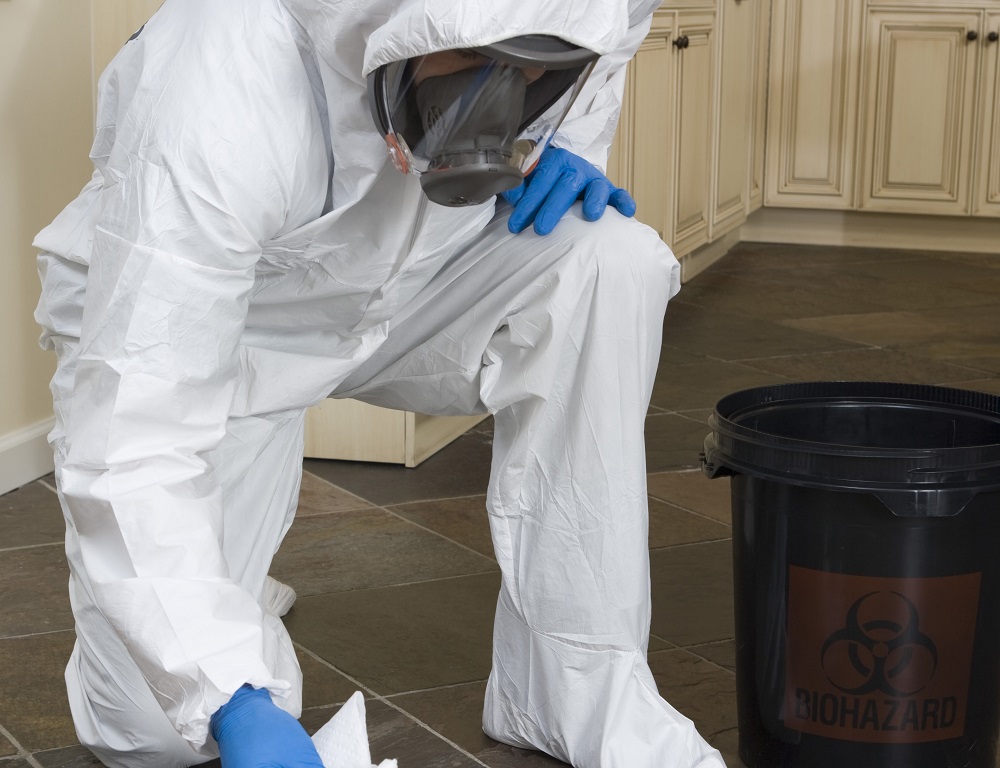
Deep cleaning for biohazard situations goes far beyond surface wiping. Proper decontamination follows strict protocols that ensure complete pathogen elimination.
Pre-Cleaning Assessment
Trained technicians map contaminated areas, test surfaces for pathogen presence, and document conditions. This assessment costs $200 to $600 but proves essential for comprehensive remediation and insurance documentation.
Containment and Air Management
Before cleaning begins, teams establish negative air pressure containment to prevent cross-contamination. HEPA air scrubbers run throughout the process, adding $400 to $1,000 in equipment and operation costs.
Multi-Stage Sanitization
Remediation involves physical removal of contaminated materials, application of hospital-grade disinfectants with required dwell times, and antimicrobial treatments. Labor for thorough sanitization typically costs $75 to $125 per hour per technician, with projects requiring two to four technicians.
Post-Remediation Verification
ATP testing, microbial sampling, or third-party clearance testing documents successful decontamination. Verification costs $300 to $800 but provides crucial proof of safe reoccupancy.
Why Do Columbus Properties Face Unique Cost Factors?
The Martinez Victorian in German Village presented challenges common to Columbus’s diverse housing stock. Local factors significantly influence remediation complexity and cost.
Historic Properties
Columbus’s historic neighborhoods feature older construction with porous materials like unsealed brick, plaster walls, and hardwood floors that absorb contaminants more readily. Preservation requirements in historic districts sometimes limit remediation methods, increasing labor time.
Building Code Compliance
Ohio and Columbus building codes require specific reconstruction standards after biohazard material removal. Bringing older properties to current code during reconstruction adds $1,000 to $5,000 beyond basic remediation.
Seasonal Challenges
Central Ohio’s humid summers promote rapid mold growth following biohazard incidents, requiring additional mold remediation averaging $2,000 to $8,000. Winter heating costs increase when properties need ventilation during multi-day remediation projects.
Urban Access Issues
Short North, Victorian Village, and German Village properties often have limited parking and narrow access, requiring special equipment transport and additional labor time that adds 10-20% to project costs.
What Additional Expenses Catch Property Owners Off Guard?
The Martinez family encountered several costs beyond the base remediation estimate that Columbus property owners should anticipate.
Content Disposal
Porous materials like upholstered furniture, mattresses, carpeting, and personal items often cannot be salvaged. Content disposal adds $500 to $3,000 depending on volume and disposal method requirements.
Structural Material Removal
When contamination penetrates drywall, insulation, subflooring, or cabinetry, these materials must be removed and properly disposed of as biohazardous waste. Demolition and disposal costs $2,000 to $10,000 for typical residential projects.
Odor Remediation
Persistent odors often require specialized treatment beyond standard cleaning. Ozone treatment, hydroxyl generation, or thermal fogging adds $500 to $1,500 to project totals.
Reconstruction Services
After removal and cleaning, properties need reconstruction. While not technically part of remediation, most property owners bundle these services. Reconstruction costs vary widely but typically equal or exceed remediation costs.
How Can You Reduce Biohazard Remediation Expenses?
While professional remediation is never optional for true biohazard situations, property owners can minimize costs through strategic decisions.
Immediate Response
The Martinez family’s three-week delay before calling professionals allowed contamination to spread from the original bedroom throughout the first floor. Immediate response prevents migration that expands affected areas and increases costs.
Accurate Initial Assessment
Detailed professional assessment prevents scope creep and budget surprises. Though assessment costs $200 to $600, it saves money by identifying all affected areas upfront.
Insurance Claim Management
Many Columbus property owners don’t realize their homeowner’s or commercial policies may cover portions of remediation costs. Professional remediation companies provide documentation supporting insurance claims that can recover thousands of dollars.
Selective Material Replacement
Not everything requires premium replacement. Discussing economical reconstruction options with contractors reduces post-remediation rebuild costs without compromising safety.
What Insurance Coverage Applies to Biohazard Situations?
The Martinez family’s rental property insurance covered $8,900 of their $12,400 total cost because the contamination resulted from a covered medical emergency. Understanding insurance nuances helps Columbus property owners maximize recovery.
Covered Scenarios
Sudden accidental events like crime scenes, unattended deaths, and sewage backups from system failures typically receive coverage. Policy limits vary, but many provide $10,000 to $25,000 for biohazard remediation.
Excluded Situations
Gradual issues like hoarding, long-term neglect, or drug-related contamination often face denial. Some policies exclude illegal activity consequences entirely.
Documentation Requirements
Insurance companies need detailed invoices, photographs, disposal manifests, and clearance testing results. Professional remediation companies familiar with insurance processes provide comprehensive documentation that strengthens claims.
What Qualifications Should Columbus Remediation Companies Have?
Not all cleaning companies possess the training and licensing for legitimate biohazard work. The Martinez family verified several credentials before hiring their remediation company.
Look for IICRC Applied Microbial Remediation Technician certification demonstrating specialized training. OSHA Bloodborne Pathogen Standard compliance proves technicians understand health risks and protection protocols. Ohio EPA hazardous waste transporter licensing ensures legal disposal capability. Commercial liability insurance of at least $2 million protects property owners from liability. Workers’ compensation coverage protects homeowners if technicians are injured on-site.
How Urgent Is Professional Biohazard Remediation?
Biological materials begin decomposing within hours, spreading contamination and creating health hazards. The Martinez family’s delay allowed pathogens to multiply, odors to intensify, and contamination to spread into the HVAC system, increasing their final cost by approximately 40%.
Immediate professional response limits exposure risks, reduces contamination spread, prevents secondary damage like mold growth, minimizes disposal volume and costs, and often qualifies for emergency insurance response.
What Long-Term Value Does Professional Remediation Provide?
Professional remediation costs seem substantial initially, but the Martinez family recognized several long-term benefits that justified their investment.
Health Protection
Proper decontamination eliminates pathogens that cause serious illness. This protection extends to family members, tenants, future occupants, and visitors.
Property Value Preservation
Undisclosed contamination creates legal liability and dramatically reduces property value. Professional remediation with proper documentation maintains marketability.
Legal Compliance
Ohio landlord-tenant law requires rental properties meet health and safety standards. Professional remediation provides documentation demonstrating compliance.
Peace of Mind
Knowing your Columbus property is genuinely safe rather than just superficially clean provides invaluable peace of mind for property owners and occupants.
Where Can Columbus Residents Access Professional Help?
When biohazard situations occur in Columbus, Franklin County, or surrounding central Ohio communities, immediate professional assistance is locally available. Whether addressing trauma scenes, sewage emergencies, infectious disease contamination, or hazardous chemical residues, certified specialists respond quickly to assess situations and provide detailed cost estimates before beginning work.
Transparent professionals explain all cost factors, provide written estimates detailing each service component, and work directly with insurance companies to maximize coverage. While biohazard remediation represents a significant investment, it protects health, preserves property value, and ensures legal compliance.
Frequently Asked Questions
What is the average cost for biohazard cleanup in Columbus homes?
Columbus residential biohazard remediation typically ranges from $2,000 to $15,000 for standard situations. Small isolated incidents may cost as little as $1,500, while extensive contamination, especially in larger or historic properties, can exceed $30,000 including reconstruction.
How quickly can remediation companies respond in Columbus?
Most professional services offer 24/7 emergency response with technicians arriving within 1-4 hours of initial contact. Immediate response is crucial for limiting contamination spread and reducing overall costs.
Do Columbus landlords have legal obligations for biohazard cleanup?
Yes. Ohio landlord-tenant law requires rental properties meet health and safety standards. Landlords must address biohazard contamination promptly and provide documentation of professional remediation before re-renting units.
Can I clean up minor biohazards myself to save money?
Small blood spills from minor injuries may be cleaned by property owners using proper protective equipment and disinfectants. However, any significant contamination, sewage backup, or situation involving unknown substances requires professional intervention for health and legal protection.
How long does biohazard remediation take for typical Columbus properties?
Timeline varies by contamination extent. Small projects complete in 6-12 hours, moderate situations require 2-4 days, and extensive contamination with reconstruction can take 1-3 weeks. Thorough drying and verification testing add time but ensure complete safety.
Conclusion
Understanding biohazard remediation costs helps Columbus property owners prepare for unexpected contamination events. While pricing varies based on contaminant type, affected area size, and disposal requirements, professional remediation provides essential health protection and regulatory compliance that safeguard both families and property values.
If you’re dealing with a biohazard situation in Columbus, Ohio, or surrounding Franklin County communities, immediate professional help is available. PuroClean Home Savers serves the Columbus area with certified technicians, transparent pricing, and comprehensive services from assessment through final clearance testing. Call (614) 689-0012 for immediate assistance and a detailed evaluation of your specific situation. Don’t compromise your health or property value with inadequate cleanup when professional remediation is just a phone call away.
 PuroClean Home Savers