


Reviewed for technical accuracy by PuroClean Home Savers’ IICRC-certified restoration team.
Under the IICRC S520 Standard for Professional Mold Remediation, a musty odor in a home is treated as a reliable sign of active fungal growth even before any visible spotting appears. The EPA’s mold guidance supports this: the compounds that create a musty smell are released once moisture has been present long enough for colonization to take hold, which often happens well ahead of anything you can see on a wall or ceiling. In Columbus, several geographic and infrastructure factors make this a common problem, from the city’s river corridors to its mix of century-old and newer housing stock.
This guide covers eight places mold commonly hides in Columbus homes, how neighborhood-specific flooding and sewer conditions raise the risk, and when to stop investigating on your own and call in a professional.

Key Takeaways for Homeowners
- A musty smell is a strong early indicator of hidden mold growth, even without visible staining.
- Columbus neighborhoods along the Scioto and Olentangy Rivers, including Franklinton, the Bottoms, and Grandview-adjacent properties, face elevated flood risk documented in FEMA Flood Insurance Rate Maps.
- Pre-1970 neighborhoods like German Village and Old North Columbus rely on combined sewer systems that can back up during heavy rain, introducing Category 3 (black water) contamination.
- Craftsman-era homes in Clintonville and the Short North often develop mold behind plaster walls and in basement crawl spaces.
- Hidden mold can release mycotoxins into household air well before it’s visually detected.
- Professional remediation under IICRC S520 relies on moisture mapping and containment barriers to prevent the spread of spores during cleanup.
If you’re dealing with a musty smell right now, treat it as time-sensitive. Moisture trapped inside walls or beneath flooring compounds the longer it’s ignored, and most delays lead to more material needing removal later. PuroClean Home Savers offers 24/7 emergency dispatch for homeowners throughout Columbus and Franklin County.
Why Columbus Homes Are Prone to Hidden Mold
Columbus is shaped by its rivers. The Scioto runs north to south through the city and is joined near downtown by the Olentangy, with Big Walnut Creek to the east and Alum Creek to the southeast. FEMA Flood Insurance Rate Maps identify Special Flood Hazard Areas concentrated in Franklinton, the Bottoms, and along Alum Creek on the near east side. The Griggs and O’Shaughnessy dams help manage flow, but intense urban rainfall can still overwhelm drainage capacity in low-lying areas.
Flooding risk and construction era combine differently depending on the neighborhood. Sump pump failures during spring storm season are common in finished basements throughout Clintonville, Bexley, and the Near East Side. Pre-1970 neighborhoods including German Village, Old North Columbus, and parts of Franklinton run on combined sewer systems that overflow during heavy rain, sending Category 2 or 3 contaminated water back through floor drains and sanitary laterals in areas like the Near South Side, Linden, and Olde Towne East. Meanwhile, pre-1960 construction throughout German Village, Victorian Village, and Italian Village is more prone to burst pipes and aging supply line failures, and craftsman-era homes in Clintonville and the Short North frequently develop mold behind plaster walls and inside basement crawl spaces where original construction offers little moisture barrier.
Newer development, including much of Dublin, generally benefits from better engineered drainage, though aggressive building near the Scioto has pushed some newer neighborhoods into flood-prone territory as well. Seasonally, Columbus sees both spring river overflow risk and summer thunderstorms capable of flash flooding, and the city’s sewer maintenance operations center has logged hundreds of flooded-basement reports during single intense storm events.
Takeaway: In Columbus, the right questions to ask about a musty smell depend heavily on your neighborhood: is it a river-corridor flood risk, a combined sewer system, or an aging construction-era plumbing issue?
The 8 Overlooked Areas Mold Grows Without Being Seen
1. Behind Drywall Near Basement Floor Lines
Water pushed in through minor foundation cracks wicks upward into drywall, especially in Franklinton and Bottoms properties near the Scioto. Moisture mapping with a hygrometer detects elevated readings in the material well before any surface staining shows.
2. Under Basement Carpet and Padding
Carpet padding holds water like a sponge and rarely dries on its own. This is a frequent issue after sump pump failures in Clintonville and Bexley basements, and long-term saturation can lead to subfloor delamination if left unaddressed.
3. Inside HVAC Ductwork
Ducts routed through a damp basement can circulate mold spores throughout the entire house, which is why a musty smell sometimes seems strongest in an upstairs room far from the actual source. Cross-contamination through HVAC systems is a major reason technicians use containment barriers before disturbing suspected growth.
4. Crawlspace Framing in Craftsman-Era Homes
Clintonville and Short North craftsman homes often have crawl spaces where insulation has absorbed moisture over time, trapping dampness against floor joists for extended periods without anyone noticing.
5. Behind Plaster Walls in Older Construction
Plaster walls in pre-1960 homes throughout German Village, Victorian Village, and Italian Village can hide mold growth where plaster has separated slightly from lath, creating small air gaps that trap moisture from slow leaks or condensation.
6. Behind Kitchen and Bathroom Cabinets
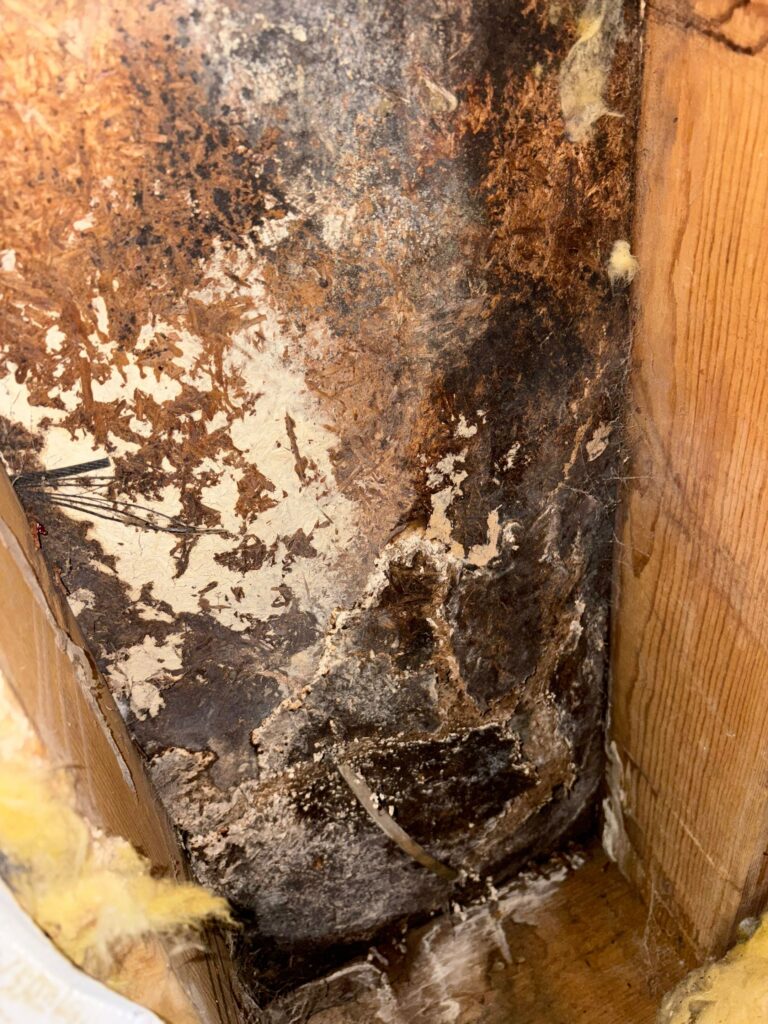
Slow plumbing leaks in aging supply lines, common in older Columbus housing stock, combine with basement or first-floor humidity to keep the area behind cabinet backs consistently damp and out of sight.
7. Around Basement Window Wells
Window wells that fill with runoff during heavy spring rain and don’t drain properly push moisture directly against basement window frames, and older wood-framed windows absorb that water over repeated seasons.
8. Wall Cavities on Exterior-Facing Walls
In neighborhoods with older housing stock and limited modern vapor barrier detailing, condensation can form inside wall cavities where warm interior air meets a cold exterior surface. Thermal imaging is often the most reliable way to detect this type of hidden growth without opening the wall.
Takeaway: In Columbus, the specific hidden mold risk in your home often tracks closely with your neighborhood’s flood history and construction era, so identifying which applies to you narrows down where to look first.
Warning Signs That Mean Stop and Call a Professional
A musty smell that persists after running a dehumidifier for several days, or one that follows a known combined sewer overflow event or basement flooding, means it’s time for professional assessment rather than continued DIY effort. At that point, thermal imaging and hygrometer readings can locate hidden moisture without demolition, and LGR dehumidification paired with air scrubbers and HEPA filtration can begin controlled drying right away.
If your musty smell followed a sewer backup in an older Columbus neighborhood, that combination likely means Category 3 protocols apply, and a professional should handle it rather than a DIY cleanup attempt.
How Professional Mold Remediation Works Under IICRC S520
- Inspection and moisture mapping. Technicians use moisture meters and hygrometers to trace the source, whether it’s river-corridor flooding, sewer backup, or an aging plumbing leak.
- Containment setup. Negative air pressure and physical containment barriers isolate the work area to prevent cross-contamination into the rest of the home.
- Removal of unsalvageable material. Saturated drywall, plaster, insulation, or padding that can’t be fully cleaned is removed and disposed of properly.
- Antimicrobial treatment. Remaining structural surfaces receive an EPA-registered antimicrobial biocide application to address remaining spores.
- Structural drying. LGR dehumidifiers and air movers restore normal moisture levels, monitored with daily hygrometer readings until drying targets are met.
- Air scrubbing and final clearance. HEPA-filtered air scrubbers run throughout the drying process, and a final inspection confirms the area meets clearance before containment comes down.
Takeaway: Each of these steps exists to keep mycotoxins and spores contained to the original problem area rather than spreading to the rest of the home.
What Makes PuroClean Home Savers Different
PuroClean Home Savers works directly with most major insurance carriers on direct billing, so Columbus homeowners aren’t stuck covering remediation costs upfront. The team is IICRC-certified in water damage and mold remediation protocols, with local response across Columbus and Franklin County that’s typically faster than restoration companies dispatching from outside the region.
Frequently Asked Questions
Does homeowners insurance cover mold remediation in Columbus? It depends on the cause. Mold from a sudden, covered event like a burst pipe is often covered, while mold from long-term seepage or neglected maintenance typically is not. Reviewing your policy’s mold exclusions with your agent ahead of time clarifies your coverage.
How much does mold remediation cost in Columbus? Costs vary based on how far the mold has spread and which materials need to be removed. A small, isolated area costs significantly less than a job involving plaster wall removal or subfloor delamination. A PuroClean assessment provides a specific scope and estimate for your home.
How long does mold remediation typically take? Most residential projects take three to seven days from containment through final clearance testing. Jobs involving crawlspace drying or Category 3 decontamination after a sewer backup can take longer depending on the extent of saturation.
Can I clean mold myself, or do I need a professional? Small surface mold on nonporous materials like tile can often be handled with basic cleaning. Mold on porous materials, mold covering a significant area, or mold tied to a hidden moisture source like a wall cavity or crawlspace needs professional evaluation since surface cleaning won’t reach the underlying cause.
Is the musty smell itself a health hazard? The odor compounds themselves aren’t usually a major health risk at typical household levels, but the mold producing them releases spores and mycotoxins that can trigger allergic reactions, respiratory irritation, and worsened asthma symptoms, especially in sensitive individuals. Treat the smell as a signal to investigate rather than a direct danger on its own.
What happens if my basement flooded from a combined sewer overflow? Water from a combined sewer overflow is classified as Category 3, or black water, under IICRC S500, requiring more extensive decontamination and disposal of affected porous materials than a clean water event. This kind of contamination should be handled by trained professionals rather than DIY cleanup.
Don’t Let a Musty Smell Linger
If your Columbus home has a musty odor and you can’t pinpoint the source, PuroClean Home Savers is available 24/7 for emergency inspection with direct insurance billing. Call (614) 689-0012 to schedule an assessment with an IICRC-certified technician who can find the hidden cause before it spreads further.
PuroClean Home Savers (614) 689-0012 Serving Columbus, Ohio and Franklin County.