


Reviewed for technical accuracy by PuroClean Home Savers’ IICRC-certified restoration team.
Professional mold remediation follows the IICRC S520 Standard for Professional Mold Remediation, which sets the protocol for inspecting, containing, and removing mold-affected materials in a way that prevents regrowth. Columbus homeowners who have scrubbed the same basement wall more than once are almost always dealing with an unresolved moisture problem, not a weak cleaning product. The EPA’s own mold guidance backs this up directly: mold control depends on moisture control first. Here are the seven mistakes keeping mold coming back in Franklin County homes, and what proper remediation actually involves.
Key Takeaways for Homeowners
- Recurring mold nearly always means the moisture source was never fixed, regardless of how thoroughly the surface was cleaned.
- Columbus sits along the Scioto and Olentangy rivers, and neighborhood-specific flood risk varies significantly by proximity and sewer type.
- Pre-1970 neighborhoods with combined sewer systems can turn a basement flood into a category 3 contamination event.
- Sump pump failure is a leading cause of recurring basement moisture in neighborhoods like Clintonville and Bexley during spring storms.
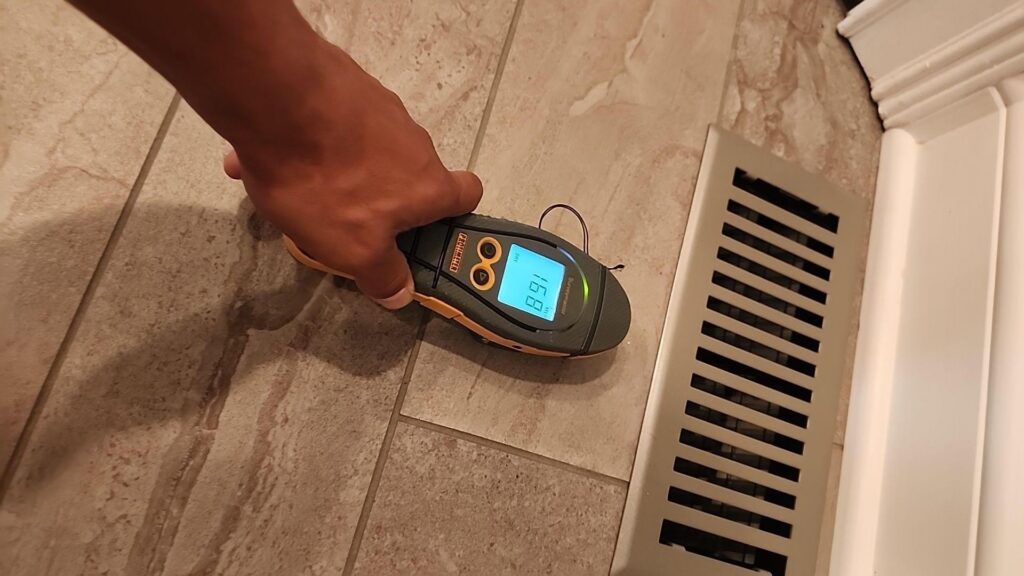
- A moisture meter and hygrometer reading, not a visual check, is the only reliable way to confirm a space is actually dry.
- Professional remediation uses containment barriers and negative air pressure so spores do not spread to unaffected rooms during cleanup.
Mold and water damage keep spreading while a decision gets made. Colonization can begin within 24 to 48 hours in the right humidity. If mold has already returned once in your Columbus home, call PuroClean Home Savers at (614) 689-0012 for a moisture assessment before it spreads further.
Mistake 1: Cleaning the Mold Without Fixing What Fed It
Wiping down or bleaching a visible mold patch without correcting the moisture source behind it is the number one reason mold reappears. The surface looks clean for a while, but if the wall cavity or subfloor stays damp, spores recolonize the same area quickly.
This shows up often in German Village and Victorian Village homes, where pre-1960 plumbing and aging supply lines create slow, hidden leaks behind plaster walls that homeowners do not discover until mold has already established itself. Cleaning that mold without inspecting the plumbing behind it almost guarantees a repeat.
Takeaway: Identify the actual moisture source with a moisture meter before cleaning anything. A clean-looking wall does not mean a dry one.

Mistake 2: Underestimating River Corridor Risk
Why does mold keep showing up in basements near downtown Columbus? The Scioto River bisects the city and is joined near downtown by the Olentangy, and FEMA Flood Insurance Rate Maps identify significant Special Flood Hazard Areas in Franklinton, the Bottoms, and along Alum Creek on the near east side. Homes in or near these zones face elevated groundwater and basement seepage risk that a single dehumidifier cannot fully offset.
The Griggs and O’Shaughnessy dams provide flood control for the region, but intense urban rainfall can still overwhelm drainage systems faster than the dams can compensate. Homeowners in Franklinton or Grandview-adjacent properties who treat a wet basement as a one-time event are often surprised when the same moisture returns during the next heavy spring storm season.
Takeaway: If your home sits near the Scioto or Olentangy corridors, seasonal moisture risk is ongoing, not something one repair permanently resolves.
Mistake 3: Ignoring a Sump Pump That Failed Once Already
Sump pump failures during spring storm season are a leading cause of recurring basement moisture in finished basements throughout Clintonville, Bexley, and the Near East Side. Homeowners who reset a tripped pump and move on without asking why it failed are often setting up the next flooding event.
A pump that failed once due to a power outage, a stuck float switch, or being undersized for the basin will very likely fail the same way again during the next major storm. That repeated flooding is often the actual reason mold keeps returning in these neighborhoods, even when the homeowner is diligent about cleaning after each event.
Takeaway: After any sump pump failure, have the pump and a battery backup system tested before the next storm season, not after the basement floods again.
Mistake 4: Treating Combined Sewer Overflow Like a Clean Water Problem
Pre-1970 Columbus neighborhoods, including German Village, Old North, and parts of Franklinton, run on combined sewer systems that can overflow during heavy rain, sending contaminated water back into basements through floor drains. This water is classified as category 3, or black water, under IICRC S500, and it carries bacterial risk that changes the entire cleanup approach.
Ohio EPA combined sewer overflow policy exists precisely because this contamination category requires different handling, including full PPE for anyone in the space, containment barriers, and disposal of most porous materials rather than drying and reusing them. Mold that grows after a combined sewer overflow event is growing in a bacterially compromised environment, and standard mold cleaning products are not designed to address that layer of the problem.
Takeaway: If your basement flood has ever come with a sewage odor or backed up through a floor drain, treat any resulting mold as category 3 from the start.
Mistake 5: Using Fans Instead of Real Structural Drying
Fans move air across a room but cannot pull moisture out of saturated framing, subfloor, or insulation. Structural drying requires low-grain refrigerant (LGR) dehumidification sized appropriately to the space, combined with air movers positioned to create airflow across every wet surface.
Psychrometrics, the science of tracking air temperature, humidity, and vapor pressure together, is how technicians know when a space is actually dry. Daily hygrometer readings are compared against an unaffected reference room, and drying continues until those numbers match. Subfloor delamination, where plywood layers swell and separate, is a common sign that a previous drying attempt in a Short North or Clintonville craftsman home stopped too early.
Takeaway: Ask exactly what drying equipment was used and for how many days. A couple of box fans is not structural drying.
Mistake 6: Missing the Warning Signs That Mean Stop and Call a Professional
Certain signs mean DIY mold cleaning should stop immediately: a musty smell that returns after cleaning, visible growth larger than roughly 10 square feet, mold spreading to more than one room, or bubbling and discoloration low on a wall near the floor line. Each of these signals moisture has traveled well beyond the visible patch.
This is where PuroClean Home Savers’ local presence matters for Columbus homeowners. The company provides 24/7 emergency dispatch, direct insurance billing to streamline the claims process, and IICRC-certified technicians local to the Columbus and Franklin County area, meaning a faster response than a company dispatching from outside the region during a time-sensitive moisture event.
Takeaway: A mold patch that has already come back once is itself the warning sign that it is time to call a professional.
Mistake 7: Skipping Airborne Spore Control During Cleanup
Mold spores travel through HVAC systems, open doorways, and even on clothing moving between rooms. A basement cleanup that skips containment barriers and negative air pressure can inadvertently push spores upstairs during the work itself, contaminating previously unaffected living space.
HEPA-filtered air scrubbers run continuously during professional remediation specifically to capture airborne spores that a containment barrier alone will not fully stop. This is often the missing step when a homeowner sees mold appear somewhere new shortly after a DIY basement cleanup.
Takeaway: Any mold remediation, whether DIY or professional, needs airborne spore control, not just cleaning of the visible patch.

What Professional Remediation Actually Involves
- Moisture mapping and inspection. Thermal imaging and moisture meters map the true extent of water intrusion before demolition starts.
- Containment setup. Containment barriers and negative air pressure machines isolate the work zone from the rest of the home.
- Continuous air scrubbing. HEPA-filtered air scrubbers capture airborne spores for the duration of the job.
- Removal of contaminated material. Affected drywall, insulation, and flooring are physically removed and disposed of, not cleaned in place.
- Antimicrobial application. An EPA-registered antimicrobial biocide treats remaining structural surfaces.
- Structural drying. LGR dehumidifiers and positioned air movers dry the space to a documented humidity target verified against a reference room.
- Final verification. A post-remediation inspection confirms the space meets acceptable clearance levels before containment comes down.
Frequently Asked Questions
Does homeowners insurance cover mold remediation in Columbus? Coverage generally depends on the cause. Mold resulting from a sudden covered event, such as a burst pipe, is often covered, while mold from long-term seepage or deferred maintenance usually is not. Combined sewer overflow damage may require a separate endorsement. Review your specific policy language or ask a remediation company for help interpreting it.
How much does mold remediation cost in Columbus? Cost depends on the affected square footage, containment complexity, and whether structural materials need removal and replacement. Small, isolated jobs cost less than extensive basement remediation involving demolition. An accurate number requires an in-person inspection with moisture mapping.
How long does mold remediation take in a typical Columbus home? Most straightforward jobs run 3 to 7 days from containment through final drying verification. Jobs involving combined sewer overflow contamination or extensive structural drying, common in older Franklinton or German Village properties, can take longer.
Can I clean mold myself, or do I need a professional? EPA guidance generally supports DIY cleanup only for mold patches smaller than about 10 square feet on hard, nonporous surfaces. Larger areas, porous materials, sewage-contaminated water, or mold that has already returned once should go to a professional.
Is recurring mold a health concern for my household? Ongoing mold exposure can worsen asthma, trigger allergic reactions, and irritate the respiratory system, with certain species producing mycotoxins that raise additional concerns. A recurring pattern means repeated exposure, which is a strong reason to address the moisture source rather than continue cleaning the surface.
Why does my Columbus basement flood during both spring and summer storms? Columbus has two separate risk windows: spring river corridor overflow near the Scioto and Olentangy, and summer flash flooding from intense thunderstorms that can overwhelm combined sewer systems in older neighborhoods. A fix aimed at one season, like waterproofing against river seepage, can still leave a home vulnerable to the other.
PuroClean Home Savers Serving Columbus, Ohio and Franklin County (614) 689-0012
Mold that keeps returning means the real cause is still active. PuroClean Home Savers offers 24/7 emergency dispatch, direct insurance billing, and IICRC-certified technicians local to the Columbus area, ready to assess the moisture source the same day you call. If your mold has already come back once, call (614) 689-0012 before it spreads further.