


Executive Summary
Columbus homeowners face unique winter water damage risks from Ohio’s freeze-thaw cycles, aging infrastructure, and rapid weather changes. Burst pipes, basement seepage, and ice dam leaks can cause thousands in damage within hours. This comprehensive guide explains what causes winter water emergencies, provides immediate action steps, shares a real Columbus restoration story, and connects you with expert help. If water damage is happening now, call PuroClean Home Savers at (614) 689-0012 for immediate 24/7 emergency response.
Why Are Columbus Homes Particularly Vulnerable to Winter Water Damage?
Columbus sits in a climate transition zone where Arctic air masses collide with warmer Gulf moisture. This creates dramatic temperature swings. January temperatures can range from 5°F during polar vortex events to 50°F during warm fronts within the same week.
These fluctuations stress your home’s water systems in ways steady cold doesn’t. Pipes expand and contract repeatedly, weakening joints. Snow accumulates, then melts rapidly, overwhelming drainage systems. Ice forms on roofs, melts slightly during afternoon warming, then refreezes at night into larger dams.
Columbus’s housing stock includes many homes built in the 1950s through 1980s before modern insulation standards. These homes have pipes in vulnerable locations: exterior walls without proper insulation, unheated crawl spaces, and poorly ventilated attics. Even newer construction faces risks when builders route plumbing through exterior wall cavities for design convenience.
What Actually Happens When a Pipe Freezes and Bursts?
The physics are straightforward but the results are devastating. When water temperature drops to 32°F, it begins forming ice crystals. As freezing continues, ice expands with incredible force, roughly 40,000 PSI of pressure.
This pressure doesn’t typically burst the pipe at the frozen section. Instead, pressure builds in the water trapped between the ice blockage and a closed faucet. The pipe fails at its weakest point, often a fitting or joint downstream from the freeze.
Columbus residents often discover burst pipes when temperatures rise and ice melts. Suddenly, water flows freely through the break at 400 to 800 gallons per hour depending on pipe size and water pressure. A half-inch pipe running for just two hours releases enough water to flood an entire basement.
Copper pipes, common in Columbus homes built from the 1960s through early 2000s, are especially vulnerable at soldered joints. PEX piping is more freeze-tolerant but still fails under extreme conditions. Galvanized steel pipes in older Columbus homes become brittle with age and crack rather than burst.
How Quickly Does Water Damage Progress?
Water damage follows a predictable timeline that accelerates faster than homeowners expect:
Minutes 1 to 60: Water spreads across floors, soaking into carpet, padding, and porous flooring materials. It begins wicking up drywall and wood baseboards. Furniture in contact with water starts absorbing moisture.
Hours 1 to 24: Water penetrates deeper into building materials. Drywall begins swelling and degrading. Wood flooring cups and warps. Mold spores, present everywhere in the environment, land on wet surfaces and begin activating. Metal components start rusting. Electrical systems become hazardous.
Hours 24 to 48: Mold growth becomes visible, especially in Columbus’s humid climate where summer moisture already challenges basements. Contamination risks increase as organic material begins decomposing. Hardwood flooring damage may become irreversible. Drywall loses structural integrity.
Days 3 to 7: Mold colonies establish and spread rapidly. Structural wood begins rotting. Restoration costs multiply as demolition requirements increase. Health risks from mold exposure and contaminated materials rise significantly.
The critical window for preventing permanent damage and mold growth is 24 to 48 hours. Professional response within the first few hours dramatically reduces total restoration costs and eliminates most secondary damage.
What Are the Warning Signs of Ice Dam Formation?
Ice dams develop through a specific process that Columbus homeowners can learn to recognize early:
Initial signs: Large icicles forming along gutters and eaves indicate snowmelt is occurring and refreezing. While small icicles are normal, formations exceeding 12 inches or gathering in clusters signal problems.
Progressive indicators: Ice ridges visible along roof edges, especially running parallel to gutters. Uneven snow melt patterns where portions of the roof are bare while others retain full snow cover. This uneven melting comes from heat escaping through inadequately insulated areas.
Interior warning signs: Water stains appearing on ceilings near exterior walls, particularly in upper-floor rooms or along soffits. Peeling paint or wallpaper that wasn’t there before winter. Damp or compressed insulation in attic spaces. Ice accumulation in attic spaces or along roof decking visible from inside.
Advanced problems: Water actually dripping from ceiling fixtures, light housings, or along wall-ceiling joints. By this stage, significant damage is occurring behind the scenes.
Columbus’s typical winter includes multiple freeze-thaw cycles. Each cycle makes ice dams worse as meltwater refreezes in larger formations. What starts as a minor ice buildup in December can become a major leak source by February.
Real Story: When a Columbus Family’s Vacation Turned Into a Crisis
Jennifer and Mark Chen live in a 1970s ranch home in Upper Arlington. They had never experienced plumbing problems in their eight years there. In late January, they left for a long weekend to visit family in Cleveland, setting the thermostat to 62°F to save energy.
Temperatures Friday night dropped to 7°F with wind chills below zero. A pipe running through an exterior wall in their kitchen cabinet froze solid. The Chens had no idea because the freeze location blocked water flow completely. The home seemed fine.
Sunday afternoon brought a warming trend to 38°F. As they drove home, the frozen section began thawing. Water pressure built behind the weakening ice blockage. At approximately 3:00 PM, a joint in the copper pipe failed catastrophically.
They arrived home at 6:00 PM. Water had been flowing for three hours. The kitchen, adjacent dining room, and hallway had standing water. Water had soaked through the floor into the basement, damaging the finished ceiling below.
Mark immediately shut off the main water valve. They estimated 900 gallons had flooded their home. Jennifer called their insurance company who recommended PuroClean Home Savers.
“We called at 6:30 PM on a Sunday evening,” Jennifer remembers. “I honestly didn’t expect anyone to answer. But they picked up immediately and said they’d have a crew there within 90 minutes.”
The PuroClean team arrived at 8:00 PM with a truck full of equipment. They quickly assessed the damage using moisture meters and thermal imaging. Extraction began immediately with truck-mounted pumps pulling standing water in less than 40 minutes.
“What impressed us most was how they explained everything,” Mark says. “They showed us the moisture readings, explained what needed to happen, and gave us a realistic timeline. No sales pressure, just professional assessment.”
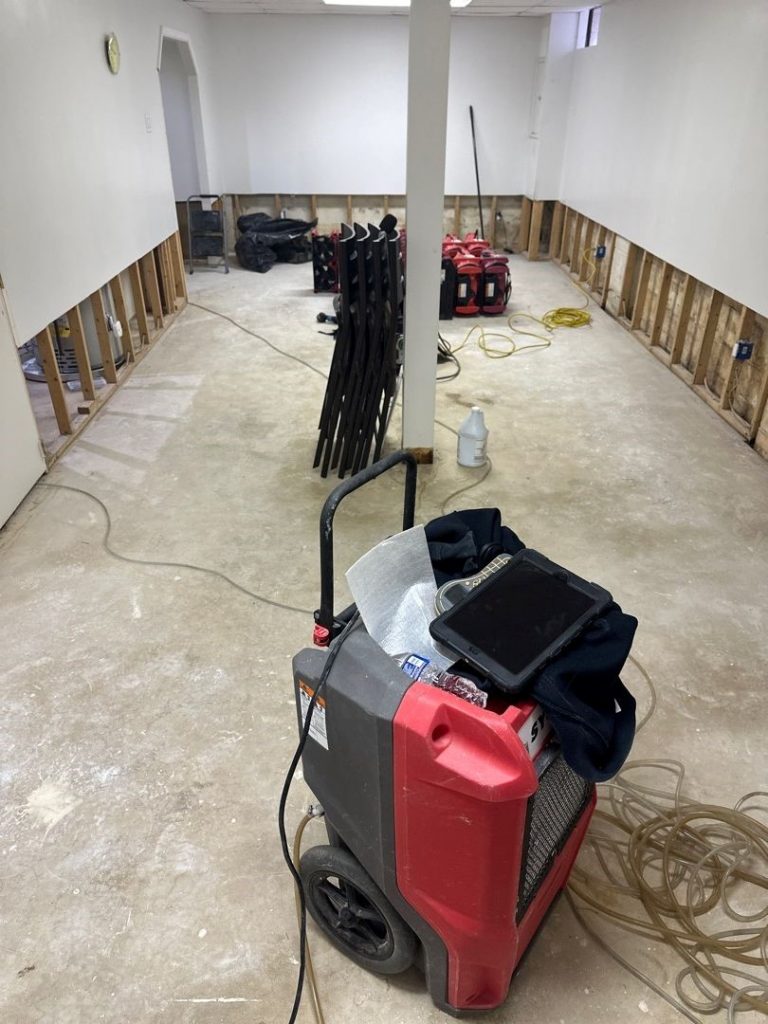
The team placed air movers and commercial dehumidifiers throughout affected areas. They removed unsalvageable materials including soaked drywall and the kitchen cabinet base that had housed the failed pipe. For four days, they monitored moisture levels twice daily and adjusted equipment.
“We were terrified about mold,” Jennifer admits. “But they explained that fast response and proper drying prevents mold if you act within 48 hours. Because they got there so quickly, we avoided that nightmare.”
Final moisture readings confirmed all materials were dry. Total restoration cost $8,700, covered by insurance minus their $1,000 deductible. A contractor later insulated the wall cavity where the pipe had frozen.
“The lesson for us was prevention and having a plan,” Mark reflects. “Now we keep the thermostat at 55°F minimum when traveling, we leave cabinet doors open during extreme cold, and we have PuroClean’s number saved in our phones. We also had that vulnerable pipe relocated during repairs.”
The Chens estimate that if they had arrived home Monday instead of Sunday, or if they hadn’t called professionals immediately, their damage could have easily exceeded $25,000 with mold remediation added.
What Should I Do the Moment I Discover Water Damage?
Your actions in the first minutes and hours determine whether you face minor inconvenience or major disaster:
Turn off the water source immediately. For burst pipes, shut off your main water valve. Every home should have this clearly marked and easily accessible. If you can’t locate it, shut off water at the meter. For roof leaks from ice dams, place containers to catch dripping water and move belongings to dry areas.
Shut off electricity to affected areas. Water and electricity create deadly combinations. If water has reached outlets, switches, or electrical panels, shut off power at the main breaker. Never step in standing water if electrical sources might be energized.
Document all damage thoroughly. Before touching anything, photograph and video everything from multiple angles. Capture water levels, damaged belongings, source locations, and overall scope. Insurance claims require this evidence. Include close-ups and wide shots.
Call professionals immediately. Every minute water remains increases damage and cost. Contact PuroClean Home Savers at (614) 689-0012 for 24/7 emergency response in Columbus and surrounding areas. Their certified technicians typically arrive within 90 minutes with industrial extraction equipment, commercial drying systems, and moisture detection technology.
Begin careful water removal. While waiting for professionals, use towels, mops, or a wet vacuum for small amounts. Don’t spread water to unaffected areas. Avoid wetting yourself or working near electrical hazards.
Move valuables and furniture. Place aluminum foil or plastic under furniture legs to prevent staining and moisture wicking. Remove area rugs, artwork, and electronics to dry locations.
Don’t use regular fans or open windows. Improper air circulation spreads moisture into unaffected areas and creates perfect conditions for mold. Professional restoration requires specific airflow patterns that home equipment cannot achieve.
How Do Professionals Extract Water and Dry My Home?
Professional water damage restoration follows a systematic process that differs dramatically from homeowner attempts:
Inspection and assessment: Certified technicians use thermal imaging cameras to identify all affected areas, including hidden moisture in walls, ceilings, and subfloors. Moisture meters provide precise readings that guide the entire process. They classify water damage by contamination level and create a detailed scope.
Water extraction: Truck-mounted extraction units remove standing water at 20 to 30 gallons per minute. Powerful vacuum systems pull water from carpet, padding, and porous materials. Complete extraction typically takes 30 minutes to 2 hours depending on volume and square footage.
Drying and dehumidification: Commercial-grade air movers create specific airflow patterns that dry both surface and hidden moisture. Industrial dehumidifiers remove 100 to 200 pints of moisture daily from the air, preventing it from reabsorbing into materials. Equipment runs continuously for 3 to 5 days typically.
Monitoring and adjustment: Technicians return twice daily to check moisture readings and adjust equipment placement. They track progress scientifically rather than guessing based on appearance. Drying continues until all materials reach safe moisture levels verified by meter readings.
Cleaning and sanitizing: After complete drying, affected areas receive EPA-registered antimicrobial treatment to prevent mold growth and eliminate odors. Surfaces are cleaned to remove any contaminants carried by water.
Restoration: Final steps include replacing removed materials like drywall, insulation, baseboards, and flooring. Many restoration companies handle this phase or coordinate with contractors to return your home to pre-damage condition.
PuroClean Home Savers uses state-of-the-art equipment and proven protocols refined over decades in the restoration industry. When you call (614) 689-0012, you’re accessing this comprehensive system rather than just renting individual pieces of equipment.
Will Insurance Cover My Winter Water Damage?
Most standard Ohio homeowners insurance policies cover sudden and accidental water damage, including:
- Burst pipes from freezing conditions
- Ice dam roof leaks
- Supply line failures from water heaters, dishwashers, or washing machines
- Sudden appliance malfunctions
Policies typically exclude:
- Gradual damage from long-term leaks you knew about but didn’t repair
- Flooding from outside water sources entering your home (this requires separate flood insurance)
- Damage from lack of maintenance, such as burst pipes in a vacant home where heat wasn’t maintained
- Seepage from chronic foundation or grading issues
The gray areas involve negligence claims. If you maintained your home reasonably and the damage was truly accidental, coverage generally applies. If you left your home unheated during freezing weather or ignored obvious warning signs, insurers might dispute coverage.
Columbus homeowners typically carry deductibles ranging from $500 to $2,500. Your out-of-pocket cost equals your deductible plus any uncovered damage.
PuroClean Home Savers works directly with insurance companies throughout the process. They document everything to insurer standards, communicate with adjusters, and help navigate claims paperwork. This typically speeds approval and reduces homeowner stress during an already difficult situation.
Why Does Basement Seepage Worsen During Winter Months?
Columbus basements face unique winter challenges that create perfect conditions for water intrusion:
Frozen ground prevents absorption. When soil freezes solid to depths of 12 to 18 inches, snowmelt and rain cannot percolate downward. Water flows horizontally along the frozen layer directly toward your foundation.
Rapid snowmelt overwhelms drainage. Columbus can accumulate significant snow then experience sudden warming. Ten inches of snow melting over 48 hours produces the water equivalent of heavy rainfall, but drainage systems designed for gradual rain can’t handle the volume.
Gutters fail when needed most. Ice clogs gutters and downspouts, forcing meltwater directly against your foundation instead of channeling it away. Even properly maintained gutters can fail when sudden ice dams form.
Hydrostatic pressure increases. Saturated soil creates immense pressure against foundation walls. This forces water through microscopic cracks, porous concrete blocks, and floor-wall joints. Pressure can exceed 1,000 pounds per square foot.
Sump pump failures during critical periods. Winter storms cause power outages exactly when sump pumps need to run continuously. Even brief failures allow water levels to rise above basement floor level.
Columbus homes built before modern waterproofing standards often lack proper footer drains, waterproof membrane coatings, or adequate foundation drainage. These homes experience chronic winter seepage.
How Can I Prevent Burst Pipes in My Columbus Home?
Prevention costs far less than repair and requires straightforward actions: Maintain minimum indoor temperature. Never let your thermostat drop below 55°F, especially when away from home. Pipes in exterior walls and unheated spaces need consistent warmth.
Insulate vulnerable pipes. Add foam insulation sleeves to pipes in crawl spaces, attics, garages, and exterior walls. Focus especially on pipes along north-facing walls.
Seal air leaks. Cold air infiltration around pipes through wall gaps, rim joists, and foundation cracks creates freeze conditions. Seal openings with appropriate materials.
Open cabinet doors during extreme cold. This allows warm room air to circulate around pipes under sinks along exterior walls.
Let faucets drip during severe freezes. Moving water resists freezing. A pencil-thin stream prevents ice formation in vulnerable pipes. The small water cost is trivial compared to burst pipe damage.
Disconnect and drain outdoor hoses. Remove garden hoses and drain exterior faucets. Close interior shutoff valves to outdoor faucets and open the outside valve to drain residual water.
Know your shutoff valve location. Every family member should know where the main water shutoff is located and how to operate it. Test it annually to ensure it functions.
Add heat cable to chronic problem areas. Thermostatically controlled heat tape prevents freezing in pipes that have frozen before or that can’t be better insulated.
For Columbus homeowners, special attention to pipes along north and east facing walls makes sense. These receive less solar warming and face prevailing winter winds.
What Makes Ice Dams Different From Regular Roof Ice?
Not all roof ice creates problems. Understanding the difference helps you identify actual ice dam threats:
Regular roof ice: Forms uniformly across the entire roof surface when temperatures stay below freezing consistently. Snow compresses into ice but doesn’t create differential melting. While heavy, it doesn’t typically force water under shingles.
Ice dams: Form specifically at roof edges when heat escaping through your roof melts snow, which then flows down and refreezes at the colder eaves and gutters. This creates a growing ridge that traps subsequent meltwater.
The key difference is the melting pattern. If your entire roof is equally icy, that’s usually okay. If you see melting in some areas while ice accumulates specifically along eaves, you have an ice dam developing.
Columbus homes with inadequate attic insulation or ventilation create perfect ice dam conditions. Heat rises from living spaces, warms attic air, melts roof snow from below. The eaves, which extend beyond the heated envelope, stay cold and freeze the flowing water.
Preventing ice dams requires addressing the heat loss, not just removing ice. Temporary removal helps, but the dam reforms quickly without fixing the underlying insulation problem.
Should I Remove Snow From My Roof?
It depends on your roof structure, snow depth, and ice dam formation:
When removal helps: If snow depth exceeds 12 inches and you’re experiencing ice dam leaks or if snow is melting unevenly creating ice ridges at eaves, careful removal can provide temporary relief.
When removal is dangerous: Never attempt roof access during icy conditions. Falls from roofs represent a leading cause of winter injuries. Snow removal from the ground using a roof rake is safer but still requires care to avoid power lines and damaging shingles.
Professional assessment: If your roof is sagging or you hear cracking sounds, evacuate and call professionals immediately. Most Columbus residential roofs handle typical snow loads, but ice accumulation adds significant weight.
For most situations, improving attic insulation and ventilation prevents ice dams more effectively than repeatedly removing snow. If you’re experiencing repeated ice dam problems, call PuroClean Home Savers at (614) 689-0012. They can assess the situation and coordinate with roofing specialists to address both immediate damage and underlying causes.
What’s the Difference Between Clean Water, Gray Water, and Black Water Damage?
Water damage professionals classify water by contamination level because this determines cleaning protocols and safety requirements:
Category 1 clean water: Originates from sanitary sources like burst supply pipes, leaking faucets, or water heater pressure relief valves. Initially poses no health threat but becomes contaminated if left standing for 48 hours as it absorbs material from surfaces.
Category 2 gray water: Contains some contamination from sources like dishwasher or washing machine overflows, broken aquariums, or waterbed leaks. May cause discomfort or illness if contacted or consumed. Requires additional cleaning and sanitation.
Category 3 black water: Highly contaminated and potentially toxic from sources like sewage backups, toilet overflows containing feces, flooding from rivers or streams. Poses serious health risks requiring specialized remediation and protective equipment.
Most winter pipe bursts start as Category 1 but can progress to Category 2 if water sits for extended periods. Basement seepage that contacts sewage pipes or soil contamination may be Category 2 or 3.
PuroClean Home Savers assesses water category during initial inspection and follows appropriate protocols for each classification. This ensures both complete restoration and your family’s safety.
How Long Does Professional Water Damage Restoration Take?
Timeline varies based on damage extent, affected materials, and moisture levels. Here’s what Columbus homeowners typically experience:
Emergency response: PuroClean Home Savers typically arrives within 90 minutes of your call to (614) 689-0012. Initial assessment takes 30 to 60 minutes. Water extraction begins immediately and takes 30 minutes to 3 hours depending on volume.
Drying phase: Most residential water damage requires 3 to 5 days of continuous drying with professional equipment. Technicians monitor progress twice daily and adjust equipment based on moisture meter readings. Heavily saturated materials like concrete or hardwood may need 5 to 7 days.
Cleaning and treatment: After complete drying, 1 to 2 days for antimicrobial treatment, odor removal, and detailed cleaning of affected areas.
Restoration and repairs: Timeframe varies dramatically based on extent. Simple repairs like replacing drywall and repainting might take 3 to 5 days. Extensive restoration involving flooring, cabinetry, or structural repairs can require 2 to 4 weeks. Many factors including contractor availability and material delivery affect this phase.
Throughout the process, PuroClean Home Savers maintains communication with you and your insurance company, providing regular updates and documentation.
Can I Do Anything While Waiting for Professional Help to Arrive?
Yes, several safe actions help minimize damage:
Stop ongoing water flow if you can do so safely. Shut off the main water valve for plumbing failures.
Turn off HVAC systems if water has reached air ducts or returns. Running forced air can distribute contaminated air and spread moisture.
Remove small valuables like electronics, documents, photographs, and jewelry from affected areas.
Mop or towel small amounts of water if you can do so without electrical hazard risk. Focus on preventing water from spreading to unaffected areas.
Open cabinet and closet doors to improve air circulation to hidden areas.
Take detailed photos of all damage from multiple angles for insurance documentation.
Don’t remove carpet or padding. Professionals need to see original conditions for proper assessment. Attempting removal often causes additional damage.
Avoid using home vacuum cleaners on standing water. Shop vacs designed for water are safer, but standard vacuums create electrical hazards and usually fail.
Don’t disturb mold growth if you see any. Disturbing mold releases spores into air. Professionals have proper containment equipment.
These actions help but don’t replace professional restoration. The sooner professionals arrive with proper equipment, the better your outcome. PuroClean Home Savers maintains 24/7 emergency response specifically because water damage worsens every hour.
Frequently Asked Questions
How much does water damage restoration cost in Columbus?
Costs vary widely based on damage extent and affected square footage. Small single-room incidents typically range from $1,500 to $4,000. Whole-basement flooding averages $4,500 to $9,000. Extensive multi-floor damage can reach $15,000 to $30,000 or more. Insurance usually covers most costs after your deductible for covered incidents. PuroClean Home Savers provides detailed written estimates and works with your insurance company to maximize coverage and minimize your out-of-pocket expense.
Will water damage always cause mold in Columbus?
Not if you act quickly. Columbus’s humid climate creates favorable mold conditions year-round, making fast response critical. Mold needs moisture, oxygen, and organic material to grow. Professional drying within 24 to 48 hours eliminates the moisture component before mold can establish. Delayed response or incomplete drying almost guarantees mold growth in Ohio’s climate. Once mold colonies establish, you need separate remediation services before restoration can proceed.
Can I stay in my home during water damage restoration?
Usually yes, though it depends on damage location and extent. If restoration is confined to a basement or single area and doesn’t affect your HVAC system, you can typically remain in other areas safely. Extensive damage requiring equipment throughout multiple floors may make staying difficult due to noise, equipment, and access restrictions. Safety concerns like electrical hazards, sewage contamination, or structural damage might require temporary relocation. Your restoration company will provide specific guidance for your situation.
What should I do if my sump pump fails during a winter storm?
First, if you have power, check whether the pump is simply stuck or clogged. Sometimes debris blocks the float mechanism. If the pump has failed mechanically, you need immediate backup. Contact PuroClean Home Savers at (614) 689-0012 for emergency water extraction. Many Columbus residents install battery backup sump pumps or water-powered backup pumps for exactly this situation. These automatically activate when the primary pump fails, preventing flooding during power outages.
How do I know if I have hidden water damage?
Warning signs include musty odors (indicating mold growth), water stains on ceilings or walls that appear without explanation, peeling paint or wallpaper, warped or buckling floors, increased humidity in normally dry areas, and unexplained increases in water bills. Professional moisture detection using thermal imaging cameras and pin or pinless moisture meters identifies hidden water in wall cavities, under flooring, and in ceilings. If you suspect hidden damage, call for professional assessment before visible problems develop.
What’s the most common cause of winter water damage in Columbus homes?
Burst pipes from freezing conditions lead all other causes, accounting for roughly 60% of winter water damage claims in cold climates. Ice dams cause about 20% of claims. Basement seepage from snowmelt and sump pump failures account for most remaining incidents. The common thread is inadequate preparation and sudden temperature changes characteristic of Columbus winters.
Should I hire a restoration company or just use my contractor?
Restoration companies specialize in water extraction, drying, and preventing secondary damage like mold. They have specialized equipment and certifications that general contractors don’t. Contractors excel at rebuilding and repairs but typically lack industrial extraction and drying equipment. The most effective approach uses restoration companies first to dry everything properly, then contractors for reconstruction. Many restoration companies like PuroClean Home Savers provide both services or coordinate closely with contractors for seamless restoration.
How can I tell if my attic insulation is adequate to prevent ice dams?
Check insulation depth and uniformity. Columbus homes should have R-38 to R-60 insulation in attics (roughly 12 to 20 inches of fiberglass or 9 to 15 inches of cellulose). Look for even coverage with no visible gaps, compressed areas, or spots where you can see the ceiling drywall. Check for proper ventilation with soffit vents at eaves and ridge or gable vents at the peak. If your attic temperature during winter closely matches outside temperature, ventilation is working correctly. If the attic feels significantly warmer than outside, heat is escaping through insulation gaps.
Conclusion
Winter water damage in Columbus requires immediate professional response to prevent escalating costs and secondary problems like mold growth. Whether facing burst pipes, basement seepage, or ice dam leaks, the first hours determine your outcome.
Remember the Chen family’s experience. Their weekend trip became a crisis, but immediate professional response contained damage that could have exceeded $25,000 to under $9,000. The difference was recognizing the emergency and calling experts immediately.
PuroClean Home Savers serves Columbus and surrounding communities with 24/7 emergency response, 365 days a year. Their IICRC-certified technicians arrive equipped with truck-mounted extraction systems, industrial drying equipment, thermal imaging cameras, and moisture detection tools. They work directly with your insurance company to streamline claims and restore your home to pre-damage condition.
Don’t let water damage worsen while you debate your next step. Every hour increases your total cost and damage. If you’re experiencing any winter water emergency in Columbus or surrounding areas, call PuroClean Home Savers immediately at (614) 689-0012. Professional help is available right now, and rapid response protects both your home and your financial investment.