

Water Damage: The Hidden Energy Drain
When homeowners think about water damage, they often picture stained walls, warped flooring, or mold. But there’s another hidden cost-higher energy bills. In South Atlanta’s warm, humid climate, water intrusion doesn’t just damage property, it forces your HVAC system to work harder, driving up electricity costs month after month.
Understanding the link between water damage and energy loss helps homeowners see why fast, professional restoration isn’t just about safety, it’s about long-term savings.
How Damp Areas Affect Energy Efficiency
Reduced Insulation Performance
When water soaks into walls, ceilings, or floors, insulation loses its ability to trap heat or cool air. Wet insulation clumps together, leaving gaps where air escapes. This forces HVAC systems to run longer to maintain comfortable temperatures.
Air Leaks and Drafts
Moisture damages wood and drywall, creating cracks that allow conditioned air to escape and outdoor air to enter. Even small leaks make a home less energy-efficient.
HVAC Overload
In humid environments, excess indoor moisture makes HVAC systems work harder to remove water vapor from the air. This increases energy use and strains equipment.
Mold and Air Quality Issues
Mold growth in ductwork or around vents reduces airflow, forcing HVAC systems to work harder and increasing costs.
Real-World Example: The Cost of a Damp Basement
Consider a South Atlanta homeowner with a basement leak. Moisture soaks insulation and seeps into framing. Over time:
- The basement feels damp and cool, increasing heating needs in winter.
- Mold growth affects air quality, making HVAC filters clog faster.
- Energy bills rise steadily-even though usage habits haven’t changed.
What looks like a minor water problem ends up costing hundreds of dollars in wasted energy each year.
Seasonal Impacts in South Atlanta
Because Atlanta experiences both hot summers and chilly winters, water damage affects energy use year-round.
- Summer: Humidity and damp insulation increase cooling loads.
- Winter: Cold drafts from water-damaged walls force heaters to work harder.
- Storm Season: Heavy rains add moisture stress, compounding the problem.
This makes water restoration an important part of maintaining efficiency across all seasons.
The Restoration Solution
Step 1: Moisture Detection
Professionals use thermal imaging and moisture meters to find hidden damp spots behind walls, under floors, and in ceilings.
Step 2: Water Extraction and Drying
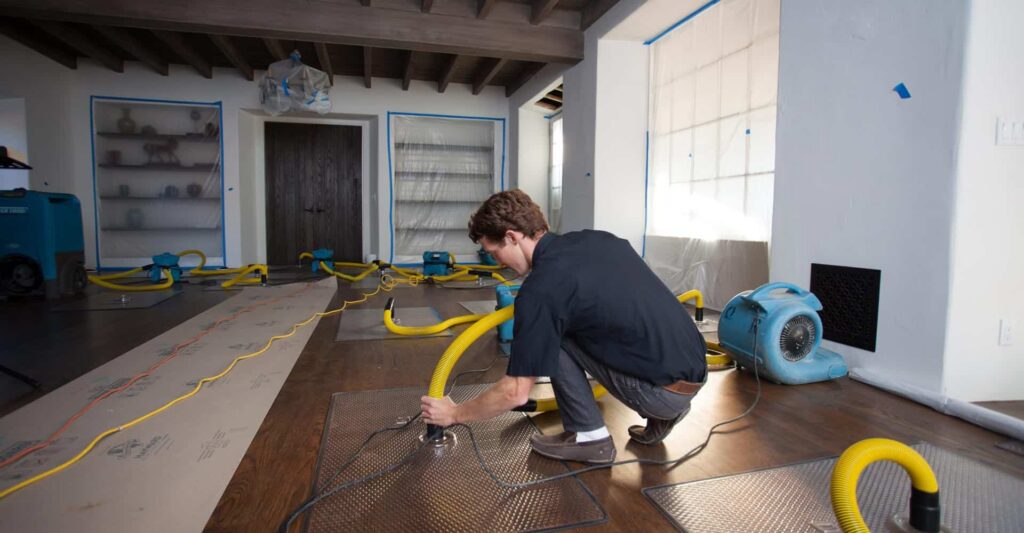
Industrial pumps and air movers remove water and dry materials completely, restoring insulation performance.
Step 3: Repairs and Sealing
Damaged drywall, insulation, and framing are replaced, restoring structural and energy efficiency.
Step 4: Mold Remediation
Cleaning and sanitizing ensure mold doesn’t restrict airflow or worsen air quality.
Step 5: Prevention Guidance
Homeowners receive recommendations to prevent future water issues, protecting both property and energy savings.
Why DIY Cleanup Won’t Restore Efficiency
Many homeowners try to manage water damage with towels or small fans. While this may dry surfaces, hidden moisture remains in insulation and wall cavities.
Without professional drying, these damp spots continue to waste energy-even if the room looks dry. The result? Lingering high utility bills and recurring mold growth.
Long-Term Benefits of Professional Water Restoration
- Lower Utility Bills: Restored insulation and sealed air leaks reduce energy waste.
- Extended HVAC Life: Less strain means fewer repairs and replacements.
- Improved Comfort: Even temperatures throughout the home.
- Healthier Air Quality: Eliminating mold and dampness reduces allergens.
- Higher Home Value: Energy efficiency appeals to buyers and inspectors.
Water damage restoration isn’t just a repair, it’s an investment in your home’s future.
How PuroClean of South Atlanta Helps
At PuroClean of South Atlanta, we understand that water damage has hidden costs beyond repairs. That’s why our restoration services focus on both safety and efficiency.
Our team provides:
- 24/7 emergency water damage response
- Advanced drying and dehumidification
- Full insulation and drywall replacement
- Mold remediation for healthier air
- Energy-saving restoration practices
- Insurance claim assistance to ease the process
We restore not just homes, but also comfort and savings.
Restoring Comfort, Protecting Your Wallet
Water damage is more than an inconvenience, it’s a hidden energy drain. By addressing damp areas quickly and professionally, South Atlanta homeowners can cut utility bills, extend HVAC life, and enjoy healthier indoor air.
If your home has suffered water damage, don’t wait for rising bills to tell the story. Contact PuroClean of South Atlanta for expert water restoration that protects both your property and your budget.