


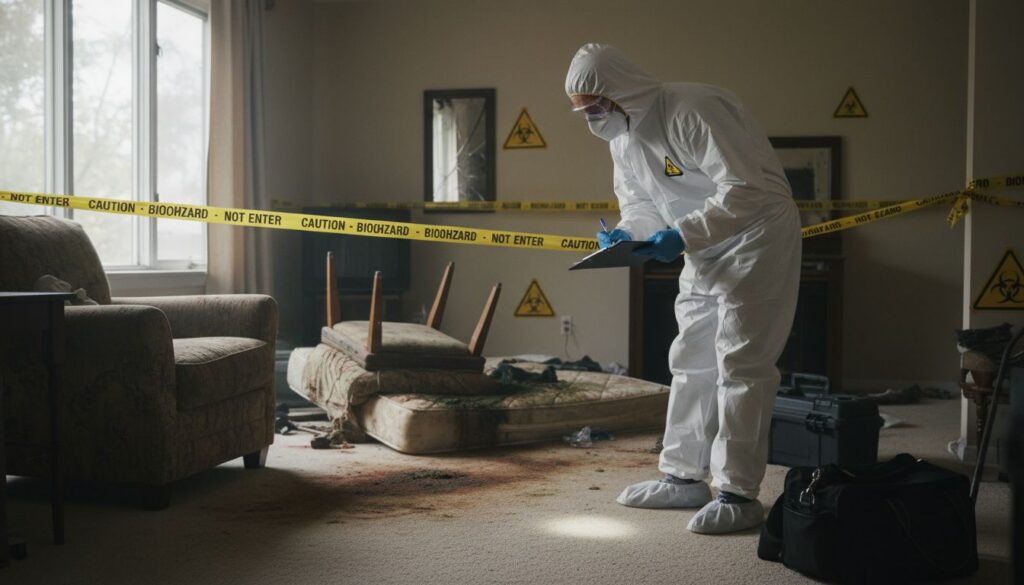
Biohazard Situations Can Occur in Many Different Settings
Biohazard cleanup is often associated with extreme events, but many situations that occur in homes and commercial properties require professional handling. Accidents, medical emergencies, unattended deaths, sewage backups, and trauma related incidents can all leave behind biological contaminants that pose health risks if not properly addressed.
In densely populated areas like Atlanta and Sandy Springs, biohazard situations may occur in apartments, offices, rental properties, or private homes. Even when contamination appears limited, biological materials can spread beyond the immediate area and remain hazardous without proper cleanup.
Why Biohazard Cleanup Requires Specialized Procedures
Biohazard cleanup involves far more than basic cleaning or disinfection. Biological contaminants may contain pathogens that survive on surfaces and within porous materials. Standard household cleaners are not designed to eliminate these risks or prevent cross contamination.
Professional biohazard cleanup follows strict safety procedures that include the use of protective equipment, containment zones, and approved disinfectants. These protocols ensure that contaminants are removed safely without spreading them to unaffected areas.
Contamination Often Extends Beyond Visible Areas
One of the biggest challenges in biohazard situations is that contamination does not stay confined to one location. Fluids can seep into flooring, baseboards, subfloors, and wall cavities. Air movement can also distribute microscopic particles throughout adjacent rooms before cleanup begins.
Biohazard cleanup includes a detailed assessment of how far contamination has spread. Addressing hidden contamination helps ensure the space is fully restored and safe for reentry.

Proper Removal and Disposal Protects Health and Property
Materials affected by biological contamination often need to be removed entirely to eliminate health risks. Carpeting, padding, drywall, insulation, and soft furnishings may absorb contaminants and cannot always be safely cleaned. These materials must be handled and disposed of according to strict regulations.
Biohazard cleanup ensures that contaminated materials are removed, sealed, and transported for disposal in compliance with health and environmental guidelines. This process protects occupants, cleanup personnel, and the surrounding community.
Discretion and Sensitivity Are Essential During Cleanup
Many biohazard situations involve emotionally difficult circumstances. Property owners, tenants, or family members may already be coping with stress, trauma, or loss. Cleanup must be handled with professionalism, discretion, and respect for privacy.
Biohazard cleanup prioritizes restoring safety while minimizing disruption. Maintaining confidentiality and working efficiently allows occupants to focus on recovery rather than the cleanup process itself.
Prompt Cleanup Reduces Health Risks and Liability
Delaying biohazard cleanup allows pathogens to remain active and odors to intensify. Over time, contamination can spread further into building materials, increasing cleanup complexity and potential liability. Exposure risks also increase for anyone entering the space.
For property owners in Atlanta, Sandy Springs, and nearby South Atlanta communities, understanding when biohazard cleanup is necessary helps prevent long term health and property issues. If a space has been affected by a biohazard situation and there are concerns about safety or proper handling, you can contact us to discuss the circumstances, assess risks, and determine the appropriate steps needed to restore the property safely.