


When a pipe bursts in a suite, smoke reaches neighboring units, or mold is discovered behind drywall, every hour affects more than the building. Revenue, tenant confidence, inventory, employee safety, and insurance timelines all start moving at once. This commercial property restoration guide explains what business owners and property managers should do first, what happens during professional restoration, and where fast decisions can prevent a manageable loss from becoming a much larger one.
What commercial restoration actually involves
Commercial restoration is not just cleanup. It is a coordinated process that stabilizes the property, limits secondary damage, documents conditions, and returns the space to safe use as efficiently as possible. The exact scope depends on the cause of loss, but most jobs involve inspection, hazard control, removal of damaged materials when necessary, drying or decontamination, odor treatment, and verification that the space is ready for repairs or re-occupancy.
The biggest difference between residential and commercial losses is complexity. Commercial buildings often have larger footprints, more occupants, shared systems, compliance concerns, sensitive equipment, and stricter downtime costs. A wet break room in an office has one set of priorities. Water reaching server closets, medical suites, retail inventory, or multi-tenant corridors changes the response plan immediately.
The first 24 hours matter most
In commercial losses, delay creates expensive chain reactions. Water migrates into wall cavities, under flooring, and into lower levels. Smoke residues continue to settle and corrode surfaces. Mold can begin growing quickly where moisture remains. Biohazard events require controlled handling and thorough disinfection before anyone should return.
The first priority is safety. If there is an electrical risk, structural instability, sewage contamination, fire damage, or suspected hazardous residue, the area should be isolated until trained professionals assess it. Occupants may want to grab belongings or continue working around the problem, but that can increase risk and contaminate unaffected areas.
The next priority is mitigation. That means stopping the source if possible, protecting unaffected spaces, and beginning emergency measures before damage spreads further. In a commercial setting, mitigation can include shutting off water, boarding openings, extracting standing water, setting containment barriers, initiating drying, or restricting traffic flow through impacted zones.
Documentation should start early. Photos, videos, inventory notes, and a record of when the loss was discovered can support insurance claims and help clarify what was pre-existing versus newly damaged. Good restoration teams document conditions throughout the process so owners and adjusters can track progress instead of guessing.
A practical commercial property restoration guide for common loss types
Water damage and flooding
Water damage is one of the most disruptive commercial losses because it spreads fast and hides well. Visible water is only part of the problem. Moisture can move into baseboards, insulation, subfloors, cabinetry, wall cavities, and adjacent suites.
Professional water restoration usually starts with a moisture inspection and category assessment. Clean water from a supply line is different from gray water from appliances or black water from sewage backup. That distinction affects what can be dried and saved versus what must be removed for health reasons.
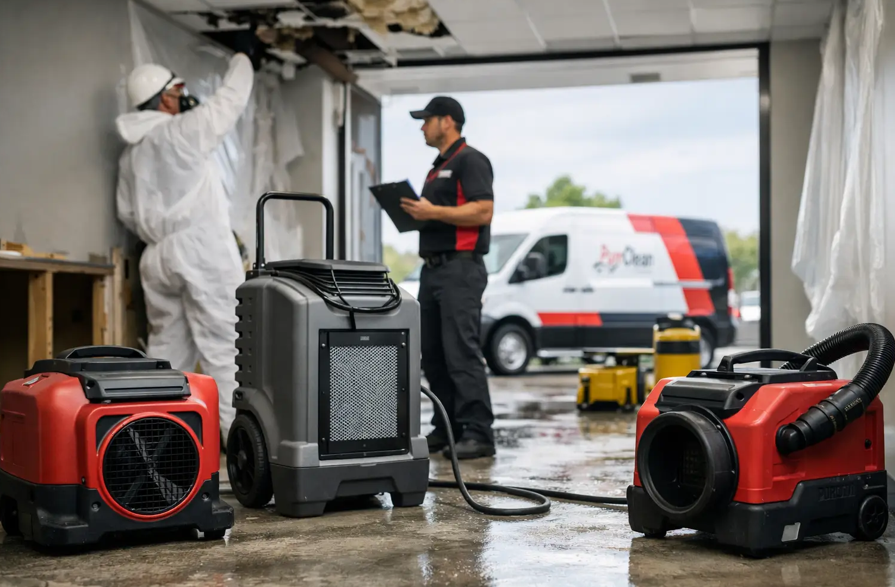
Extraction comes first, then structural drying. Air movers, dehumidifiers, moisture meters, and thermal imaging help technicians dry the property with precision rather than relying on surface appearances. In a commercial building, it may be possible to dry selected zones while keeping parts of the property operational, but that depends on the contamination level, layout, and HVAC impact.
Fire and smoke damage
After a fire, many owners focus on the burned area and underestimate the smoke. Smoke can travel through corridors, HVAC systems, offices, storage rooms, and neighboring tenant spaces. It leaves residues that stain, smell, and damage finishes and electronics over time.
A proper fire restoration plan addresses both direct fire damage and smoke contamination. That can include debris removal, emergency board-up, odor control, residue cleaning, and targeted demolition where materials are no longer salvageable. Some contents can be cleaned and restored, but porous materials exposed to heavy smoke or suppression water may not be recoverable.
Time matters here, too. Acidic residues can continue damaging surfaces after the fire is out. Early cleaning improves salvage potential and shortens the path to repairs.
Mold contamination
Mold is rarely just a surface issue. It usually points to an unresolved moisture source such as a plumbing leak, roof intrusion, humidity imbalance, or past flooding that was not dried fully. In commercial properties, mold can affect indoor air quality, tenant comfort, and in some cases, business operations.
Mold remediation should begin with locating and correcting the moisture source. Cleaning visible growth without fixing the underlying water problem usually leads to repeated contamination. Containment, air filtration, selective demolition, removal of contaminated materials, and detailed cleaning are often needed to prevent spores from spreading into occupied areas.
The trade-off is that aggressive removal may temporarily expand the work area, but partial remediation often causes longer disruptions later. When health concerns or liability issues are involved, thoroughness is the safer path.
Biohazard and trauma-related events
Some commercial losses involve more than structural damage. Sewage backups, unattended deaths, trauma scenes, crime scene residue, and hazardous drug contamination require specialized response. These are not maintenance issues and should not be handled by untrained staff.
Biohazard restoration focuses on safe removal, cleaning, disinfection, deodorization, and lawful disposal of affected materials. It also requires proper personal protective equipment, controlled access, and EPA-registered disinfectants used according to protocol. In these situations, discretion matters as much as technical skill. Property owners need a team that can protect health, preserve professionalism, and move the site back toward safe use without creating more exposure.
What a professional restoration process should look like
A reliable restoration response is structured, not improvised. First comes the site assessment. Technicians identify the source, the extent of damage, immediate hazards, and what can be stabilized right away. They should explain what they are seeing in plain language, because most owners and managers are making decisions under pressure.
Next comes containment and mitigation. Depending on the loss, this may involve shutting down affected systems, isolating work zones, setting up negative air, removing standing water, or securing the property. The goal is to stop the problem from growing while preserving as much of the building and contents as possible.
Then comes restoration work itself. That can include drying, cleaning, demolition of unsalvageable materials, disinfecting, deodorization, and content handling. Some jobs move quickly. Others require phased work so parts of the building can reopen while deeper restoration continues elsewhere.
Finally, there is monitoring and communication. Moisture readings, equipment checks, photo documentation, and insurance coordination help keep the project accountable. A commercial client should never be left wondering whether the building is actually getting drier, cleaner, or safer.
How to reduce downtime during restoration
Downtime is often the highest hidden cost in a commercial loss. Rent interruptions, lost appointments, canceled production, displaced staff, and reputational impact can exceed the cost of physical damage.
The right restoration plan considers operations from the start. In some properties, work can be staged after hours or separated by containment so unaffected departments remain open. In others, temporary relocation of people or inventory is the safer option. There is no single best answer. It depends on the contamination level, occupancy type, HVAC design, and whether customers or patients are entering the space.
This is where experienced commercial restoration teams add value. They do not just ask how to dry the building. They ask how the property functions and what must be protected first. For a retail space, that might be inventory and customer access. For an office, it may be records, electronics, and conference areas. For a multi-tenant building, it may be common areas and preventing spread into adjacent suites.
Choosing the right restoration partner
A commercial loss is not the time to guess whether a vendor can handle scale, documentation, and health-related risks. Look for trained technicians, 24/7 emergency availability, commercial-grade drying and cleaning equipment, and clear experience with the type of loss you are facing.
Ask how they document moisture, contamination, and progress. Ask how they handle tenant communication, after-hours work, and insurance coordination. Ask whether they can address specialized issues such as mold, sewage, smoke, or biohazards in-house. A provider that can manage multiple restoration needs under one process often reduces confusion and shortens recovery time.
For business owners and property managers in Las Vegas and nearby communities, this is especially relevant during sudden plumbing failures, storm-related intrusion, HVAC issues, and high-heat conditions that can worsen moisture and odor problems quickly.
Preventing the next loss
No building is risk-free, but many major losses start with small failures that were easy to miss. Preventive inspections, leak detection, HVAC maintenance, roof checks, and a clear emergency response plan all reduce exposure. So does knowing who to call before an emergency happens.
A written response plan should identify shutdown points, vendor contacts, tenant notification steps, and documentation responsibilities. That kind of preparation may feel secondary on a calm day, but it becomes extremely valuable when decisions have to be made fast.
When damage hits a commercial property, the goal is not just to clean up what is visible. It is to protect people, reduce interruptions, and restore confidence in the space. The right response brings order to a chaotic situation – and that starts with acting early, asking the right questions, and working with a team that knows how to move a property from disruption back to operation.
#purocleanofthebigisland