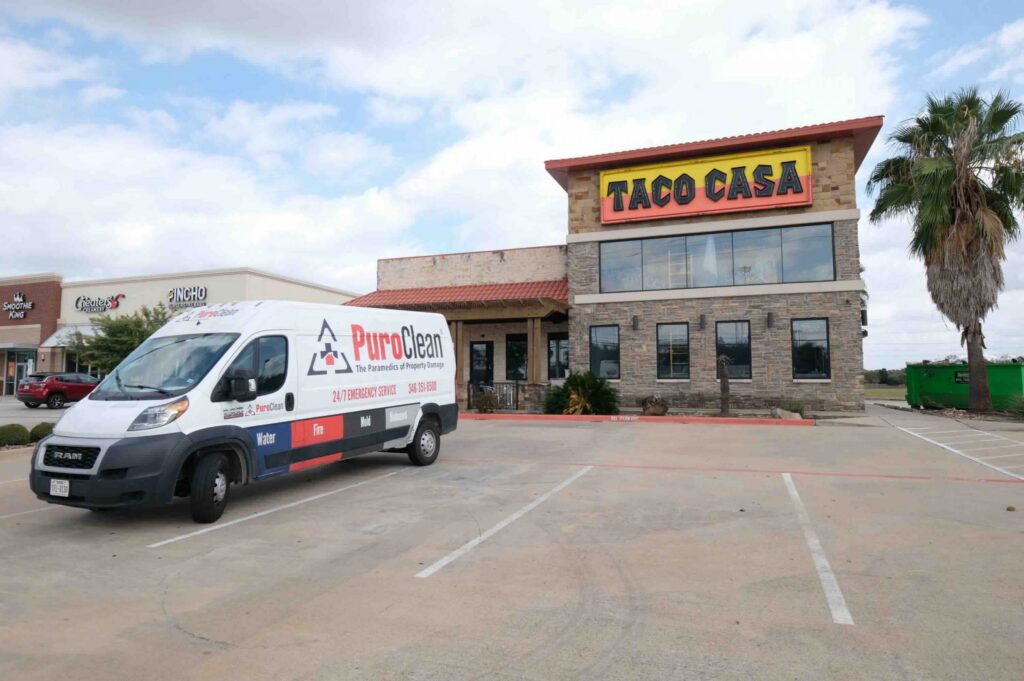
When Taco Casa reached out to PuroClean of Sugarland South for a commercial mold remediation project, the initial estimate—based on LoneStar Mold Testing’s protocol—projected a 13-day timeline. But once our team opened the walls and began investigating the moisture sources, it became clear that the true scope was far more extensive. Hidden humidity pockets, HVAC imbalance, exterior moisture intrusion, and a newly discovered roof leak quickly transformed this into a multi-layered project requiring additional resources, approvals, and protocol revisions.
To help property owners understand what goes into a job of this scale, we’ve included our educational breakdown video, Houston Mold Remediation: Step-by-Step Guide Every Homeowner Needs (insert your link here), and stay tuned—we also filmed an in-progress project video showing our team in action during this Taco Casa remediation.

Early Findings: HVAC Imbalance & Widespread Humidity Issues
From the first assessment, our team found that the HVAC system was unbalanced at Taco Casa—some rooms were significantly warmer, creating pockets of high humidity ideal for mold growth. The restroom and maintenance closet showed the most advanced contamination, so immediate containment was installed to isolate affected zones. Per LoneStar’s protocol, air scrubbers were placed in each room to establish negative pressure and prevent cross-contamination during demolition.
But as soon as demolition began, mold growth was found far beyond the originally identified areas. Even more concerning, active moisture was entering the building from multiple exterior sources.
Amending Protocol
Midway through demolition, the team uncovered a roof leak allowing continuous moisture penetration. This required the project to pause until the landlord’s roofing vendor completed repairs.
Further inspection revealed moisture intrusion behind portions of the dining room walls. These structural issues were not part of the initial assessment, so the hygienist amended the protocol and submitted state updates before work could continue.
1. Double the Mold
Demolition revealed more than double the anticipated mold contamination—over 150 square feet. This exceeded the state threshold, so the hygienist filed revised notifications and adjusted the removal plan, which added time to the project as well.
2. Expanded Remediation
The areas below were amended
- Standing/ordering area
- Both restrooms
- Janitor’s closet
- Sections of the dining room
- Multiple interior walls
Containment zones were expanded, and cleaning and verification procedures were updated accordingly.
3. No Mold Found Behind FRP Panels
A positive finding—FRP (fiberglass reinforced polymer) panels were clean behind the walls, allowing the team to focus efforts on confirmed contaminated areas.
4. HVAC Removal & Protocol Revision
Because HVAC imbalance contributed significantly to mold growth, the system required:
- Vendor removal of HVAC components
- Inspection and cleaning
- Added direction in the revised protocol
Reconstruction could not begin until HVAC work was completed to prevent future moisture issues.
5. Roof Leak Added to the Scope
The newly discovered leak required landlord intervention before encapsulation or reconstruction could proceed. The hygienist added this moisture source to the official protocol.
6. Moisture Penetration in Dining Room Walls
Opening additional walls exposed active moisture entering from the exterior. This required expanded demolition, cleaning, and moisture correction.
7. Additional Containment & Equipment
Due to the increased scope:
- Additional containment was installed
- Negative pressure was recalibrated
- Extra air scrubbers were added
- Equipment remained onsite longer
- Air change rates were increased per hygienist direction
These adjustments ensured safe working conditions and prevented airborne mold from spreading during remediation.
Passing Clearance & Final Documentation
After thorough demolition, HEPA cleaning, fogging, and encapsulation, LoneStar Mold Testing performed final swab tests, air samples, and a full visual inspection. All containment zones passed clearance.
PuroClean and the hygienist then completed and signed the CMDR (Certificate of Mold Damage Remediation), verifying Taco Casa was restored to safe conditions and ready for reconstruction.
Conclusion
What began as a straightforward 13-day mold remediation project evolved into a complex operation involving structural discovery, external moisture corrections, roof repair, HVAC remediation, and multiple protocol updates. Through every phase, PuroClean of Sugarland South worked collaboratively with LoneStar Mold Testing, the landlord, and the HVAC vendor to uphold the highest safety and compliance standards.
The project was completed successfully—removing contamination, correcting moisture issues, and preparing Taco Casa for safe reconstruction and reopening.
For more information on Mold Remediation Services, call (281) 916-2002
Visit the PuroClean of Sugarland South website for mold, water, and commercial restoration resources.