Water Damage Restoration Cost in Houston: 2026 Pricing Guide
Water damage restoration in Houston commonly costs about $1,000 to $7,000 for a limited or moderately sized residential loss. Severe, contaminated, structural, or multi-room damage may cost $7,000 to $15,000 or more. National consumer-pricing data published in 2026 places the average water damage restoration project at approximately $3,868, with reported projects ranging from $450 to $16,000.[1][2]
The final price depends on the water source, contamination level, affected square footage, materials involved, accessibility, required drying equipment, contents handling, demolition, and reconstruction. Commercial and large-loss projects require a property-specific estimate.
Last reviewed: August 24, 2026
Houston water damage cost summary
- Typical national average: Approximately $3,868
- Reported national range: Approximately $450–$16,000
- Common Houston residential planning range: Approximately $1,000–$7,000
- Severe or widespread Houston losses: Approximately $7,000–$15,000+
- Commercial and large losses: Property-specific estimate
- Primary cost factors: Water category, affected area, materials, drying time, demolition, contents and reconstruction
The Houston figures are planning ranges, not a fixed price list or guarantee. An onsite inspection is required to prepare a project-specific estimate.
How Much Does Water Damage Restoration Cost in Houston?
Many Houston residential water damage projects fall between approximately $1,000 and $7,000. A limited clean-water loss confined to one accessible area may remain near the lower end of that range. A multi-room loss involving saturated drywall, flooring, cabinets, insulation, or concealed structural moisture will generally cost more.
Severe projects may exceed $7,000 to $15,000 when they involve sewage, exterior floodwater, widespread saturation, mold growth, damaged contents, demolition, or reconstruction. Large commercial losses can cost substantially more because they may require additional technicians, high-capacity equipment, containment, after-hours work, tenant coordination, and phased restoration.
The most reliable estimate begins with an inspection. The restoration team must identify the source, measure the affected area, map concealed moisture, evaluate contamination, and determine which materials can be dried instead of replaced. Learn more about the complete water damage restoration process in Houston.
2026 National Water Damage Restoration Cost Benchmarks
Current consumer-pricing publications provide a useful national baseline, but they should not be treated as a quote for a particular Houston property. Local labor, building construction, contamination, accessibility, and reconstruction requirements can all change the final price.
| Source | Published Average | Published Range | Important Context |
|---|---|---|---|
| Angi, 2026[1] | Approximately $3,868 | $450–$16,000 | Price varies according to the affected area, water type, saturation and repairs. |
| HomeAdvisor, 2026[2] | Approximately $3,868 | $1,383–$6,369 for many projects; broader reported range of $450–$16,000 | The affected area, water source and damaged materials influence the total. |
These figures are national consumer benchmarks rather than a Houston-specific price index. They also combine projects with very different scopes. A small supply-line leak and a contaminated multi-room flood should not be expected to cost the same simply because they affect similar square footage.
2026 Houston Water Damage Restoration Planning Ranges
| Loss Level | Planning Range | Possible Scope |
|---|---|---|
| Minor localized loss | $1,000–$3,000 | A limited clean-water incident involving extraction, moisture measurements, air movement and dehumidification. |
| Moderate residential loss | $3,000–$7,000 | Multiple rooms or affected drywall, flooring, baseboards, cabinets, insulation or concealed spaces. |
| Severe or widespread loss | $7,000–$15,000+ | Extensive saturation, contaminated water, demolition, contents handling, prolonged drying or structural repairs. |
| Commercial or large loss | Property-specific estimate | Large buildings, multiple units, specialized equipment, extensive documentation or phased restoration. |
These ranges are intended for preliminary planning. They are not quotes, guarantees, insurance-coverage determinations, or universal prices.
How Much Does Water Damage Restoration Cost per Square Foot?
National consumer data places water damage restoration at approximately $3 to $7.50 per affected square foot, with cost increasing as contamination and restoration complexity increase.[1] HomeAdvisor publishes a similar approximate range of $3.50 to $7.50 per square foot.[2]
Square-foot pricing should be used cautiously. It may help with early planning, but it does not account for every project variable. Two 500-square-foot losses can have substantially different costs when one involves a recent clean-water supply-line break and the other involves sewage that has saturated drywall, flooring and cabinets.
A complete estimate may also include services that are not accurately represented by affected square footage, such as emergency mobilization, contents handling, containment, specialized equipment, demolition, disposal and reconstruction.
What Does a Water Damage Restoration Estimate Include?
Water damage restoration involves more than removing visible standing water. Moisture can migrate beneath flooring, behind baseboards, inside wall cavities, through insulation and underneath cabinets. A professional scope may include several stages.
Emergency inspection and damage assessment
The restoration team identifies the apparent source, checks for safety hazards, documents visible conditions and determines which areas require further inspection.
Water extraction
Standing water is removed with pumps, extraction units and specialized attachments. The volume of water, affected flooring and accessibility influence the labor and equipment required. Properties with active flooding may need immediate emergency water extraction in Houston.
Moisture detection and mapping
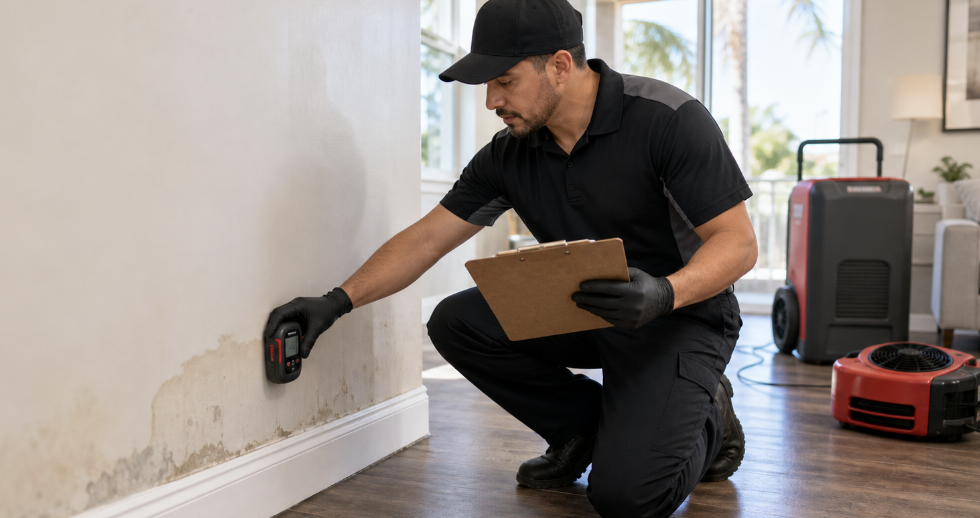
Moisture meters, thermal imaging and targeted inspection methods help identify water beneath flooring, behind walls, in ceilings and inside cabinets. Professional moisture mapping in Houston can help establish the actual boundaries of a loss.
Structural drying and dehumidification
After extraction, air movers and dehumidifiers remove moisture from the structure and surrounding air. Equipment quantity and drying time depend on saturation, material type, temperature, humidity and airflow.
The U.S. Environmental Protection Agency recommends drying water-damaged materials within 24 to 48 hours when possible to help prevent mold growth.[3] PuroClean provides professional water extraction and dehumidification in Houston.
Cleaning and sanitization
Affected surfaces may require cleaning, sanitizing or other treatment based on the water source and materials involved. Contaminated water generally requires greater protection, containment and disposal controls.
Material removal
Drywall, insulation, padding, flooring, trim and cabinets may need to be removed when they cannot be dried or safely restored. Selective removal can also be necessary to reach concealed wet areas.
Contents handling
Furniture, documents, electronics, clothing, inventory and other belongings may require evaluation, cleaning, drying, relocation, storage or disposal. PuroClean offers contents cleaning after water damage in Houston.
Repairs and reconstruction
Mitigation stabilizes and dries the property. Reconstruction returns damaged areas to their pre-loss condition. Repairs may include insulation, drywall, painting, flooring, cabinets, trim or more extensive structural work.
How Water Categories Affect Restoration Cost
Professional water damage restoration follows established industry principles addressing water source, contamination, material science, drying technology, equipment and documentation. The ANSI/IICRC S500 is the principal professional standard for water damage restoration.[4]
| Category | General Description | Possible Cost Effect |
|---|---|---|
| Category 1 | Water originating from a sanitary source, such as a recent supply-line release. | Often less expensive when addressed promptly because more materials may remain salvageable. |
| Category 2 | Water containing a meaningful level of contamination, such as certain appliance discharges. | May require additional cleaning, protective equipment, material evaluation and removal. |
| Category 3 | Heavily contaminated water, including sewage and many exterior floodwater incidents. | Generally requires the most extensive containment, removal, cleaning, disposal and documentation. |
Water conditions can deteriorate over time or change as contamination spreads. Property owners should avoid contact with sewage or exterior floodwater and should not assume water is safe based on appearance. Houston properties affected by rising or exterior water may require specialized flood damage cleanup.
How Affected Materials Change the Price
Two properties with similar amounts of water can have different restoration costs because building materials respond differently to moisture.
Drywall and insulation
Drywall can wick water above the visible waterline, while insulation may trap moisture inside walls. Limited clean-water exposure may sometimes be dried, but prolonged saturation or contamination can require removal.
Carpet and padding
Carpet may be recoverable under some clean-water conditions. Padding can be more difficult to dry in place and may require replacement. Contamination, delamination and prolonged exposure also affect salvageability.
Hardwood, laminate and engineered flooring
Wood-based flooring can cup, crown, swell, buckle or separate after absorbing water. The result depends on the material, installation method, saturation and moisture trapped beneath the floor.
Tile and subflooring
Tile may resist water, but moisture can migrate through grout or beneath the installation into the subfloor. Specialized inspection may be necessary to determine whether concealed materials are wet.
Cabinets and vanities
Cabinet boxes, backs and toe kicks may conceal moisture. Composite materials can swell or delaminate, while drying salvageable cabinets may require directed airflow or specialized access.
Personal and commercial contents
Furniture, documents, electronics, merchandise and other contents may require cleaning, pack-out, storage or disposal. Contents work can materially change the total project scope.
Cost Factors by Type of Water-Loss Incident
Burst or leaking pipes
A plumbing loss may remain limited when discovered quickly. A concealed or unattended leak can spread through walls, floors, cabinets and multiple rooms. Costs increase when access requires opening walls, removing cabinets or drying multiple levels.
Roof leaks and wind-driven rain
Roof-related intrusion can affect ceilings, attic insulation, walls, flooring and electrical fixtures. Restoration costs are normally separate from repairing the roof or exterior opening. Learn more about roof-leak water damage restoration in Houston.
Appliance and water-heater failures
Washing machines, dishwashers, refrigerators and water heaters can release substantial amounts of water. The cost depends on how quickly the supply is stopped, whether water traveled beneath flooring or cabinets, and whether the discharge contained contaminants.
Storm and exterior flooding
Stormwater and rising floodwater can affect large areas and introduce contaminants. The scope may include extraction, porous-material removal, structural drying, cleaning, contents handling, odor control and reconstruction.
Fire-suppression water
Sprinklers and firefighting efforts may create simultaneous water, smoke, soot and fire damage. These incidents require a coordinated restoration plan rather than treating the water as an isolated problem.
Commercial water losses
Commercial pricing may reflect larger floor areas, sensitive equipment, inventory, multiple tenants, high-capacity drying equipment and business-continuity requirements. See commercial water damage restoration in Houston.
Why Water Damage Restoration Costs Vary in Houston
Humidity and drying conditions
Houston’s humid climate can complicate structural drying because the surrounding air may already contain substantial moisture. Controlled air movement, dehumidification and ongoing moisture measurements help create effective drying conditions.
Slab foundations
Water can travel underneath flooring, walls, cabinets and baseboards without remaining visible. Laminate, engineered wood and carpet padding may conceal moisture after standing water is removed.
Multi-story migration
Water released from an upper-level bathroom, appliance, pipe or roof opening may affect ceilings, walls, insulation and flooring on lower levels. These losses often require more inspection, equipment and repair work than a one-room incident.
Storm and hurricane exposure
Houston storms can produce roof damage, wind-driven rain, exterior flooding, power interruptions and widespread restoration demand. Temporary stabilization and contents handling may become part of the project.
Property access and occupancy
Apartments, offices, retail centers, medical facilities and industrial properties may require containment, phased work and coordination around occupants or business operations. PuroClean also provides apartment water damage restoration in Houston.
Does Insurance Cover Water Damage Restoration in Houston?
Texas homeowners and renters policies commonly cover sudden and accidental water damage, but coverage depends on the policy and cause of loss. The Texas Department of Insurance lists burst pipes, toilet overflows and broken washer hoses as examples of sudden incidents that may be covered. Gradual leaks and seepage are commonly excluded.[5]
Sudden and accidental damage
A burst supply line or sudden appliance-hose failure may qualify for coverage. The resulting damage may be covered even when the failed plumbing component or appliance itself is not.
Gradual leaks
Damage developing over weeks or months may be treated differently. Insurers may consider when the problem began, when it became visible and whether the owner took reasonable steps to prevent additional damage. When the source is unclear, professional water-leak detection in Houston can help document concealed moisture.
Exterior flooding
Most homeowners insurance does not cover rising exterior floodwater. Separate flood insurance is usually necessary. The National Flood Insurance Program confirms that most homeowners insurance does not cover flood damage.[6]
Steps that may support a claim
- Report the loss promptly.
- Photograph visible damage when it is safe.
- Take reasonable steps to prevent additional damage.
- Keep receipts for emergency expenses.
- Preserve damaged materials until the insurer provides direction, unless they create a safety hazard.
- Keep estimates, photographs, moisture records, invoices and restoration documents.
PuroClean can document restoration work and communicate with insurance professionals when appropriate. The insurance carrier—not the restoration contractor—determines coverage, deductibles, limits and claim payments.
Commercial Water Damage Restoration Costs in Houston
Commercial projects require property-specific estimates because buildings vary in size, construction, occupancy and operational needs.
A commercial estimate may account for:
- Affected square footage and number of floors
- Water category and contamination
- Extraction and drying-equipment capacity
- Emergency or after-hours response
- Employee, tenant, patient and customer safety
- Inventory, electronics, machinery and documents
- Containment and air-quality controls
- Equipment staging and building access
- Demolition, disposal and reconstruction
- Phased work intended to reduce downtime
- Insurance and property-management documentation
For offices, warehouses, restaurants, retail properties, hotels, apartments, medical buildings and industrial facilities, visit our Houston commercial water damage restoration page.
How to Limit Additional Damage and Restoration Costs
- Protect people first. Avoid standing water when electricity, sewage, chemicals or structural instability may be present.
- Stop the source when safe. Shut off an accessible fixture valve or the main water supply when the source is inside the property.
- Begin extraction promptly. Standing water can migrate into adjacent rooms and concealed materials.
- Document conditions. Photograph the apparent source, affected rooms and damaged belongings.
- Avoid unsafe drying methods. Household fans can spread contamination when sewage or mold is present.
- Follow the drying plan. Moving or switching off equipment can interrupt drying and leave concealed moisture behind.
- Contact the insurer. Prompt reporting may help clarify emergency mitigation and documentation requirements.
EPA guidance emphasizes drying wet materials within 24 to 48 hours when possible.[3] This does not mean every structure will be completely dry within 48 hours; it means mitigation should begin promptly to reduce the conditions that support mold growth.
How PuroClean Prepares a Water Damage Restoration Estimate
- Initial assessment: Review the source, timing, visible damage, occupancy and safety concerns.
- Moisture inspection: Measure affected materials and determine how far moisture traveled.
- Water classification: Evaluate the source and potential contamination.
- Salvageability decisions: Determine which materials can be dried and which require removal.
- Equipment planning: Calculate extraction, air movement, dehumidification and filtration requirements.
- Scope development: Document labor, equipment, cleaning, demolition, contents work and repairs.
- Monitoring: Track moisture conditions and adjust the drying plan when necessary.
The scope may change if previously concealed moisture or damage is discovered after mitigation begins.
Frequently Asked Questions
What is the average cost of water damage restoration in Houston?
Many Houston residential projects fall between approximately $1,000 and $7,000. National consumer-pricing sources report an average of approximately $3,868, but individual projects range much lower or higher depending on their scope.[1][2]
How much does it cost to dry one room?
The cost depends on room size, water category, affected materials, equipment requirements and whether flooring, drywall, cabinets or insulation must be removed. An inspection is needed to define the drying area.
Is water damage restoration priced per square foot?
Square footage may be used as one estimating component. Current consumer data suggests approximately $3 to $7.50 per affected square foot, but contamination, materials, equipment and reconstruction can substantially change the total.[1]
Does emergency service cost more?
After-hours, weekend or holiday response may affect mobilization and labor costs. However, delaying extraction can allow moisture to spread and increase the final scope.
How long does structural drying take?
Drying time depends on saturation, materials, humidity, temperature, airflow and equipment capacity. Moisture readings should determine completion rather than an arbitrary number of days.
Does homeowners insurance cover water damage?
Policies commonly cover sudden and accidental water damage but may exclude gradual leaks, seepage and maintenance-related problems. Coverage is determined by the policy and insurer.[5]
Does homeowners insurance cover flooding?
Most homeowners insurance does not cover rising exterior floodwater. Separate flood insurance is generally required.[6]
Will insurance cover mold after water damage?
Coverage depends on the original water source, policy language and applicable mold limits. Mold resulting from a covered sudden loss may be treated differently from mold caused by gradual seepage or flooding.[5]
Can PuroClean estimate commercial water damage?
Yes. Commercial estimates consider the building, affected area, water category, equipment, contents, business operations, documentation and necessary repairs.
How can I request an estimate?
Call PuroClean of Central Southwest Houston at (832) 856-5900 to discuss the loss and arrange the appropriate next step.
Request Water Damage Restoration Help in Houston
PuroClean provides water extraction, structural drying, dehumidification, moisture mapping, cleaning, contents handling and restoration for Houston homes and businesses. If water is actively spreading or contaminated, avoid the affected area and request professional assistance promptly.
References
- Angi. “How Much Does Water Damage Restoration Cost? 2026 Data.” Updated August 3, 2026. National consumer-pricing estimates, reported project range and cost factors. ↩
- HomeAdvisor. “How Much Does Water Damage Restoration Cost?” Updated June 17, 2026. National average, typical range and per-square-foot consumer benchmarks. ↩
- U.S. Environmental Protection Agency. “Water Damage—Cleanup and Mold Prevention.” Guidance for responding to clean-water damage within 24 to 48 hours. ↩
- Institute of Inspection, Cleaning and Restoration Certification. “S500 Standard for Professional Water Damage Restoration.” Overview of professional restoration principles, drying technology, equipment, building science and contamination considerations. ↩
- Texas Department of Insurance. “Unexpected Indoor Waterfall? Home or Renters Insurance Might Help.” January 29, 2026. Texas guidance concerning sudden water damage, gradual leaks, mold and flood exclusions. ↩
- National Flood Insurance Program. “Flood Insurance Eligibility.” Guidance explaining that most homeowners insurance does not cover flood damage. ↩
Editorial note: Consumer-pricing sources provide national estimates rather than guaranteed Houston prices. Insurance information is general educational material and is not a coverage determination. Property owners should review their policies with their insurer or licensed insurance professional.