


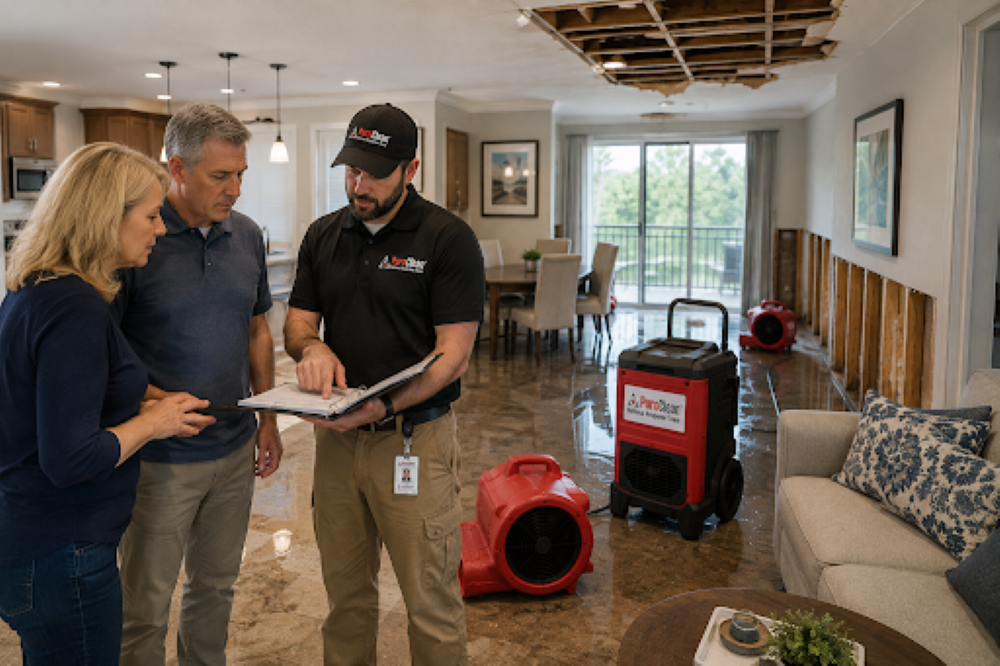
Avoid Costly Delays When Condo Damage Strikes
When a condo has water, fire, or mold damage, things can get stressful fast. A pipe bursts in one unit, water seeps through ceilings and walls, and now several neighbors are upset and confused. People are asking who pays, who is allowed into the unit, and who is supposed to approve the restoration work.
When everyone has to stop and argue over responsibilities, the damage keeps spreading. Drywall soaks up water, mold may start to grow, and smoke odor can settle in deeper. Understanding how your condo association and unit owners split responsibilities before anything happens can save time, money, and a lot of frustration.
In this article, we explain how insurance usually works for condos, how emergency access to units is handled, who approves what during property damage restoration, and how a professional team can keep a multi-unit loss from turning into chaos. Late summer storms, wind-driven rain, and heavy downpours in Michigan can hit quickly, so clear roles matter even more when the weather turns rough.
How Condo Governing Documents Define Who Pays
Every condo community is guided by a stack of documents. They may look boring, but they decide a lot during a property damage restoration event.
Common documents include:
- Master deed
- Bylaws
- Covenants, Conditions & Restrictions (CC&Rs)
- HOA rules and regulations
These spell out what the condo considers:
- Common elements, like roofs, exterior walls, hallways, lobbies, stairwells, and shared mechanical systems
- Limited common elements, such as balconies, patios, or sometimes windows and doors that serve one unit but are still controlled by the association
- Unit interiors, usually the space inside your walls where your finishes and fixtures live
A basic rule of thumb is that the condo association’s master policy usually covers common elements and the building structure. The unit owner’s HO-6 condo policy usually covers interior finishes, personal belongings, and loss of use if you cannot live in your home during repairs.
The tricky part is the gray areas. For example:
- Plumbing lines that run through shared walls but only serve one unit
- Windows and exterior doors that belong to one unit but may be defined as common or limited common elements
- HVAC or electrical systems that serve more than one unit
The answer is rarely the same from one community to the next. The exact wording in your condo documents controls who is responsible and which insurance policy is expected to respond. That is why we always suggest that both board members and unit owners in Howell and the metro Detroit area review those documents with an insurance professional before a loss happens.
Master Policies vs. HO-6: Sorting Out Insurance Coverage
Not all condo master policies are written the same way. Knowing what kind your building carries helps everyone understand what they are expected to maintain and insure.
Common types of master policies include:
- Bare walls, often covers the basic structure but stops at the drywall or studs, leaving interior finishes to the owner
- Single entity, may cover standard original fixtures like builder-grade cabinets and flooring, but not owner upgrades
- All-in, often covers most interior fixtures as originally built, leaving mainly personal property and upgrades to the owner
A unit owner’s HO-6 policy is usually designed to help with:
- Interior finishes like upgraded cabinets, flooring, countertops, and built-ins
- Fixtures such as lighting or plumbing upgrades inside the unit
- Personal belongings, including clothing, furniture, decor, and electronics
- Loss of use if you need temporary housing while repairs are done
- Sometimes loss assessment coverage, which can help if the HOA master policy has a large deductible that gets shared with owners
In real life, a single event often triggers more than one claim. Water from a supply line in one unit might damage that interior, the hallway outside, and the unit below. The master policy may help with the common hallway and shared systems, while one or more HO-6 policies may respond to damaged interiors and belongings.
A professional property damage restoration provider should carefully document which areas belong to which party. At PuroClean of Howell, we coordinate with insurers and unit owners by:
- Mapping damage by unit and by common area
- Photographing and noting finishes, fixtures, and structural components
- Preparing clear reports that separate likely HOA responsibilities from owner responsibilities
This helps all carriers process their part of the claim more smoothly, which usually gets repairs moving faster.
Emergency Access, Approvals, and Multi-Unit Coordination
When water is actively pouring into a unit or smoke is spreading through a hallway, minutes matter. Most condo documents give the HOA or property manager the right to enter a unit during a true emergency to protect people and property. That may include situations like:
- Water running from a broken pipe, overflowing appliance, or fire sprinkler
- A fire or heavy smoke condition
- Serious health or safety hazards that threaten nearby units
Outside of an emergency, entry is usually more limited and must follow notice rules, which are set in the bylaws and local laws. Boards should work with their legal and insurance partners to set:
- Clear emergency entry policies
- Updated key or access procedures, especially in buildings with electronic locks or key fobs
- Simple communication scripts to explain why and when emergency entry may occur
Once the immediate danger is under control, the approval process for restoration begins. In general:
- The HOA signs contracts for work on common elements or building systems
- The unit owner signs for work inside their unit, especially for finishes and personal property items
- Pre-approved vendors that are already known to the board and manager can respond faster, without waiting for long decision chains in the middle of a crisis
Quick decisions do more than keep people comfortable. They also reduce secondary damage, such as:
- Mold growth after water events
- Smoke and soot spreading deeper into walls and ductwork
- Odors becoming harder to remove over time
Organizing multi-unit property damage restoration is a team effort. A capable restoration company should:
- Triage the scene to stop active water, secure the area after fire, or contain mold
- Create separate files and documentation for each affected unit plus any common areas
- Keep the board, property manager, and impacted residents all informed in plain language
- Help plan reconstruction steps so finishes can be restored with as little repeat disruption as possible
In the greater Howell and metro Detroit area, we often see upper-floor leaks affecting several levels below, kitchen fires that send smoke into corridors, and wind-driven rain that leads to exterior and window leaks. Clear coordination keeps these events from turning into long, confusing disputes.
Build a Clear Plan Before the Next Emergency
The best time to sort out condo responsibilities is long before the next storm, pipe break, or electrical issue. Boards and unit owners can work together by:
- Reviewing master deeds, bylaws, and CC&Rs with an insurance professional
- Checking that both the master policy and HO-6 policies reflect how the documents define units and common elements
- Updating emergency entry and vendor policies so everyone understands how decisions will be made
Some communities find it helpful to form a small “emergency and restoration” committee that includes board members, the property manager, and at least one unit owner. This group can:
- Keep policies and contact lists current
- Recommend preferred vendors for water, fire, mold, biohazard, and reconstruction services
- Help communicate clear steps to neighbors when an incident affects multiple units
A thoughtful plan protects both the association and individual owners. It also helps your restoration team work faster and with fewer surprises when every minute counts.
Frequently Asked Questions About Condo Restoration
Who Pays for Property Damage Restoration in a Condo?
Typically, the HOA’s master policy covers common elements and structural components, while the unit owner’s HO-6 policy covers interior finishes and personal belongings. The exact split depends on your governing documents and how your insurance policies are written.
Can the HOA Enter My Condo Without My Permission During an Emergency?
Most condo documents allow the HOA or property manager to enter a unit without prior consent in genuine emergencies to protect people or property, such as stopping active water flow or addressing immediate fire or safety hazards. The details are defined in your bylaws and local laws.
Should You Call Insurance or the HOA First After Damage?
If there is an active emergency, call 911 if needed and then contact a professional property damage restoration company right away. Next, notify both your HOA or property manager and your own insurance carrier so they can help determine which policy applies and how claims should be filed.
What Can I Do Now to Avoid Disputes If Damage Affects My Unit Later?
Review your condo documents and your HO-6 policy, ask your insurance agent to explain any gaps, and keep written records of upgrades you have made. You can also encourage your HOA to adopt clear emergency and restoration procedures and to designate preferred vendors in advance.
How Does PuroClean of Howell Work with Both HOAs and Unit Owners?
PuroClean of Howell coordinates with boards, property managers, and individual owners by documenting damage carefully, explaining what likely falls under each party’s responsibility, and providing detailed reports for insurance carriers. This helps keep everyone aligned and the property damage restoration process moving efficiently.
Restore Your Property With Trusted Local Experts Today
When water, fire, or mold disrupts your home or business, our team at PuroClean of Howell is ready to help you recover quickly and safely. Learn how our proven property damage restoration services can limit losses, protect your belongings, and get your space back to normal. If you are facing an urgent situation or simply have questions about next steps, contact us today so we can assess your needs and provide a clear plan of action.