


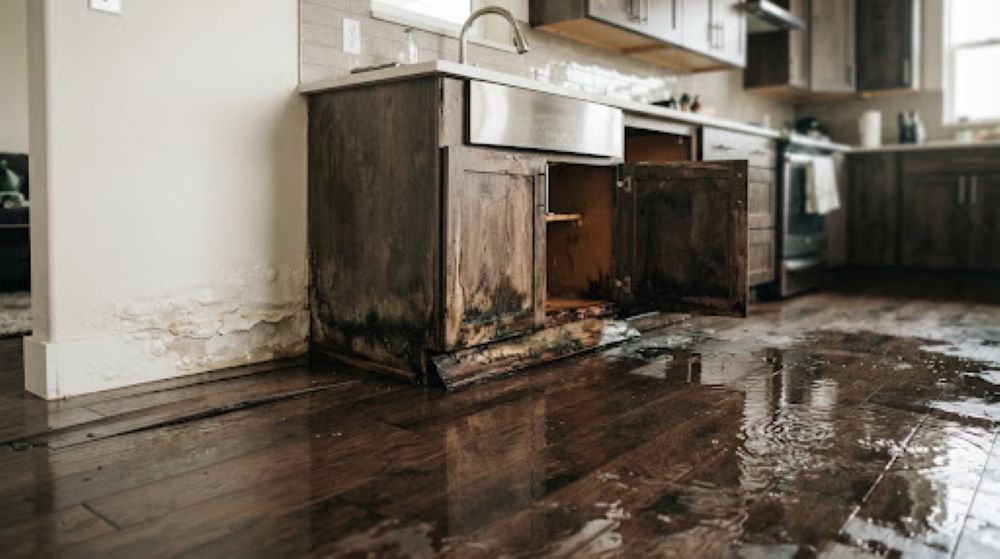
Water in the kitchen can throw your whole day off. A leak around the sink, fridge, or dishwasher can soak cabinets, flooring, and even nearby rooms before you notice it. Because the kitchen is full of wood, drywall, wiring, and food prep areas, even a small leak can create big problems if it is not handled the right way.
In this article, we explain what happens when you call professional property damage restoration services after a kitchen leak. We walk through the steps from the first inspection to drying, cleaning, and rebuilding, so you know what to expect and how to protect your home or business.
Stopping the Drip and Taking First Steps
Kitchen leaks are disruptive because so many things are packed into one space. Water can reach:
- Cabinets and toe kicks
- Flooring around appliances
- Walls, ceilings, and lighting
- Outlets, cords, and power strips
Fast action helps limit damage and lowers the chance of mold and safety hazards. When you bring in a professional team, we look at both the obvious water and the spots you cannot see. We also help you make safe choices about power, appliances, and food areas so you are not taking risks.
Property damage restoration services give you a clear plan. Instead of guessing what to dry or tear out, you get step-by-step help through cleanup, drying, and repairs so your kitchen can be used again as soon as it is safe.
Assessing Kitchen Water Damage the Right Way
The first visit is all about understanding what happened and how far the water went. We start by tracking down the source, such as a supply line, fridge line, sink drain, or dishwasher connection. Stopping or controlling that leak is always the top priority.
Then we check what materials are affected. That often includes:
- Base cabinets and trim along the floor
- Flooring, especially near fridges, sinks, and dishwashers
- Walls and ceilings around the leak
- Areas under or behind appliances and nearby rooms
We do not rely only on what we can see. Moisture meters and infrared cameras help us find hidden water behind walls, under finishes, or inside cabinet bases. That is important because water that stays trapped can lead to odors, staining, or mold later.
Safety checks are part of this first step too. We check for:
- Wet outlets, cords, or power strips
- Slippery floors and trip hazards from hoses or equipment
- Possible contamination if the leak involved a dishwasher, sink drain, or dirty water
When the inspection is done, we explain what we found in simple terms and outline the plan so you know what will happen next.
How Pros Contain and Remove Water
After the inspection, the focus shifts to stopping water from spreading and getting as much of it out as possible. Property damage restoration services use different tools and setups to control the situation.
To limit the spread, we may:
- Put down containment barriers or plastic to separate wet and dry areas
- Cover clean surfaces like countertops and upper cabinets
- Move undamaged items, rugs, and furniture out of the work zone
Water removal usually includes pumps, wet vacuums, and special extraction tools designed for different surfaces. For example, we use tools that pull water out of flooring or from the surface of cabinets without causing more damage.
Humidity plays a big role. In late summer and early fall, when air can still be warm and sticky in Michigan, natural drying is slower. Moist air holds on to water, so professional dehumidification becomes very important. It helps pull moisture out of the air and materials at a controlled pace, which protects wood and other finishes.
Drying, Cleaning, and Protecting Kitchen Surfaces
Once standing water is gone, the drying phase begins. This is more than just placing a fan in the room. We design a drying plan that covers:
- Air movers to keep air flowing across wet surfaces
- Dehumidifiers to pull moisture out of the air
- Targeted drying on cabinets, walls, ceilings, and flooring
Cabinets can be tricky, especially around the base. We may remove toe kicks, drill small access holes in hidden areas, or use focused airflow to dry inside cavities. Walls and ceilings may need small openings so trapped water can escape safely.
While things are drying, we clean and sanitize surfaces to protect your cooking and prep areas. This can include:
- Wiping down hard surfaces with appropriate cleaning solutions
- Treating areas with odor control methods
- Covering or sealing off food prep spaces to keep out dust and debris
Not every material can be saved. Some items are better removed to prevent long-term issues:
- Solid wood cabinets and quality trim often can be dried and refinished
- Swollen particle board or delaminated cabinet parts usually need replacement
- Insulation or soft finishes that stay wet are often removed for safety
We walk you through what can likely be saved and what needs to come out so there are no surprises later.
Repairing and Rebuilding Your Kitchen
After drying and cleaning, the focus turns to repairs. The goal is to restore both the function and the look of your kitchen. Common reconstruction steps include:
- Replacing damaged drywall, insulation, and trim
- Repairing or replacing cabinets, backsplashes, and countertops that were affected
- Installing new flooring in areas that could not be salvaged
- Reconnecting sinks, dishwashers, and other appliances
Restoration pros pay close attention to matching finishes, paint colors, and materials so patched areas blend in as much as possible with the rest of the room. We know your kitchen is a central space, so we try to keep it feeling familiar when work is complete.
Insurance is often part of this phase. A full-service restoration company helps with:
- Detailed documentation of the damage with notes and photos
- Clear estimates that outline what needs to be done
- Communication with your insurance adjuster to help support your claim
This coordination can help keep the project moving and reduce back and forth delays.
Why Local Michigan Experts Matter
Local property damage restoration services understand the specific challenges of homes and businesses in Metro Detroit and Mid-Michigan. Our weather can shift quickly, from summer storms to cool fall nights, and those changes affect indoor humidity and how buildings dry.
Being nearby also matters for timing. Leaks do not wait for business hours. A 24/7 response means help can arrive during evenings, weekends, or holidays, when many kitchen leaks are first noticed.
PuroClean of Howell serves our local community with restoration services for water, fire, mold, biohazard, and reconstruction. Our team focuses on clear communication, respect for occupied kitchens and dining areas, and careful protection of your home or business while we work.
Frequently Asked Questions About Kitchen Leak Restoration
What Should I Do Immediately After I Find a Kitchen Leak?
Shut off the water supply if you can safely reach it, and avoid stepping in water where there could be electrical risks. Unplug or switch off nearby appliances only if it is safe to do so. Try to block the leak with a container or towel and gently dry up standing water, then contact professional restoration help as soon as possible.
How Long Does Kitchen Water Damage Restoration Usually Take?
The drying phase often takes several days, depending on how much water was involved and what materials were affected. Repairs and rebuilding can range from a short period to a few weeks if cabinets, drywall, and flooring need replacement. Your restoration provider will give you a more accurate timeline after the inspection.
Will My Insurance Cover Property Damage Restoration Services?
Many homeowners and business policies cover sudden and accidental leaks, like a broken supply line or failed dishwasher hose. Gradual damage or problems linked to neglected maintenance may not be covered. A restoration company can help document what happened and provide detailed estimates to support your claim.
Can My Kitchen Cabinets Be Saved After a Leak?
It depends on what the cabinets are made of, how long they stayed wet, and where the water reached. Solid wood and some higher quality materials can sometimes be dried and repaired. Cabinets that are swollen, soft, or separating often need partial or full replacement. A professional assessment is important before making that call.
Is It Safe to Stay Home During Kitchen Restoration Work?
In many cases, yes, especially if the damage is limited and safety risks are under control. Your restoration team may set up barriers, adjust work hours, and manage dust and noise to reduce disruption. If there are major safety issues or large areas that must be opened up, they will talk with you about whether temporary relocation is a better option.
Get Started With Your Project Today
When property damage disrupts your home or business, we are ready to respond quickly and help you move forward with confidence. Learn more about how our property damage restoration services can address your situation and prevent further issues. At PuroClean of Howell, we will walk you through each step, from initial assessment to restoration. If you are ready to talk with a specialist, contact us today.