


Table of Contents
Hidden water damage often develops long before you see water dripping from a wall or ceiling. After the summer storms common in Northwest Montana, rainwater can enter through roofing, siding, windows, or small foundation cracks and remain trapped inside wall cavities. If you notice musty odors, peeling paint, unexplained stains, or warped drywall, it’s important to investigate quickly. The sooner you identify the problem, the easier and less expensive it usually is to repair.
What Is Hidden Water Damage?
Hidden water damage refers to moisture that accumulates inside walls, ceilings, or floors without being immediately visible. Unlike a burst pipe that floods a room, these leaks often develop slowly and continue unnoticed for weeks or months.
In Kalispell, homes may experience concealed moisture after heavy summer thunderstorms, wind-driven rain, plumbing leaks, or roof damage caused by changing weather conditions. Even a small amount of trapped moisture can weaken building materials and create conditions where mold growth, moisture intrusion, and structural damage begin to develop.
Why Summer Storms in Northwest Montana Increase the Risk
Summer storms across Northwest Montana can produce intense rainfall, strong winds, and hail in a short period. While obvious roof damage is easy to recognize, small openings around flashing, windows, or siding often allow water to enter without homeowners realizing it.
The water may travel inside wall cavities before finally appearing somewhere completely different from the original entry point. This is why damage discovered indoors often started much earlier outside the home.
Common Signs of Hidden Water Damage
Not every warning sign looks dramatic. Many homes show subtle symptoms long before major repairs become necessary.
Musty or Damp Odors
A persistent earthy smell usually indicates moisture trapped behind drywall or beneath flooring. Even if no stains are visible, lingering odors often suggest water has been present long enough for microbial growth to begin.
Discoloration on Walls or Ceilings
Yellow, brown, or copper-colored stains often appear when water slowly migrates through drywall. These spots may gradually grow larger after each storm or plumbing leak.
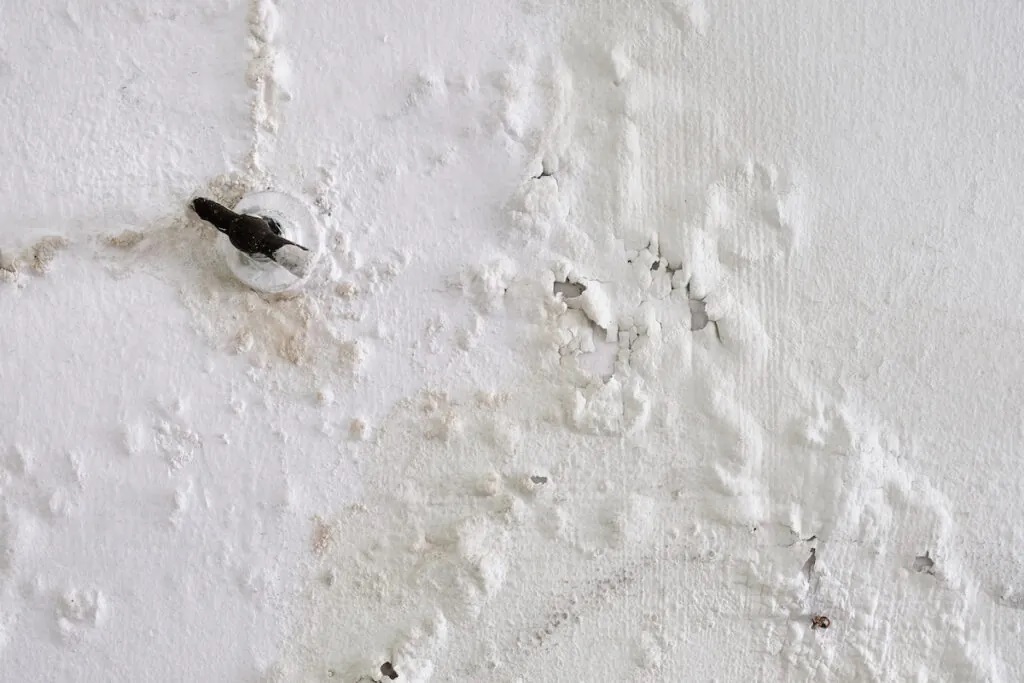
Peeling Paint or Bubbling Drywall
When moisture becomes trapped behind painted surfaces, it weakens the bond between paint and drywall.
Common signs include:
- Bubbling paint that feels soft to the touch, indicating moisture is pushing outward.
- Wallpaper separating from the wall because the adhesive has weakened.
- Drywall that appears swollen or uneven after repeated exposure to moisture.
These changes usually indicate water has been present for some time rather than resulting from a one-time spill.
Warped Baseboards or Flooring
Wood naturally expands when it absorbs moisture. Baseboards pulling away from the wall, hardwood floors cupping, or laminate flooring lifting at the seams may all point to moisture hidden inside nearby walls.
Unexplained Increase in Utility Bills
If your water bill suddenly increases without any change in usage, a concealed plumbing leak could be supplying a constant source of moisture behind your walls.
Where Hidden Water Damage Usually Starts
Understanding the most common sources helps homeowners inspect the areas most likely to develop problems.
| Source | Why It Happens | Possible Warning Signs |
|---|---|---|
| Roof leaks | Storm damage or aging shingles | Ceiling stains, attic moisture |
| Plumbing leaks | Damaged pipes or fittings | High water bills, damp drywall |
| Window leaks | Failed seals or flashing | Soft drywall below windows |
| Exterior siding | Wind-driven rain intrusion | Interior wall stains |
| Foundation cracks | Water entering after heavy rain | Basement moisture, musty odors |
How to Check for Water Damage Behind Walls
You don’t have to remove drywall immediately to identify potential moisture problems. Start with a careful visual inspection and look for changes that may indicate moisture is trapped behind the walls.
- Schedule a Professional Moisture Inspection: If you suspect hidden water damage, professional restoration specialists can use moisture meters, thermal imaging cameras, and other non-invasive tools to locate trapped moisture accurately without unnecessary demolition. This allows the problem to be identified before it causes more extensive damage.
- Look for Visible Changes: After heavy rain, inspect your walls, ceilings, and corners for new water stains, bubbling paint, peeling wallpaper, or warped trim. Taking photos over time can also help you spot gradual changes that might otherwise go unnoticed.
- Pay Attention to Odors: A persistent musty or damp smell—especially one that becomes stronger after a storm—is often a sign that moisture is trapped inside the wall cavity, even if there are no visible stains.
- Feel the Surface: Gently press on areas that look suspicious. Drywall affected by moisture may feel cooler than surrounding surfaces, slightly soft, or swollen, indicating that water may be hidden behind it.
- Monitor Repeating Problems: If water stains seem to dry out but reappear after every rainfall, the source of the leak has likely not been repaired. Simply repainting the wall won’t solve the underlying issue.
Why Early Detection Matters
Ignoring hidden water damage allows moisture to continue affecting your home’s structure over time.
Problems that may develop include:
- Mold growth, which can begin within 24 to 48 hours when moisture remains trapped and continue spreading if the source is not corrected.
- Drywall deterioration, causing walls to soften, crumble, or lose structural integrity as water breaks down the material.
- Wood rot, weakening framing members, trim, and subflooring after prolonged exposure to moisture.
- Higher restoration costs, since small leaks are generally much easier and less expensive to repair than widespread water damage.
Addressing the issue early often limits both repair time and the extent of restoration required.
When to Call PuroClean in Kalispell, MT
If you suspect hidden water damage, professional inspection is the safest way to determine how far moisture has spread. Waiting until visible damage becomes severe often means more extensive repairs are needed.
At PuroClean, our technicians use advanced moisture detection equipment to locate concealed water intrusion, assess the extent of the damage, and develop a restoration plan that helps return your property to its pre-loss condition. Whether the problem started after a plumbing leak or one of Northwest Montana’s summer storms, our team is ready to respond quickly throughout Kalispell and the surrounding communities.
Frequently Asked Questions
Q: Can water damage stay hidden for months?
A: Yes. Small plumbing leaks or storm-related intrusion can remain inside wall cavities for months before visible symptoms appear. During that time, moisture may continue affecting drywall, insulation, and wood framing.
Q: What does hidden water damage smell like?
A: Most homeowners notice a musty, damp, or earthy odor. This smell is often one of the earliest signs that moisture has been trapped behind walls.
Q: Can I detect water damage without opening my walls?
A: In many cases, yes. Visible stains, warped materials, recurring odors, and professional moisture detection tools can identify concealed moisture without immediately removing drywall.
Q: Does every water leak cause mold?
A: Not always, but mold can begin growing within 24 to 48 hours when moisture remains present. Prompt drying and repairs significantly reduce the risk.
Q: Should I repaint a water stain?
A: No. Water stains should always be investigated first to confirm the leak has been repaired. Painting over the stain without fixing the source usually results in the damage returning.
Protect Your Home Before Hidden Damage Gets Worse
If you’ve experienced recent summer storms in Northwest Montana or suspect moisture behind your walls, don’t wait for the damage to spread. Contact PuroClean in Kalispell, MT at (406) 890-6202 for a professional inspection and moisture assessment. Early detection can help protect your home’s structure, reduce restoration costs, and prevent more extensive repairs.
Key Takeaways
- Hidden water damage often develops long before visible leaks appear.
- Summer storms in Northwest Montana can allow water to enter through roofs, siding, and windows.
- Musty odors, stains, and bubbling paint are common early warning signs that deserve attention.
- Professional moisture detection can locate water behind walls without unnecessary demolition.
- Prompt repairs reduce the risk of mold growth and structural damage.
- Monitoring your home after major storms helps catch problems before they become costly.
- PuroClean provides professional water damage inspection and restoration services throughout Kalispell, MT.
Explore More of Our Blogs