


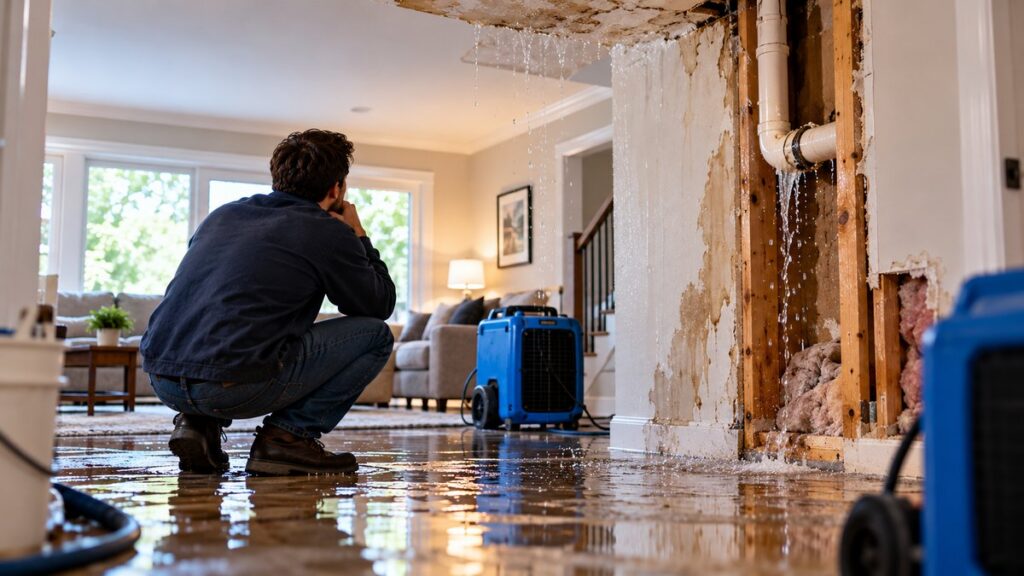
A leaking pipe, failed appliance, or unexpected flooding can leave your New Paltz home or business with more damage than you can see. Even after the standing water is gone, moisture may remain beneath flooring, inside walls, or around structural materials.
At PuroClean Professional Restoration, we help homeowners, landlords, and business owners in New Paltz, NY, address water damage through professional assessment, water removal, structural drying, and restoration.
One of the most common questions property owners have is what happens after they discover a water problem. Will the flooring need to be removed? How long will drying take? Can wet drywall be saved? What happens before repairs begin?
Understanding the restoration process can help you make informed decisions and know what to expect as your property recovers.
Need professional water damage cleanup in New Paltz? Call our Kingston-based team at (845) 481-9060.
1. The First Step: Finding Out How Far the Water Traveled
The visible damage doesn’t always reveal the full extent of a water loss.
Water can travel beneath flooring, spread behind cabinets, soak into drywall, and move into insulation or framing. Even a leak that appears limited to one room may affect materials in an adjoining space or on the level below.
That’s why professional restoration begins with understanding the conditions at your property.
Identifying the Water Source
Before developing a restoration plan, it’s important to determine where the water came from and whether the source has been stopped.
A broken supply line, leaking dishwasher, roof leak, and sewage backup can create different cleanup requirements.
The water source also affects how materials should be handled. Water from a plumbing supply line may require different procedures than water containing sewage or contaminants from outdoor flooding.
If the source involves a plumbing failure, a licensed plumber may be needed to make the necessary repairs.
Identifying Hidden Moisture
Moisture can remain inside building materials after the surface appears dry.
At PuroClean Professional Restoration, our water damage assessment focuses on understanding which areas have been affected and which materials may need drying, cleaning, or removal.
Professional moisture-detection equipment can help identify conditions that aren’t apparent through visual inspection alone.
We use assessment findings to guide the restoration approach rather than assuming that every water loss requires the same procedures.
2. Removing Water and Drying the Structure
Once immediate safety concerns and the water source have been addressed, the next steps depend on the amount of water present and the materials involved.
Water Extraction
If standing water is present, professional extraction equipment can remove substantial amounts of liquid water from affected areas.
This matters because removing water directly is generally more efficient than relying on evaporation alone.
For example, a soaked carpet may contain water within its fibers and padding even after the visible puddle has disappeared.
Depending on the water source, contamination level, and material condition, some components may be suitable for drying while others may need to be removed.
Not every water damage situation involves standing water. A slow leak inside a wall may require moisture assessment and access to affected materials without a separate extraction stage.
For more information about the available professional water damage mitigation services, explore the water damage restoration services offered by PuroClean Professional Restoration.
Structural Drying and Dehumidification
After excess liquid water is removed, moisture may remain inside drywall, wood, subflooring, and other building materials.
Professional structural drying addresses that remaining moisture.
Air movers help promote evaporation from affected surfaces, while dehumidifiers remove moisture from the surrounding air. The equipment and placement depend on the conditions found during assessment.
Drying may also require access to concealed materials when moisture is trapped behind walls or beneath flooring.
The goal is not simply to make a room look dry. It’s to evaluate whether the affected materials have reached appropriate drying conditions.
Monitoring Drying Progress
Drying takes time, and different materials may release moisture at different rates.
We monitor the drying process to assess progress and determine whether equipment adjustments or additional work are needed.
A floor that feels dry underfoot isn’t necessarily dry beneath the surface. Measurements help provide a more reliable basis for deciding when drying goals have been met.
3. Can Water-Damaged Flooring, Walls, and Other Materials Be Saved?
One of the biggest concerns after water damage is whether affected materials must be replaced.
The answer depends on the material, the source of the water, how long it remained wet, and the condition of the affected area.
Hardwood and Other Flooring
Wood flooring can absorb moisture and change shape as it becomes wet.
Depending on the circumstances, boards may cup, warp, or buckle. Some flooring can be dried and retained, while other materials may require removal or replacement.
Laminate, engineered products, carpet, and padding can respond differently to water exposure.
We evaluate actual material conditions before discussing whether drying or replacement is appropriate.
Drywall and Insulation
Drywall can absorb water and lose strength when it remains saturated.
In some situations, affected drywall can be dried. In others, the degree of damage or contamination makes removal necessary.
Insulation can also retain moisture inside wall cavities, creating conditions that require further assessment.
The right approach depends on the water source, material condition, and whether appropriate drying can be achieved.
Cabinets, Trim, and Personal Belongings
Water can affect cabinet bases, baseboards, furniture, stored belongings, and other materials.
Some items may be suitable for cleaning or restoration. Others may be too damaged to retain.
If you have important documents, photographs, or sentimental belongings in an affected area, let our team know during the assessment.
We can discuss the condition of the property and the restoration options available without promising that every item can be saved.
4. Special Considerations for New Paltz Properties
New Paltz includes a variety of residential and commercial buildings, and water damage can affect different properties in different ways.
The most useful restoration approach begins with the conditions at the individual building rather than assumptions about its neighborhood or age.
Older Homes and Historic Materials
New Paltz is known for its historic architecture, including the Historic Huguenot Street area.
Older properties may contain materials such as plaster, traditional wood trim, original flooring, or other finishes that deserve careful evaluation after water exposure.
These materials can respond differently to moisture than modern building products.
That doesn’t mean every older home requires demolition or specialized repairs. It means material condition, drying feasibility, and safety concerns should be considered before deciding what can remain.
Some older buildings may also contain lead-based paint. When qualifying renovation work involves disturbing painted surfaces, applicable lead-safe work requirements must be considered.
PuroClean Professional Restoration holds EPA Lead-Safe certification, which is relevant to qualifying renovation and repair activities. This certification is separate from the company’s IICRC restoration certification. Confirm current certification details and applicable requirements before publishing this claim.
Rental and Multi-Unit Properties
Water damage in a rental property may affect more than one resident or unit.
A plumbing failure in an upper-level apartment, for example, can allow water to reach ceilings, walls, or flooring below.
Property owners and managers may need to coordinate access, document affected areas, and plan around occupied spaces while restoration work proceeds.
An appropriate assessment helps clarify which areas require attention and what disruption may be expected.
Heavy Rain and Outdoor Water Intrusion
The New Paltz area includes properties near the Wallkill River and other drainage features.
Heavy rainfall can contribute to water intrusion under certain conditions, but the risk depends on an individual property’s elevation, drainage, location, and building characteristics.
Water entering from outdoor flooding may contain contaminants and should not automatically be treated as a clean-water loss.
If you suspect floodwater or sewage contamination, avoid entering affected areas and contact properly equipped professionals.
5. What Happens After Structural Drying Is Complete?
Water damage restoration doesn’t necessarily end when the drying equipment is removed.
Some projects require little additional work once affected materials have reached appropriate drying goals.
Other projects may involve replacing drywall, insulation, flooring, baseboards, or other components that could not be retained.
At PuroClean Professional Restoration, we provide water damage mitigation and reconstruction services.
After the affected areas have been evaluated and dried, we’ll discuss the findings and any additional restoration or repair work that may be appropriate.
The amount of reconstruction depends on what was damaged or removed and the scope of the project.
We want you to understand which steps have been completed, what remains to be addressed, and why the recommended work is necessary.
6. What Should You Know About Restoration Costs and Insurance?
Water damage restoration costs vary because no two losses are identical.
Several factors influence the scope of work, including the amount of water, contamination concerns, affected materials, access to concealed spaces, and whether repairs are needed.
A small plumbing leak and a flooded lower level may require very different levels of restoration.
That’s why an assessment is important before determining what work is necessary.
If you’re considering an insurance claim, document the damage when safe and review your policy with your insurance provider.
Insurance coverage depends on the cause of the water loss, applicable exclusions, deductibles, and policy terms.
An insurer may treat sudden plumbing damage differently from water entering during an outdoor flood.
Keep relevant photographs, receipts, and correspondence for your records.
We can explain the restoration work being considered and the conditions found at your property, while your insurance company determines coverage under your policy.
Frequently Asked Questions
How long does water damage cleanup usually take?
The timeline depends on the extent of the damage, the materials affected, and the work required.
Water extraction may be relatively straightforward in some situations, but structural drying and repairs can take longer.
We use assessment findings and moisture monitoring to help determine what work is needed and evaluate progress rather than promising the same completion time for every property.
Do I need a restoration company if I’ve already cleaned up the visible water?
Not necessarily for every small spill.
If a minor amount of clean water has been removed safely and no building materials remain affected, professional restoration may not be needed.
However, extensive water intrusion, wet walls or flooring, contaminated water, or suspected hidden moisture may warrant professional assessment.
Will I need to leave my home while drying equipment is operating?
That depends on the damage, safety conditions, areas affected, and equipment required.
Some restoration projects allow portions of a property to remain in use. Other situations may require restricted access or temporary relocation.
We’ll discuss the affected areas and restoration approach so you can understand what disruption may be involved.
What’s the difference between water mitigation and reconstruction?
Water mitigation focuses on limiting additional damage and addressing moisture through activities such as extraction, drying, and removal of materials that cannot be retained.
Reconstruction addresses building components that need to be repaired or replaced afterward.
Not every water loss requires reconstruction. The need for repairs depends on the actual damage and work performed.
Need Water Damage Cleanup in New Paltz, NY?
Whether you’ve discovered standing water, moisture beneath your flooring, or damage from a leaking pipe, knowing what happens next can make the situation easier to manage.
At PuroClean Professional Restoration, our Kingston-based team serves New Paltz and surrounding Hudson Valley communities.
Our business holds IICRC certification, and we provide water damage mitigation and restoration services for homeowners and commercial property owners.
We’ll discuss your situation, explain the next steps, and help you understand the restoration work your property may need.
For more information, visit our page for restoration services in New Paltz, NY.
Call PuroClean Professional Restoration at (845) 481-9060.
PuroClean Professional Restoration
625 NY-28
Kingston, NY 12401
Serving New Paltz and surrounding communities.

