


A clear, still January night in the Catskill foothills can drop temperatures far below what the forecast for Kingston suggests. Homes tucked into hollows and hillsides around Woodstock and West Hurley feel it first. Pipes running through a crawl space, a mudroom, or an old addition can freeze in a few hours. Exposed pipes in Woodstock homes are a common winter weak spot, and most of the fixes are simple. This guide covers where to look, what to do before a cold snap, and how drying works if a line splits.
How Cold the Hudson Valley Side of the Catskills Gets
Cold enough that freezing nights are the norm for months. The nearest long-term NOAA station with temperature normals in the valley is Rhinebeck 4 SE, across the Hudson. Its 1991–2020 climate normals average nearly 185 nights a year at or below 32°F. About 16 nights a year fall to zero or lower, and January’s normal low is 11.4°F.
Woodstock and West Hurley sit at different elevations and exposures, so your own yard may run colder or warmer. The point is that a hard freeze is routine here, not rare. A pipe that made it through a mild winter isn’t proof it will make it through a cold one.
Where Pipes Are Most Exposed
Answer first: anywhere a line runs through space the furnace doesn’t heat well.
Common trouble spots in local homes include:
- Crawl spaces under additions, sunrooms, and porches
- Pipes along the inside of exterior walls, especially under kitchen sinks
- Mudrooms and laundry rooms built on slabs or piers
- Unheated garages with a utility sink or washer hookup
- Well lines and pressure tanks in cold basements or well pits
- Outdoor faucets and the short section of pipe just inside the wall
Many homes around here were added onto over the decades. A cozy main house can have a thin-walled addition with plumbing that sits much colder. Walk through with a flashlight and trace where water lines actually go.
Protecting Exposed Pipes Before the Next Cold Snap
A few weekend tasks cut the risk a lot:
1. Fit foam pipe insulation on reachable lines in crawl spaces, basements, and garages.
2. Seal gaps where outside air reaches pipes, such as around sill plates, vents, and utility openings.
3. Close and latch crawl space access doors for winter.
4. Disconnect garden hoses and shut off and drain outdoor faucets from inside if you have a valve.
5. Ask a plumber about heat cable for a line you can’t reroute or insulate well.
6. Find your main shutoff, label it, and make sure it turns.
Keep the heat on, even when you’re away. Your plumber or insurer can tell you what thermostat setting fits your house. If you leave for a long stretch, ask a plumber whether draining the system makes sense.
During a Deep Freeze
When a cold front is on the way, take a few extra steps:
- Open sink cabinet doors on outside walls so room heat reaches the pipes
- Let a faucet on an exterior wall drip slightly overnight
- Keep garage doors closed
- Check that the furnace or boiler is running and has fuel
- Check the well pressure tank area if it shares a cold space
If a faucet slows to a trickle or stops, a line may already be frozen. Shut off the water to that line if you can. Then call a plumber to thaw it. Avoid open flames, which can start a fire inside a wall.
Signs a Pipe Is Starting to Freeze
Catching a freeze early can save a lot of drying. Watch for:
- A faucet that sputters, slows, or stops on a cold morning
- Frost on a visible section of pipe
- A toilet that refills slowly
- An odd smell from a drain, which can mean water isn’t moving
- Bulging or a small crack in an exposed pipe
Exposed pipes in Woodstock crawl spaces often give one of these warnings first. Don’t ignore a slow faucet on a below-zero morning. Close the valve for that line if you can, and call a plumber before the ice melts and the split starts leaking.
Seasonal Homes and Rentals
Plenty of homes around Woodstock are weekend places or short-term rentals. Those are especially exposed because no one may be there to notice a problem for days.
If you own one, consider:
- A low-temperature alert or Wi-Fi leak sensor that texts your phone
- A neighbor or caretaker who checks the house after hard freezes
- A clear note by the main shutoff for guests and cleaners
- Having a plumber drain and winterize the system if the house sits empty for long periods
Homes in Woodstock and West Hurley
Census Bureau estimates (ACS 2020–2024, five-year, table B25035) put the median year built in the town of Woodstock at 1961 (±5). The West Hurley CDP comes in at 1967 (±4). Table B25034 shows that roughly three in four homes in each were built before 1980.
Homes from that era often have copper or galvanized lines, thin insulation, and later additions. Exposed pipes in Woodstock cottages and West Hurley ranches can sit in crawl spaces that were never meant to be heated. Older houses may also have lead paint or asbestos-containing materials. Have them tested before anyone opens a wall or ceiling to reach a pipe.
If a Pipe Bursts
Answer first: shut the water off first, then protect people and belongings.
1. Close the main shutoff, or the nearest valve to the break.
2. If water is near outlets or the panel, shut off power only if you can reach the breaker without stepping in water.
3. Move rugs, furniture, and boxes out of the wet area.
4. Take photos and video before cleanup.
5. Call a plumber to repair the line, and call a restoration company for drying.
Water from a clean supply line usually starts as Category 1. Under the IICRC S500 standard, the category is set on site, since water can pick up contaminants as it spreads.
How We Dry Burst-Pipe Damage
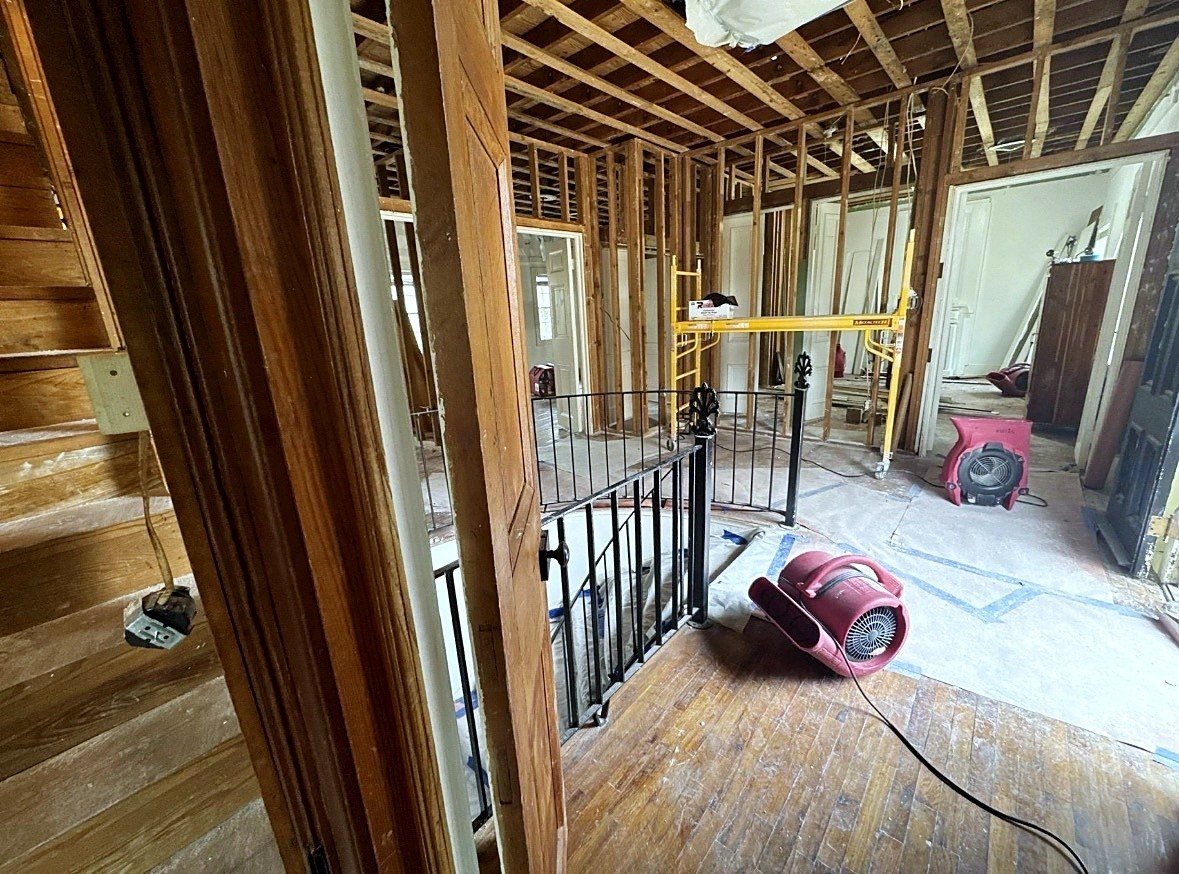
Our water damage restoration crew begins by tracing where the water went. It often travels farther than it looks, under flooring, into wall cavities, and down to the floor below.
Exposed pipes in Woodstock homes often leak into a floor system or a finished basement, so we check below the break too. Then we:
- Extract standing water from floors and carpet
- Remove soaked materials that can’t be dried in place, such as some padding and insulation
- Set air movers and dehumidifiers matched to the space
- Check moisture readings each day and adjust equipment
- Document progress for you and your adjuster
For a home with wood floors, specialty drying mats may help pull moisture out of the boards. Most homes need several days of drying, depending on materials and how long water ran.
After the Drying Is Done
Once readings show the structure is dry, the repair stage begins. That might mean new drywall, flooring, or trim where materials had to come out. It’s also a good moment to fix the reason the pipe froze. Ask your plumber about rerouting the line, adding insulation, or sealing the draft that reached it. A short list of changes now can keep the same spot from failing next winter.
What Insurance Usually Says About Frozen Pipes
The Insurance Information Institute’s guide to surviving severe cold weather says standard homeowners policies cover most freeze damage, including pipes that freeze and burst. It also notes that most policies don’t cover flood or sewer and drain backups. Your policy may have its own conditions, so check with your agent or adjuster.
Example: A West Hurley couple returns from a weekend away to find a split line under the mudroom sink and wet flooring in the hall. They close the main valve, take photos, and call for drying the same morning. This is a made-up scenario, not a real client’s story.
Frequently Asked Questions
How Do I Protect Exposed Pipes in Woodstock Crawl Spaces?
Insulate reachable lines, seal drafts where cold air enters, and keep access doors closed. A plumber can advise on heat cable for hard-to-reach runs.
Should I Let Faucets Drip?
On very cold nights, a slight drip from a faucet on an outside wall can help. Ask your plumber what makes sense for your home.
Can I Thaw a Frozen Pipe Myself?
A plumber is the safest choice. If you try, use gentle heat like a hair dryer and never an open flame.
How Long Does Drying Take After a Burst Pipe?
It depends on the materials and how far the water spread. Most homes take several days.
Help With Exposed Pipes in Woodstock and West Hurley
PuroClean Professional Restoration is locally owned by Jonathan Beever, Shawn McDermott, and Andrew Rankel. Our team is IICRC Certified and EPA Lead Safe Certified. We’re available 24/7 at (845) 481-9060. Our office is at 625 New York 28, Kingston, NY 12401. We help homeowners in Woodstock, West Hurley, Bloomington, Hurley, Kingston, Hillside, Rosendale, Tillson, Marbletown, and Cottekill. We also serve neighbors in Greene County and Columbia County.