


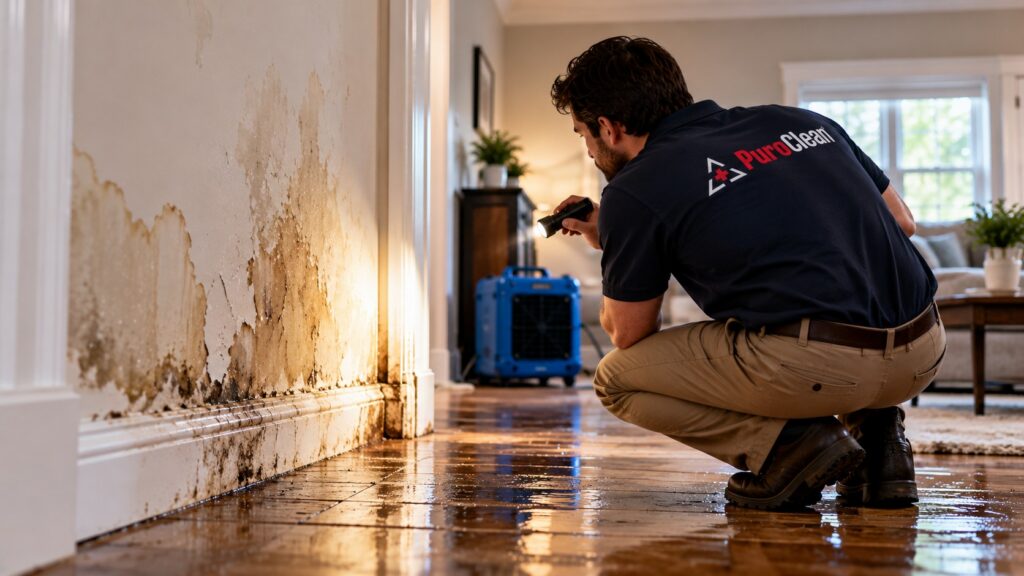
A leaking pipe or flooded room doesn’t always leave obvious damage behind. You may remove the standing water, wipe down the surfaces, and assume the problem is over—only to notice warped flooring, peeling paint, or a musty smell several days later.
That’s because water can travel into building materials and remain there after the visible moisture disappears.
At PuroClean Professional Restoration, we help homeowners, landlords, and business owners in Highland, NY, address water damage through professional moisture assessment, water extraction when needed, structural drying, and restoration.
If your property has experienced a plumbing leak, appliance overflow, or water intrusion, understanding the signs of hidden moisture can help you determine whether additional restoration work is necessary.
Concerned about hidden water damage in Highland? Call our Kingston-based team at (845) 481-9060.
1. Signs That Water Damage May Be Hiding Inside Your Property
Water doesn’t always remain in the room where a leak begins. It can travel beneath flooring, through wall cavities, and into adjoining spaces.
Sometimes the first sign of damage appears after the original water problem has been addressed.
Flooring That Warps, Buckles, or Feels Different
Wood and wood-based flooring can absorb moisture and change shape.
You may notice boards that are cupping, edges that are lifting, or sections that no longer feel level underfoot.
Other flooring materials may show loose edges, separation, or changes in appearance.
These symptoms can have more than one cause, so they don’t automatically prove that water damage is present. However, if they develop after a leak or flood, moisture beneath the finished surface may need to be investigated.
Stains or Changes in Walls and Ceilings
Water that enters a wall cavity or moves through a ceiling can leave discoloration, bubbling paint, damaged drywall, or peeling finishes.
A small stain may represent a limited issue, but it can also be the visible result of moisture that traveled through a larger concealed area.
It’s important to identify and address the source before repairing the surface.
Painting over a stain or replacing a damaged section of drywall won’t resolve an active leak.
Persistent Damp or Musty Odors
A musty smell can indicate a moisture-related problem, although odors alone cannot establish whether mold is present.
If an odor appears after a plumbing leak or water intrusion, check for visible moisture where it’s safe to do so.
Avoid opening walls or disturbing suspected mold growth without understanding the potential hazards.
A professional assessment may help identify whether moisture remains in concealed spaces.
Repeated Dampness Around Cabinets or Baseboards
Kitchen cabinets, bathroom vanities, laundry areas, and baseboards can conceal plumbing-related moisture.
For example, a slow leak beneath a sink may wet the cabinet base and adjacent flooring without producing an obvious puddle.
If you notice recurring dampness, swelling, or discoloration, arrange for the source to be evaluated.
Addressing the plumbing problem is essential, but the surrounding building materials may also need attention.
2. Where Hidden Moisture Commonly Collects After a Leak
Different building materials respond to water in different ways.
Understanding where moisture may remain helps explain why wiping up the visible water isn’t always enough.
Beneath Hardwood, Laminate, and Other Flooring
Water can move through seams, beneath flooring edges, and into underlayment or subflooring.
A finished floor may appear dry while moisture remains in materials below it.
The restoration approach depends on the type of flooring, how the water entered, whether contamination is involved, and the condition of the underlying materials.
Some floors can be dried and retained. Others may require removal of affected components.
Behind Drywall and Inside Wall Cavities
Drywall, insulation, wood framing, and other wall components may absorb or retain moisture.
A leak from an upstairs bathroom, for example, may allow water to travel down through a wall cavity and affect areas below the original source.
The visible surface doesn’t always reveal how far the water traveled.
Professional moisture assessment can help determine whether concealed materials need further evaluation, drying, or removal.
Around Cabinets and Built-In Fixtures
Cabinet bases, trim, and built-in fixtures can make moisture harder to identify.
Water from a dishwasher, refrigerator supply line, or sink connection may spread beneath surrounding cabinetry.
Depending on the amount of water and the materials involved, restoration may require access to spaces that aren’t visible during ordinary cleaning.
In Finished Basements and Lower-Level Rooms
A finished basement can contain drywall, flooring, insulation, and enclosed storage areas that are affected by water intrusion.
Water may enter through a plumbing failure, drainage issue, or other source.
Even after standing water is removed, moisture can remain in materials that were exposed.
The appropriate cleanup approach depends in part on where the water came from.
Outdoor floodwater or sewage-contaminated water may require different procedures from a recent clean-water plumbing leak.
3. Why Hidden Water Damage Matters for Highland Properties
Highland is a community in the Town of Lloyd, on the western side of the Hudson River. Its residential and commercial properties vary in age, construction, layout, and use.
That variety matters because a restoration plan should reflect the actual building and the conditions found—not assumptions about every property in the community.
Older Homes and Original Materials
Some Highland-area homes contain older wood flooring, plaster, trim, or other traditional building materials.
After water exposure, these materials may need careful evaluation before anyone decides whether they can be dried or must be removed.
Original materials can be important to a property’s appearance and character, but preservation has to be balanced with safety, contamination, and the feasibility of effective drying.
A material shouldn’t be retained simply because it is valuable or difficult to replace.
Rental and Multi-Unit Buildings
A plumbing leak in a rental or multi-unit property can affect more than one occupied space.
Water originating in an upstairs bathroom or kitchen may travel into a ceiling or wall below.
For landlords and property managers, determining which areas are affected can be especially important when coordinating access and minimizing unnecessary disruption.
Professional assessment helps identify the extent of the moisture problem and which spaces may require restoration work.
Commercial Buildings and Workspaces
Water damage can interrupt business activities, affect stored inventory, or limit access to work areas.
An appliance leak, plumbing failure, or wet ceiling can create concerns beyond the visible damage, particularly when moisture reaches flooring, wall cavities, or equipment.
Business owners may need to plan around drying equipment, temporary restrictions, and any repairs that follow.
We can discuss the affected areas and restoration approach so property managers and business owners have a clearer understanding of the work being considered.
Water Entering From Outside
Some properties in the Highland area may experience water intrusion during heavy rainfall or drainage problems.
However, the risk depends on an individual property’s location, elevation, grading, drainage, and building conditions.
Proximity to the Hudson River doesn’t automatically mean a property is susceptible to flooding.
When outdoor water enters a building, contamination should be considered. Floodwater can contain materials that make cleanup more complicated than an ordinary plumbing loss.
If the water may be contaminated, avoid entering or cleaning the affected area yourself.
4. How Professional Moisture Assessment Works
When water damage is suspected, the first task is understanding what happened and which materials may be affected.
An effective assessment considers both visible conditions and places where water could have traveled.
Identifying the Source
The source of the moisture must be addressed before lasting repairs can be made.
If a pipe or fixture is leaking, a qualified plumber may be required to repair it.
If water is entering from outside, the underlying drainage or building-envelope problem may require attention from an appropriate contractor.
Restoration addresses the resulting damage, but drying alone won’t correct a source that continues introducing water.
Evaluating Affected Materials
Moisture-detection equipment can help identify conditions that aren’t obvious through visual inspection alone.
Depending on the property and materials involved, measurements may help determine which areas require closer evaluation.
These findings contribute to a restoration plan that reflects the water source, extent of damage, and types of materials affected.
Determining Whether Drying Is Necessary
Not every water incident requires extensive professional restoration.
A minor clean-water spill that is promptly and safely removed may not require specialized drying.
However, when water has spread beneath flooring, entered wall cavities, affected insulation, or remained in a property for an unknown period, a more thorough assessment may be appropriate.
The goal is to recommend work based on the actual conditions—not automatically treat every spill as a major restoration project.
5. What Happens During Structural Drying?
When building materials retain moisture, professional structural drying may be necessary.
The drying process is designed around the conditions found during the assessment and may change as moisture levels are monitored.
Water Extraction When Needed
If standing water is present, professional extraction equipment can remove significant amounts of liquid water.
This reduces the amount of moisture that must be addressed through drying equipment.
If there’s no standing water, extraction may not be necessary.
For example, a concealed plumbing leak may have left damp drywall or framing without creating a visible pool of water.
Air Movement and Dehumidification
Air movers can support evaporation from affected surfaces, while dehumidifiers help remove moisture from the surrounding air.
Equipment selection and placement depend on the materials, extent of moisture, and environmental conditions.
Simply directing a household fan toward a wet wall doesn’t necessarily address moisture behind that wall.
Some situations require additional access to concealed materials or removal of components that cannot be dried appropriately in place.
Moisture Monitoring
Drying is evaluated through appropriate moisture measurements rather than appearance alone.
At PuroClean Professional Restoration, we use moisture monitoring to assess progress and determine whether the drying approach needs adjustment.
Different materials and building assemblies may dry at different rates.
We discuss the findings and next steps as work progresses.
Determining When Drying Is Complete
A surface can feel dry even while moisture remains in the underlying material.
That’s why drying decisions should be based on suitable measurements and material conditions.
Once affected materials have reached appropriate drying goals, we can discuss whether further restoration or repairs are needed.
6. Can Water-Damaged Materials Be Repaired Instead of Replaced?
Homeowners often worry that discovering hidden moisture means large sections of their property will have to be demolished.
That isn’t always the case.
Whether a material can be saved depends on its condition, the water source, how long it was wet, and whether it can be dried or cleaned appropriately.
Materials That May Be Suitable for Drying
Some affected flooring, framing, drywall, or other components may be appropriate for drying and retention.
The decision depends on the actual circumstances.
For example, a relatively recent plumbing leak may leave materials in a different condition from an area that remained wet for an extended period.
We evaluate the damage before discussing restoration options.
Materials That May Require Removal
Materials can become too damaged, deteriorated, or contaminated to retain.
Wet insulation, damaged drywall, compromised flooring components, or materials exposed to sewage may require removal under appropriate restoration procedures.
Removing affected materials can also be necessary when concealed moisture cannot otherwise be addressed adequately.
Repairing the Property After Drying
Some projects require little additional work once drying is complete.
Others may need new drywall, flooring, trim, insulation, or other building components.
PuroClean Professional Restoration offers both water damage mitigation and reconstruction services.
We’ll explain which materials were affected and discuss the repair needs identified during the restoration process.
For older properties, qualifying repair work involving painted surfaces may also require lead-safe work practices. Our Kingston business holds EPA Lead-Safe certification, which is relevant to applicable renovation work.
7. Costs, Insurance, and Documentation After Hidden Water Damage
Hidden moisture can make restoration costs difficult to predict before the property is assessed.
The amount of visible damage doesn’t necessarily indicate how much work is required.
Costs may depend on the water source, affected materials, access to concealed areas, extent of moisture, and any necessary repairs.
For that reason, an on-site evaluation is important before determining the appropriate scope of work.
Keep Records of What You Discover
If you notice a new stain, damaged floor, or moisture near a plumbing fixture, take photographs when it’s safe.
Record when you first noticed the problem and any known information about the leak.
Retain relevant receipts and repair records.
These details can help you maintain an accurate account of the damage.
Review Insurance Coverage Carefully
Insurance coverage depends on the policy, the cause of the damage, and any applicable exclusions or conditions.
A sudden plumbing failure may be evaluated differently from gradual leakage or outdoor flooding.
Don’t assume that concealed damage is automatically covered or excluded.
Contact your insurance provider to understand the requirements that apply to your claim.
We can explain our restoration assessment and the work being considered, but your insurance company determines coverage under your policy.
Frequently Asked Questions
Can a wall be wet inside even if the paint looks normal?
Yes. Water can enter wall cavities and affect drywall, insulation, framing, or other materials without immediately changing the visible surface.
If a wall may have been exposed to a leak, professional moisture assessment can help determine whether concealed areas require attention.
Does a musty smell always mean there’s mold behind the walls?
No. A musty odor can be associated with moisture-related conditions, but it doesn’t confirm the presence or location of mold.
If the smell appears after a leak or water intrusion, investigating the moisture source is a sensible first step.
Avoid disturbing suspected mold growth without appropriate precautions.
How do I know whether my subfloor needs to be replaced?
A subfloor’s condition depends on its material, the amount and duration of water exposure, contamination, and any physical deterioration.
Some subfloors can be dried successfully. Others may be too damaged to retain.
An assessment helps determine which option is appropriate rather than assuming replacement is necessary in every case.
Will drying equipment make it difficult to use my home or business?
Drying equipment can create noticeable noise and airflow and may need to operate for extended periods.
The level of disruption depends on which rooms are affected and how the equipment must be positioned.
We’ll discuss the work areas and equipment needs so you can plan around the restoration process.
Concerned About Hidden Water Damage in Highland, NY?
When a floor starts to buckle, a stain appears on the ceiling, or a room develops a persistent damp smell after a leak, it’s important to understand what’s happening before beginning cosmetic repairs.
At PuroClean Professional Restoration, our Kingston-based team serves Highland and surrounding Hudson Valley communities.
We help homeowners and businesses evaluate water damage, address affected materials, and understand the appropriate steps toward restoration.
Our business holds IICRC certification, and we provide professional water damage mitigation, structural drying, and related restoration services.
Whether you’re dealing with visible water or suspect moisture beneath the surface, contact our team to discuss your situation.
Call PuroClean Professional Restoration at (845) 481-9060.
PuroClean Professional Restoration
625 NY-28
Kingston, NY 12401
Serving Highland and surrounding communities.

