


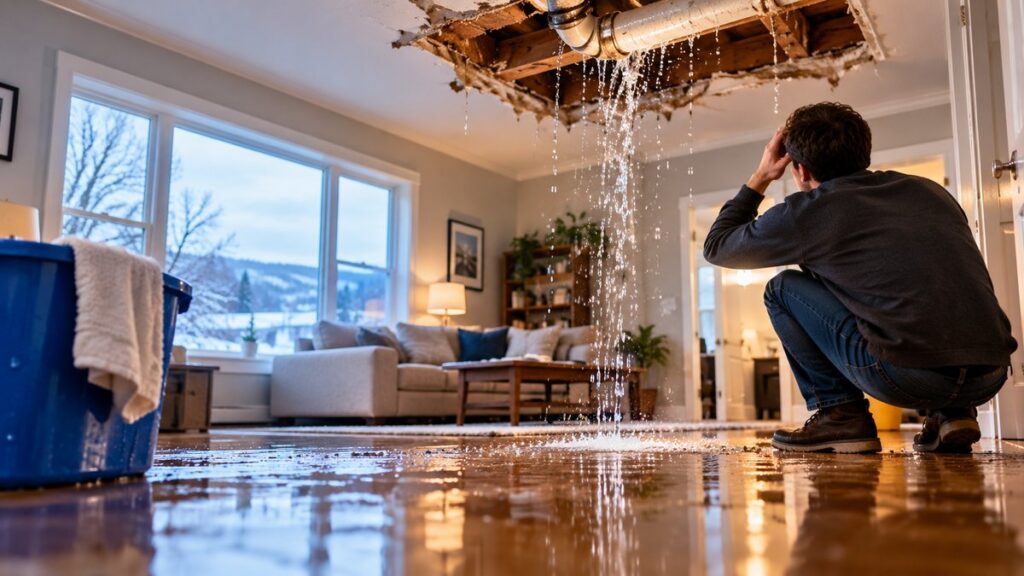
A leaking pipe can affect more than one room. In an apartment building, water may travel from an upstairs bathroom into the unit below. In a commercial property, a failed plumbing connection can damage flooring, inventory, and work areas before someone discovers the problem.
When water damage affects a home, rental property, or business in Newburgh, NY, the first challenge is often understanding how far the water has spread and what needs to happen next.
At PuroClean Professional Restoration, we help Newburgh homeowners, landlords, and commercial property owners address water damage through professional assessment, water extraction when needed, structural drying, and restoration.
Whether you are responsible for a single-family home, multiple rental units, or a commercial building, understanding the restoration process can help you make informed decisions and coordinate the work more effectively.
Need water damage restoration in Newburgh? Call our Kingston-based team at (845) 481-9060.
1. What to Do When You Discover Water Damage
The first priority after discovering water damage is protecting the people in the building.
Before trying to clean up or move belongings, consider whether the affected area is safe to enter.
Stop the Water Source When Possible
If the damage is coming from a leaking fixture or appliance, shutting off its supply valve may stop additional water from entering.
For a larger plumbing failure, the building’s main water valve may need to be closed.
Only attempt this if you can reach the valve safely. Do not enter standing water near electrical equipment or other hazards.
If a pipe, fixture, or plumbing connection needs repair, contact a qualified plumber.
Stopping the source is essential, but it does not necessarily resolve moisture already present in floors, walls, or other building materials.
Avoid Electrical and Structural Hazards
Water can create dangerous conditions around outlets, electrical equipment, and appliances.
Stay out of standing water that may be in contact with electrical systems.
Only turn off electricity at a breaker panel when it can be reached safely from a dry location. If you are uncertain, contact a qualified electrician or your utility provider.
Also avoid areas beneath ceilings that appear swollen, sagging, or unstable. Saturated building materials can become hazardous.
Treat Sewage and Outdoor Floodwater Differently
Not all water damage presents the same cleanup conditions.
A recent leak from a drinking-water supply line is different from a sewage backup or water entering from outdoor flooding.
Potentially contaminated water may contain biological or chemical hazards.
Keep children, pets, employees, and other occupants away from affected areas. Do not attempt to enter or clean contaminated spaces without appropriate professional protection and procedures.
Document the Damage
When it is safe, take photographs or video of the affected rooms, damaged belongings, and visible water conditions.
Record when the problem was discovered and what is known about its source.
For rental or commercial properties, it may also be helpful to note which units, rooms, or business areas appear affected.
These records can support communication with restoration professionals, building stakeholders, and insurance providers.
2. Why Water Damage Can Spread Beyond the Original Room
One of the challenges with water damage is that moisture does not necessarily remain where the leak began.
Water can move along building materials, enter wall cavities, and travel through floors or ceilings.
A visible stain may be only part of the affected area.
Water Traveling Between Floors
Consider an upstairs bathroom with a failed supply line.
Water may collect on the bathroom floor, but it can also pass through openings around plumbing penetrations and into the ceiling below.
The downstairs occupant might notice discoloration or dripping before the source is identified.
Even after the plumbing problem is repaired, moisture may remain in drywall, insulation, framing, or flooring.
Professional assessment helps determine which materials have been affected.
Water Behind Cabinets and Walls
Kitchen sinks, dishwashers, water heaters, and other fixtures can develop leaks in areas that are difficult to see.
Water may spread beneath cabinets, behind baseboards, or into adjoining rooms before becoming obvious.
Replacing a damaged cabinet panel or painting a stained wall does not resolve moisture that remains behind the finished surface.
The source and affected materials need to be evaluated before repairs are considered complete.
Water in Lower-Level Spaces
Basements and lower-level rooms may be affected by plumbing failures, appliance leaks, drainage problems, or water entering from outdoors.
The source matters because it helps determine whether contamination is a concern and what cleanup procedures may be appropriate.
Water remaining inside finished walls, flooring, or insulation can also require professional drying even after visible standing water has been removed.
3. Water Damage Considerations for Newburgh Properties
Newburgh includes residential neighborhoods, rental housing, commercial spaces, and buildings of varying ages and construction types.
Each property presents different restoration considerations.
The appropriate response depends on the actual building conditions rather than assumptions about a particular neighborhood.
Single-Family Homes
For homeowners, water damage can interrupt daily routines and affect belongings, flooring, walls, and living spaces.
A plumbing leak or appliance failure may leave rooms unusable while the damage is assessed and addressed.
The extent of work depends on the amount of water, affected materials, and whether moisture has traveled into concealed areas.
Some losses can be handled with limited drying and cleanup. Others require material removal or repairs.
Rental and Multi-Unit Buildings
Water damage in a rental building can create additional coordination challenges.
One plumbing failure may affect multiple apartments or shared building areas.
Property owners and managers may need to arrange access, notify affected occupants, and coordinate with plumbers, restoration professionals, and other contractors.
If an upstairs leak affects a lower unit, the restoration assessment should consider the areas where water may have traveled—not just the room containing the failed fixture.
The goal is to understand the full scope of the damage and avoid overlooking affected materials.
Commercial Properties
A water loss in a store, office, restaurant, or other commercial space can interfere with normal operations.
Wet flooring, damaged ceilings, inaccessible storage areas, or equipment concerns may affect employees and customers.
Restoration work can also introduce temporary noise, equipment placement, or restrictions on access.
Business owners and managers benefit from understanding which areas require work and whether unaffected parts of the property may remain usable.
The answer depends on safety, the damage, and the restoration plan.
Older Buildings and Original Materials
Some Newburgh properties contain older plaster, wood trim, flooring, or other traditional building materials.
These features may deserve careful evaluation after water exposure.
Not every wet material must be removed, and not every material can be safely retained.
The decision depends on its condition, contamination concerns, and whether appropriate drying or restoration is possible.
Older buildings may also contain lead-based paint. When qualifying renovation work disturbs painted surfaces, applicable lead-safe requirements must be considered.
PuroClean Professional Restoration holds EPA Lead-Safe certification, which is relevant to qualifying renovation and repair activities. That certification is separate from its IICRC restoration certification.
4. How Professional Water Damage Restoration Works
Once the immediate safety concerns and water source have been addressed, professional restoration focuses on evaluating the damage and determining what work is necessary.
At PuroClean Professional Restoration, we provide water damage mitigation and restoration services for residential and commercial properties.
The work varies with each situation.
Damage Assessment
We evaluate the affected areas to better understand where the water traveled and which materials may have retained moisture.
The assessment considers the water source, visible damage, safety concerns, and potential moisture in concealed spaces.
For a multi-unit property, the evaluation may need to consider areas above, below, or adjacent to the original leak.
The findings guide the restoration approach.
Learn more about our professional water damage mitigation services.
Water Extraction
If standing water is present, professional extraction equipment can remove substantial amounts of liquid water.
This reduces the amount of moisture that must be addressed during structural drying.
Not every loss requires extraction.
For example, a slow plumbing leak inside a wall may cause damp materials without leaving standing water on the floor.
The restoration approach should reflect what is actually present.
Structural Drying and Dehumidification
After excess liquid water is removed, affected materials may still contain moisture.
Professional air movers and dehumidifiers can support drying by promoting evaporation and managing moisture in the surrounding air.
Equipment selection depends on the affected materials, extent of water damage, and environmental conditions.
Some situations may require additional access to concealed materials or removal of components that cannot be dried appropriately in place.
Moisture Monitoring
Drying is not complete simply because a wall or floor feels dry.
Measurements help evaluate moisture remaining in affected materials and determine whether drying goals are being reached.
We monitor drying progress and assess whether the approach needs to be adjusted.
Different materials can dry at different rates, which is one reason restoration timelines vary.
Cleanup and Repairs
Some water-damaged materials can be dried and retained.
Other materials may be too damaged, contaminated, or deteriorated to restore safely.
If drywall, insulation, flooring, or other components require removal, repairs may be necessary after the affected structure has been addressed.
PuroClean Professional Restoration also offers reconstruction services.
We discuss the restoration findings and next steps so you can understand the scope of work being considered.
5. Coordinating Water Damage Restoration in a Rental or Commercial Property
When several people use or occupy a building, restoration involves more than drying materials.
Owners and managers often need to communicate with occupants, arrange access, and make decisions about repairs while limiting unnecessary disruption.
Identify the Areas That May Be Affected
The room where water was discovered may not be the only area requiring attention.
In a multi-story building, water can reach lower ceilings and adjacent spaces.
Document which units or rooms show visible damage and communicate that information to the restoration team.
An assessment can help identify areas that may not be immediately obvious.
Arrange Safe Access
Restoration professionals may need access to affected rooms, utility spaces, or adjoining areas to evaluate moisture and perform work.
Property managers should coordinate access with occupants in accordance with applicable lease terms and legal requirements.
Do not send occupants into potentially hazardous areas to investigate damage.
Safety concerns should be addressed before access is arranged.
Plan Around Drying Equipment
Structural drying equipment may need to remain in place and operate for extended periods.
The equipment can produce noticeable noise and airflow, and certain spaces may have restricted use during restoration.
For a rental building or commercial property, that may require planning around occupied rooms, common areas, or business activities.
We can explain the affected work areas and equipment needs so property owners and managers have a clearer understanding of what to expect.
Keep Communication Clear
When multiple occupants or stakeholders are involved, consistent communication can reduce confusion.
Useful updates may include which areas are affected, what work is underway, and whether further access or repairs may be required.
We aim to explain our assessment findings and the restoration steps being considered in terms property owners and managers can understand.
6. What Affects Water Damage Restoration Costs?
Water damage restoration does not have a single price that applies to every building.
A contained plumbing leak in one room may require a different scope of work from a loss affecting several apartments or commercial spaces.
The amount of water, contamination concerns, affected materials, access requirements, drying needs, and repairs all influence the work.
The Extent of the Damage
Visible water is not always a reliable measure of how much material has been affected.
A small leak inside a wall may require investigation of concealed moisture, while some larger clean-water spills can be addressed without extensive demolition.
Assessment findings help determine the appropriate scope.
The Type of Water
Water from a clean supply line may require different procedures than a sewage backup or outdoor floodwater.
Contamination can affect how materials are handled and whether they can be retained.
This is one reason restoration costs cannot be determined accurately from the size of the affected area alone.
The Need for Repairs
Drying and cleanup are only part of some restoration projects.
If damaged materials must be removed, additional repairs or reconstruction may be required.
The nature and extent of those repairs influence the overall project.
7. Insurance and Documentation for Newburgh Property Owners
Insurance questions can be especially complicated when water damage affects rental properties or commercial buildings.
Different policies may apply to the building, business contents, personal belongings, or other affected property.
Coverage depends on the relevant policy terms and circumstances of the loss.
Document the Damage When Safe
Photographs, videos, repair records, and notes about the discovery of the water problem can help establish what happened.
For multi-unit properties, it may be useful to document which areas were affected and when damage was reported.
Keep receipts for relevant emergency expenses and maintain correspondence with your insurer.
Understand Which Policy May Apply
Homeowners, landlords, commercial property owners, and tenants may have different insurance arrangements.
Building damage and personal property damage may fall under different policies.
Do not assume that a landlord’s policy automatically covers a tenant’s belongings or that every commercial water loss is covered by business interruption insurance.
Contact the relevant insurer and review the applicable policy.
Ask Questions About the Restoration Scope
If you are responsible for approving the work, ask what materials are affected, why particular procedures are recommended, and whether repairs may be needed afterward.
An understandable scope can help you make decisions and communicate with other stakeholders.
We can explain our findings and the restoration work being considered, but insurance providers determine coverage under their policies.
Frequently Asked Questions
What should I tell PuroClean when calling about water damage in a rental building?
Start with the building’s location, the apparent water source, and which units or areas are affected.
Tell us whether water is still entering the property, whether sewage or outdoor floodwater may be involved, and whether anyone has noticed electrical or structural hazards.
You don’t need to diagnose concealed moisture yourself. We’ll discuss the situation and appropriate next steps.
Can tenants or employees remain in the building during restoration?
That depends on the affected areas, potential contamination, electrical or structural hazards, and the work required.
Some projects may allow unaffected spaces to remain in use. Others may require restricted access or temporary relocation.
Safety and occupancy decisions should reflect actual site conditions and any applicable requirements.
Does water damage in one apartment mean the entire building needs restoration?
Not necessarily.
Water may remain within one unit, or it may travel into adjacent or lower areas.
A professional assessment helps determine the extent of the damage.
The goal is to identify affected materials and address the areas that require restoration rather than assume every unit needs the same work.
Should I contact my insurance company before authorizing emergency work?
Review your policy and contact your insurer promptly to understand claim requirements.
If an immediate hazard or active water source is present, take reasonable safety precautions and steps to prevent additional damage without putting anyone at risk.
Keep records of emergency actions and expenses. Insurance coverage and authorization requirements depend on the applicable policy.
Need Water Damage Restoration in Newburgh, NY?
Whether you’re dealing with a leaking pipe in your home, water moving between rental units, or damage affecting a commercial property, understanding the extent of the problem is an important first step.
At PuroClean Professional Restoration, our Kingston-based team serves Newburgh and surrounding Hudson Valley communities.
We provide water damage mitigation, structural drying, and restoration services for residential and commercial properties.
Our business holds IICRC certification, and we focus on explaining the damage, the recommended work, and the next steps.
If your Newburgh property has been affected by water, contact us to discuss your situation.
Learn more about our restoration services in Newburgh, NY.
Call PuroClean Professional Restoration at (845) 481-9060.
PuroClean Professional Restoration
625 NY-28
Kingston, NY 12401
Serving Newburgh and surrounding communities.

