


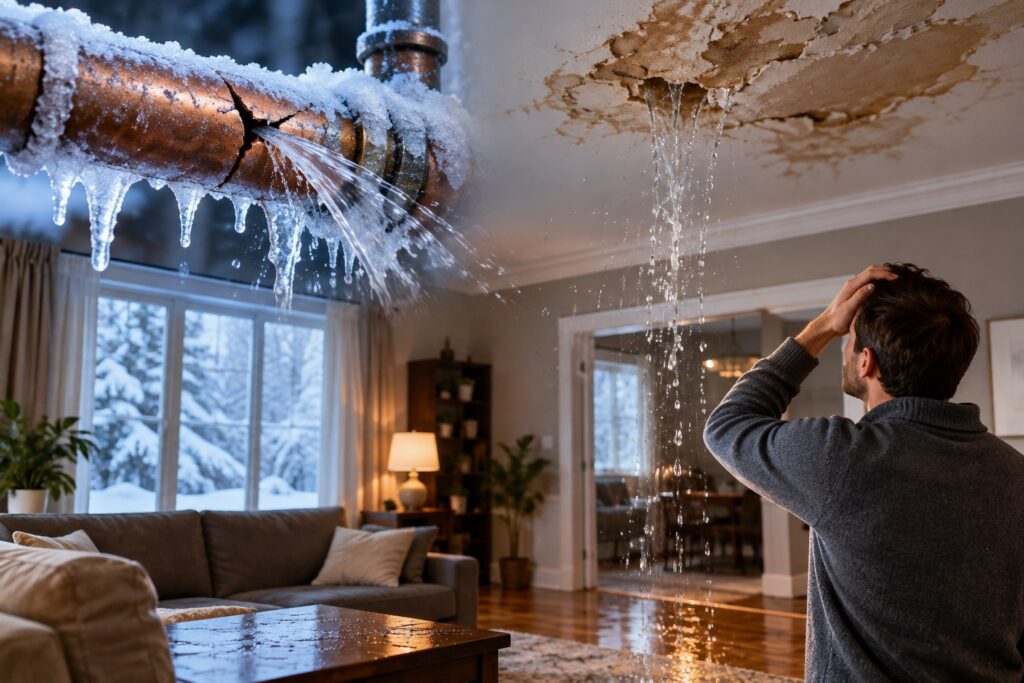
A frozen pipe can create more than a plumbing problem. When a pipe cracks or bursts, water may spread through walls, ceilings, flooring, and other building materials before anyone discovers the damage.
For property owners in Woodstock, NY, winter plumbing problems can be particularly concerning when a home has unheated spaces or isn’t occupied every day. A leak might begin while you’re away, leaving moisture in places that aren’t immediately visible when you return.
At PuroClean Professional Restoration, we help Woodstock homeowners, landlords, and business owners address water damage through professional assessment, water removal, structural drying, and restoration.
If you’ve discovered a leaking or burst pipe, knowing what to check—and what not to touch—can help you protect your property while arranging the appropriate repairs.
Need water damage restoration in Woodstock? Call our Kingston-based team at (845) 481-9060.
1. What to Do When You Discover a Burst or Leaking Pipe
If you find water entering your home or business, concentrate first on stopping additional damage without putting yourself at risk.
Shut Off the Water Supply When Safe
If the leak is coming from a plumbing fixture or appliance, shutting off the nearby supply valve may stop the flow.
For a burst pipe inside a wall or another concealed area, you may need to turn off the building’s main water valve.
Only approach the valve if you can reach it safely.
Don’t enter standing water near electrical equipment, outlets, or exposed wiring. If the location is unsafe or you’re uncertain, leave the area and contact a qualified professional.
Watch for Electrical and Structural Hazards
Water can create electrical hazards even when the affected area appears relatively small.
Stay away from standing water that may contact outlets, appliances, power cords, or electrical systems.
Only operate a breaker panel if you can reach it safely from a dry location. When in doubt, contact a qualified electrician or your utility provider.
Also keep clear of ceilings that are sagging, bulging, or dripping heavily. Water-soaked ceiling materials may become unstable.
Don’t Force a Frozen Pipe to Thaw
If you suspect a pipe is frozen but it hasn’t visibly ruptured, avoid using a torch, open flame, or other uncontrolled heat source.
Improper thawing can damage plumbing and create a fire hazard.
A licensed plumber can evaluate the problem, determine whether repairs are needed, and recommend a safe approach.
Document What You Find
When conditions are safe, take photographs or video of the affected rooms, visible leaks, and damaged belongings.
Make a note of when you discovered the problem and anything you know about how long the property may have been wet.
These details can be helpful when discussing the damage with a restoration professional and your insurance company.
2. Why Frozen Pipes Can Cause Hidden Water Damage
A burst pipe doesn’t always produce an obvious pool of water.
If a plumbing line fails inside a wall, above a ceiling, or beneath a floor, water may spread into surrounding materials before becoming visible.
You might first notice:
- A spreading stain on drywall or a ceiling
- Warped or buckling flooring
- Damp baseboards or trim
- Water appearing in a room below the leak
- Musty odors after the visible water has been removed
These signs don’t establish the full extent of the damage, but they can indicate that moisture has reached building materials.
Water Can Travel Beyond the Initial Leak
For example, a pipe that fails inside an upstairs bathroom wall may allow water to reach the flooring, subfloor, insulation, and ceiling below.
Removing water from the bathroom floor would address only the visible portion of that loss.
Moisture that remains inside building cavities may require additional assessment and structural drying.
A Pipe May Begin Leaking After Temperatures Rise
Freezing can damage a pipe without creating an immediately visible leak.
When ice thaws and water pressure returns, a crack or failed connection may allow water to escape.
That’s one reason a property can develop water damage even after the coldest weather has passed.
If you suspect frozen or damaged plumbing, arrange appropriate plumbing evaluation before assuming the system is safe to operate.
3. Water Damage Risks in Seasonal and Unoccupied Woodstock Homes
Some Woodstock properties are occupied year-round, while others are used for weekends, vacations, or extended visits.
The restoration concerns can be different when a building has been empty for days or weeks.
A Small Leak Can Go Undetected
In an occupied home, someone may notice a dripping ceiling or wet floor shortly after a plumbing failure.
In an unoccupied home, the same leak may continue—or leave materials wet—until someone returns.
If you discover damage after an absence, you may not know exactly when it began.
That uncertainty matters because the duration of moisture exposure can affect which building materials are suitable for drying and which may require removal.
Look Beyond the Room Where You Found Water
Once you’ve confirmed the property is safe to enter, pay attention to areas where water may have traveled.
For example, moisture from a failed upstairs pipe may affect rooms below it. A basement plumbing problem may leave water behind stored belongings or inside finished walls.
You shouldn’t remove walls or flooring yourself just to search for hidden damage.
Professional moisture assessment can help identify which areas warrant closer attention.
Consider the Building’s Heating and Plumbing Conditions
A property that is left unoccupied during winter may have plumbing in areas that are difficult to keep warm, such as crawl spaces, unfinished utility rooms, or spaces near exterior walls.
Not every Woodstock property has these conditions, and a building’s age alone doesn’t determine whether its plumbing is vulnerable.
However, reviewing pipe insulation, heating reliability, and the location of vulnerable plumbing with a qualified contractor can be worthwhile after a freeze-related incident.
For seasonal homeowners, arranging periodic property checks may also help identify leaks earlier.
4. What Happens After the Plumbing Leak Is Repaired?
Repairing the failed pipe stops the source of the problem, but it doesn’t necessarily resolve the resulting water damage.
Water may still be present in flooring, walls, insulation, or other structural materials.
The next step is determining how far the moisture spread and what restoration work is appropriate.
Assessing the Water Damage
At PuroClean Professional Restoration, we assess affected areas to help identify visible damage, possible concealed moisture, and the condition of building materials.
For more information, explore our professional water damage mitigation services.
The water source is an important part of that evaluation.
Water from a recently failed supply line may require different handling from water affected by sewage or outdoor flooding.
Even an initially clean water source can create more complicated conditions when moisture remains in building materials for an extended period.
Removing Standing Water
When standing water is present, professional extraction equipment can remove substantial amounts of liquid water.
This reduces the amount of moisture that must be addressed during structural drying.
Not every leak requires extraction. A concealed plumbing leak may leave damp materials without creating a visible pool of water.
The restoration plan depends on the actual conditions found.
Drying Walls, Floors, and Other Materials
After excess water is removed, affected materials may still retain moisture.
Professional drying can involve air movers and dehumidifiers to help manage evaporation and moisture in the affected environment.
Some materials may require additional access or removal if they cannot be dried appropriately in place.
Moisture monitoring helps evaluate drying progress and determine whether adjustments are needed.
A surface feeling dry to the touch isn’t sufficient proof that the material beneath it has reached appropriate drying conditions.
Determining What Can Be Restored
Water-damaged flooring, drywall, cabinets, and trim aren’t automatically beyond repair.
Some materials may be suitable for drying and retention. Others may need removal because of contamination, physical damage, or the inability to dry them safely.
We discuss the condition of affected materials and the appropriate next steps, including repairs or reconstruction where necessary.
The goal is to make decisions based on the actual damage rather than assuming that everything wet must be replaced—or that everything can be saved.
5. What About Older Homes and Original Building Materials?
Woodstock-area properties can include buildings with original wood floors, plaster walls, older trim, and other finishes that homeowners value.
Water damage can be particularly frustrating when it affects materials that may be difficult to replace with an exact match.
The important question isn’t simply whether a material is old. It’s whether the material is structurally sound, appropriately clean, and capable of being dried or restored.
When Materials May Be Retained
Some wood, plaster, and other building materials can be evaluated for drying rather than immediately removed.
The outcome depends on factors such as water exposure, material composition, existing deterioration, and contamination.
For instance, flooring affected by a relatively recent plumbing leak may present different options from flooring that remained saturated for an unknown period.
When Removal May Be Necessary
Materials that are severely deteriorated, contaminated, or unable to meet appropriate drying goals may require removal.
Concealed moisture can also make it necessary to access affected cavities or spaces.
We explain the findings and restoration considerations before recommending the next steps.
Lead-Safe Considerations
Some older buildings may contain lead-based paint.
If restoration or reconstruction work involves disturbing painted surfaces in a building covered by applicable lead-safe regulations, appropriate work practices are important.
PuroClean Professional Restoration holds EPA Lead-Safe certification, which is relevant to qualifying renovation and repair work. This is separate from our IICRC restoration certification.
6. How Should You Handle Insurance After a Winter Plumbing Loss?
Water damage can raise financial questions almost immediately.
Will the insurer cover the damaged flooring? Does it matter whether the property was unoccupied? What records should you keep?
The answers depend on your specific policy and the circumstances of the loss.
Review Your Policy and Contact Your Insurer
Insurance coverage may depend on the cause of the damage, the steps taken to maintain the property, policy exclusions, and other conditions.
Seasonal or unoccupied properties can have coverage requirements that differ from those of a primary residence.
Avoid assuming that a burst pipe is automatically covered—or excluded.
Review your policy and speak with your insurer about the circumstances and documentation requirements.
Keep Useful Records
When safe, document the visible damage and maintain records of relevant plumbing repairs, emergency expenses, and restoration work.
If you were away when the leak occurred, note when the property was last checked and when the damage was discovered.
These records may help explain the circumstances to your insurance provider.
Understand the Restoration Scope
A water damage assessment can help identify affected materials and the work that may be required.
We can explain the restoration findings and the services being considered, but your insurance company determines coverage under your policy.
There is no single restoration price or insurance outcome that applies to every frozen-pipe loss.
Frequently Asked Questions
If my frozen pipe has thawed, do I still need to check for leaks?
Yes. A frozen pipe may crack or develop a failed connection that becomes apparent when water begins flowing again.
Look for visible leaks, unexplained moisture, or signs of water damage, but avoid reopening a system you believe may be damaged without appropriate professional guidance.
A licensed plumber can inspect the plumbing and determine whether repairs are needed.
Can I use household fans to dry a room after a burst pipe?
For a very small, safely contained clean-water spill, ordinary cleanup and ventilation may be sufficient.
However, when water has reached drywall, flooring, insulation, or concealed spaces, household fans alone may not adequately address retained moisture.
Professional assessment can help determine whether structural drying is necessary.
What should I do if I return to my Woodstock home and discover old water damage?
First, make sure it’s safe to enter.
Avoid electrical hazards, unstable ceilings, and any water that may be contaminated.
If you don’t know how long the property has been wet, don’t assume the problem has resolved because visible surfaces are dry.
Arrange assessment of the affected areas to determine whether moisture, damaged materials, or mold-related conditions still need attention.
Does every frozen-pipe water loss require reconstruction?
No. Some losses can be addressed through appropriate drying and cleanup without significant rebuilding.
Other situations involve materials that must be removed or replaced.
The need for reconstruction depends on the water damage, material condition, and work required to restore the affected areas.
Need Water Damage Restoration in Woodstock, NY?
Whether you’ve discovered a burst pipe, water-damaged flooring, or evidence of a leak that went unnoticed while your property was unoccupied, you don’t have to determine the full extent of the damage on your own.
At PuroClean Professional Restoration, our Kingston-based team serves Woodstock and surrounding Hudson Valley communities.
We provide water damage mitigation, professional drying, and restoration services for residential and commercial properties. Our business holds IICRC certification, and we can help you understand the next steps after a water loss.
Learn more about our Restoration services in Woodstock, NY.
If you’re dealing with water damage after a winter freeze or plumbing failure, contact us to discuss your situation.
Call PuroClean Professional Restoration at (845) 481-9060.
PuroClean Professional Restoration
625 NY-28
Kingston, NY 12401
Serving Woodstock and surrounding communities.

