


Table of Contents
Mold in outdoor sheds is more than just unsightly — it can damage stored belongings, weaken wooden structures, and release spores that spread to nearby areas. Understanding how to remove mold from shed surfaces effectively is essential for protecting your property, maintaining air quality, and preventing costly repairs.
In Lafayette, IN, where fluctuating temperatures and high seasonal humidity often lead to excess moisture, sheds are particularly vulnerable to mold growth. The combination of limited airflow and damp conditions creates an ideal environment for spores to thrive. In this guide, the experts at PuroClean of Lafayette explain how to remove mold from a shed safely, prevent it from returning, and maintain a clean, dry storage space throughout the year.
Understanding Mold Growth in Sheds
Mold thrives in dark, damp, and poorly ventilated environments. A shed often fits this description, especially during Indiana’s humid summers or rainy springs. When air circulation is low and moisture accumulates, mold spores can begin to grow within 24 to 48 hours.
Common Causes of Mold in Sheds
- Leaky roofs or windows: Rainwater can seep through damaged shingles or cracked seals.
- Poor ventilation: Limited airflow traps humidity inside, creating the perfect breeding ground for mold.
- Condensation: Warm, moist air meeting cool shed walls or floors can produce condensation that supports mold growth.
- Ground moisture: Water rising from soil or poor drainage around the foundation adds humidity from below.
Identifying and addressing these moisture sources is the first and most important step before starting any cleaning process.
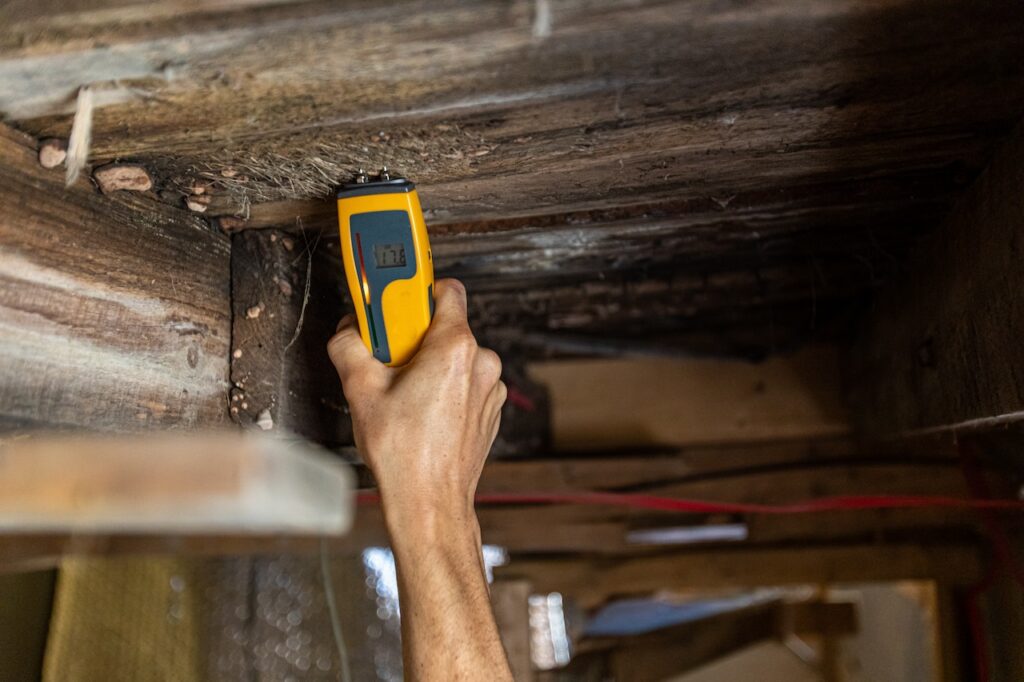
Moisture meters are capable of detecting water through a variety of building mediums.
Step-by-Step: How to Remove Mold from Shed
Once you’ve addressed the moisture source, you can safely remove the mold. Follow these steps carefully to ensure thorough and lasting results.
Step 1: Protect Yourself
Mold removal can release spores and allergens into the air, posing risks to your health. Before starting, wear protective gear—including gloves, safety goggles, and a respirator mask—to prevent inhaling spores or having them come into contact with your skin or eyes.
Long sleeves and pants are also recommended. Proper protection ensures you can work safely and comfortably throughout the cleaning process, especially in confined spaces like a shed.
Step 2: Clear and Inspect the Shed
Empty your shed completely so you can see all affected areas. Inspect every item for mold or dampness. Non-porous materials such as metal, glass, or plastic can usually be cleaned and salvaged, while porous materials like cardboard, cloth, or untreated wood often retain mold deep within their fibers and should be discarded.
This step prevents cross-contamination and gives you a clean workspace for treatment. Taking time to sort through items also helps identify whether leaks or condensation have damaged your belongings.
Step 3: Clean Affected Surfaces
Prepare a cleaning solution using either:
- 1 cup of household bleach mixed with 1 gallon of water, or
- A commercial mold cleaner recommended by the EPA (EPA Mold Cleanup Guidelines).
Scrub the affected areas with a stiff brush, applying firm pressure to remove visible growth. Ventilate the shed during cleaning by opening windows and doors or using a fan to avoid inhaling fumes.
Step 4: Rinse and Dry the Area
After scrubbing, rinse each cleaned surface with fresh water to remove any chemical residue or loosened mold. Thorough drying is critical; even slight dampness can allow mold to return within days. Use portable fans, a dehumidifier, or natural ventilation to circulate air and accelerate drying.
Check corners, flooring, and wood joints carefully, as these areas often trap residual moisture. The goal is to make sure the entire shed feels completely dry before you move on to disinfection.
Step 5: Disinfect and Deodorize
Once the shed is dry, apply a disinfectant or white vinegar spray to all cleaned surfaces. This final step kills any lingering spores and neutralizes musty odors that mold leaves behind. Allow the disinfectant to sit for several minutes before wiping or air-drying the area.
Vinegar, in particular, has natural antifungal properties and can help prevent regrowth. Disinfecting also leaves the space fresh and ready for future use, giving you peace of mind that the cleanup was effective and long-lasting.
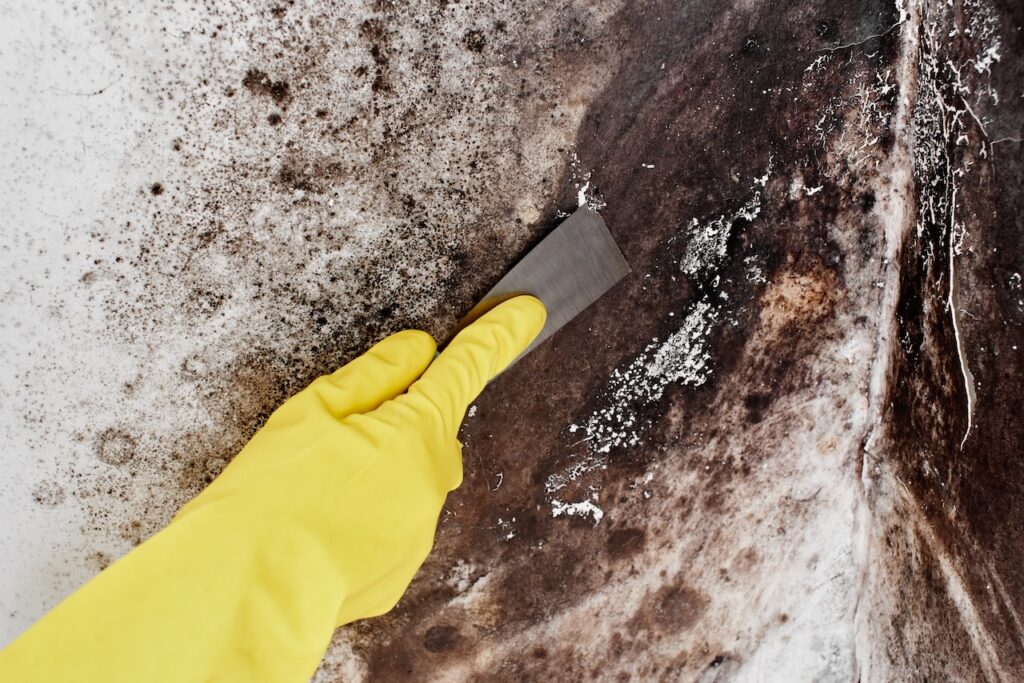
Mold can be the source of numerous health concerns, and proper protection should be worn during removal.
Weatherproofing and Mold Prevention
After removing mold, focus on preventing it from returning. Mold prevention is a combination of moisture control, ventilation, and regular maintenance — especially in humid climates like Lafayette, IN.
Improve Ventilation
Proper airflow is one of the simplest and most effective ways to prevent moisture buildup. Install vents or a small exhaust fan to circulate air and reduce humidity inside the shed. During dry days, leave doors or windows open for a few hours to allow fresh air to replace trapped moisture.
Improved ventilation prevents condensation from forming on walls and ceilings, keeping your shed’s interior dry and less inviting to mold spores.
Seal Leaks and Cracks
Even minor gaps in a shed’s structure can let in rainwater or humid air. Regularly inspect the roof, doors, and windows for leaks, and reseal them with high-quality caulk or weatherstripping. Replace any warped wood or damaged panels that could allow water intrusion during storms.
By closing these entry points, you reduce the likelihood of moisture accumulating inside, protecting both the shed and any items stored within it.
Use a Dehumidifier or Moisture Absorber
If your shed tends to stay damp, a dehumidifier or moisture absorber can make a major difference. Choose a small, energy-efficient unit or place moisture-absorbing materials such as silica gel, activated charcoal, or calcium chloride crystals in corners and along walls.
Maintaining indoor humidity between 40% and 50% prevents the air from becoming overly moist, keeping mold spores dormant and minimizing odor or wood rot.
Apply Protective Coatings
Sealing the shed’s surfaces adds a valuable layer of protection against future mold growth. Treat wooden walls, floors, and shelving with a water-repellent sealant or outdoor-grade paint that resists moisture penetration.
Reapply coatings as needed—typically every one to two years—to maintain effectiveness. This barrier helps prevent wood fibers from absorbing water, reducing the risk of discoloration, decay, and mold formation over time.
Routine Maintenance to Keep Your Shed Mold-Free
Keeping your shed dry is an ongoing process. Make inspection and cleaning part of your seasonal maintenance routine.
- Inspect quarterly for leaks, cracks, or damp spots.
- Clean dust and debris to keep air moving freely.
- Check stored items periodically — moisture can hide in boxes or under shelves.
- Trim nearby vegetation that blocks airflow or traps moisture against the shed walls.
These small steps help maintain good air circulation and stop minor issues before they become costly mold problems.
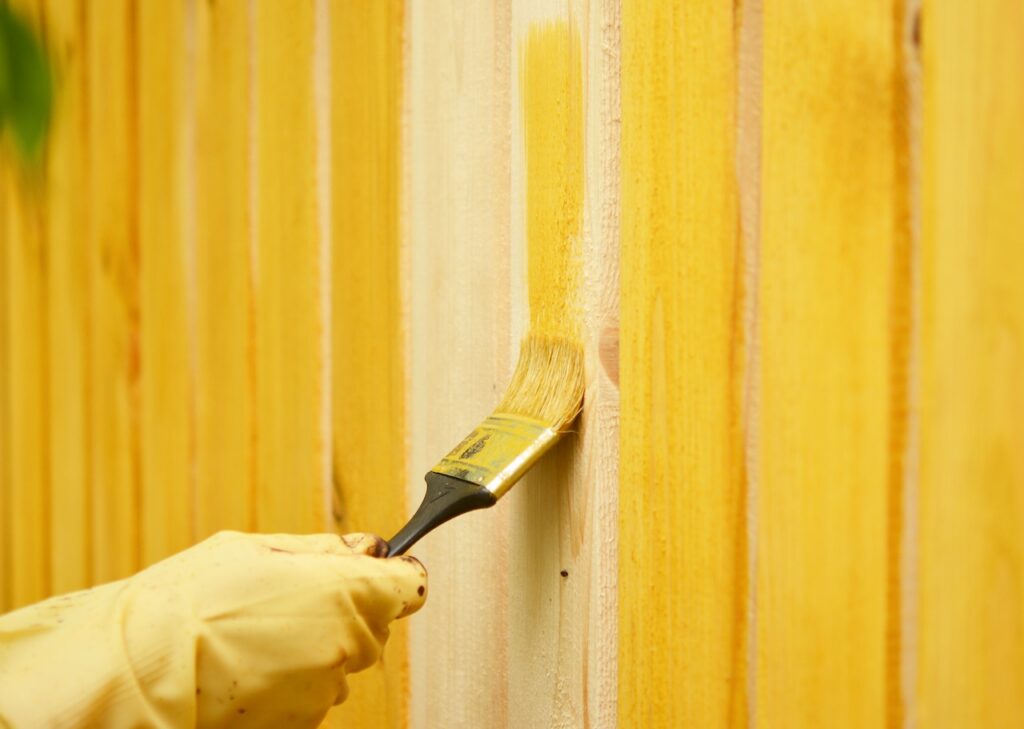
Treating wood with a waterproof sealant can help mitigate mold development.
Comparing DIY vs. Professional Mold Removal
| Approach | Advantages | Disadvantages |
|---|---|---|
| DIY Mold Removal | Low cost; suitable for small, visible mold spots | Risk of incomplete cleanup; may not address hidden mold or moisture sources |
| Professional Remediation | Comprehensive cleaning and drying; prevents recurrence | Higher upfront cost but more effective for long-term results |
If the mold covers more than 10 square feet, or if you suspect mold has spread into walls or insulation, the EPA recommends hiring professionals for safe removal.
Choose PuroClean of Lafayette for Mold Removal and Prevention
When DIY cleaning isn’t enough, PuroClean of Lafayette is your trusted local expert for professional mold remediation. Our certified technicians provide complete mold inspection, removal, and prevention services for homes, sheds, and outbuildings across Lafayette, West Lafayette, Dayton, and nearby communities.
Using advanced drying, dehumidification, and air purification systems, we eliminate mold at its source and ensure it doesn’t return. Each project begins with a detailed inspection and moisture assessment, followed by safe containment to stop spores from spreading. We then perform deep cleaning, HEPA filtration, and surface treatments to remove all traces of contamination.
If you’re unsure how to remove mold from shed spaces safely, our experts can handle the process from start to finish, restoring your property to a clean and healthy condition while preventing future mold growth.
At PuroClean of Lafayette, our mission is to restore your property safely and efficiently while protecting your health and belongings. For fast, professional assistance, call us today at (765) 701-4242. Our team is available 24/7 to respond to emergencies and help you maintain a clean, healthy, and mold-free environment.
Frequently Asked Questions
What’s the fastest way to remove mold from a shed?
Scrub affected areas with a bleach-and-water solution (1 cup bleach per gallon of water), then dry completely to prevent regrowth.
Can mold spread from my shed to my house?
Yes. Mold spores can travel through the air and potentially spread indoors, especially if the shed is attached or close to the home.
What temperature kills mold effectively?
Most molds die at temperatures above 140°F (60°C), but physical removal and drying are still necessary to prevent regrowth.
Is it safe to use bleach on wooden surfaces?
Yes, for surface cleaning. However, porous wood may retain moisture, so drying and sealing afterward are essential.
How can I prevent mold in my shed year-round?
Keep the interior dry with good ventilation, repair leaks immediately, and use dehumidifiers or vapor barriers in humid months.
Summary
- For large or recurring mold problems, contact PuroClean of Lafayette — your local mold remediation experts.
- Mold in sheds is common in Lafayette’s humid climate but can be prevented with proper ventilation and moisture control.
- Always wear protective gear and clean with bleach or EPA-approved mold removers.
- Seal cracks, repair leaks, and dry thoroughly after cleaning.
- Regular inspection and maintenance are essential to prevent recurrence.
Read more about this topic: