



A homeowner off Lumsden Road called us last September with a specific question she’d been wrestling with for about three weeks. Her teenage son had developed what seemed like persistent allergy symptoms that had started around the time his bedroom had developed a slightly musty smell. She couldn’t see any visible mold anywhere. She wasn’t sure whether what she was noticing warranted professional mold inspection or whether she was overthinking a situation that would resolve on its own. The question she was asking is one most Brandon property owners face at some point, and the honest answer requires evaluating specific factors rather than defaulting to either immediate professional response for every concern or dismissing situations that warrant attention. Here’s the decision framework that actually works for determining when your Brandon property genuinely needs professional mold inspection.
Factor One: What Visible Signs Are Actually Present?
The first factor is what you can actually observe at the property. Different categories of visible signs warrant different responses.
The specific visible indicators:
- Confirmed visible mold that’s clearly present and identifiable typically warrants professional inspection and remediation planning
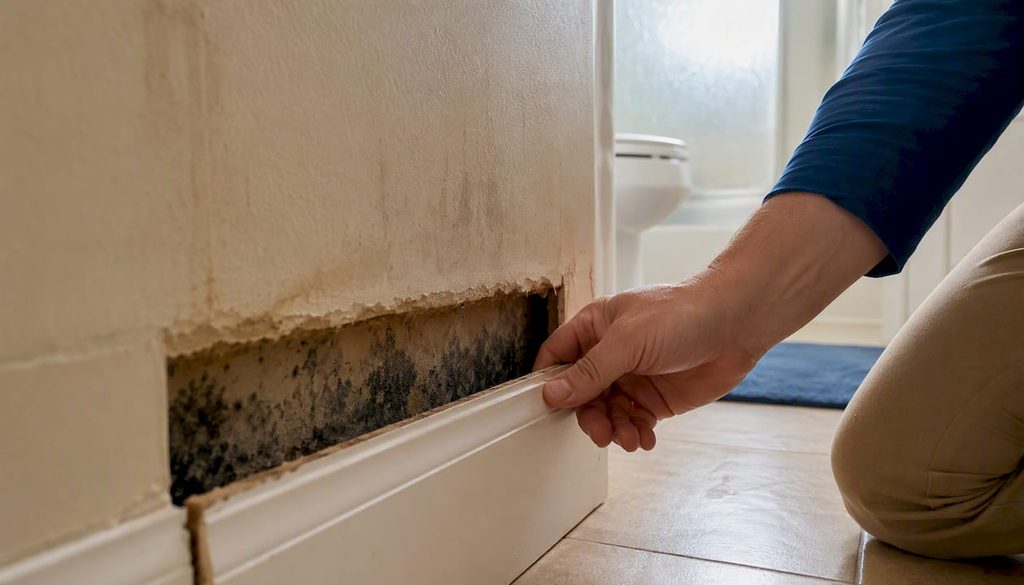
- Suspicious staining or discoloration that may be mold but may be other conditions warrants professional assessment to determine which
- Water staining patterns on ceilings, walls, or near fixtures indicating moisture conditions that may be producing mold in areas you can’t see
- Material changes including warping, buckling, or texture changes in areas that have had moisture exposure
- Visible condensation patterns that persist beyond temporary conditions
- Peeling paint or wallpaper in areas that may indicate moisture issues
- Caulk or grout deterioration at bathroom or kitchen fixtures that may indicate ongoing moisture
- No visible signs but other factors present that warrant attention
For the Lumsden Road homeowner, she had no visible mold at all in her son’s bedroom. The visible-only test would have told her nothing was wrong. The actual conditions turned out to involve hidden mold growth inside the wall assembly near her HVAC return vent that was contributing to the symptoms she was observing.
For Brandon homes specifically, the humid Tampa Bay climate means hidden mold conditions often develop before visible signs appear. Properties where only visible mold would prompt professional response often miss conditions that have been developing for weeks or months before surface symptoms would appear.
Factor Two: What Occupant Symptoms Are Present?
The second factor involves whether occupants are experiencing symptoms that may relate to mold exposure. Symptoms are often the most reliable early indicator of mold conditions that aren’t visible.
The specific symptom indicators:
- Persistent respiratory symptoms including coughing, wheezing, or shortness of breath that develop and persist
- Allergy-like symptoms that correlate with time at the property versus time away
- Recurrent sinus issues that don’t resolve with typical treatment
- Skin irritation developing without other apparent cause
- Headaches that correlate with property occupancy patterns
- Fatigue or cognitive effects that improve during time away from the property
- Asthma exacerbation in individuals with existing asthma
- Multiple family members experiencing similar symptoms
- Pets exhibiting respiratory or skin symptoms
For the Lumsden Road situation, her son’s symptoms had developed gradually over several weeks and were consistently worse after sustained time in his bedroom. The pattern of symptom timing correlated with occupancy of the specific space where hidden mold conditions turned out to exist. The symptoms were the earliest reliable indicator of the hidden conditions.
For Brandon families where any combination of these symptoms is present without clear other explanation, professional mold inspection can identify or rule out mold exposure as a contributing factor. The specific timeline correlation between symptoms and property occupancy is one of the strongest indicators.

Factor Three: What’s the Property’s Recent Water History?
The third factor is whether the property has experienced water events that may have produced conditions leading to mold development.
The specific water history considerations:
- Recent water damage events including any leaks, floods, or plumbing failures
- Hurricane or tropical weather damage that may have produced water intrusion
- HVAC condensate issues that may have affected ceilings, walls, or flooring
- Plumbing fixture leaks including slow leaks that may have been ongoing
- Roof leaks including small ones that may have been repaired but may have produced conditions in building materials
- Appliance leaks including dishwashers, washing machines, or refrigerator ice makers
- Historical water staining indicating past moisture conditions
- Unaddressed mitigation after water events where drying wasn’t properly completed
- Previous mold treatments that may not have fully resolved underlying conditions
For Brandon properties specifically, the cumulative 2024-2026 hurricane season activity means many properties have experienced water events in recent memory. Properties where water events were fully addressed with proper professional water damage restoration typically don’t develop subsequent mold issues. Properties where water events received inadequate response often develop mold conditions weeks or months after the original event.
For the Lumsden Road homeowner, her property had experienced minor water intrusion from Hurricane Milton in October 2024 that had been addressed with household equipment rather than professional response. The hidden mold conditions traced to insufficient drying after that event, with growth developing slowly in the subsequent months as the climate conditions continued producing moisture in materials that hadn’t been properly dried.
Factor Four: What Are the Specific Property Risk Factors?
The fourth factor involves whether the property has specific conditions that increase mold risk independent of visible signs or current symptoms.
The specific property risk factors:
- HVAC system age and maintenance affecting both humidity control and potential contamination
- Attic ventilation adequacy affecting condensation and moisture management
- Crawl space conditions for homes with crawl spaces where moisture management matters significantly
- Window seal condition affecting air and moisture infiltration
- Roof age and condition affecting water intrusion potential
- Plumbing age and condition affecting leak potential
- Historical flooding exposure including whether the property is in flood-prone areas
- Construction materials including whether the property uses materials particularly susceptible to mold issues
- Previous mold history on the property including whether prior remediation addressed underlying causes
- Vacancy periods when properties may have experienced unmonitored conditions
For Brandon properties generally, the humid subtropical climate means properties with multiple risk factors benefit from periodic professional inspection even without current symptoms or visible signs. Properties with minimal risk factors may not warrant inspection without specific triggers.
For property managers overseeing Brandon rental properties, these risk factors particularly matter since tenant turnover creates periods when property conditions may not be fully monitored. Vacant units that sat through summer humidity sometimes develop mold conditions that become apparent when new tenants move in.
Factor Five: What’s at Stake if You Delay?
The fifth factor involves evaluating the consequences of delayed inspection if conditions are actually present.
The specific stakes considerations:
- Family health including vulnerable occupants like children, elderly, or immunocompromised individuals
- Property value implications of unaddressed mold conditions discovered during future sale
- Insurance claim timing that may be affected by delayed response
- Remediation scope that typically expands with delayed response
- Secondary damage potential as mold conditions affect additional materials
- HVAC system implications as mold conditions can distribute through ductwork
- Occupant disruption during eventual remediation, which is typically more extensive after delays
- Documentation gaps for property records that may matter for insurance or sale purposes
For situations where symptoms correlate with property occupancy or where risk factors combined with any concerning signs are present, delayed inspection typically produces worse outcomes than prompt professional response. The specific stakes typically favor inspection over waiting.
For the Lumsden Road situation, the three-week delay between her son’s first symptoms and her eventual call for professional response allowed the hidden mold conditions to continue developing. Earlier inspection would have identified the conditions sooner with less scope accumulated during the delay period.
What the Five-Factor Evaluation Actually Produces
Combining these five factors for any specific situation typically produces clear decision direction. Properties with no visible signs, no symptoms, no water history, minimal risk factors, and no particular stakes typically don’t warrant immediate professional inspection. Properties with any combination of visible signs, concerning symptoms, recent water events, significant risk factors, or important stakes typically warrant professional inspection to identify or rule out mold conditions.
For the Lumsden Road homeowner, her five-factor evaluation pointed clearly toward professional inspection. No visible signs but symptoms present, prior water event from hurricane season, HVAC-related risk factors, and family health stakes all aligned to indicate professional response was warranted. The inspection confirmed hidden mold conditions in the wall assembly, mold removal addressed the conditions, and her son’s symptoms resolved within weeks of the project completion.
For Brandon property owners facing similar decision questions, running honestly through these five factors produces clearer direction than either reflexive dismissal of concerns or automatic professional engagement for every observation.
What the Mold Inspection Decision Actually Reduces To
How to know when your Brandon property actually needs professional mold inspection reduces to honest evaluation across visible signs, occupant symptoms, water history, property risk factors, and stakes at risk from delay. Brandon property owners who evaluate their situations against these five factors consistently reach decisions that fit their actual circumstances rather than defaulting to either extreme. The Lumsden Road homeowner’s situation illustrated how properties can need mold inspection even without visible signs when other factors align to indicate attention is warranted. For every Brandon property owner wondering whether specific concerns warrant professional mold inspection, the five-factor framework produces honest answers specific to the property conditions and occupant situations actually present.
Get Professional Mold Inspection at Your Brandon Property When Factors Indicate It
The team at PuroClean Emergency Restoration Specialists is ready to help. Contact us today to schedule professional mold inspection at your Brandon, FL property when the five-factor evaluation indicates that systematic assessment with moisture meters, thermal imaging, and comprehensive documentation is warranted for your specific situation.