


Water entering your basement due to drainage problems, flash floods, appliance failures, or other reasons can cause severe damage to your home.
Here’s what you can do to keep water out of your basement:
1. Clean Rain Gutters
Blocked gutters may cause roof water to pour directly into your home’s foundation, increasing the risk of basement flooding. Remove any debris, such as leaves or branches, from the gutters and check the gutters for loose particles if you have asphalt roofing. Tighten any loose gutter straps and spout extensions. If there is gunk in the downspouts, clean them by pouring water into the downspouts with a garden hose.
2. Extend Downspouts
To protect your basement from excess water, downspouts should extend at least five feet away from your house. This can be achieved by adding plastic or metal extensions to the downspouts. Alternatively, consider having an underground drain pipe installed. This system can send gutter run-off away from your house.
3. Slope The Ground Away From Your Foundation
Make sure that the ground next to your foundation slopes away from the foundation to divert rainwater away from your home. The “crown” of dirt around your house should slope at least six inches over the first 10 feet in all directions.
4. Seal Gaps In The Basement
Water may leak into your basement through gaps or cracks around plumbing pipes or cracks in concrete walls. Seal these gaps with polyurethane caulk or hydraulic cement. However, if water comes through the floor, sealing gaps won’t do the trick, and you need to fix the groundwater problem.
5. Install A French Drain
For serious water problems, install a curtain drain such as a French drain. This type of drainage system consists of a series of underground pipes that divert water away from your home’s foundation.
6. Waterproof Interior Basement Walls.
Condensation that forms on basement walls may be prevented by applying sealant on the walls. You can waterproof basement walls with concrete coatings, silicate-based concrete sealers, waterproofing paint, or plastic sheets or panels. Alternatively, waterproof exterior walls of the basement to fix gaps in the foundation, although it’s a costly job that requires excavating around the house.
7. Install A Sump Pump.
These devices protect against flooding by pumping out water that has accumulated in the sump basin. When the water level in the basement floor rises, the sump pump will automatically discharge the water outside your house. Learn how to choose a sump pump here and how to test a sump pump in this article.
In case your basement has flooded, call a water damage contractor immediately. To avoid safety hazards, don’t enter the basement and make sure not to make direct contact with floodwater. For flood water damage repair and mold remediation services, contact the PuroClean of Lakeville office. Need help now? See water damage restoration in Savage and nearby cities.
Newer homes can still take on water. See how we help keep water out of your basement in Elko New Market and Credit River.
Groundwater is close to the surface in parts of Savage; see water damage restoration in Savage.
A Minnesota Calendar to Keep Water Out of Your Basement
The seven tips above work best when you do them at the right time of year. Minnesota weather swings from deep freezes to fast snowmelt to summer storms, so here is a simple schedule to keep water out of your basement all year.
Spring (March to May)
- Test the sump pump before the snow melts by pouring a bucket of water into the pit.
- Clear snow and ice away from the foundation and window wells so melt water can drain.
- Walk the lower level after every warm spell and heavy rain, and look for damp spots along the floor and walls.
- Reattach any downspout extensions that came loose over the winter.
Summer (June to August)
- Run a dehumidifier in the lower level. Damp air can leave water on cool walls even when no water is coming in.
- Check window well covers and drains after big storms.
- Look at the grading. Soil settles, and a low spot next to the house can send water toward the basement.
Fall (September to November)
- Clean gutters after the leaves drop.
- Disconnect garden hoses and shut off outdoor spigots before the first hard freeze.
- Make sure the sump pump discharge line points away from the house and is not blocked.
Winter (December to February)
- Keep the heat on and open cabinet doors on outside walls during very cold nights so pipes do not freeze.
- Watch for ice dams on the roof. They can push melt water into walls that drain down to the basement.
- Know where your main water shutoff is in case a pipe bursts.
Signs Water Is Getting Into Your Basement
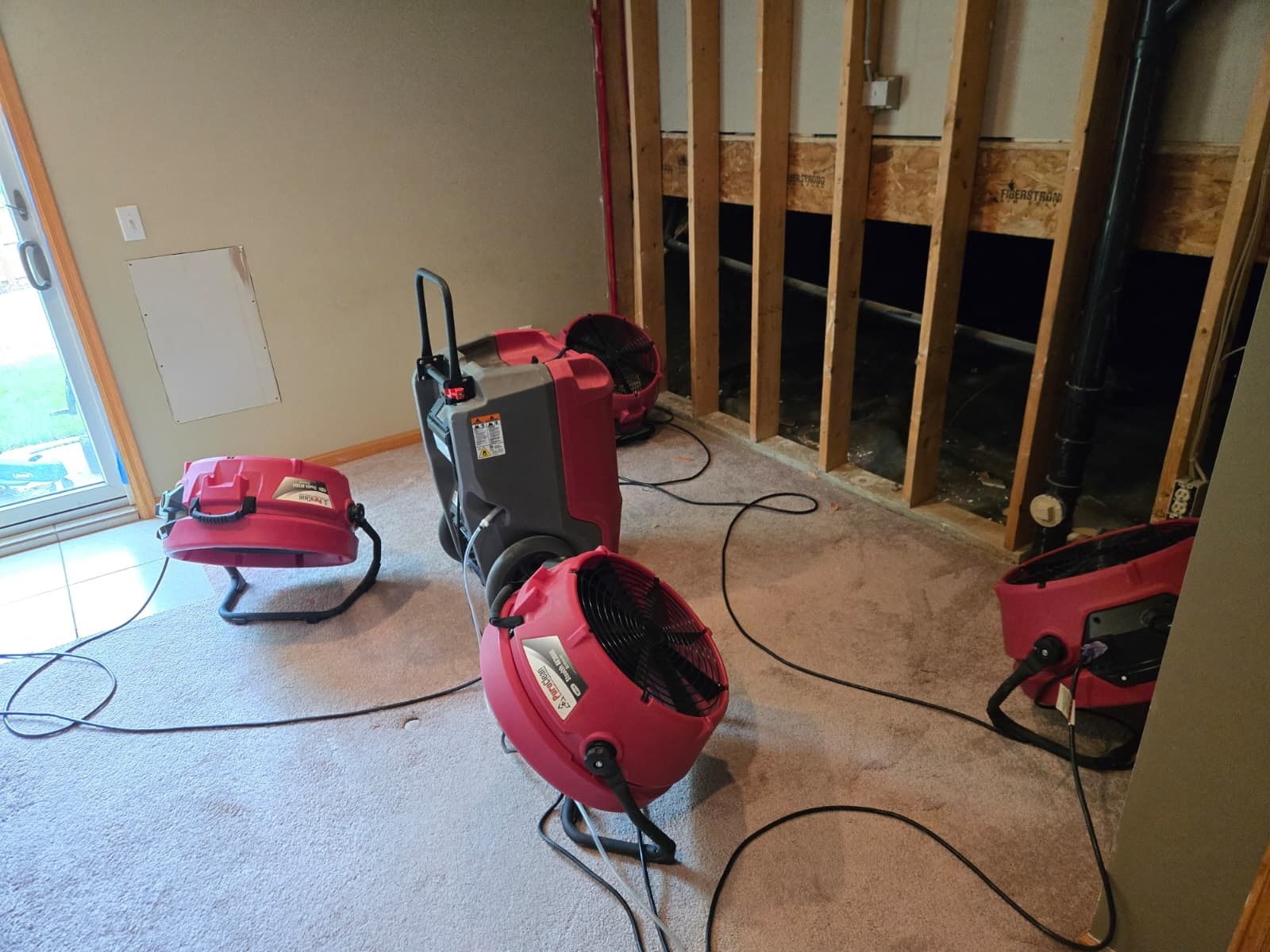
Water does not always show up as a puddle. Watch for these early signs that it is time to work harder to keep water out of your basement:
- A musty or earthy smell that does not go away
- White, chalky deposits on concrete walls (called efflorescence)
- Peeling paint or bubbling drywall near the floor
- Damp carpet edges or rust on metal shelving and appliance feet
- Water stains around window wells or floor drains
When You Cannot Keep Water Out of Your Basement
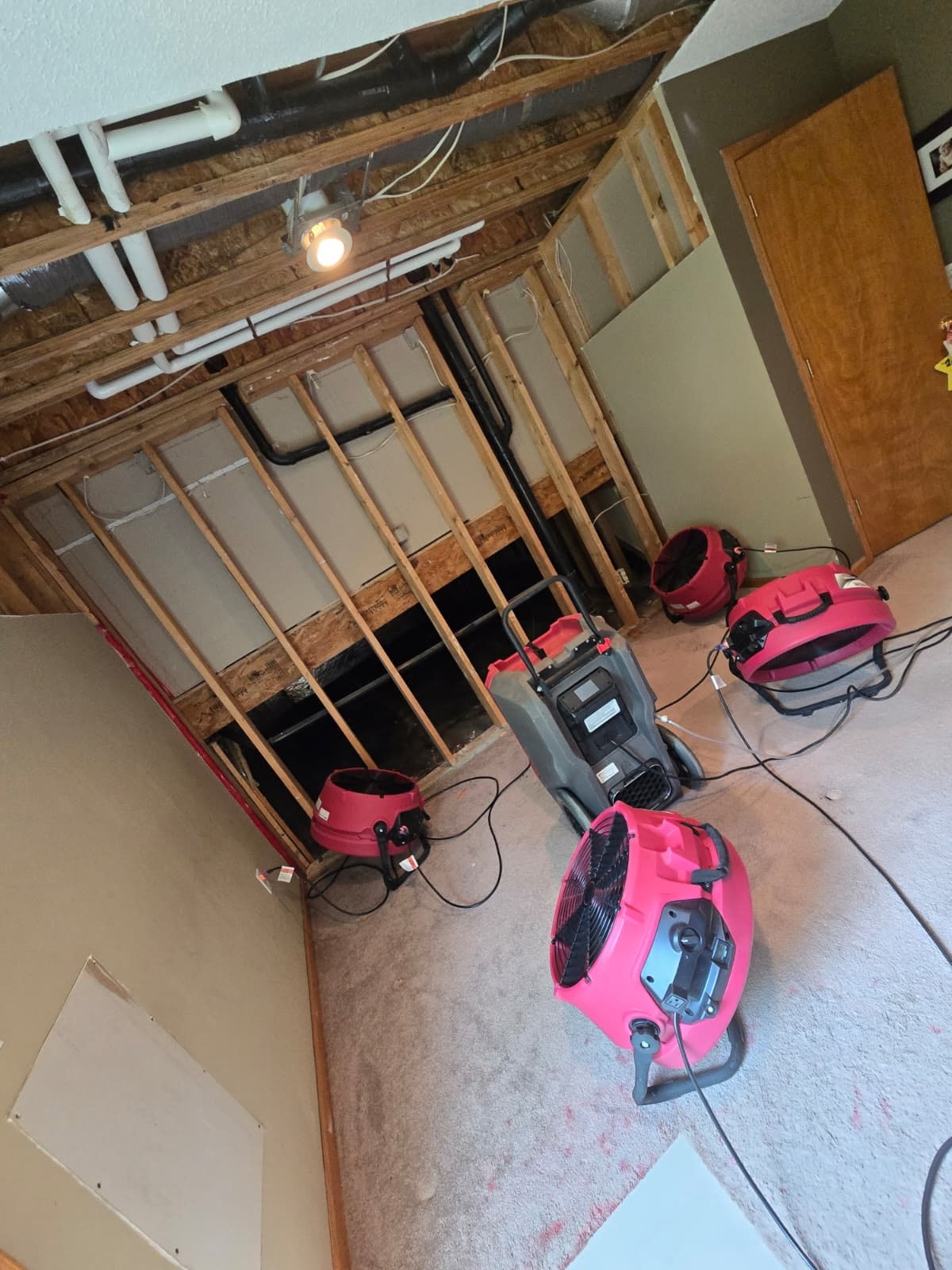
Even when you work hard to keep water out of your basement, a house can flood when a storm drops a lot of rain at once or a sump pump fails. If water does get in:
- Stay out of standing water near outlets, cords or the furnace. Turn off power to the area only if you can reach the breaker safely.
- Stop the source if you can, such as closing the main water valve for a broken pipe.
- Take photos and video for your insurance company.
- Move small items to a dry room. Our crews lift and move heavy furniture off wet floors.
- Call PuroClean of Lakeville at (952) 377-8477, 24/7.
The National Weather Service flood safety page has more tips for staying safe during heavy rain. Standard homeowners policies often do not cover flooding from outside water, so ask your agent about it. FloodSmart.gov explains how flood insurance works. Your insurer decides what your policy covers.
How We Help After Water Gets In
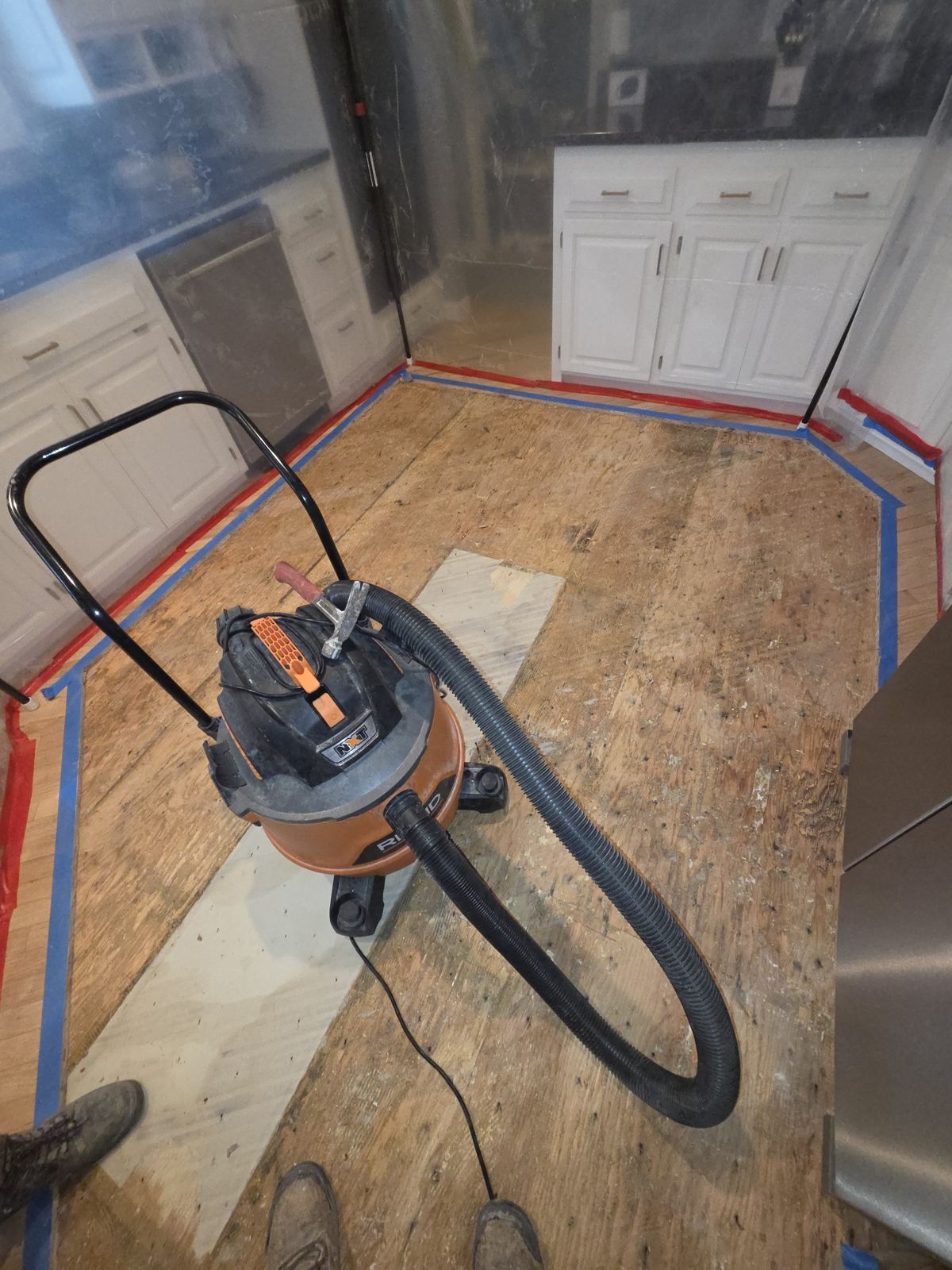
Our IICRC-certified team removes standing water, finds hidden moisture with meters and a thermal camera, and dries the structure with air movers and dehumidifiers. We make follow-up moisture-monitoring visits until the materials are dry, then handle repairs and reconstruction if needed. We work with insurance companies, help document your claim and can bill your insurer directly.
We will also point out what may have let the water in, so you can take steps to keep water out of your basement next time.
Which Tip Matters Most for Your Home?
It depends on where the water comes from. Use what you see to pick the right fix:
- Water along the bottom of one wall after rain: start outside. Check gutters, downspouts and grading on that side. These steps keep water out of your basement at the source.
- Water near a window well: clean the well drain and add a cover.
- Water coming up through the floor or a floor crack: this is usually groundwater. A sump pump or drain tile is the usual way to keep water out of your basement in that case.
- Water near a pipe or appliance: it may not be outside water at all. Check supply lines, the water heater and the washer.
Older homes and newer homes both take on water. The right mix of fixes is what keeps water out of your basement over time.
Keep Water Out of Your Basement: FAQ
Do I need a sump pump?
If your home has a sump pit, keep the pump working and consider a battery backup. Many south metro homes have one, and it is often the main thing that helps keep water out of your basement during heavy rain.
How far should downspouts reach?
At least five feet from the house, as tip 2 above explains. Longer is better if the yard slopes toward the foundation.
Will sealing the walls stop all water?
Sealing helps with small gaps and dampness. If water comes up through the floor or along the joint where the floor meets the wall, the cause is usually groundwater or drainage, and sealing alone will not keep water out of your basement.
Is your estimate free?
Yes. If water has already gotten in, call (952) 377-8477 for a free estimate. We are based in the Lakeville area and serve the whole south metro.
Need help now? See our water damage restoration service, or read more tips on preventing flooding in your home.

