


If you live in Burnsville, you’ve probably heard the rain on the roof by now. The National Weather Service Twin Cities office says a widespread, soaking rain will fall today through Wednesday, with 0.75 to 2 inches expected across the region. Today and Tuesday also stay unusually mild, with highs in the 60s, before the rest of the week cools into the 40s and 50s.
Mild, wet days followed by a cool-down are a setup for basement mold in Burnsville. Rain soaks the soil around your foundation, damp air settles in the lower level, and once the furnace kicks on, moisture condenses on cool walls, windows, and pipes. If your basement smells musty by Thursday, here’s what to do in the first 48 hours and when to call for help.
Why Basement Mold in Burnsville Shows Up After a Rainy Stretch
Mold spores are everywhere. They only become a problem on surfaces that stay damp. As the U.S. EPA puts it, the key to mold control is moisture control. The EPA also says that if wet materials are dried within 24 to 48 hours after a leak or spill, in most cases mold will not grow. That’s your window.
In Burnsville split-levels and ramblers with living space partly below grade, rainy weeks let moisture in a few common ways:
- Seepage through block walls, floor cracks, or the joint where the wall meets the slab
- Window wells full of leaves that hold water against the glass and frame
- Short downspouts that drop roof water right next to the foundation
- Condensation on cold walls, windows, and water pipes once the heat comes on
- Carpet on concrete or paneling over block, which trap dampness where you can’t see it
Your 48-Hour After-Rain Basement Checklist
Here’s a free checklist for this week. Most of it takes about 15 minutes and a flashlight.
- Do a smell test. Walk the basement before you open any windows. A musty, earthy odor usually means moisture, and often mold, nearby.
- Check the low spots. Look at wall corners, under the stairs, behind the furnace and water heater, and along the bottom of finished walls for staining or damp spots.
- Press on the carpet. Kneel on carpet near exterior walls. If it feels cool and damp, the pad underneath may be wet.
- Look at windows and pipes. Water droplets on glass or cold pipes are condensation, a sign the air is too humid.
- Check humidity. A simple hygrometer from a hardware store tells you where you stand. The EPA recommends keeping indoor humidity below 60 percent, ideally between 30 and 50 percent.
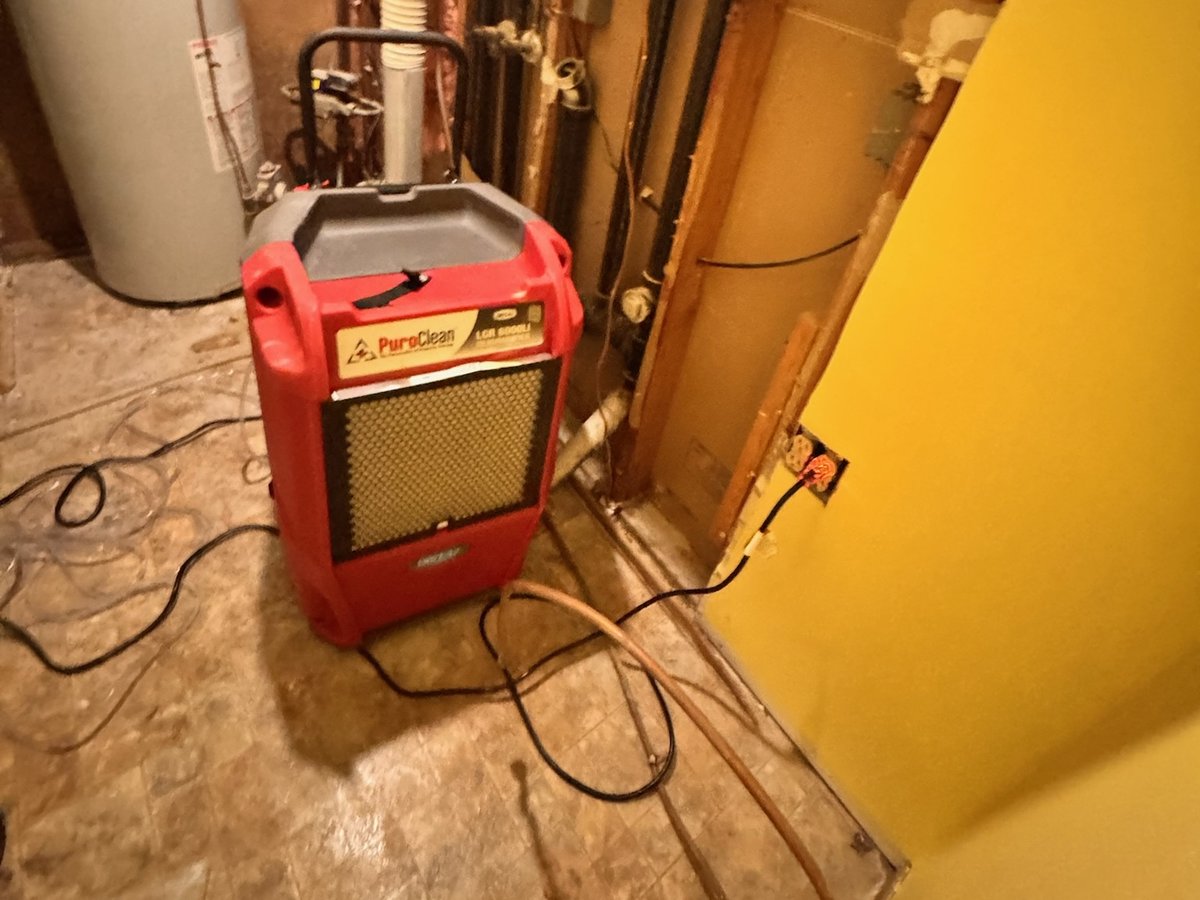
- Dry anything wet right away. Pull wet rugs and cardboard boxes off the floor, run a dehumidifier, and use fans if outlets and cords are dry.
- Fix the water path. Once the rain stops, clear window wells, extend downspouts, and make sure the sump pump discharge empties well away from the house.
If You Find Mold: First Steps and Safety Warnings
Don’t scrub, sand, or dry-brush it
Disturbing mold puts spores into the air, where they drift to other rooms. Leave it alone until you have a plan.
Keep the furnace from spreading it
If the growth is near a return vent or ductwork, the EPA advises against running an HVAC system you suspect is contaminated, because it can spread mold through the house. That matters this week, as many of us turn the heat on for the first time.
Protect yourself and the people at risk
The Minnesota Department of Health notes that common symptoms from mold can include coughing, runny nose, wheezing, and sore throat, and that people with asthma or allergies may notice their symptoms get worse. Keep children and anyone with respiratory or immune concerns away from the area, and talk with a doctor about health worries.
Small spot or bigger problem?
The EPA says that if the moldy area is less than about 10 square feet (roughly a 3-foot by 3-foot patch), most homeowners can clean it themselves on hard surfaces, using gloves, goggles, and an N-95 respirator, after the moisture problem is fixed. Never mix bleach with cleaners that contain ammonia. Painting over mold doesn’t solve it.
When to Call a Mold Remediation Professional
Call for help when:
- The growth covers more than about 10 square feet, or keeps coming back
- You smell mold but can’t find it, which often means it’s behind paneling, drywall, or carpet
- Drywall, insulation, or carpet pad got wet and didn’t dry within a day or two
- The water came from a floor drain or sewer backup
- Someone in the home has asthma, allergies, or a weakened immune system
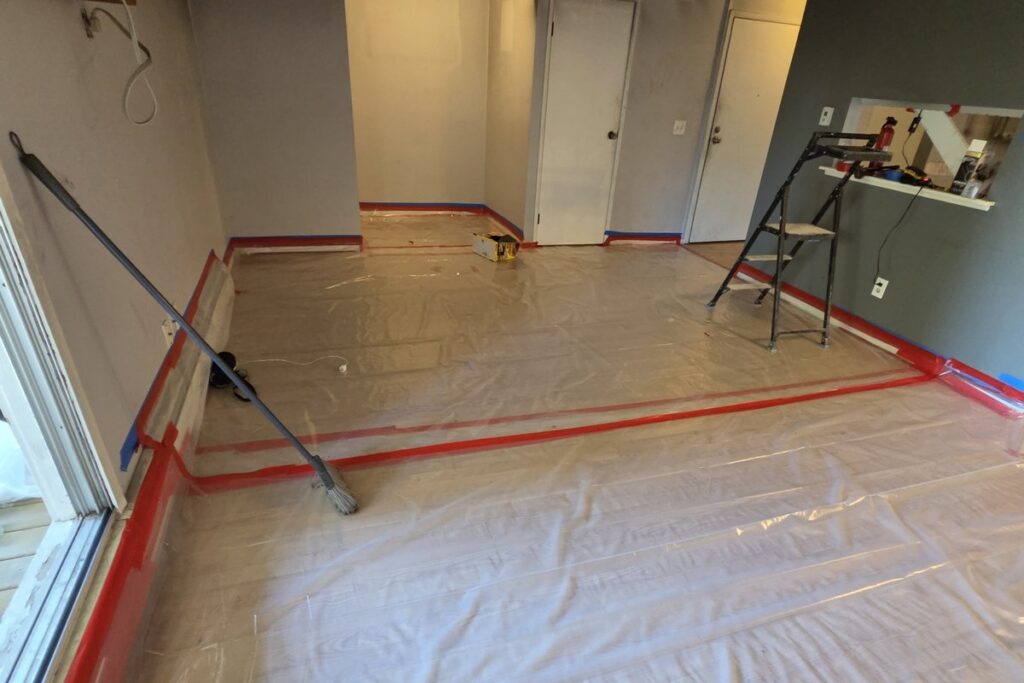
Our IICRC-certified team follows a documented process: moisture meters and thermal cameras to find hidden water, plastic containment to keep spores out of clean rooms, HEPA air filtration, removal of materials that can’t be saved, and drying until readings confirm it. We eliminate existing mold, explain the cause, and handle repairs and reconstruction. Learn more on our mold remediation in Burnsville page and our main mold removal and remediation service page.
Insurance Tips for Basement Mold
Mold coverage varies by policy, and the cause often matters: mold from a sudden water event may be treated differently than mold from long-term seepage or humidity. Only your insurer can say what your policy covers. A few tips help either way:
- Take photos and video of the mold and any water damage before anything is moved or cleaned.
- Call your agent early and ask how mold and water damage are handled under your policy.
- Keep receipts for dehumidifiers, fans, or emergency repairs.
We document the damage with photos and moisture readings you can share with your adjuster, and we can bill your insurance company directly. Coverage decisions are always up to your insurer.
Basement Mold FAQ
Why does my basement smell musty after it rains, even with no puddles?
Moisture can wick through concrete and block or collect under carpet without leaving standing water. A musty smell is often the first sign.
Will running a dehumidifier get rid of mold?
A dehumidifier helps stop new growth by drying the air, but it doesn’t remove mold that’s already growing. Existing growth needs to be cleaned or removed, and the moisture source needs to be fixed.
Do you serve Burnsville and nearby cities?
Yes. PuroClean of Lakeville is based in the Lakeville area and serves the entire Twin Cities south metro, including Burnsville, Apple Valley, Eagan, Savage, Prior Lake, Lakeville, Rosemount, and Farmington, for homes and businesses alike.
Musty Basement in Burnsville? Start With One Quick Call
You don’t have to figure this out alone. We’re your south metro neighbors, and a short phone call is an easy first step. Tell us what you’re seeing or smelling, and we’ll help you decide whether it’s a weekend cleanup or a job for a pro. Call PuroClean of Lakeville 24/7 at (952) 377-8477, or request a free estimate online. We’re licensed and insured, and we’ll help you get your basement dry, clean, and back to normal.

