


24/7 Call or Text 651-329-5436
Mold Remediation St. Paul MN for Century-Old Homes and Duplexes
Mold remediation St. Paul MN from PuroClean of Lakeville is built for older buildings: stone foundations, plaster walls, radiators and attics that were never designed for modern insulation. Our IICRC-certified team finds the moisture, contains the work area, removes growth and rebuilds. We are based in the Lakeville area, serve the entire south metro and also serve St. Paul.
See or smell mold in your St. Paul home or business? Call (952) 377-8477 any time. We arrive on-site quickly, and estimates are free.
Some of the Oldest Housing in the Metro
St. Paul is Minnesota’s capital and the Ramsey County seat, and its homes are old by Midwest standards. The city’s comprehensive plan housing chapter reports a median age of 69 years for the city’s housing, and 57 percent of its single-family, duplex and triplex buildings were built before 1930. Foursquares, Victorians, bungalows and two- and three-unit buildings line many streets.
Age brings character and moisture quirks. Limestone and brick foundations pass water slowly, and many basements were built for coal, storage and laundry, not living space. Attics often have uneven insulation and many air leaks, which drive frost and ice dams. Mold remediation St. Paul MN in these homes means respecting old materials while dealing firmly with the moisture.
The Mississippi and a Long Flood Record
The Mississippi River curves through the heart of the city. The Minnesota DNR records that the river crested at St. Paul at 26.01 feet on April 16, 1965, still the record. In April 2023, the Metropolitan Airports Commission installed its metal plank floodwall at St. Paul Downtown Airport as the river headed toward major flood stage, the seventh deployment since the system was developed in 2008.
Most St. Paul neighborhoods sit well above the river, but a long wet spring still raises groundwater, and older storm and sewer connections can back up during heavy rain. Sewer backups are contaminated water, and EPA recommends professional cleanup in those cases. We handle that cleanup and the mold remediation St. Paul MN that may follow.
Duplexes, Triplexes and Rentals
Two- and three-unit buildings are a big part of St. Paul’s housing. Stacked kitchens and bathrooms mean a leak upstairs travels straight down into the unit below. Shared basements hold laundry, water heaters and storage for several households.
For owners and landlords, mold remediation St. Paul MN needs clear records for each unit. We document readings and photos, contain the work so tenants can stay where possible and coordinate repairs. MDH’s page for renters recommends that tenants report moisture and mold to the owner promptly, in writing for ongoing problems, and that is a good habit for any multi-unit building.
Mold Remediation St. Paul MN Before and After Renovations
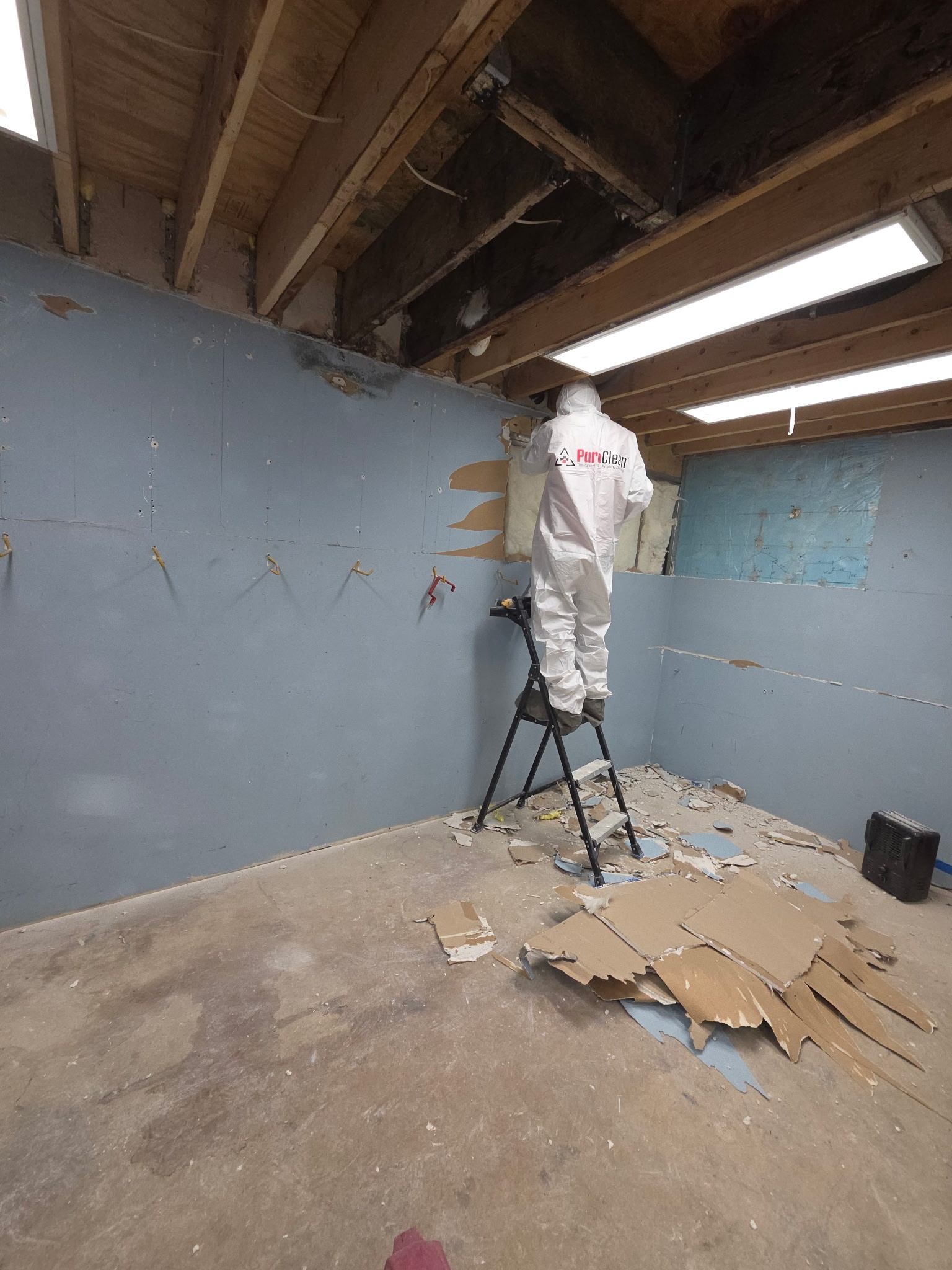
Older St. Paul homes are constantly being updated, and renovations often uncover old water damage: a stained subfloor under a bathroom, moldy insulation in a knee wall or a damp basement wall behind paneling. EPA notes that disturbing hidden mold can release a lot of spores, so it helps to pause and contain the area before demolition continues.
We work alongside homeowners and contractors to handle mold remediation St. Paul MN as a defined step: contain, remove, clean, dry and verify. Then the renovation can continue on clean, dry framing. Planning for mold remediation St. Paul MN early keeps a remodel on schedule.
If you are buying an older home, a musty basement or attic is worth a closer look before closing. A moisture-focused inspection and free estimate give you real numbers instead of guesses.
Where Mold Hides in St. Paul Buildings
Stone and brick basements
Old foundations let moisture through, and anything stored against them can grow mold. Musty odors in basement laundry areas are common.
Plaster and lath walls
Plaster hides damp lath and framing. Bubbling paint and soft spots near exterior walls or under bathrooms are clues.
Attics and knee walls
Knee-wall spaces in story-and-a-half homes are cold, leaky and rarely checked, so frost and roof leaks can go unnoticed.
Around radiators and old windows
Old windows sweat in winter, and a slow radiator valve leak wets the floor below.
Winter, Thaw and Summer Humidity in St. Paul
Freeze-thaw cycles are hard on buildings. Snow on a roof melts from attic heat, refreezes at the cold overhang and forms a dam that pushes meltwater under shingles and into insulation and wall cavities. The Minnesota Department of Health names ice dams and leaking roofs as common sources of indoor mold and advises sealing attic air leaks and adding insulation to stop them.
Spring snowmelt then saturates the soil around foundations, and July brings sticky, humid days. MDH recommends relative humidity under 60 percent for most of the year and 20 to 40 percent in winter, when windows and cold walls sweat. Good mold remediation St. Paul MN work accounts for all of these seasons, not just the stain you can see today.
Attics, Roofs and Mold Remediation St. Paul MN
Ice dams are a Minnesota tradition nobody enjoys. Water backed up behind the dam can enter the roof edge, soak insulation and run down inside walls. MDH names ice dams and leaking roofs among common mold sources and recommends attic insulation and air sealing as prevention. After a bad ice dam season, ask us to check top-floor ceilings and walls; early mold remediation St. Paul MN keeps damage small.
Making a Lower Level Stay Dry
Lower levels stay cool, which makes them comfortable in summer and prone to condensation. Carpet on concrete, drywall to the slab and boxes against walls give moisture places to sit. After mold remediation St. Paul MN, we suggest a hygrometer, a dehumidifier sized for the space and regular checks of the sump pit and floor drain. MDH lists basement flooding and pooling water at foundations among the places mold shows up.
Wet Rooms and Mold Remediation St. Paul MN
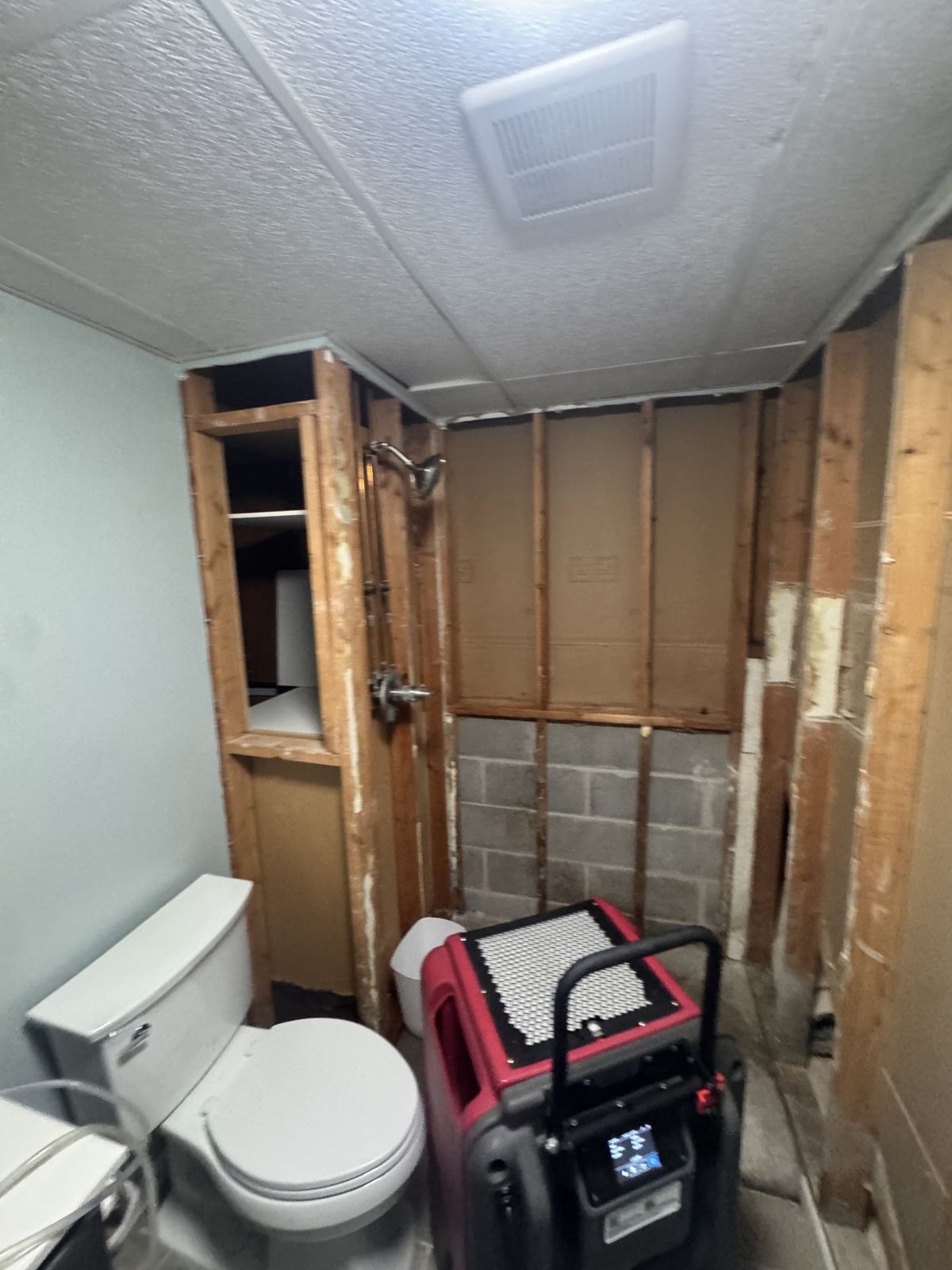
A little mildew on caulk is routine cleaning. Soft drywall around a tub, a stained ceiling below a shower or a musty sink cabinet points to a leak. EPA advises venting moisture-producing appliances like clothes dryers outdoors and keeping air conditioning drip pans clean. When we do mold remediation St. Paul MN in a bathroom or laundry room, we find the leak and coordinate the plumbing fix before rebuilding.
Signs You May Need Mold Remediation St. Paul MN
The Minnesota Department of Health says the most practical way to find a mold problem is to use your eyes and nose. Mold can look cottony, velvety, granular or leathery, and it can be white, gray, brown, black, green or other colors. A musty or earthy smell counts as evidence too. If you see or smell mold, MDH says to assume a problem exists. Also look for water stains, peeling paint, warped trim and condensation on windows or pipes.
When the Smell Comes Before the Stain
When we hear “it smells like a basement, but I can’t find anything,” we start measuring. Drywall, framing and subfloor moisture tell us where water has been. Thermal imaging shows cool areas worth checking. EPA warns that disturbing hidden growth, such as peeling back wallpaper, can release a lot of spores, so we contain the area first if we need to open it. This is the core of careful mold remediation St. Paul MN.
Why Speed Matters After a Leak
If a pipe, appliance or roof just leaked, think in hours, not weeks. EPA guidance says that in most cases mold will not grow if materials are dried within 24 to 48 hours. Water wicks up drywall and spreads under flooring faster than most people expect. Quick drying protects the structure and may make mold remediation St. Paul MN unnecessary.
Our Mold Remediation St. Paul MN Process
1. Inspect and find the moisture
Our IICRC-certified technicians look for visible growth, follow the odor and use moisture meters and thermal imaging to find damp materials. The goal is the source: a leak, condensation, a roof problem or groundwater.
2. Contain the area
We seal the work area with plastic sheeting and protect floors and paths so dust and spores stay where they are while materials are removed.
3. Remove what can’t be cleaned
Porous materials with growth, such as drywall, carpet and insulation, are cut out and bagged. MDH says these materials are difficult to clean and should be thrown away.
4. Clean and dry
Hard surfaces are cleaned, and the area is dried with dehumidifiers and air movers. We aim to eliminate any existing mold, then confirm with moisture readings.
5. Repair and monitor
Our repairs and reconstruction team replaces drywall, trim and flooring, and we make follow-up moisture-monitoring visits where drying needs checking.
Which Materials Can Be Saved?
- Usually cleaned: concrete, metal, tile, glass and structurally sound framing.
- Usually removed: moldy drywall, insulation, carpet pad and ceiling tile.
- Case by case: furniture, rugs and stored items, depending on material and value.
That approach follows MDH and EPA guidance and keeps mold remediation St. Paul MN from removing more than necessary.
Confirming a Clean, Dry Space
A finished mold remediation St. Paul MN project should look clean, smell normal and stay dry. MDH says that when all visible growth is removed, nearby areas are cleaned and the space stays dry and odor-free, it should be relatively safe with regard to mold. We verify dryness with meters and revisit if readings need time to come down, then hand the room off for repairs.
How Long Mold Remediation St. Paul MN Takes
A small, contained area may be done in a day or two. Larger jobs that need drying and reconstruction take longer. Most families stay home during mold remediation St. Paul MN because containment keeps the work separate. We give you a timeline with your free estimate and update it if we find more moisture than expected.
Should You Test Before Mold Remediation St. Paul MN?
We get this question often. The short answer from MDH’s guidance on mold testing is that testing is usually not needed if you can see or smell mold, because all indoor growth should be removed regardless of type. Results vary by hour and location, so a single test can mislead. EPA guidance says surface sampling may help determine whether an area was adequately cleaned, which is where testing tends to earn its cost.
Protecting Sensitive Family Members
According to EPA, mold produces allergens and irritants, and sensitive people may react with sneezing, runny nose, red eyes or skin rash. For a household with allergies, the goal of mold remediation St. Paul MN is the same as always, but the planning is tighter: firm containment, a clean path out of the house and clear communication about which rooms to avoid and when. For questions about symptoms, talk with your health care provider.
Small Spot or Professional Mold Remediation St. Paul MN?
Not every spot needs a crew. EPA’s mold and moisture guide says that if the moldy area is less than about 10 square feet, roughly a 3-by-3-foot patch, most people can handle it themselves by scrubbing hard surfaces with detergent and water and drying them completely. EPA recommends professional help when there has been a lot of water damage, when growth covers more than 10 square feet or when sewage or other contaminated water was involved. Don’t paint or caulk over mold; EPA notes paint over mold is likely to peel.
First Steps When You Find Mold
Small steps help while you wait for us. Turn off the water to any leaking fixture. Leave visible growth alone rather than wiping or scrubbing it, because disturbing it puts spores in the air. Close the door to the room, set a fan to blow out an open window if the weather allows, and keep the HVAC system off if the growth is close to it. Photograph everything before it is moved. Then call (952) 377-8477 to set up mold remediation St. Paul MN and a free estimate.
Commercial Mold Remediation St. Paul MN
St. Paul’s storefronts, downtown offices, warehouses and apartment buildings face roof, plumbing and HVAC moisture.
We provide commercial mold remediation for offices, retail, rental and multi-unit buildings and industrial or warehouse properties. PuroClean is trusted by businesses nationwide, and our goal is to restore operations quickly while keeping the work area contained. EPA’s guide for schools and commercial buildings applies to many building types, and we follow its principles of fixing moisture, containing work and removing contaminated materials.
Documentation for Your Insurer
Good records make claims easier. We photograph the affected area, log moisture readings, note the likely source and write a detailed scope. We work with insurance companies and can bill your insurer directly, though your insurer alone decides what is covered.
St. Paul Prevention Tips
- Keep winter indoor humidity at 20 to 40 percent, as MDH suggests, to limit window sweating.
- Seal attic and knee-wall air leaks to reduce ice dams.
- Check radiator valves for drips each fall.
- Keep stored items off basement floors.
- Ask a plumber about a backwater valve if your basement has backed up.
- Tenants: report leaks to the owner in writing.
Other Ways We Help
Our main mold removal and remediation page explains our approach in more detail. Many mold jobs start as water losses, so see our St. Paul water damage restoration page and our water damage restoration service. We also provide fire and smoke damage restoration with smoke and odor removal, including non-fire odors like tobacco, and biohazard cleanup. Browse all residential restoration services and our commercial restoration services.
What You Can Expect From Us
You can expect a free estimate, a clear explanation of what we found and why, a contained work area and a finished room at the end. Our IICRC-certified team is licensed and insured, we arrive on-site quickly and we work with insurance companies. We are based in the Lakeville area and work throughout the south metro, and we also serve St. Paul.
Serving St. Paul and Its Neighbors
We also serve Mendota Heights, Woodbury, Inver Grove Heights and Cottage Grove. See every city on our service areas page.
Mold Remediation St. Paul MN FAQ
Can Mold Remediation St. Paul MN crews work in a plaster-walled home?
Yes. We open only what is needed, dry carefully and repair in a way that suits the house.
I rent in St. Paul and found mold. What should I do?
MDH recommends notifying your landlord promptly, in writing for ongoing problems, and asking for repairs. Owners can call us for an inspection and free estimate.
Can I just spray bleach on it?
EPA says using bleach or another biocide is not recommended as a routine part of mold cleanup, and that the key is removing the growth and fixing the moisture. Painting or caulking over mold is also discouraged because the paint is likely to peel.
Is mold a health concern?
EPA says molds can produce allergens and irritants, that inhaling or touching mold may cause allergic reactions in sensitive people, and that mold can trigger asthma attacks in people with asthma who are allergic to mold. If you have health concerns, talk with a health professional. We focus on removing growth and fixing the moisture.
What humidity should I keep indoors?
EPA recommends keeping indoor relative humidity below 60 percent, ideally between 30 and 50 percent. MDH suggests 20 to 40 percent in winter. A simple hygrometer from a hardware store shows where you stand.
How long does Mold Remediation St. Paul MN take?
It depends on how much material is affected and how wet the structure is. Small, contained jobs may take a day or two, while larger projects with drying and reconstruction take longer. We give you a timeline with your free estimate.
Call for Mold Remediation St. Paul MN Today
Reach our team at (952) 377-8477, 24/7, or send us a message. Estimates are free.
More Restoration Services in St. Paul
Mold usually starts with a water problem, and a fire can leave smoke, soot and water damage behind. Our team based in the Lakeville area also provides water damage restoration in St. Paul and fire and smoke damage restoration in St. Paul. Call (952) 377-8477 any time, 24/7, for a free estimate.

