


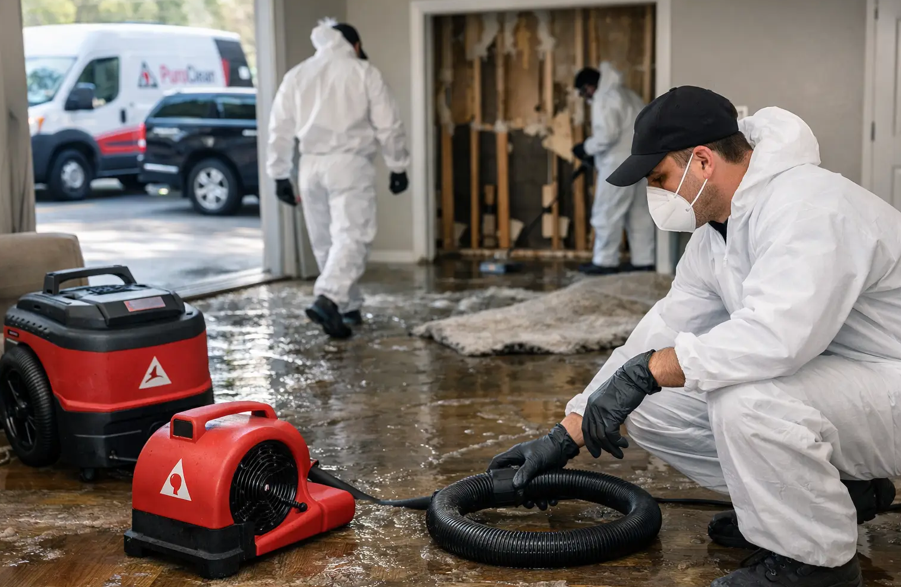
A flooded kitchen at 2 a.m. does not wait until business hours. Water keeps moving, soaking baseboards, slipping under flooring, filling wall cavities, and turning a manageable loss into a much larger restoration job by the hour. That is why 24-hour flood cleanup matters. Fast action is not just about convenience. It is how you reduce structural damage, limit contamination, and improve the chances of saving materials that would otherwise need to be removed.
For homeowners and property managers, the first question is usually simple: Can this wait until morning? In some cases, a very small clean water spill that has been fully stopped might be stable for a few hours. A true flood loss usually is not. Burst supply lines, overflowing appliances, storm intrusion, sewer backups, and slab leaks can keep feeding moisture into floors, drywall, insulation, and contents long after the visible water is gone.
Why 24-hour flood cleanup is time-sensitive
Water damage does not stay in one room. It travels through seams, under thresholds, and into materials you cannot inspect with the naked eye. Carpet padding, engineered wood, MDF cabinets, drywall, and insulation can all absorb moisture quickly. In a commercial setting, water can also affect inventory, electronics, tenant spaces, and daily operations.
The first 24 to 48 hours are especially important because conditions change fast. Clean water can become a bigger sanitation issue if it sits. Humidity rises indoors, odors begin to develop, and porous materials start to break down. If the source involves gray water or black water, the urgency is even higher because contamination is part of the loss from the start.
That is the practical value of emergency response. The goal is not simply to remove standing water. It is to identify how far the water migrated, separate salvageable materials from unsalvageable ones, begin structural drying, and create a documented plan that supports both recovery and insurance communication.
What happens during a 24-hour flood cleanup
A professional response starts with safety and source control. If the property has electrical risk, contaminated water, or possible ceiling collapse, those hazards have to be addressed before cleanup truly begins. Once the source has been stopped or contained, technicians inspect the affected areas and determine the category of water, the extent of migration, and which materials can likely be restored.
Water extraction comes next. This is where commercial-grade pumps, extractors, and specialized tools make a real difference. Surface water is only part of the issue. Water trapped in carpet backing, pad, subfloors, wall cavities, and built-in materials often requires targeted extraction methods to reduce drying time and prevent secondary damage.
After extraction, drying and dehumidification begin. This stage is often misunderstood because the room can look dry before it actually is dry. Moisture meters, thermal imaging, and hygrometric readings help technicians track hidden moisture in wood, drywall, framing, and concrete-adjacent materials. Air movers and dehumidifiers are then positioned based on the layout, materials involved, and the drying goals for the structure.
Cleaning and disinfection may also be required, depending on the source of the flood. If water came from a sanitary supply line, cleaning needs are different from those if the loss involved appliance discharge, stormwater intrusion, or sewage contamination. In higher-risk situations, affected materials may need to be removed, disposed of properly, and the remaining structure cleaned with EPA-registered disinfectants.
What you should do before help arrives
The right first steps can reduce damage, but only if they are safe. If possible, stop the water source. Shut off the local supply valve or the main water line if a plumbing failure is involved. If water is near outlets, electrical equipment, or powered appliances, do not enter the area until power has been assessed and shut off safely.
If conditions allow, move lightweight items, rugs, paperwork, electronics, and soft goods away from the affected area. Lift furniture legs off wet flooring with blocks or foil if doing so will not put you at risk. Open cabinet doors in affected areas to improve airflow, but do not tear out materials or start removing walls just to speed things up. Unplanned demolition can complicate drying, create safety problems, and make insurance documentation harder.
Photos and videos are worth taking early. Capture the source if visible, the standing water, affected rooms, damaged contents, and material conditions before major movement happens. That record can be helpful later when discussing scope and timeline.
What should you avoid? Do not use a household vacuum on standing water. Do not assume bleach solves contamination. Do not run HVAC equipment if the system may be pulling contaminated air or if water has affected components. And do not rely on fans alone for meaningful structural drying after a serious flood.
Not every flood is the same
One reason flood losses are stressful is that the right response depends on the source. A refrigerator supply line leak in a tile kitchen creates a different restoration plan than a sewage backup in a bathroom or stormwater entering a ground-floor office. The visible damage may look similar at first, but the health considerations and material decisions can be very different.
Clean water losses may allow for more aggressive saving of materials if the response is quick. Gray water losses, which can involve washing machine discharge or other used water sources, increase the need for careful cleaning and selective removal. Black water losses, including sewage and certain storm-related intrusions, usually require a much more controlled remediation approach because of the pathogens and contaminants involved.
This is also where experience matters. Overdrying some materials can cause problems. Leaving moisture behind causes bigger ones. A proper drying plan balances urgency with technical accuracy.
The hidden costs of waiting
A delayed response often costs more than people expect. Flooring that might have been dried in place may instead cup, swell, delaminate, or detach. Cabinets can wick water upward through toe kicks and side panels. Drywall may seem fine at first, then soften, stain, and support microbial growth later. Odors become harder to remove once moisture has had time to settle into porous surfaces.
For landlords and commercial properties, delay also affects occupancy. Tenants may need relocation. Business interruption can grow from a short disruption into a longer shutdown if water reaches multiple suites or building systems. Fast mitigation does not guarantee every material will be saved, but it usually improves your options.
In Southern Nevada properties, people sometimes underestimate indoor moisture because the outdoor climate is dry. Inside a flooded structure, the conditions are completely different. Trapped moisture in wall cavities, under vinyl flooring, and beneath cabinets can persist unless it is measured and addressed directly.
Why professional equipment changes the outcome
Many flood losses look simple on the surface. A shop vacuum, a few towels, and some household fans can make the room look better quickly. The problem is that appearance is not the same as restoration. Professional extraction equipment removes far more water, especially from carpets, pads, and seams. Commercial dehumidification controls the indoor environment in a way that home units usually cannot.
Just as important, certified technicians know how to map moisture and monitor drying progress. That documentation helps answer a critical question every property owner asks: is the building actually drying, or are we just hoping it is? Reliable readings guide decisions about whether materials can stay, need more drying time, or should be removed.
A company such as PuroClean of East Las Vegas also brings order to a chaotic moment. That means a structured inspection, clear communication, proper containment when needed, and coordination that helps customers move from emergency response into full restoration without unnecessary delays.
Insurance, documentation, and peace of mind
After a flood, people often worry about saying the wrong thing, missing a step, or failing to document enough. A restoration team cannot make coverage decisions for your carrier, but thorough records support the claims process. Moisture readings, photos, equipment logs, affected material notes, and scope updates all help create a clearer picture of what happened and what was required to stabilize the property.
It also helps to have direct explanations in plain language. Customers should understand what was affected, what can likely be saved, what is still being evaluated, and what the next 24 hours will look like. During an emergency, clarity matters almost as much as speed.
Flood damage feels overwhelming because it disrupts the place where you live or work all at once. The good news is that early, skilled intervention can turn a fast-moving problem into a controlled recovery, and that first call often makes more difference than people realize.
#purocleanofeastlasvegas