


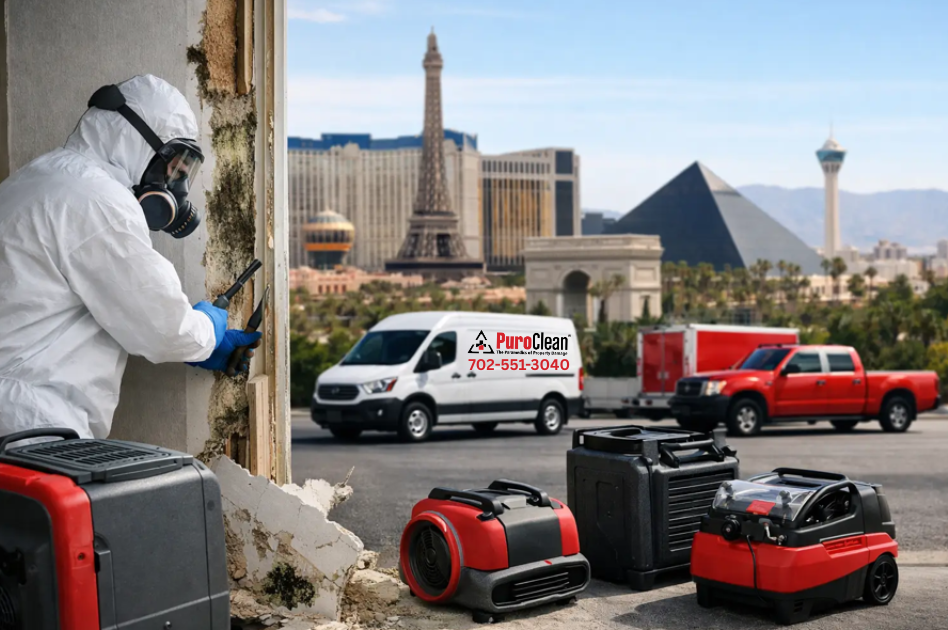
A small leak behind a bathroom wall can turn into a much bigger problem than stained drywall. By the time you notice a musty smell, warped baseboards, or dark spotting near an AC line, mold may already be growing inside materials you cannot fully inspect on your own. That is why Las Vegas mold remediation is not just about cleaning what you can see. It is about finding the moisture source, containing the damage, and restoring safe conditions before the problem spreads.
In homes and commercial buildings across the valley, mold often follows water damage that was never fully dried. It can develop after a slab leak, a roof intrusion, an appliance failure, a plumbing backup, or HVAC condensation. Even in a dry climate, indoor moisture creates the right conditions for growth when it is trapped inside wall cavities, under flooring, above ceilings, or around poorly ventilated bathrooms and laundry areas.
Why mold problems happen in Las Vegas
People often assume mold is mostly a humid-climate issue. That is only partly true. Outdoor humidity matters less than indoor moisture that lingers long enough for spores to grow on organic materials such as drywall, wood, insulation, and dust buildup.
In Las Vegas properties, mold commonly follows an event that seemed minor at first. A slow supply line leak under a sink, an overflow from an upstairs bathroom, or storm-related roof damage may not look severe on day one. The real issue starts when moisture stays hidden. If materials are not properly dried with professional equipment and verified moisture readings, mold can begin developing in as little as 24 to 48 hours under the right conditions.
Commercial buildings face a similar risk, especially where maintenance teams manage multiple units or larger HVAC systems. Tenant turnover, vacant spaces, and delayed reporting can allow a moisture issue to continue longer than anyone realizes. By the time visible signs appear, remediation may involve multiple rooms, contaminated contents, and temporary business disruption.
What Las Vegas mold remediation should actually include
Not every mold problem requires the same level of intervention. A small area caused by a localized issue may be more limited. A larger loss tied to widespread moisture intrusion calls for a controlled remediation process. The difference matters because incomplete work can leave contamination behind or allow mold to return.
A proper response starts with inspection and moisture detection. Technicians need to identify not only where mold is present, but also what is feeding it. If the moisture source is still active, surface cleaning alone will not solve the problem.
Containment is the next critical step when affected areas are more than minor or when contamination could spread during demolition and cleaning. This may involve isolating the work zone, using negative air pressure, and protecting unaffected parts of the property. In occupied homes or businesses, that step helps reduce cross-contamination and keeps the cleanup more controlled.
From there, remediation may include removal of unsalvageable materials, detailed cleaning of structural surfaces, HEPA vacuuming, and application of appropriate antimicrobial treatments where indicated. Air filtration is often used throughout the process to capture airborne particles. In situations where the mold followed a water loss, drying and dehumidification are just as important as the cleaning itself.
That process is one reason certified restoration support matters. Mold is rarely a one-step job. It often overlaps with water mitigation, controlled demolition, odor management, and documentation for property owners or insurance carriers.
Signs you should not ignore
Some mold problems are obvious. Others are easy to dismiss until they become more expensive. A persistent musty odor is one of the most common early warnings, especially in bathrooms, kitchens, laundry rooms, closets, and around air handlers.
You may also notice bubbling paint, peeling wall coverings, discoloration around baseboards, warped trim, or soft drywall. In commercial spaces, stained ceiling tiles and recurring odor complaints from staff or tenants often point to hidden moisture above the ceiling line or inside mechanical systems.
Health-related concerns can also prompt an inspection. While reactions vary from person to person, some occupants report irritation, congestion, coughing, or worsening allergy-like symptoms in affected indoor spaces. That does not mean every symptom automatically points to mold, but it does mean unexplained indoor air concerns should be taken seriously when moisture issues are present. Seek advice from your doctor.
Why DIY cleanup has limits
There are cases where a property owner can wipe down a very small, non-porous area and monitor it. But many mold situations are not that simple. The problem with do-it-yourself cleanup is not just whether you can remove a visible patch. It is whether you can confirm the extent of hidden damage, stop the moisture source, and prevent the spread during the process.
Disturbing mold-contaminated drywall, insulation, or cabinetry without containment can release spores into nearby rooms. Using household fans incorrectly may make that worse. Bleach is also widely misunderstood. It does not perform the same way on porous materials, and it does not replace proper removal and drying when materials are compromised.
The trade-off is straightforward. A small issue addressed early may stay small. A larger issue handled casually can become a much more disruptive restoration project later. If the mold is inside wall cavities, involves multiple materials, follows sewage or dirty water, or affects a rental or commercial property, professional remediation is the safer path.
The role of moisture control in mold removal
One of the biggest mistakes in mold work is focusing only on what is visible. Mold remediation succeeds or fails based on moisture control. If technicians remove damaged drywall but leave elevated moisture in framing, subflooring, or adjacent materials, the property is still at risk.
Professional drying involves more than setting a few fans in the room. It may require air movers, commercial dehumidifiers, HEPA-filtered air scrubbers, and ongoing monitoring with moisture meters and thermal imaging tools. That data helps determine whether the structure is actually drying or whether hidden moisture remains trapped.
This matters after clean water losses as well as larger incidents. A broken supply line behind kitchen cabinets, for example, can wet drywall, toe kicks, insulation, and flooring layers all at once. Even after the plumbing repair is complete, the remediation work is not finished until the affected materials are either dried to acceptable levels or removed.
What property owners can expect during the process
The most stressful part of a mold loss is often not knowing what comes next. Clear communication matters just as much as technical skill.
A dependable remediation team should explain the scope of damage, what areas need containment, which materials can be cleaned versus removed, and how drying and filtration will be managed. If the loss may involve insurance, documentation becomes especially important. Photos, moisture readings, equipment logs, and a clearly defined work plan help support the claim and reduce confusion.
For homeowners, that guidance helps protect both the property and the people living in it. For landlords and property managers, it helps with tenant communication, habitability concerns, and speed of turnover. For businesses, it supports continuity planning and helps minimize unnecessary downtime.
In some cases, the answer is straightforward and limited. In others, especially where water traveled between rooms or units, the scope can expand once materials are opened for inspection. That is not always a sign of overreaction. It is often the only way to see the full extent of concealed damage.
Choosing a Las Vegas mold remediation company
When you need mold remediation, speed matters, but speed without process is risky. The right company should be able to respond quickly, inspect thoroughly, and show how it will control contamination while addressing the underlying moisture issue.
Ask whether the team is trained in water damage mitigation as well as mold remediation. That combination matters because mold problems and drying problems are closely connected. You also want a company that uses professional-grade containment methods, HEPA filtration, moisture mapping, and clear documentation throughout the job.
A local response can make a real difference, especially after sudden leaks or flooding in Las Vegas, Henderson, North Las Vegas, or Boulder City. When technicians arrive quickly, they have a better chance of limiting secondary damage before mold spreads further. PuroClean of East Las Vegas approaches these losses with that urgency, combining IICRC-certified restoration practices with a guided process that helps customers move from uncertainty to recovery.
If you suspect mold, the best next step is not to wait for it to become easier to see. It is to get the property assessed, identify the moisture source, and start the right remediation plan while the damage is still more manageable.
#purocleanofeastlasvegas #lasvegas