


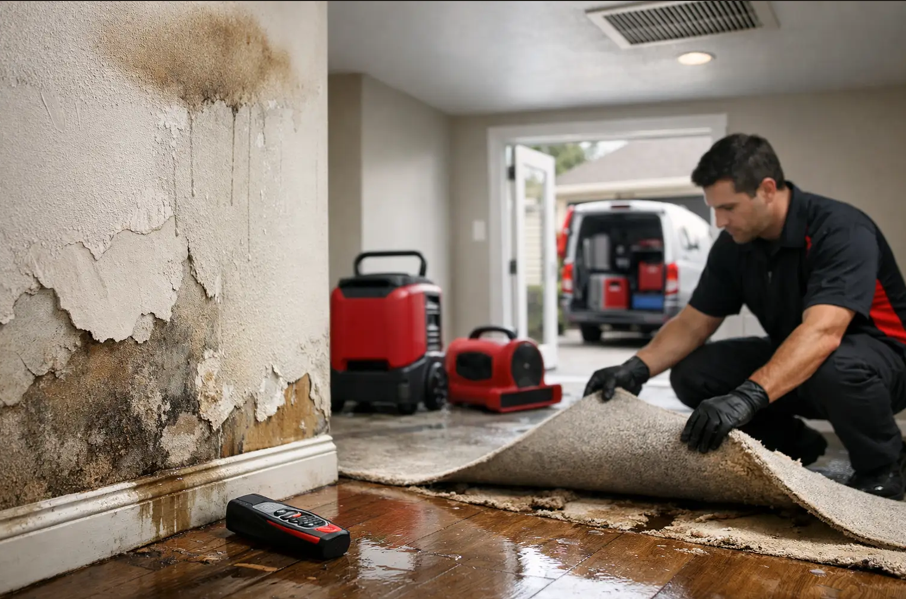
A water leak does not need to flood a room to cause serious damage. A slow drip behind a wall, under a sink, or beneath flooring can soak building materials for weeks before it becomes obvious. Knowing the top signs of hidden water damage helps homeowners, landlords, and property managers act before moisture turns into structural deterioration, mold growth, or a larger insurance claim.
In Las Vegas-area properties, people sometimes assume dry desert air will prevent moisture problems. It can help surfaces dry faster, but it will not dry water trapped inside wall cavities, cabinets, subfloors, or insulation. Once water is concealed, professional inspection and controlled drying are often the safest path forward.
1. Musty or earthy odors that keep returning
A persistent musty smell is often one of the earliest warnings that moisture is present where it should not be. The odor may be strongest in a bathroom, laundry room, kitchen, closet, under-stair storage area, or a room that has remained closed for several days.
Air fresheners and open windows may temporarily cover the smell, but they do not solve its source. Moisture absorbed by drywall, carpet backing, wood framing, or insulation can support microbial growth. Not every odor means visible mold is present, but a recurring damp or earthy smell deserves investigation, particularly after a plumbing issue, roof leak, appliance overflow, or past flood.
2. Stains, discoloration, or paint that changes appearance
Water often leaves evidence on ceilings and walls before it causes a noticeable drip. Look for yellow, brown, or gray rings; cloudy patches; darkened baseboards; and paint that appears bubbled, cracked, or unusually soft. A ceiling stain below an upstairs bathroom may point to a leaking supply line, drain line, toilet seal, shower pan, or overflow event.
Do not assume a dry-looking stain is an old problem that no longer matters. The original leak may have stopped, but the material behind the surface could still hold moisture. A technician can use moisture meters and thermal imaging to help determine whether the area is active, how far moisture traveled, and whether drying or material removal is needed.
3. Warped floors, loose tiles, or changes underfoot
Flooring can reveal hidden water damage long before a homeowner sees standing water. Wood floors may cup, buckle, separate at seams, or feel uneven. Laminate flooring can swell at the edges, while vinyl may loosen or develop bubbles. Tile can become loose when moisture compromises the adhesive or subfloor beneath it.
Carpet deserves attention as well. If an area feels damp, smells stale, has rippling, or develops dark tack strip lines near the wall, water may have reached the padding and subfloor. Even when the carpet surface feels dry, moisture can remain underneath. This is especially common after a washing machine leak, slab leak, toilet overflow, or water intrusion at an exterior door.
4. Soft drywall, swollen cabinets, or peeling baseboards
Drywall is highly absorbent. When it has been wet for an extended period, it can become soft, crumbly, bowed, or swollen near the bottom edge. Press gently rather than aggressively. If the wall flexes, feels spongy, or flakes apart, stop probing and arrange an inspection.
Kitchen and bathroom cabinets are also vulnerable because leaks inside them are easy to miss. Watch for swollen particleboard, warped cabinet bottoms, loose toe kicks, rusted hardware, or staining around plumbing penetrations. Baseboards that pull away from the wall, discolor, or feel soft can indicate water has traveled along the floor or inside the wall cavity.
5. A sudden increase in your water bill
A higher water bill without a clear explanation can signal a concealed plumbing leak. This is particularly relevant for supply line leaks, irrigation line problems, leaks beneath a slab, and malfunctioning fixtures that run intermittently.
Before assuming the issue is hidden water damage, rule out predictable causes such as seasonal irrigation changes, guests, or a recently filled pool. Then check whether the water meter continues to move when faucets, appliances, and irrigation systems are off. A meter check can be useful, but it does not reveal the leak location or the extent of moisture damage. A plumber may identify the source, while a restoration professional evaluates and dries the affected structure.
6. Mold-like spotting or repeated mildew around fixtures
Small spots of mildew near a shower may result from ordinary surface humidity and housekeeping needs. But repeated staining, dark spotting on walls or ceilings, or growth around baseboards and cabinet interiors can point to moisture beyond the surface.
The difference matters. Surface mildew on grout may respond to cleaning and better ventilation. Growth caused by a leaking pipe behind a vanity or shower wall requires the moisture source to be corrected first. Cleaning visible material without addressing concealed water can allow the issue to return and spread.
Avoid disturbing a large or suspicious area yourself. Scrubbing, sanding, or removing damaged drywall can release particles and uncover more contamination than expected. A qualified remediation team can contain the area, identify affected materials, remove damage safely when necessary, and dry the structure using appropriate equipment.
7. Unexplained humidity, condensation, or a room that feels clammy
An isolated humid or clammy room may be caused by poor ventilation, a malfunctioning HVAC system, or outdoor weather. However, when the condition is new and localized, it can also suggest a hidden moisture problem. Bathrooms, utility rooms, and spaces near water heaters or air-conditioning equipment are common areas to check.
Condensation on windows alone is not proof of a leak. It depends on indoor humidity, temperature differences, and ventilation. The concern grows when condensation appears alongside odors, peeling finishes, visible staining, or damp materials. Those combined clues warrant a more thorough assessment.
8. Water sounds when no fixture is running
Hearing a faint hiss, drip, or rushing sound inside a wall can be unsettling, especially when all fixtures are off. Sometimes the sound is normal pipe movement, appliance operation, or irrigation. Other times, it is a pressurized water leak that is actively releasing water behind finished surfaces.
If you hear water where you should not, turn off the local fixture valve if it is safe to do so. For an active or significant leak, shut off the main water supply if you know where it is and contact a plumber or emergency restoration provider. The faster active water is stopped and extracted, the more likely flooring, walls, cabinets, and contents can be protected.
9. Cracks, shifting, or damage around exterior openings
Not all hidden water damage begins with plumbing. Roof leaks, failed flashing, damaged window seals, and exterior wall penetrations can allow water into a building during rain or wind-driven storms. Look for staining around windows, soft trim, peeling paint, cracked caulk, or ceiling damage near exterior walls.
These symptoms may be intermittent because they only appear under certain weather conditions. Taking photos when staining appears and noting where it occurs can help identify patterns. The exterior source must be repaired, but interior materials still need to be checked for trapped moisture and properly dried.
What to do when you suspect concealed moisture
Do not wait for visible flooding to take action. Move valuables away from the suspected area, avoid using electrical outlets or appliances near moisture, and do not puncture walls unless directed by a qualified professional. If sewage, contaminated water, or a large leak is involved, keep people and pets away from the area.
A proper water damage assessment goes beyond what can be seen. At PuroClean of East Las Vegas, trained technicians can inspect affected areas with moisture-detection equipment, document conditions, extract water when needed, and set up professional drying and dehumidification equipment. The goal is not simply to make the room look dry. It is to address moisture in the materials that can continue causing damage after the surface appears normal.
If something smells off, feels soft, or looks different than it did last week, trust that observation. A prompt inspection can turn an uncertain warning sign into a manageable repair instead of a major restoration project.
#purocleanofeastlasvegas