


A burst supply line at 2 a.m. does not give you time to figure things out slowly. Water moves fast, spreads behind walls, soaks insulation, swells wood, damages flooring, and can create mold conditions within a day or two. That is why understanding the water damage restoration steps matters. The right response can reduce repair costs, protect indoor air quality, and improve the chances of saving materials that would otherwise need to be replaced.
For most property owners, the hardest part is knowing what happens first and what should never be delayed. Restoration is not just about removing visible water. A professional process includes inspection, moisture mapping, extraction, drying, cleaning, and repairs based on the source of water and the materials affected.
The first water damage restoration steps happen before equipment arrives
Safety comes first. If water is near electrical outlets, appliances, or your breaker panel, the area may not be safe to enter until power is shut off. If the damage involves sewage, storm runoff, or any water that may be contaminated, direct contact should be avoided entirely. In those cases, the cleanup process is not a basic drying job. It becomes a sanitation issue as well.
If it is safe to do so, stopping the source of water is the next priority. That may mean shutting off the main water supply, isolating a leaking appliance line, or placing a temporary cover on a roof opening. Every minute counts. The longer water sits, the farther it travels into subfloors, cabinets, baseboards, drywall, and structural cavities.
Documentation also matters early. Photos and videos of affected areas, damaged contents, and the apparent source can help support the insurance process. This does not replace a professional assessment, but it can preserve a clear record of the initial condition before cleanup begins.
Inspection and moisture mapping
A proper restoration project starts with a full inspection, not guesswork. Technicians assess where the water came from, how far it spread, what materials were affected, and whether the damage is recent or ongoing. The category of water matters because clean water from a supply line is handled differently than gray water from an appliance discharge or black water from sewage backup.
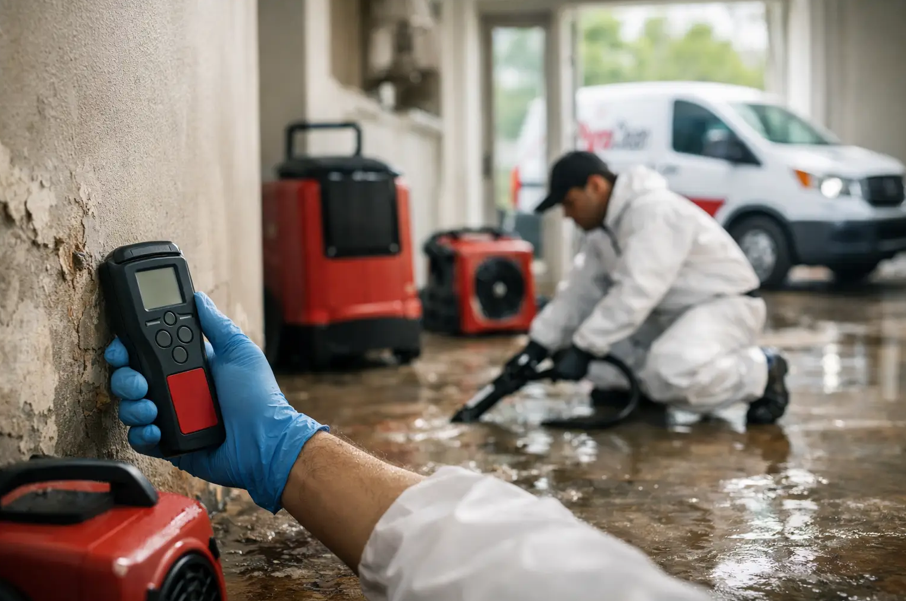
Moisture detection tools are used to identify hidden impact. What looks like a wet patch in one room may extend under flooring or inside wall cavities well beyond what is visible. In commercial spaces, the inspection may also consider business interruption risks, inventory exposure, and whether sensitive equipment was affected.
This stage shapes the rest of the job. If the wrong areas are missed at the beginning, drying can appear complete while trapped moisture remains behind. That is one of the main reasons water damage leads to secondary problems later.
Water extraction comes before drying
One of the most misunderstood water damage restoration steps is the difference between extraction and drying. Extraction removes standing water. Drying removes moisture trapped in materials and air. Both are essential, but extraction should happen first because bulk water removal speeds up everything that follows.
Professional extraction equipment is much more effective than mops, towels, or a consumer wet vacuum when significant water is involved. The goal is to remove as much liquid as possible from floors, carpets, padding, and affected structural areas. Fast extraction can improve the chance of saving carpet in some cases, though that depends on how long it has been wet and whether the water is contaminated.
Some materials respond better than others. Hardwood floors may be salvageable if action is immediate and specialized drying methods are used. Particleboard cabinets often swell quickly and may not recover well. Drywall may sometimes be saved when exposure is minimal and the water source is clean, but heavily saturated or contaminated sections are often removed.
Controlled drying and dehumidification
Once standing water is gone, the property still is not dry. This is where air movers, commercial dehumidifiers, and sometimes specialty drying systems come in. The goal is to bring moisture levels in affected materials back to an acceptable range without causing additional stress to the structure.
Drying is not simply a matter of turning on fans. Equipment placement, airflow direction, temperature, humidity levels, and the type of materials involved all affect results. Too little drying power can prolong damage. Too aggressive an approach can create uneven drying, material warping, or missed hidden moisture.
In some losses, technicians may use cavity drying methods for walls, drying mats for hardwood floors, or negative pressure systems for tight spaces. In Las Vegas, the dry climate can help in some situations, but indoor water damage still requires controlled drying. Desert air alone does not reliably dry wall assemblies, insulation, subfloors, or enclosed spaces.
Removal of unsalvageable materials
Not every material can or should be saved. One of the more difficult parts of restoration is controlled demolition, where damaged materials are removed to allow proper drying, cleaning, and repair. This may include sections of drywall, insulation, laminate flooring, carpet pad, baseboards, or cabinetry.
The decision depends on contamination, saturation level, material type, and how long the damage has been present. For example, if sewage affected the area, porous materials often must be removed because cleaning alone may not be enough to restore them safely. If a clean-water loss is addressed quickly, selective removal may be minimal.
Done correctly, demolition is targeted, not excessive. The purpose is to open what needs to be accessed while preserving as much of the structure as reasonably possible.
Cleaning, disinfecting, and odor control
After extraction and demolition, surfaces still may need detailed cleaning. Water damage often leaves behind soil, residues, bacteria, or musty odors depending on the source and how long the materials stayed wet. This step is especially important in kitchens, bathrooms, crawl spaces, and any area affected by gray or black water.
Professional restoration teams use cleaning agents and EPA-registered disinfectants appropriate for the type of loss. The process may include surface cleaning, antimicrobial application where justified, and deodorization. Odor control is not about masking smells. It is about removing contamination and treating affected materials and air pathways properly.
This stage also applies to contents. Furniture, rugs, documents, electronics, and inventory may require separate evaluation. Some items can be restored with drying and specialized cleaning. Others may be unsafe or uneconomical to save. It depends on material, contamination, and replacement cost.
Monitoring makes the process accountable
Drying is not complete when equipment has run for a certain number of days. It is complete when moisture readings show that the affected materials have reached an appropriate dry standard. That is why ongoing monitoring is a core part of professional restoration.
Technicians revisit the site, take moisture readings, adjust equipment, and document progress. If one room is drying faster than another, the setup may need to change. If hidden moisture is discovered later, the scope may need to expand. This kind of monitoring protects both the property owner and the restoration outcome.
It also helps with insurance documentation. Clear records of conditions, equipment use, and moisture reduction support a more transparent recovery process.
Repairs and reconstruction finish the job
The final phase is putting the property back together. Depending on the extent of the damage, that may involve replacing drywall, reinstalling baseboards, painting, installing new flooring, rebuilding cabinets, or addressing damaged trim and finishes.
This is where people often realize restoration and reconstruction are related but separate. Drying a building does not automatically restore it to pre-loss condition. Repairs are what return the space to normal use.
For commercial properties, timing matters as much as quality. A delayed rebuild can affect operations, tenants, customer access, and revenue. For homeowners, it affects daily life, privacy, and comfort. A guided process matters because it keeps the project moving from emergency response to full recovery with fewer surprises.
When you should call for help immediately
Some losses should never be treated as a do-it-yourself cleanup. If the water has been sitting for more than a day, if ceilings are sagging, if you suspect contamination, if multiple rooms are affected, or if moisture has reached wall cavities and flooring systems, professional intervention is the safer move.
The same is true for commercial buildings, multifamily properties, and homes with vulnerable occupants such as children, older adults, or anyone with respiratory concerns. Water damage can shift quickly from an inconvenience to a health and structural issue.
A trained restoration team can also help prevent common mistakes, such as leaving wet insulation in place, closing walls before moisture is verified dry, or assuming visible dryness means the structure is safe. Those shortcuts often cost more later.
When property damage interrupts your home or business, the most useful next step is usually the simplest one – act fast, get the damage assessed correctly, and let the process be driven by measurements instead of assumptions.
#purocleanofeastlasvegas #waterdamage #lasvegas