


A pipe bursts at 2 a.m., the water heater fails while you are out, or a supply line leaks behind a wall for days before anyone notices. In moments like that, most people ask the same question: what does a water damage restoration company do, and how quickly can they stop the damage from getting worse?
The short answer is this: a professional restoration company does much more than remove visible water. It inspects the full extent of the loss, extracts standing water, dries hidden moisture, cleans and disinfects affected areas, helps prevent mold growth, and works to restore the property as safely and efficiently as possible. When done correctly, the goal is not just to make the space look dry. It is to protect the structure, salvage materials when possible, and reduce the chance of long-term problems.
What does a water damage restoration company do first?
The first step is usually emergency response and assessment. Water damage gets worse by the hour. Drywall swells, flooring begins to separate, wood can warp, and moisture can move into insulation, cabinets, and wall cavities faster than many property owners expect.
When PuroClean of East Las Vegas’ team arrives, they start by identifying the source of the water if it is still active. In some cases, that means locating a broken line, appliance leak, roof intrusion, or drain backup. Stopping the source comes before everything else. If water is still entering the property, extraction alone will not solve the problem.
Next comes a detailed inspection. Technicians assess how far the water traveled, what materials were affected, and whether the loss involves clean water, gray water, or contaminated water such as sewage. That distinction matters because the cleanup approach changes based on the category of water. A clean water loss from a supply line is handled differently than a toilet overflow or a storm-related intrusion carrying contaminants.
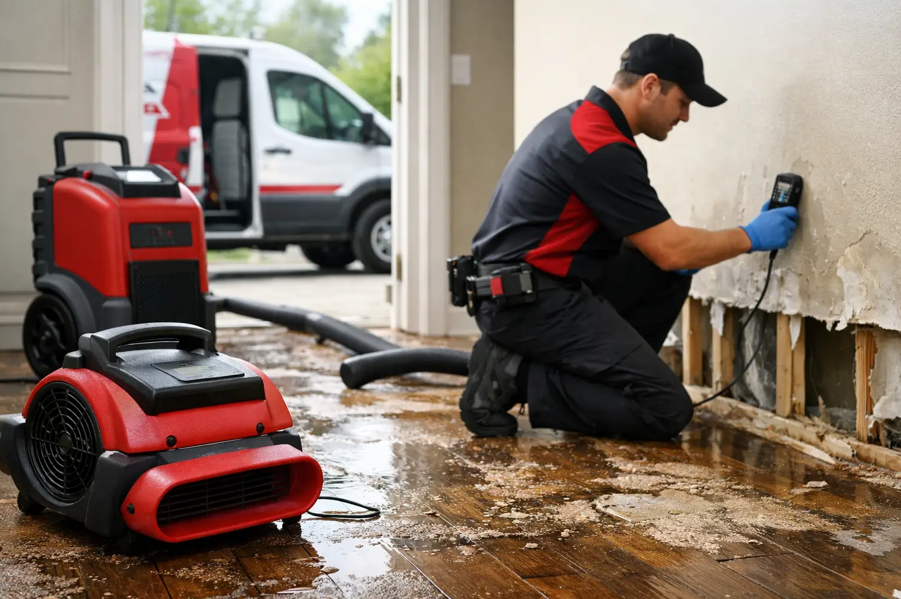
Moisture meters, thermal imaging tools, and other detection equipment help locate water that is not visible on the surface. This is one of the biggest reasons professional restoration matters. A floor can appear dry while moisture remains trapped underneath it.
Water extraction is only the beginning
One of the most visible jobs a restoration company performs is water removal. Using commercial extraction equipment, technicians remove standing water from floors, carpets, padding, and other affected areas. Fast extraction helps limit secondary damage and shortens the overall drying time.
Still, extraction is just the first phase. Even after the water is removed, many materials remain wet. Subfloors, framing, baseboards, drywall, insulation, and built-in cabinetry can all hold moisture. If those areas are not addressed, the property may continue to deteriorate even after the puddles are gone.
This is why professional drying is such a core part of the process. Industrial air movers, low-grain refrigerant dehumidifiers, and other specialized equipment are placed strategically to pull moisture out of the structure and contents. The equipment setup is not random. It is based on the type of materials affected, the amount of moisture present, airflow requirements, and the size of the impacted area.
Drying the structure the right way
Drying is where expertise makes a real difference. A restoration company does not simply place fans in a room and hope for the best. Technicians create a drying plan, monitor moisture readings, and adjust equipment as conditions change.
For example, hardwood floors may need a more controlled approach than tile over concrete. Wet drywall in one area may be saved, while saturated drywall in another may require removal if the water category is contaminated or the moisture has spread too far. Cabinets, crawl spaces, wall cavities, and behind-baseboard areas all require different strategies.
In Las Vegas and surrounding communities, people sometimes assume dry outdoor air means indoor water damage will resolve quickly on its own. It can help in some situations, but indoor structural drying still requires controlled conditions and measurement. Hidden moisture does not disappear just because the climate is arid. Trapped water behind walls or under flooring can linger long enough to create major issues.
Cleanup, sanitizing, and odor control
Another major part of the answer to what does a water damage restoration company do is cleanup. Water losses often leave behind more than moisture. They can also bring dirt, bacteria, staining, residue, and odors.
After extraction and during the drying process, restoration technicians clean affected surfaces and contents as needed. If the water event involved contamination, more extensive disinfecting and material removal may be required. This is especially true with sewage backups, toilet overflows, and water that has contacted unsanitary surfaces.
Professional restoration companies use EPA-registered disinfectants when the situation calls for them. They may also use air scrubbers and deodorization methods to address indoor air quality concerns and lingering smells. The right cleaning process depends on what was affected. A bathroom overflow in a tile area is not the same as contaminated water soaking carpet, drywall, and furniture in multiple rooms.
This is also the stage where companies determine what can be restored and what cannot. Some materials can be cleaned and dried successfully. Others, especially porous items exposed to contaminated water, may need to be removed for health and safety reasons.
Do restoration companies tear out walls and flooring?
Sometimes they do, but not always.
A good restoration company aims to preserve as much as reasonably possible. If materials can be dried and restored safely, that is often the preferred path. But there are cases where controlled demolition is necessary to reach trapped moisture or remove unsalvageable materials.
This can include removing sections of drywall, wet insulation, damaged baseboards, saturated carpet padding, or compromised flooring. The purpose is not demolition for its own sake. It is to prevent hidden moisture from remaining in the structure and to prepare the area for proper drying and repair.
There is always a balance here. Remove too little, and moisture may remain hidden. Remove too much, and you increase cost and disruption unnecessarily. Experienced restoration professionals make those decisions based on moisture readings, contamination level, material condition, and the likelihood of successful recovery.
Documentation and insurance support matter too
During a water loss, property owners are often dealing with stress, uncertainty, and insurance questions at the same time. A restoration company typically helps by documenting the damage, recording moisture levels, photographing affected areas, and tracking the drying process.
That documentation can support insurance communication and help show what mitigation work was necessary. While coverage decisions are made by the insurance carrier, detailed records from a professional restoration team often make the process more organized and transparent.
This part of the job is easy to overlook until you are in the middle of a claim. Clear documentation helps explain what happened, what materials were affected, what steps were taken, and why those steps were necessary.
What does a water damage restoration company do after drying is complete?
Once moisture readings return to acceptable levels, the mitigation phase is largely complete. At that point, the property may need repairs or reconstruction depending on the severity of the loss.
That can range from reinstalling baseboards and replacing drywall to rebuilding affected sections of flooring or cabinetry. In smaller losses, the restoration process may be fairly straightforward. In larger or more contaminated events, full repairs can take longer and involve more trades.
Some companies handle both mitigation and reconstruction. Others focus on the emergency dry-out and cleanup phase, then coordinate the next step. What matters most is that the property is dry, safe, and properly evaluated before repairs begin. Covering up moisture before it is resolved can create a second problem behind the finished surfaces.
Why fast response changes the outcome
Water damage is one of the clearest examples of why emergency response matters. The longer moisture stays in place, the more likely it is to spread, weaken materials, increase cleanup needs, and create mold risk.
That is why trained, 24/7 response teams are so valuable for homeowners, property managers, and business owners. In a commercial setting, fast mitigation can also reduce downtime and help protect inventory, equipment, tenant spaces, and daily operations.
For families and homeowners, quick action can mean the difference between drying a room and replacing major sections of it. For landlords and property managers, it can reduce tenant disruption and preserve the condition of the building. PuroClean of East Las Vegas approaches these losses with that urgency because delayed action almost always makes recovery harder.
If you are ever faced with a leak, flood, or backup, the most useful thing to remember is this: a water damage restoration company is there to stabilize the situation, find what moisture is hiding, and guide the property back toward safe, dry conditions. The sooner that process starts, the more options you usually have.