 PuroClean of Layton
Attic mold is one of the most overlooked winter hazards in Layton homes, especially in February when outdoor conditions feel cold and dry. Many homeowners assume mold risk drops once snowstorms slow down, but February is actually when attic-related mold problems spike. The reason has little to do with precipitation and everything to do with condensation patterns inside the home.
As winter progresses, homes remain sealed for warmth, heating systems run continuously, and moisture from daily activities accumulates indoors. That moisture rises into attic spaces, where cold surfaces turn it into condensation. By February, weeks of this process create ideal conditions for mold growth that often goes unnoticed until odors, health symptoms, or visible damage appear.
In this 2026 guide, PuroClean of Layton explains why attic condensation becomes more dangerous in February, how mold develops without leaks, and what homeowners can do to protect their property and indoor air quality.
Table of Contents
Attic Mold: Why February Is the Peak Month for Hidden Growth
attic mold becomes more active in February because the contrast between warm indoor air and cold attic surfaces is at its strongest. While January is often colder overall, February typically brings more frequent freeze–thaw temperature swings, which increase condensation inside attic spaces.
The Environmental Protection Agency explains that mold growth is driven by moisture availability rather than outdoor weather conditions. At the same time, the U.S. Department of Energy notes that warm, moisture-laden indoor air naturally rises and condenses on cold surfaces such as attic decking and roof framing during winter.
This combination makes February the most deceptive month for attic-related mold problems.
1. Warm Indoor Air Feeds Attic Condensation All Winter
One of the primary drivers of attic mold is warm air escaping from living spaces into the attic. Everyday activities such as cooking, bathing, and laundry release moisture that accumulates indoors.
The U.S. Department of Energy explains that stack effect forces warm air upward through ceiling penetrations, attic hatches, and recessed lighting, carrying moisture into colder attic environments. Once that air cools, condensation forms on the roof decking and framing.
By February, this daily cycle has often been repeating for months.
2. Poor Ventilation Traps Moisture in the Attic
Another major contributor to attic mold is inadequate attic ventilation. Without proper airflow, moist air becomes trapped and condensation lingers instead of dissipating.
The Environmental Protection Agency notes that insufficient ventilation increases indoor humidity and promotes mold growth in enclosed spaces like attics. During winter, vents may also be blocked by snow or ice earlier in the season, reducing airflow even further.
This trapped moisture allows mold colonies to expand quietly.
3. Insulation Becomes Damp and Loses Effectiveness
Condensation does more than encourage mold growth, it also degrades insulation. When insulation becomes damp, it loses thermal resistance and holds moisture against wood surfaces.
The U.S. Department of Energy explains that wet insulation reduces energy efficiency and increases heat loss, which in turn worsens condensation cycles. This creates a feedback loop where moisture, heat loss, and mold growth reinforce each other.
This process significantly increases the risk of attic mold developing undetected.
4. Mold Spores Spread Into Living Spaces
One of the most serious risks of attic mold is indoor air contamination. Mold spores do not stay confined to the attic; they can migrate into living spaces through ductwork, ceiling gaps, and pressure differences.
The Centers for Disease Control and Prevention explains that mold spores can become airborne and trigger respiratory irritation, allergy-like symptoms, headaches, and asthma flare-ups. During winter, HVAC systems circulate air continuously, spreading spores throughout the home.
Homeowners often notice health symptoms before they ever see mold.
5. February Humidity Levels Are Higher Than Homeowners Expect
Even when outdoor air feels dry, indoor humidity often remains elevated in winter. Heating systems do not remove moisture, and tightly sealed homes trap it inside.
The Centers for Disease Control and Prevention notes that mold growth can occur whenever indoor humidity remains high enough, regardless of season. In February, this hidden humidity frequently supports attic mold growth above living spaces.
This is why winter mold issues often worsen late in the season.
6. Ice Dams Contribute to Hidden Attic Moisture
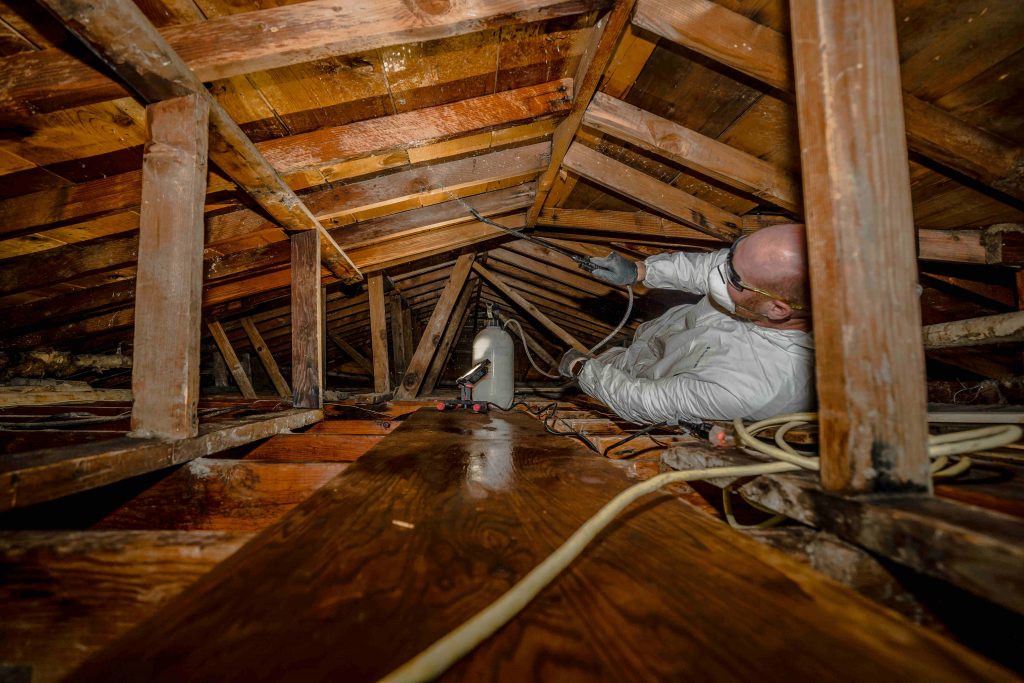
Although February may bring little new snow, ice dams formed earlier in winter continue forcing moisture into roof assemblies. That moisture often accumulates in attic insulation and framing.
The Federal Emergency Management Agency explains that ice dams trap melting snow and push water beneath shingles, allowing moisture to enter attics and wall cavities long after storms end. This delayed intrusion supports mold growth even during dry periods.
Many homeowners never connect ice dams to attic mold problems.
7. Mold Growth Begins Long Before It’s Visible
A defining feature of attic mold is delayed visibility. Mold often grows behind insulation, on roof decking, or in dark corners of the attic where homeowners rarely look.
The Environmental Protection Agency explains that mold can begin growing within 24 to 48 hours when moisture is present, even if surfaces appear dry. By the time stains or odors appear, mold may already be widespread.
This delayed discovery makes February attic inspections especially important.
Why Layton Homes Are Especially Vulnerable in February
Layton homes face unique winter risks due to freeze–thaw cycles, sealed construction, and common attic designs that limit airflow. These factors increase condensation potential late in the winter season.
The National Weather Service notes that fluctuating winter temperatures increase condensation and moisture movement inside buildings, even during dry periods. This makes February a critical month for attic moisture monitoring.
Why does attic condensation worsen in February?
Because warm indoor air continues rising while attic surfaces remain cold, increasing condensation cycles late in winter.
Can attic mold grow without roof leaks?
Yes, condensation alone is enough to support mold growth.
What symptoms can attic mold cause?
Coughing, sinus irritation, headaches, fatigue, and allergy-like symptoms.
How quickly can attic mold develop?
Mold can begin growing within 24 to 48 hours once moisture is present.
How PuroClean of Layton Identifies and Resolves Attic Mold
PuroClean of Layton specializes in identifying attic mold using moisture mapping, thermal imaging, and air quality assessment. Our team focuses on locating the moisture source, not just visible mold, so problems don’t return.
All remediation follows standards established by the Institute of Inspection, Cleaning and Restoration Certification, ensuring safe, effective, and insurance-aligned mold removal.
For professional inspection or remediation, contact PuroClean of Layton at (801) 513-2232.
February Is the Silent Mold Month
Attic mold problems in Layton peak in February because condensation, not snow, drives winter mold growth. Understanding this pattern allows homeowners to act before health and property damage escalate.
PuroClean of Layton remains a trusted local expert in winter mold inspection, remediation, and moisture control.


 PuroClean of Layton