 PuroClean of Layton
Roof leaks are one of the most misunderstood forms of winter damage in Layton, especially in January when homeowners naturally blame snow and ice. In reality, many of the roof leaks discovered during mid-winter actually begin weeks earlier, triggered by high winds that quietly compromise roofing materials long before snow ever falls.
By the time melting snow or ice reveals the problem, shingles have already lifted, flashing has already loosened, and seals have already failed. Because the visible damage appears during winter storms, homeowners often misidentify the true cause and underestimate how long water has been entering the structure.
In this guide, PuroClean of Layton explains how wind, not snow, is often the original source of January roof leaks, why this damage goes unnoticed until winter, and how Layton homeowners can act quickly to prevent extensive interior damage.
Table of Contents
Roof Leaks: Why January Is When Wind Damage Finally Shows Itself
Roof leaks frequently appear in January because colder temperatures expose weaknesses created earlier in the season. Fall and early-winter windstorms can lift shingles, crack sealants, and shift flashing without allowing immediate water intrusion, which delays detection.
High-wind events are capable of damaging roofing systems even in dry conditions, as documented by the National Weather Service, which explains that strong gusts can lift roofing components and break adhesive bonds without visible failure. Once snow arrives and daytime melting begins, water finds those weakened entry points and leaks become visible indoors.
This delayed effect is why January is often when homeowners first notice roof leaks that technically started weeks earlier.
1. Wind Lifts Shingles Long Before Snow Arrives
One of the most common wind-related causes of roof leaks is lifted or curled shingles. Strong gusts can break the adhesive seal that holds shingles flat, allowing them to shift just enough to expose the roof deck beneath.
Wind damage to shingles often occurs without immediate leaking, which is why it goes unnoticed, a pattern widely recognized by the Federal Emergency Management Agency in its wind damage guidance. Once snow melts during daytime temperature swings, water slips beneath loosened shingles and enters the attic space.
This damage typically appears first along ridgelines, roof edges, and areas with aging shingles that have lost flexibility.
2. Wind Compromises Flashing Around Roof Penetrations
Roof flashing protects vulnerable areas such as chimneys, plumbing vents, skylights, and roof valleys, but wind pressure can bend or loosen flashing without causing visible exterior damage.
Flashing failure caused by wind is one of the leading sources of delayed roof leaks, a risk consistently identified by the International Association of Certified Home Inspectors, which explains that flashing damage often reveals itself only after moisture enters weeks later. When January snow begins to melt, water flows directly into these compromised areas.
Because flashing damage is subtle and often hidden beneath shingles, it frequently escapes notice during casual inspections.
3. Wind-Driven Debris Weakens Roofing Materials
Another overlooked contributor to roof leaks is wind-driven debris. Branches, gravel, and airborne objects repeatedly strike roofing surfaces during windstorms, gradually stripping protective granules and weakening shingles.
Impact damage from debris significantly increases the likelihood of delayed roof failure, a risk highlighted by the Insurance Institute for Business & Home Safety, which notes that compromised roofing materials are far more vulnerable during subsequent weather events. Once protective layers are weakened, melting snow easily penetrates areas that once repelled water.
This explains why damage often surfaces in January rather than immediately after a storm.
4. Wind Damage Makes Ice Dams Far More Destructive
Wind damage frequently sets the stage for ice dams to worsen roof leaks. Loose shingles and damaged flashing allow water trapped behind ice dams to back up under roofing materials far more easily.
Ice dams force melting snow beneath shingles and into roof assemblies, particularly where wind has already weakened the structure, a phenomenon described by the Federal Emergency Management Agency. When these two forces combine, water intrusion accelerates quickly during January freeze-thaw cycles.
Homeowners often focus on ice dams alone, overlooking the wind damage that made the roof vulnerable in the first place.
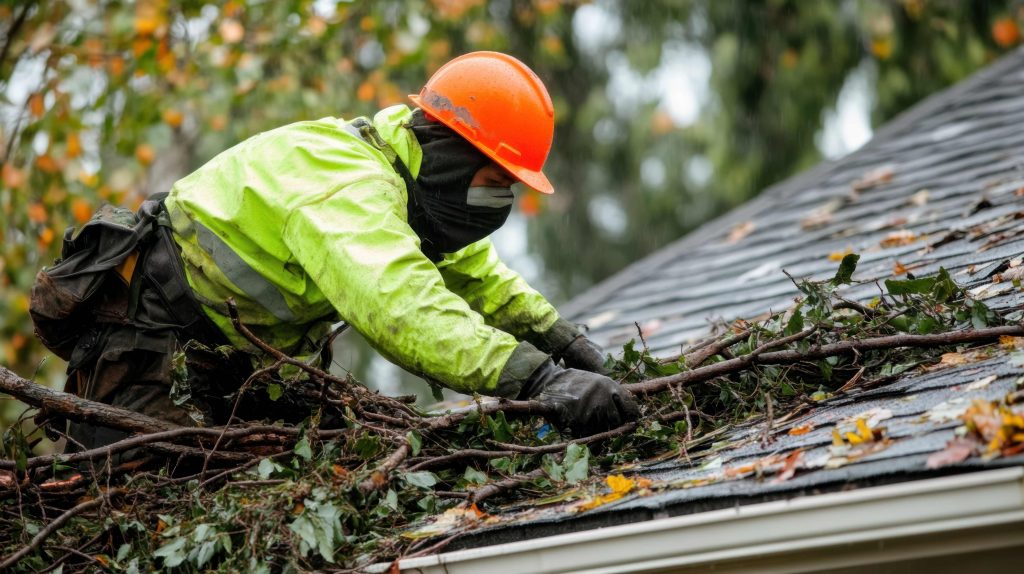
5. Wind Damage Goes Unnoticed Until Interior Symptoms Appear
Many homeowners first recognize roof leaks when they see ceiling stains, peeling paint, sagging drywall, or musty odors inside the home. At this stage, water has often been entering the structure for weeks.
Moisture intrusion through roofing assemblies can remain hidden within insulation and attic cavities for extended periods, a risk explained by the U.S. Department of Energy, which notes that trapped moisture may not become visible until conditions change. January temperature swings often trigger condensation and reveal previously hidden damage.
Delaying action allows water to spread into framing, ceilings, and wall cavities.
Why Wind-Related Roof Leaks Are Common in Layton
Layton’s geography exposes homes to frequent wind events that occur before major snowfall. These winds quietly stress roofing systems, particularly on older homes or roofs nearing the end of their lifespan.
Wind gusts exceeding roofing design tolerances can compromise shingle adhesion and flashing integrity even during dry weather, a risk documented by the National Oceanic and Atmospheric Administration. When snow arrives later, those vulnerabilities become active leak points.
This is why roof leaks in Layton are often discovered in January rather than earlier in winter.
FAQ’s
Roof leaks often begin with wind damage rather than snow because wind loosens roofing materials before winter precipitation arrives, as explained by the Federal Emergency Management Agency.
Roof leaks commonly appear in January because melting snow exposes damage created by earlier windstorms, according to the National Weather Service.
Wind damage can cause roof leaks weeks later when moisture finally enters compromised areas, a risk identified by the International Association of Certified Home Inspectors.
Insurance coverage for wind-related roof leaks depends on documentation and policy terms, as outlined by the Insurance Information Institute.
How PuroClean of Layton Handles January Roof Leak Damage
When roof leaks are discovered, immediate professional response is essential to prevent secondary damage. PuroClean of Layton provides 24/7 emergency water damage response throughout Layton.
Services include moisture detection, water extraction, structural drying, attic restoration, mold prevention, odor control, and insurance documentation. All restoration work follows IICRC S500 Water Damage Restoration Standards established by the Institute of Inspection, Cleaning and Restoration Certification.
What to Do If You Discover a Roof Leak in January
If you notice roof leaks in your Layton home, protect belongings below the leak, document visible damage, avoid attic access during icy conditions, and contact PuroClean of Layton at (801) 513-2232 immediately. Acting within the first 24 hours greatly reduces the risk of mold and structural deterioration.
January Roof Leaks Usually Begin With Wind
Roof leaks discovered in January are rarely caused by snow alone. In most cases, wind damage quietly weakens roofing materials weeks earlier, allowing water to enter once winter conditions intensify.
Recognizing this pattern helps homeowners respond faster and prevent extensive repairs. PuroClean of Layton is the trusted local expert for winter roof leak restoration, moisture control, and property recovery.
For emergency roof leak cleanup, call PuroClean of Layton at (801) 513-2232.


 PuroClean of Layton