


What Matawan Homeowners Need to Know
Living in Matawan, NJ, we experience high humidity throughout much of the year—especially during the summer and after heavy rainfall. This makes homes in our area particularly vulnerable to mold growth, especially in closed, poorly ventilated areas like closets.
At PuroClean of Matawan, we often respond to mold remediation calls that start with a musty smell coming from a bedroom closet. Explore tried and true methods on how you can prevent mold and mildew from taking over your closet and damaging your belongings when humidity is high.
In this guide, we’ll explore the reasons mold grows in closets, how to prevent mold in closets, how to recognize the signs, and steps you can take to protect your belongings and maintain a healthier home.
- Why Mold Loves Your Closet
- Tips to Prevent Growth
- Signs of Mold
- Finding It
- Removing It
- Getting Professional Help
Why Does Mold Love Your Closet?
Closets are dark, enclosed spaces with limited airflow, making them ideal for both mold and mildew growth. High humidity levels (above 60%), restricted ventilation and moisture create an ideal breeding ground, especially when organic materials like dirty clothes or damp items are present.
Top Tips to Prevent Mold Growth in Closets
1. Control Moisture – Keep Closets Dry
Humidity, leading to excess moisture, is a leading cause of mold growth. To combat it and prevent mold:
- Use a dehumidifier to absorb moisture in rooms with high humidity.
- Use silica gel packs, activated charcoal, or baking soda to absorb moisture from the air.
- Don’t keep your closet door closed all the time.
- Leave the closet doors open occasionally to allow fresh air to circulate.
- You could even place a fan at the closet entrance (blowing inside) to encourage air movement.
- Monitor humidity levels with a hygrometer. Digital hygrometers, considered more accurate than analog types, are readily available at your local hardware or big-box store. They should run between $12 and $20 depending on features).
- Aim to keep indoor humidity between 40% and 55%).
2. Store Clothes the Right Way
- Don’t keep dirty clothes in your closet. Mold spores can feed on their dirt or oils.
- Keep your laundry hamper in the laundry room or somewhere open to fresh air.
- Dry clothes completely before putting them away. Damp clothes and shoes are just another source of moisture.
- Store damp clothing elsewhere and let it dry before putting it in the closet.
- Avoid keeping clothes in plastic dry-cleaning bags. These and other plastic bags can trap humidity and promote mold growth.
3. Maximize Airflow and Ventilation
- Use plastic-coated wire shelves instead of solid shelving to improve air circulation.
- Replace solid closet doors with louvered doors to help air circulate freely.
- Don’t pack closets too tightly—leave space between your clean clothes for air to circulate between items.
- Stay away from storing items in plastic tubs. Instead, use baskets or other containers that allow airflow.
- Avoid storing items on closet floors to prevent trapping moisture underneath. Consider placing items in storage baskets up on a shelf.
4. Keep Closets Clean
- Clean closets regularly. Remove clothing, then dust the shelves, closet rods and doors (especially louvers). Vacuum or mop the floor.
- If you choose steam cleaning, be sure to let the carpet dry completely before placing items back on top of the carpet.
Special Considerations for Basements and Bathrooms
Closets near basements or bathrooms are particularly vulnerable to excess water and plumbing leaks. Be proactive and prevent mold from growing by:
- Sealing any water leaks or fixing plumbing issues promptly.
- Avoid moldy closets by installing a small dehumidifier in basement closets.
- Regularly clean closet floors and walls to remove moisture build-up.
- Manage your overall bathroom and basement humidity.
Recognizing Signs of Mold
Mold isn’t always visible. Here are additional signs to watch for that may indicate growth in your closet:
- Persistent Musty Smell: An earthy smell or musty odors in your closet, clothing, or stored items often point to excess moisture and potential issues.
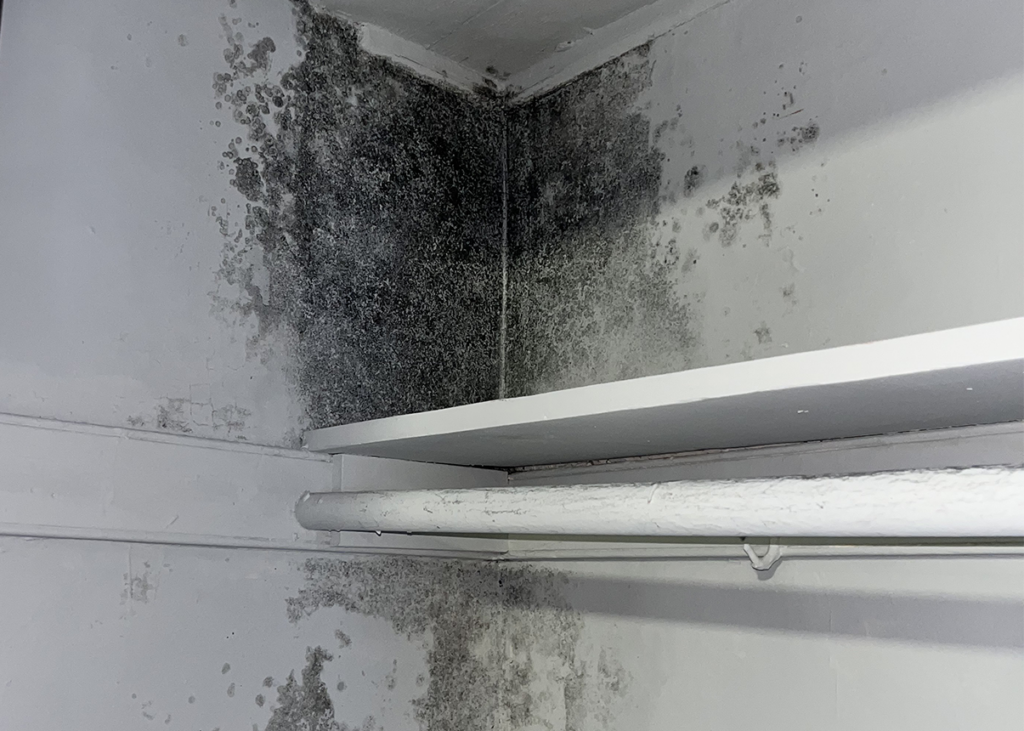
- Unusual Spots: Discolored patches on walls, ceilings, or even closet floors may be early signs of growth. These can range from faint streaks to more pronounced stains.
- Humidity Issues: High humidity in closets promotes mold, especially if things feel damp.
- Health Symptoms: Respiratory issues, allergy-like reactions, or headaches may stem from undetected mold spores in your home.
Finding the Mold
Finding mold early helps prevent its spread. Start with a simple sniff test—if your closet smells musty, it’s time to investigate further. Here are steps to help you identify problems in your closet:
- Empty the Closet for a Thorough Inspection: Remove all items, including clothes, shoes, and storage containers, to check for visible signs of mold on walls, ceilings, or floors.
- Check High-Risk Areas: Focus on areas along exterior walls, closet walls that back up to bathrooms, or corners prone to dampness. These dark, moist spaces are spots where mold thrives.
Addressing Mold in Your Closet
If you find mold develops in your closet:
- Remove moldy or mold-infested items and wash them thoroughly.
- Clean affected closet walls with specialized mold-killing products containing hydrogen peroxide.
- Avoid direct contact with mold. Wear protective gear, including gloves, a mask, and goggles, to limit spore exposure.
- Contain the area. Close the closet doors and cover the doors or area with plastic to prevent spores from spreading to other areas. Do not disturb the mold until you’re ready to clean or until a professional can remediate the mold.
- If the growth is extensive (covering an area greater than 10 square feet, says the EPA), contact a professional for safe removal.
What about Black Mold in Your Closet?
Like other molds, black mold could grow in your closet, primarily after some type of water damage, and old spores can grow quickly in this damp environment. Black mold (Stachybotrys chartarum), which is associated with the production of mycotoxins, may look greenish-black, slimy when wet or even powdery-white when it dries. However, other types of mold can also look black.
One key to identifying S. chartarum is that it likes to grow “on material with a high cellulose content, such as fiberboard, gypsum board, and paper,” according to the CDC.
Just because the color is black, it does not mean that it is the “black mold” that everyone is afraid of. Also, the exact nature of black mold and its health effects still require further study.
All types of mold can pose potential health risks, even if they do not produce mycotoxins, especially for young children. Also, people with allergies, asthma, chronic lung conditions, or weakened immune systems may be at a greater risk of experiencing severe symptoms. Effects vary from person to person.
- If you are concerned about black mold, call a mold remediation professional.
Professional Mold Removal Near Matawan, NJ
Don’t let mold take over your home. If you suspect mold or need help with mold removal, talk with PuroClean of Matawan for expert mold solutions and peace of mind. Contact us today at (732) 351-2442.