

After a flood, prioritize health and safety—discard contaminated food, medicine, and porous items, act quickly to prevent mold, and document damage for insurance before starting cleanup.
—
In the aftermath of water damage, it’s heartbreaking to see your household items damaged or destroyed. Beyond the visible destruction, these floods and burst pipes often leave behind hidden dangers like mold, bacteria, and harmful chemicals that threaten your health.
Yet, as overwhelming as it may seem, taking the correct steps now can make a significant difference in your recovery process. By understanding what to throw out after a flood and what might be salvageable, you can protect your health and start to rebuild your home with confidence.
Key Takeaways
- Sort Items by Floodwater Type and Material
- Discard Items Exposed to Black Water
- Prevent Mold Growth by Acting Fast
- Document Damage for Insurance Claims
- Prioritize Health and Safety During Cleanup
Understanding Standing Water and Floodwater Types
Floodwater can come from different sources, each with its own level of contamination and health risks. Understanding each type of water is central to safe cleanup.
- Clean water typically comes from household sources like broken pipes or appliance leaks. It poses minimal health risks if addressed promptly.
- Gray water is slightly contaminated, often from household appliances like dishwashers or washing machines. While it can still be managed, swift action is vital to avoid further contamination.
- Blackwater, commonly resulting from heavy rain or sewage backups, is highly dangerous. It carries harmful pathogens and toxins, making it a serious health hazard.
- Standing water from any source can lead to bacteria, mold, and contamination.
Prevent Mold Growth After a Flood
Mold growth is a serious concern after flooding, as spores can begin to spread within 48 hours of water exposure. If left unchecked, mold can pose significant health risks plus cause structural damage to your home. Addressing floods and standing water quickly is essential to prevent these mold dangers from escalating.
Flooded areas are particularly vulnerable to mold, mildew, and other contaminants. As floodwaters recede, the lingering moisture creates an ideal mold environment. Early detection and remediation are key to avoiding damage and maintaining a healthy home. Promptly drying affected areas and removing contaminated materials can reduce the risk of mold growth.
Key Concepts: Porous and Non-Porous
Porous items are soft and easily absorb and hold water. Examples of porous items are carpets, sheetrock and fabrics.
Non-porous items are generally hard and smooth. As such, they don’t soak up and hold water. Some examples include hard plastic items, glassware, and metal items.
Essential Items to Throw Out After a Flood
The level of water contamination and exposure time affect an item’s fate. They determine if it can be restored or must be thrown away. Depending on the conditions, gray water can become blackwater. This potential change increases the urgency for proper cleanup and disposal.
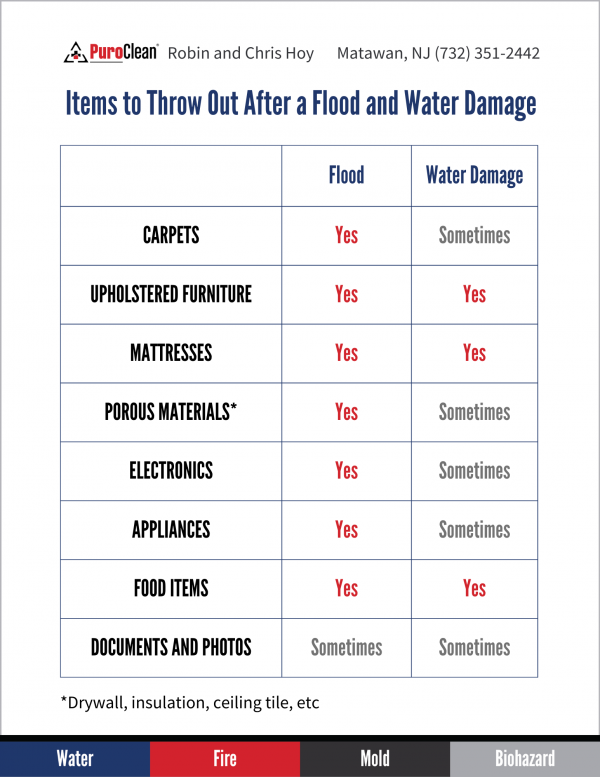
Items exposed to contaminated floodwaters, like carpets, upholstered furniture, and stuffed animals, must be discarded to prevent health hazards.
Food and Medications
- Discard food items exposed to floodwater. This includes perishables and non-perishables with damaged packaging. This also includes canned food with damaged or swollen cans. They can harbor harmful bacteria. Throw out any food not sealed in waterproof or non-porous containers with water-tight lids.
- Be cautious with home-canned goods. Most guidelines recommend throwing out all home-canned goods exposed to floodwater.
- If a power outage occurs, check the food in the refrigerator. If the refrigerator’s temperature rises above 40°F for more than two hours, some foods can spoil. Spoiled food can grow bacteria like E. coli and Salmonella. If eaten, they can cause foodborne illnesses. It’s vital to discard perishable foods, like meat and dairy. If stored at unsafe temperatures, they can cause food poisoning.
- Items that come in contact with food, like wooden cutting boards and wooden spoons, baby bottles and pacifiers, must be thrown away. You can clean things like cutlery, plates and glasses. The Centers for Disease Control says to use a solution of clean, hot water and soap. Rinse well with clean water, then sanitize them with a solution of bleach and water. (See link for specifics.)
- Throw out any medicines that touched floodwater. They may be contaminated, especially if not in water-resistant containers.
- Cosmetics also need to be thrown away.
Upholstered Furniture and Mattresses
- Upholstered furniture and mattresses soaked with floodwater are unsafe and must be thrown out. These items, once soaked with contaminated water, are a health risk. They are nearly impossible to restore to a safe condition. Due to the challenges in thoroughly cleaning and sanitizing these materials, disposal is the safest option.
Carpeting and Carpet Pads
- If floodwater has hit your carpet and pad, assess the situation. Most carpet pads have a vapor barrier—a plastic layer that prevents them from drying out properly. For clean water exposure, lift the carpet and dry it. Then, replace the pad. This can save you the cost of replacing the carpet.
- If the flooding involves sewage (a sewer loss), throw out the carpet and pad.
- A water remediation professional will suggest the proper course of action for your particular situation.
Handling Porous Materials
Porous items can harbor mold if not cleaned and dried quickly. To prevent health hazards, throw away items like drywall, insulation, and other absorbent materials to prevent health hazards.
- Documents and Photos – For documents and photos, act quickly. Discard items with mold or severe water damage. Air drying or professional restoration may help with slightly damaged documents and photos.
- Drywall and Insulation – Wet insulation must be removed and replaced to prevent mold. Mold can form on sheetrock, especially in basements around base moldings, trim, or ceiling joists. Cutting sheetrock and raising trim around the basement floor can mitigate moisture damage.
Pro Tip: Sheetrock should not be installed touching the basement floor to allow for expansion and moisture damage. You can cut the sheetrock and put up higher trim around the basement floor.
- Particleboard Furniture – Particleboard furniture is susceptible to damage when exposed to floodwater. Wet particleboard furniture often loses its strength. Due to the loss of integrity, any wet particleboard items, like cabinets and shelves, should be tossed out.
Salvageable Items: What Can Be Cleaned?
- Undamaged Canned Goods – Canned foods can be saved if appropriately cleaned. Just be sure to discard those with leaks, dents, or bulges.
- Hard Surfaces and Non-Porous Items – Non-porous items can often be cleaned using hot water combined with disinfectants. Cleaning non-porous surfaces prevents contamination and ensures a safer environment post-flood.
- Appliances and Electronics – It may be possible to save appliances and electronics. It depends on how much water they were exposed to. Carefully assess these items and consult with professionals if needed. Proper cleaning and drying can sometimes restore these items. But your welfare should always come first.
Be Safe During the Cleanup Process
Floodwaters harbor harmful bacteria and pathogens, making precautions critical during cleanup. Cleanup workers should wear proper personal protective equipment (PPE). Also, ensure good ventilation and proper cleaning techniques.
Immediate Steps – After a flood, ensuring the area’s integrity is the first step before beginning any cleanup efforts. One of the first steps is to turn off the electricity, even if power is out in the neighborhood. Floodwaters can cause electrical systems to short-circuit or create dangerous situations if the power is restored while the area is still wet.
Contact a professional or utility company if you need help turning off your electricity safely. If the flood damage is related to a water main break or other exterior line break, notify local authorities or the water company.
Protective Clothing and Gear – Wear waterproof boots, rubber gloves, and goggles when handling contaminated water. This will help ensure your safety. Wearing a mask (an N95 respirator or better) during flood damage cleanup helps filter mold spores and bacteria.
Using Cleaning Products Safely – When using cleaning agents like bleach, follow the guidelines on the label. This ensures effective disinfection and reduces risks. Mixing household cleaning products may cause harmful and even potentially lethal reactions. Do not mix bleach with other products. Wear PPE and provide good ventilation to reduce inhalation risks from chemicals.
Documenting Damage for Insurance Claims
Take Photos and Videos
Photograph and videotape all items and damaged areas from multiple angles before removing them from the property to create thorough documentation. Taking clear visual evidence before starting the cleanup process ensures an easier insurance claim process.
Contact Your Insurance Agent
Contact your insurance professional right away. Start the insurance claims process and check your coverage. Including serial numbers and keeping receipts enhances the documentation process for insurance purposes.
- You might like: Flooded Basement Cleanup Costs
Puroclean Professional Cleaning and Restoration Company
At PuroClean of Matawan, we understand the urgency and the anxiety that come with water damage in your home or business. Whether it’s a burst pipe in the middle of the night or a leaky roof discovered during a rainstorm, water damage needs prompt, professional attention to prevent further loss and mold damage. Contact PuroClean of Matawan today for immediate, professional assistance. Call us at 732-351-2442.
Our trained, background-checked IICRC* water remediation and damage restoration technicians can help with your flood or water damage 24/7. PuroClean of Matawan serves Matawan, Old Bridge, South Amboy, Brunswick Gardens, Sayre Woods, Mt. Pleasant, Laurence Harbor, Keyport, and nearby areas.
*(Institute of Inspection Cleaning and Restoration Certification)