


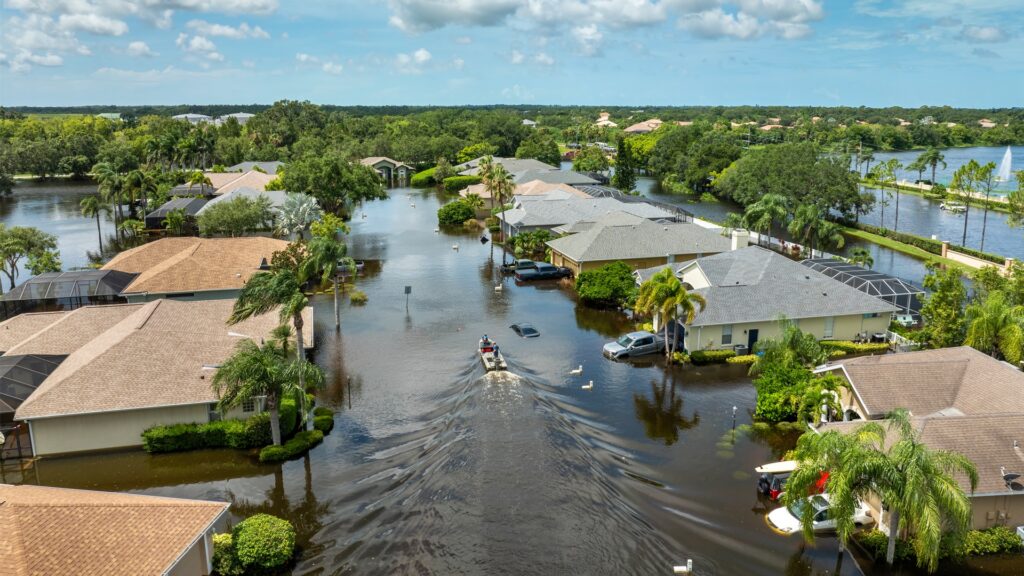
What to Do in the Event of Flooding
Anywhere it rains, it can flood. Floods can be associated with an increased water level from an established waterway, such as a river or lake. Flooding can occur from tropical cyclones, rapid accumulation of heavy rainfall, dam/levee breaks, storm surge, and outdated/clogged drainage systems. Flooding is Brevard County’s most frequent hazard.
Flood Cleanup & Restoration
Before
Review your five steps on your Pathways to Preparedness.
If flooding is imminent, turn off all utilities at the main power switch.
Purchase flood insurance. Regular homeowner’s insurance does not cover flooding, and may not cover wind-driven rain. In most cases, it takes 30 days after purchase for a policy to take effect, so it’s important to buy insurance before the storm approaches and the floodwaters start to rise.
During
If flooding occurs, go to higher ground.
Do not attempt to walk across flowing streams.
Avoid contact with floodwaters.
Evacuate immediately when the waters start to rise.
After
Don’t attempt to drive through a flooded road – turn around, don’t drown!
Be cautious in areas where floodwaters have receded.
Check for structural damage before reentering your home.
Prevent mold by removing wet contents immediately.
Read Also: PuroClean Recognizes Florida Franchise Owner with Prestigious Hot Shot Award
Terms to Know
Flood WatchBe prepared. Conditions are favorable for flooding.Flood WarningTake action. Flooding is imminent or occurring.
Quick Facts
- Flash floods are the most dangerous kind of floods. This type of flooding causes a rapid rise of water in a short period of time, generally with little or no warning.
- Most flood-related deaths are vehicular and occur at night.
- Brevard County participates in the Community Rating System (CRS) , which means you automatically qualify for an insurance premium reduction based on the riskiness of the area that you live in.
- The National Flood Insurance Program, is a pre-disaster flood mitigation and insurance protection program. The National Flood Insurance Program makes federally backed flood insurance available to residents and business owners. Contact the National Flood Insurance Program by calling 1-888-CALL-FLOOD ext. 445, TDD# 800-427-5593.
Potential Impacts
Due to its topography, the county has experienced inland flooding from at least 12 hurricane strength storms and numerous tropical systems since 1922. In addition, severe winter weather systems have caused significant coastal and inland flooding.
Flooding can occur from the ocean or rising waters of the Indian River, Banana River, St. John’s River, Mosquito Lagoon, Sykes Creek and Newfound Harbor. The majority of the land west of Interstate 95 makes up part of the St. John’s River Valley flood plain.
The county is susceptible to short duration flooding, typical of a frontal system with short periods of rain. However, rainfall can be very intense and usually is associated with thunderstorms. Freshwater flooding occurs when an excessive amount of rainfall accompanies a tropical storm or hurricane.
With the topography and high water table of Brevard County, drainage problems can make a small amount of rainfall very significant. Man-made alterations to the land have disrupted natural flow patterns and can lead to shallow flooding over a large area. Lastly, coastal tidal flooding is generated from high tides and wind action and is a chronic problem within the coastal shoreline.
In Brevard County, extreme flooding events can occur throughout the County at any time of the year.
Historic Events
Historic flooding events for Brevard County include:
- The most recent widespread flooding event was the result of record-setting rain during Tropical Storm Fay in 2008. Fay’s rain exceeded 20 inches of flooding above ground level.
- On October 24, 2005, Hurricane Wilma produced 10 to 13 inches of rain which fell across the central and north part of the county, and about 200 homes were flooded in Cocoa.
- On August 25, 1999, numerous thunderstorms passing over Melbourne and Brevard County produced nearly 3 to 8 inches of rain, flooding numerous roadways, and 49 homes received minor flooding.
Preparing for an Emergency Step 2 – Build a Kit
A disaster supply kit is a collection of essential items your household may need in the event of an emergency. Assemble your kit, and review it annually. If you evacuate, take your kit with you.
Basic Disaster Supply Kit
We recommend having the following items as part of your basic disaster supply kit:
- Water: one gallon of water per person, per day, for at least three days
- Food: at least a three-day supply of non-perishable food
- Battery-powered or hand crank radio, a weather radio, and extra batteries
- Flashlight and extra batteries
- First aid kit
- Moist towelettes, garbage bags, & plastic ties
- Feminine supplies & personal hygiene items
- Manual can opener for food
- Local maps
- Cell phone with chargers, inverter, or solar charger
- Cash
- Gloves (latex and landscaping)
- Hand Sanitizer
- Important family documents such as copies of insurance policies, identification, etc.
Additional Supplies
Once your basic supply kit has been stocked, additional items to consider include:
- Prescription medications and glasses
- Infant formula and diapers
- Pet food and extra water for your pet
- Shot records for pet(s)
- A carrier for each pet
- Sleeping bag or warm blanket for each person
- Complete change of clothing
- Matches in a waterproof container
- Mess kits, paper cups, plates, paper towels and plastic utensils
- Whistle to signal for help
- Wrench or pliers to turn off utilities
- Books, games, puzzles, or other activities for children
- Paper and pen/pencil
Persons with Disabilities, Barriers or Impairments
By evaluating your own personal needs and making an emergency plan, you can be better prepared for any situation. Inventory what you use every day to live independently. Identify the essential items you will need for at least three days. Stock custom essentials in your kit like:
- Durable medical equipment
- Assistive technology
- List of medications
- Contact information for doctors
- Have a method to communicate your impairments and needs
Pet Disaster Supply Kit
Don’t forget to keep necessary items for your pets as part of your disaster supply kit in case you need to evacuate to a pet-friendly shelter. You will need these items:
- Current rabies vaccination certificate
- Shot records
- Leash and collar
- County animal license tags
- Medications
- Crate or cage for each animal
- Pet food
- Cleaning supplies
- Newspaper or pet pad
- Comfort items for your pets
- Remember, being ready is the key to maintaining your independence.
- Pet Disaster Supply Kit
Rotate Supplies
Review and change out your supplies before and after hurricane season each year to ensure your information is up to date, and you have enough food that your whole family will like to eat if necessary.
Preparing for an Emergency Step 3 – Have a Plan
Having a plan for what to do in the event of an emergency is the most important step you can take. Think about the situations which can affect our community and how that would affect your household or business. If separated, make sure you have a designated meeting point and that everyone knows where it is.
Preparing for an Emergency Step 4 – Stay Informed
Information is critical before, during and after a disaster or emergency. There are several tools available in Brevard County to stay informed during an emergency situation or disaster. However, no one system is 100-percent fail safe and able to deliver notices to the entire population at the same time. Therefore, depending on the speed, location and severity of the emergency, one or more tools may be used to warn the public. While Brevard County Emergency Management provides the means for notification, it is the responsibility of the public to become familiar with the tools available and use the ones that will be best for them to receive emergency information.
PLEASE NOTE: Each communication tool listed below is for information purposes only and should not be substituted for official notification via a NOAA Weather Radio. A NOAA Weather Radio remains the most effective way to receive timely and official emergency weather notifications.
Social Media and Text Messages

Social media postings and text messages include information about prescribed fires, severe weather, accidents/incidents that impact major roadways or otherwise affect many people, space launches, and preparedness tips.
- Follow @BrevardEOC on Twitter
- “Like” BrevardEOC on Facebook
- To ensure that you see all of our posts, click “Get Notifications” under the “Liked” button.
- To receive text message updates on your cell phone, text BrevardEOC to 888777 (normal text messaging rates apply).
Wireless Emergency Alerts

Wireless Emergency Alerts (WEA) are notifications sent by authorized federal, state, local and tribal government agencies to WEA-capable devices about imminent threats to safety, such as a severe weather event or a missing child alert.
The messages are intended as a supplement to the existing Emergency Alert System, which broadcasts alerts over radio or television, and are possible through a collaboration of the Federal Communications Commission (FCC), the Federal Emergency Management Agency (FEMA) and the wireless industry.
- Mobile users are automatically enrolled to receive the Wireless Emergency Alerts and are not charged for receiving these text-like alerts. Note: Check your phone if you are not sure whether you have this capability. Older model devices may not be able to receive Wireless Emergency Alerts.
- The alerts are only sent when there is an imminent weather threat (Tsunami Warning, Tornado Warning, Hurricane Warning or Extreme Wind Warning), a missing child (Amber Alert) or a presidential alert.
- The alerts are short, 90-character information messages that will alert you; you may then check the media or other sources for additional information.
- These are geographically targeted alerts that are similar to a text message; however, they have a unique sound.
- If an emergency alert is issued and you are in that area with a WEA-capable phone, you will receive the message. WEA alerts are rebroadcast until the emergency situation has passed and is no longer a threat to those in the area. If you are traveling into an affected area after the original alert has been issued, you will receive the message. If you are not in your home region, and an emergency alert is issued there, you will not receive the alert.
AlertBrevard Mass Notification System

Residents of Brevard County can be notified about emergencies in their area through an automated call notification system. AlertBrevard is a primary tool used by Emergency Management to send important information to the public. However, call notifications go only to landline telephones unless other numbers are added to our database. If you rely on a cellular phone as your main telephone number, you are strongly encouraged to register your cell phone number with AlertBrevard.
AlertBrevard is used by Brevard County Emergency Management, Utilities, and Fire Rescue to notify businesses and residents for public safety purposes such as hazardous materials incidents, wildfires threatening homes, boil water notices, and other emergency situations. The calls will provide specific instructions for people to follow in order to keep themselves and others safe.
The new and enhanced version of the Emergency Notification System also provides the opportunity to receive this information via email or text message. It also offers the option of a variety of weather notifications.
Read Also: 5 Common Sources of Disasters in Your Melbourne Home in 2025: A PuroClean Guide to Prevention and Response
Preparing for an Emergency Step 5 – Get Involved
Building a culture of preparedness is how we make Brevard a more resilient community. An informed and engaged public is the best way to empower individuals to lend support. There are many ways to get involved so you can make a positive difference.
You can help by:
- Volunteer with existing disaster support organizations such as United Way, 2-1-1 Brevard, the Salvation Army, and the American Red Cross.
- Build a volunteer team with your faith-based or community group, and join the Brevard Voluntary Organizations Active in Disaster (VOAD).
- Join or start a preparedness project. Find an event or identify local resources, build a team, choose a project, set goals, and serve your community.
- Talk to your neighbors so that they know their risks and encourage them to be prepared.
- Make a financial contribution to a volunteer agency involved in disaster relief. This is the most efficient way of helping people in need after a disaster.
- Before donating any goods, including food or clothing, wait for instructions from local officials or check with a specific organization.
Training
Fostering training across multiple disciplines and jurisdictions is a core principle of emergency management on every level of government: federal, state and local. Each plays a critical role in the others’ success and it is through this collective effort that local communities are served.
Federal
The Federal Emergency Management Agency (FEMA) supports a variety of training courses in local communities across the United States by providing a national curriculum, classroom materials, instructors and certifications.
In addition to on-site instruction, the Emergency Management Institute (EMI) offers independent study courses that are self-paced and designed for people who have emergency management responsibilities and the general public through their website. All independent study courses are offered free of charge.
FEMA’s Independent Study Program offers courses that support the nine mission areas identified by the National Preparedness Goal.
- Incident Management
- Operational Planning
- Disaster Logistics
- Emergency Communications
- Service to Disaster Victims
- Continuity Programs
- Public Disaster Communications
- Integrated Preparedness
- Hazard Mitigation
For more information or to take any of the classes offered
State
Much in the same way that FEMA works to support the training needs of local jurisdictions, so too does the Training Unit for the Florida Division of Emergency Management. Their central function is to coordinate the delivery of courses to the field for those in the emergency response community; primarily focused at county and municipal responders.
One of the strongest tools used to accomplish that mission is the State’s Training and Resources Activity Center or SERT TRAC. Essentially a calendar of events, SERT TRAC is a one-stop shop for responders to find upcoming training in their community, surrounding areas and across the state.
For more information or to learn about courses being offered in the State of Florida please visit: Florida State Emergency Response Team
Download the quick tip sheet on how to create a SERT TRAC account and upload prerequisite certificates.
Note: The courses listed on SERT TRAC are designed for those with an emergency response role
How to Create a SERT TRAC Account (pdf, 665 KB)
Brevard County
Brevard County’s Office of Emergency Management works with our partners from law enforcement, fire rescue, public works and a host of other governmental and non-governmental agencies to identify and address the overall training needs of our local first responder community.
Classes on all phases of emergency management are constantly being offered. Download the informational handout on the National Incident Management System (NIMS) Training Program, which offers guidance for the core courses for individuals involved in emergency management, law enforcement, fire rescue and response operations, which includes public health, public works, utilities, and skilled support personnel positions.
For information about our Community Emergency Response Team (CERT) and how to sign up please visit the Brevard County Fire Rescue website.
National Incident Management System Training Program (pdf, 240 KB)
Organizations
Choose an organization for details: 2-1-1 Brevard American Red Cross American Society for the Prevention of Cruelty to Animals Medical Reserve Corps Radio Amateur Civil Emergency Services Salvation Army United Way of Brevard County Voluntary Organizations Active in Disasters
2-1-1 Brevard
2-1-1 Brevard operates the Community Information Hotline in partnership with Brevard Emergency Management in response to potential disaster such as a hurricane. During activations, volunteers are needed for four-hour (or longer) shifts around the clock.
Strong customer services and computer skills are required. Email [email protected] for more information or to register.
Source: BrevardCountyGovt
Conclusion: Be Prepared, Act Swiftly, and Trust the Experts in Brevard County Flooding
Living in Brevard County means enjoying the beautiful Florida lifestyle, but it also means understanding and preparing for the unique challenges our coastal environment can bring, especially when it comes to flooding. As we navigate 2025 and beyond, being proactive is your best defense against water damage.
Remember, the key to minimizing flood damage and a smoother recovery is a combination of preparation and swift, informed action. Know your flood zone, have an emergency plan in place, and stay informed through official Brevard County emergency alerts.
Should the unthinkable happen and your property experiences flooding, don’t hesitate. Time is of the essence. Water damage, if left untreated, can quickly escalate from a manageable issue to extensive structural damage and pervasive mold growth. That’s where PuroClean of Melbourne comes in.
As “The Paramedics of Property Damage®,” we are your local experts in water mitigation and restoration. Our compassionate and highly trained team is ready 24/7 to respond to your call, armed with state-of-the-art equipment to extract water, thoroughly dry your property, and restore it to its pre-damaged condition. We understand the stress and disruption a flood can cause, and we’re committed to guiding you through every step of the recovery process with professionalism and care.
Don’t let water damage overwhelm you. Be prepared, act quickly, and trust PuroClean of Melbourne to be your partner in restoring your home and your peace of mind.

For expert water damage restoration services, call PuroClean today! Our team of skilled professionals is equipped with the latest technology and techniques to quickly and effectively mitigate water damage. We understand the urgency of these situations and are committed to restoring your property to its pre-loss condition as swiftly as possible.
PuroClean’s property restoration experts are available 24/7 to help with fire damage, water damage restoration, mold remediation, biohazard cleanups, and more. As the “Paramedics of Property Damage®,” we are the first responders of property restoration, providing emergency service when you truly need it. We assist both residential and commercial clients. To schedule an appointment with the PuroClean of Melbourne office, please visit our website or call us at (321) 378-2400.