 PuroClean of Middlesex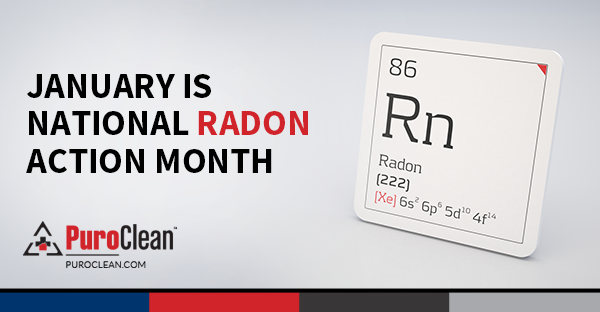
Radon is a naturally occurring radioactive gas that has no smell, color, or taste. These properties make it impossible to detect in homes without proper testing procedures. Radon is formed when the natural breakdown of uranium occurs, and this breakdown can be found in rocks, soil, and water.
Radon can spread without causing harm outdoors, when inside, it is a different story. Without natural facets to freely leave the enclosed space of a home, the gas can be a serious health and safety concern. Radon gas can enter homes and building through any cracks, gaps, and even open windows. Once gas is in the house, especially in a space with low circulation or ventilation, the gases can become trapped.
Any individual exposed to elevated levels for a long period of time faces significant health risk. This is especially true for babies and small children, seniors, and smokers, who usually have a weakened immune system. Long-term exposure is a leading cause of lung cancers, and possible a factor in neurodegenerative diseases, like Alzheimer’s. Radon is responsible for around 21,000 deaths per year in the United States, and since symptoms of radon exposure do not appear until too late, that number is bound to increase.

In January 2017, the Environmental Protection Agency (EPA) helped designate January is National Radon Action Month, to bring awareness to the posed threats. The month was also designate in hopes to promote regular home and property testing, and to research preventative measures, such as specific resistent construction practices.
A first step you and your family could take is to buy a radon testing monitor for year-round monitoring. These tests are simple to use, affordable, and widely accessible. Testing that indicates 4 picocuries per liter (pCi/L) or less is safe, but if monitors report higher levels, it is time for professional mitigation.
*Note these monitors should only be used as preliminary step, as some models may be inaccurate. Yearly professional testing is still the recommended standard. Professionals can also conduct property tests and explain the results in detail.
If at home or professional testing indicates an elevated gas presence, mitigation systems will be installed in the property to help alleviate indoor concentrations. These mitigation systems will help vent the gas from the home, and a specific area in the home, and release it into the outdoor air. If installed properly, these mitigation systems can lower in home levels up to 99%.

For prevention, especially if you are building or renovating a home or property, it’s good practice to follow radon-resistant construction methods. The primary goal is to limit the entry points within the property. When incorporated during construction, these methods can be cost-effective. If incorporated during a renovation, these techniques can be tailored to building styles.
To help know what to ask for when speaking to a contractor or architect, we have compiled a list below:
Radon Resistant Construction Checklist
- Is there, or can there be, a gas-permeable layer beneath the foundation to help the circulation beneath the home?
- Can plastic sheeting or a vapor barrier be placed over the gas-permeable layer to prevent gas from entering the building?
- Will sealant and caulking be used on all foundation cracks, joints, and gaps in and around the house to reduce infiltration?
- Will there be proper sealing around sump pumps, crawl spaces, etc?
- Is there, or can there be, a vent piping system running from under the foundation through the roof to release trapped gas?
- Can there be passive or active radon ventilation systems, and/or fans, to move any radon gas?

By actively discussing radon reducing features early in construction or renovation timelines, the more likely they can be included to help prevent radon exposure.
While radon gas is invisible, it’s impact is not. Professional and at-home testing, awareness, and prevention can help protect the health of you and your loved ones.


 PuroClean of Middlesex