

Protect Guests and Your Rental Brand From Biohazards
Biohazards in vacation rentals are not just big messes. They are health risks. In a Naples rental, this can include blood, bodily fluids, needles, or drug paraphernalia, raw sewage backups, strong pet messes, and rodent droppings or nesting materials. These are very different from sand on the floor or toothpaste in the sink, because they may carry germs that can make people sick.
During late June and the busy summer travel months, turnover schedules get tight. Guests check out late, new guests want early check-in, and cleaners are moving fast. That speed makes it easier to miss biohazard signs or to treat them as normal cleaning. Having a clear checklist keeps everyone safer and keeps your brand strong.
If biohazards are cleaned the wrong way, you risk illness for guests and staff, damage to floors, furniture, and walls, guest complaints, bad reviews, trouble with insurance claims, and possible issues with local health and safety rules. A safe and consistent plan protects the people who stay with you and the people who work for you.
Spotting Biohazard Risks During Fast Turnovers
First, you need a simple but clear inspection routine for every arrival check. Owners and managers can share this list with cleaning and turnover team members so everyone looks for the same things.
Areas to inspect as soon as you enter:
- Exterior entry, porch, and walkways
- Living and dining areas
- Bedrooms and closets
- Bathrooms and showers
- Kitchen, pantry, and trash areas
- Balconies or patios
- Laundry room and utility areas
- Garage and storage spaces
- Shared or common amenity areas, if you manage those too
Certain red flags may mean a biohazard, especially when they go beyond everyday dirt or normal trash smells. Watch for visible blood, vomit, or feces on floors, bedding, or furniture; strong, odd smells that do not match normal trash or food; needles, syringes, small baggies, or other drug-related items; toilets that overflowed, or dirty water in bathtubs or showers; backed-up drains with dark or foul-smelling water; heavy pet urine or feces, especially in carpets and on mattresses; and rodent droppings, chewed materials, or nesting piles.
Before anyone starts cleaning, stop and document. Have staff take clear, wide photos of the room and then close-ups of the affected spots. They should also make quick notes on where the issue is, what it looks and smells like, and how large the affected area seems, and record the time and who found it. This early documentation protects you and helps you decide if the mess is small enough for limited in-house handling or if you need professional biohazard cleaning in Naples, FL.
Step-by-Step Biohazard Cleaning Checklist for Owners
Some owners want a basic process when they face a minor, low-risk mess. Any action around possible biohazards should start with safety, including having the right protective gear available.
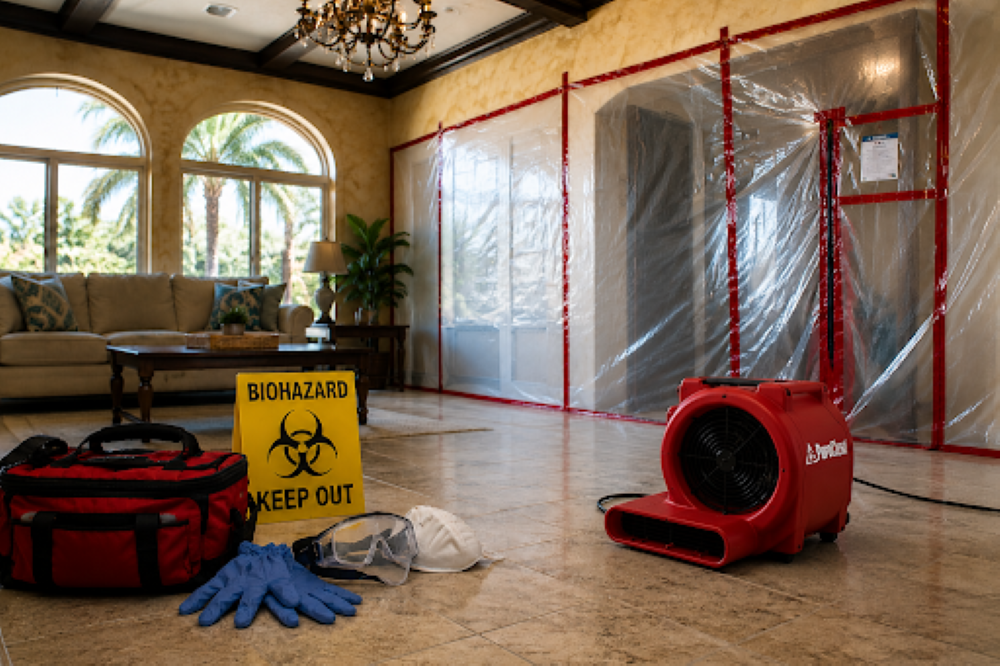
Personal protective equipment to keep on hand:
- Disposable gloves
- Masks or respirators
- Safety goggles or face shields
- Disposable shoe covers
- Disposable coveralls or aprons
Put PPE on before you enter the affected area, and remove it carefully after, turning items inside-out as you take them off so contaminated surfaces stay contained.
A simple checklist for small, low-risk incidents:
1. Secure the space
- Keep guests and untrained staff out of the area.
- Close doors and, if safe, open windows for fresh air.
2. Remove clean items
- Take out items that are clearly not affected, like clean towels or décor.
- Place them in another room so they stay safe.
3. Carefully collect small, low-risk waste
- Use tools, not bare hands, to pick up any trash.
- Place waste and used paper towels into sturdy bags.
4. Clean and disinfect hard surfaces
- Wipe up visible material, then clean the surface.
- Apply a proper disinfectant according to label directions.
5. Bag and store used supplies
- Seal used PPE, rags, and other disposable items in strong bags.
- Follow local rules for trash and any special handling.
Stop right away and do not continue if you see large areas of blood or bodily fluids, any substance that you cannot identify, signs of drug activity (especially many needles or unusual smells), sewage affecting more than one room, drain, or floor, recurring messes that keep coming back between guests, or any situation that feels beyond normal turnover work. Those are times to bring in professional support instead of trying to push through.
Documentation That Protects Your Business and Insurance
Strong documentation is your safety net. If a guest claims they got sick, an owner questions a charge, or an insurance carrier reviews a claim, your records show what really happened and how you responded.
Every time a possible biohazard is found, make sure someone records:
- Date and time discovered
- Who found it and who they notified
- Exact location and brief description
- Estimated size of the affected area
- Photos before, during, and after cleanup
- Products, methods, and PPE used
- Whether any guests or staff had direct contact
Keep your records organized with digital folders by property name and incident date, and include copies of invoices from any professional biohazard cleaning in Naples, FL. It also helps to store internal checklists filled out and signed by staff or vendors in the same place. Having these ready can make insurance conversations and guest questions much easier.
When DIY Stops and Professional Help Must Step in
There is a clear line where owners and standard cleaners should stop and professional help should start. Call in certified biohazard help if you have:
- Any violent incident or possible crime scene
- Significant blood or bodily fluids on soft or porous surfaces
- Suspected overdose, drug use, or drug preparation
- Sewage affecting multiple rooms or flowing from several fixtures
- Rodent or heavy pest infestations with droppings and nesting
- Situations where you are unsure if the unit is safe for guests
Professional biohazard cleanup teams handle these situations very differently from normal cleaners. They follow safety procedures that meet workplace rules, use disinfectants meant for serious contamination, and apply advanced odor control methods. They also know how to remove and handle contaminated building materials and contents, and they manage biohazard waste according to local and industry standards.
While you are waiting for the pros, secure the property or at least the affected rooms and stop any staff from trying to clean on their own. You should also communicate with upcoming guests to adjust plans if needed, and notify your insurance carrier and, where required, law enforcement or property management partners. These steps help protect everyone and preserve your coverage and reputation.
Build a Ready-to-Use Biohazard Response Plan Today
The best time to set up a biohazard response plan is before the next peak booking rush. A simple written plan keeps your team calm when something unpleasant appears right before check-in.
Your plan should include:
- Step-by-step instructions for staff when they find a biohazard
- A clear list of who to contact in what order
- Emergency numbers, including local medical and law enforcement
- Local providers for biohazard cleaning in Naples, FL
- A list of PPE and cleaning supplies that must stay stocked in each unit or in a central closet
Training is just as important as the plan itself. Before the busy season, sit down with cleaners, inspectors, and managers to cover what counts as a biohazard, personal safety and PPE basics, when to stop and call for help, and how to document what they see.
At PuroClean of Naples, we know that every rental property is different. Layouts, guest types, and turnover speeds all affect your risk. A little planning now means safer guests, less stress for staff, and smoother turnovers all summer long.
Frequently Asked Questions About Vacation Rental Biohazards
How Do I Know If a Mess Is a Biohazard or Just Normal Cleaning?
A mess is likely a biohazard if it involves blood, bodily fluids, raw sewage, needles, drug paraphernalia, or heavy pest droppings. Normal cleaning covers dust, sand, light food spills, and everyday bathroom use. When you are unsure, treat it as a biohazard and pause work until a professional gives guidance.
Can My Regular Cleaning Crew Safely Handle Biohazard Cleanup?
Most vacation rental cleaners are not trained or equipped for full biohazard cleanup. They may be able to handle very small, clearly identified issues with proper PPE, but anything larger, unknown, or involving blood, sewage, or drugs should be handled by certified biohazard cleaners.
What to Do If You Discover a Biohazard Right Before Check-In?
Block off the affected area right away, stop all cleaning, and take photos. Then contact a professional biohazard cleaning provider, and update your incoming guest about any needed delay or alternate plans while the area is handled safely.
Will My Insurance Cover Professional Biohazard Cleaning Costs?
Coverage depends on your policy and what caused the biohazard. Document everything with photos and notes, then speak with your insurance carrier as soon as you can to see what is covered and what paperwork they need.
Why Should I Choose a Local Naples Biohazard Cleanup Company?
A local provider understands the rental cycles, local expectations, and the pressure of fast turnovers in the Naples area. They can usually respond faster, work around guest schedules, and provide documentation that fits local standards and insurance needs.
Get Started With Your Project Today
When you are facing a hazardous or traumatic situation, you should not have to handle the cleanup on your own. At PuroClean of Naples, we provide professional biohazard cleaning in Naples, FL to restore safety and peace of mind as quickly as possible. Our trained team is ready to respond, assess the damage, and begin work with discretion and care. Reach out today so we can help you make your property safe again.