

Protecting Your Naples Vacation Rental and Your Reputation
Biohazard events in vacation rentals are not fun to think about, but they do happen. Illness, injuries, fights, drug use, or an unattended death can leave behind dangerous contamination that regular cleaners should never touch. In a busy vacation spot like Naples, one bad incident can hurt your listing, your income, and your peace of mind.
Quick, professional biohazard cleaning in Naples, FL helps protect guest health, your property value, and your reviews on Airbnb, Vrbo, and other platforms. It also shows that you take safety seriously and that you are acting responsibly as an owner or property manager.
Here, we will walk through how biohazard events are defined, who is responsible for what, how to talk to guests without causing panic, and what documentation you need for insurance and booking platforms.
What Counts as a Biohazard in a Vacation Rental
Not every mess is just a cleaning issue. Some situations are unsafe and need trained help. In a short-term rental, a biohazard can include:
- Blood or bodily fluids on floors, furniture, or bedding
- Vomit, urine, or feces in large amounts or spread across rooms
- Sewage backups or overflows from toilets or drains
- Infectious disease concerns, such as a seriously ill guest
- Drug paraphernalia, needles, unknown powders, or chemical residues
- Heavy pest or rodent contamination, droppings, or dead animals
When something like this happens, the first priority is safety. That means:
- Restricting access to the affected area right away
- Keeping guests, cleaners, and maintenance out of the space
- Avoiding DIY cleanup with household sprays or mops
- Using proper personal protective equipment if anyone must enter
Florida has health and safety expectations for rental properties, and short-term platforms also expect safe, sanitary homes. Calling a professional biohazard cleaning team in Naples helps you stay in line with these standards and protects every guest who walks in after the incident.
Owner and Property Manager Responsibilities After a Biohazard
When a serious incident happens, confusion about who does what can slow everything down. That is the last thing you need when there is blood on the floor and new guests arriving that afternoon.
Owners are usually responsible for:
- Carrying proper insurance, including coverage that can apply to biohazard events
- Approving emergency work and any needed reconstruction
- Paying deductibles and uncovered costs
- Setting clear policies for biohazard response in the management agreement
Property managers are usually responsible for:
- Answering emergency calls from guests at any hour
- Securing the property and coordinating professional vendors
- Taking photos, videos, and notes about the damage
- Handling guest communication, refunds, and calendar changes
- Updating listing platforms so the property is not booked while unsafe
Gray areas often pop up around questions like, “When do we call a professional biohazard team instead of sending regular cleaners?” To avoid arguments later, owners and managers can add clear language in the contract, such as:
- A definition of “biohazard” that matches what we listed earlier
- Who has authority to approve emergency work up to a set dollar limit
- Which vendors can be called without waiting for the owner
- How losses like canceled bookings will be documented and reported
Having this in writing makes it easier to act fast when the real thing happens.
Talking to Guests Without Causing Panic
How you talk to guests during a biohazard event can protect both safety and your ratings. The goal is to be calm, honest, and professional, without graphic detail or blame.
With current guests on-site:
- Explain that there is a health and safety issue that requires immediate attention
- Let them know you need to block off an area or move them to another unit or property
- Focus on their safety and comfort, not on the messy details
- Offer practical help, such as help with new lodging or adjusted check-out
For upcoming guests and platform support teams:
- Use clear, simple language like “unforeseen health and safety issue” or “biohazard cleanup in progress”
- Avoid guessing what happened or who caused it
- Do not admit fault or promise outcomes you cannot control
- Keep messaging focused on guest safety and your efforts to fix the problem quickly
Always keep records of what you said and when. Save messages sent through Airbnb, Vrbo, or other platforms, and follow up verbal talks with a short written summary when you can. These records can matter later for insurance or platform decisions.
Documentation, Insurance, and Platform Requirements
Good documentation is your best friend in a biohazard event. It supports insurance claims, helps with platform penalties, and shows that you handled things responsibly.
Right after the incident, and as safely as possible, you or your property manager should:
- Take time-stamped photos and short videos of the affected areas
- Write an incident report that includes date, time, and what was found
- Note who discovered the issue and who was on-site
- Keep a log of all calls, texts, and actions taken
Insurance companies often want to see:
- Detailed invoices from the biohazard cleaning and restoration team
- Technician notes describing contamination, methods used and materials removed
- Itemized lists of damaged contents that had to be discarded
- Proof of lost rental income, such as canceled reservations and blocked dates
- Before and after evidence that the property was professionally cleaned and restored
Booking platforms may ask for similar proof when you request fee waivers, calendar protection, or help with guest disputes. When you work with a professional company that handles biohazard cleaning in Naples, FL, they can provide clear reports and photos that support your side of the story.
Why Timing Matters During Peak Season
Late summer in Naples often means heavy guest turnover, lots of same-day checkouts and check-ins, and high humidity that can make odors and bacteria more stubborn. A biohazard event during this time can feel like a worst-case scenario.
Trained technicians help by:
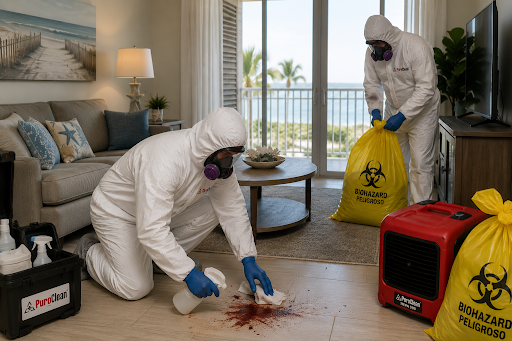
- Setting up proper containment so contamination does not spread to clean areas
- Using professional cleaning agents and equipment for deep disinfection
- Handling odor control so lingering smells do not turn into bad reviews
- Bagging, labeling, and disposing of hazardous materials the right way
All of this helps shorten downtime so you can safely open your calendar again. It also protects long-term income by keeping your property in good shape and giving guests confidence that the home is truly clean and safe.
Preparing Before an Emergency Happens
The best time to plan for a biohazard event is long before you ever need it. Owners and managers can work together to build a simple written response plan that covers:
- Who gets the first phone call when a serious incident happens
- How to lock down the property or affected rooms
- Which vendor to call for professional biohazard cleaning
- How much the manager can approve on the spot for emergency work
- Basic message templates for guests and platform support
It also helps to build a relationship with a local restoration team experienced in biohazard work. When that team already knows your property and your expectations, response is often faster and smoother, especially during busy times.
As a local restoration provider, we at PuroClean of Naples see how stressful these situations can be for both owners and property managers. A little planning, clear roles, and support from trained professionals go a long way toward protecting people, properties, and reputations.
Biohazard Cleaning FAQs for Naples Vacation Rentals
How Do I Know If a Situation Requires Professional Biohazard Cleaning?
A situation likely needs professional help if it involves blood, bodily fluids, significant sewage contamination, suspected drug residue or paraphernalia, or any incident related to serious illness or death. When you are not sure, it is safer to treat it as a biohazard and have a trained company assess the scene.
Who Pays for Biohazard Cleanup in a Short-Term Rental?
In most cases, the property owner is financially responsible, often with help from insurance if the policy covers biohazard or specialty cleanup. A property manager may arrange vendors or advance payment, but the management agreement should spell out how costs are handled.
Will My Rental Platform Penalize Me for Canceling After a Biohazard?
Many booking platforms will review penalties when there is a clear health and safety hazard. They typically want documentation, such as photos, written incident details, and invoices from a professional cleanup company, to show that the property was temporarily unsafe.
How Soon Can I Rent My Property Again After a Biohazard?
The timeline depends on how serious the contamination is. Smaller events may be resolved in a matter of hours, while more extensive damage can take one or more days. A professional team can inspect, clean, and then let you know when it is appropriate to accept new guests.
Can My Regular Cleaning Company Handle Biohazard Situations?
Most standard cleaning services are not trained, equipped, or insured for biohazard work. They may spread contamination or put workers and guests at risk. For any situation involving blood, bodily fluids, sewage, drug materials, or serious illness, it is safer to rely on a company that focuses on biohazard cleaning.
Restore Safety And Peace Of Mind With Expert Biohazard Cleanup
If you are facing a difficult or hazardous situation, our team at PuroClean of Naples is ready to respond quickly and discreetly. We provide professional biohazard cleaning in Naples, FL to help make your property safe and habitable again. Reach out today so we can assess your situation, explain your options, and start a cleanup plan that fits your needs.