


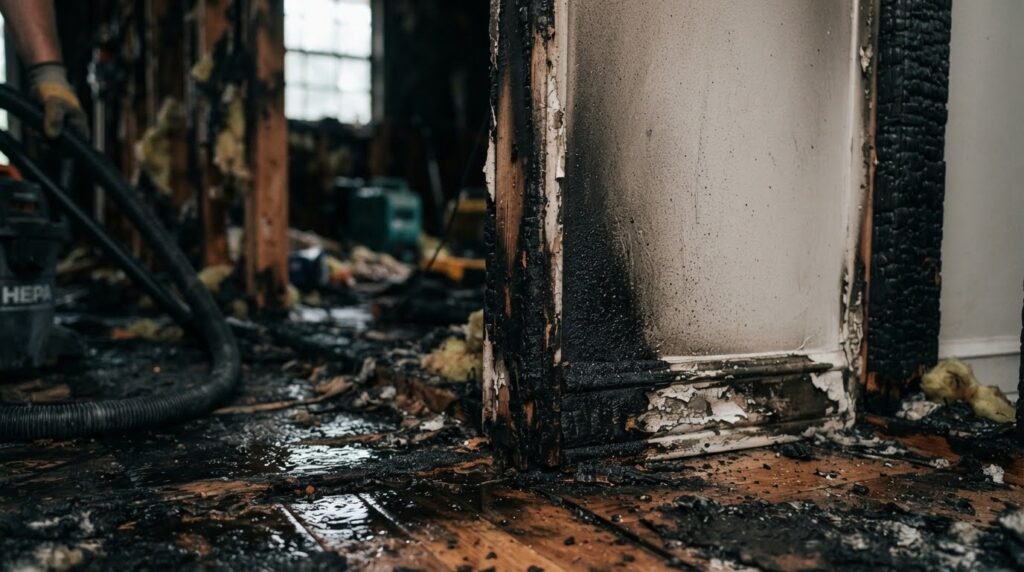
Protect Your Naples Property After a Fire
Fire damage does not stop when the flames go out. In Naples, smoke, soot, and water from firefighting efforts can start breaking down finishes, staining surfaces, and soaking into contents very fast, especially in our hot, humid air. Odors can get stronger, metal can start to corrode, and items that might have been saved can become a total loss.
The first 72 hours after a fire are some of the most important hours for your property. Quick, professional fire damage cleanup helps limit permanent staining, deeper smoke odors, and secondary water damage. You also have to think about storms, rain, and high humidity that can enter through broken windows, doors, and roof openings.
In this guide, we will walk through what usually happens after a fire: the first 72 hours, inspection and debris removal, soot and smoke cleanup, deodorization, and how reconstruction fits in. We will also share simple steps to prepare your home or business before crews arrive so the work can start faster and go smoother.
First 72 Hours After a Fire in Naples
Right after a fire, safety comes first. Even if things look calm, there can still be danger inside.
Here are key safety steps for this early stage:
- Wait for the fire department to say the property is safe to enter
- Stay away from areas that look unstable, sagging, or cracked
- Only turn off utilities if emergency crews say it is safe
- Be alert for exposed wires, broken glass, sharp metal, and slippery floors
In the first 24 to 72 hours, you can expect a fast response once you contact a professional fire damage cleanup team. Crews typically arrive, check basic safety, and start emergency steps like board-up and tarping. Open windows and doors, missing roofs, and broken glass can let in rain and humid air, so securing the structure is a priority. If needed, they may set up temporary power or climate control to help limit moisture problems.
During this time, technicians also start documenting the loss for insurance. That often includes:
- Photos and video of each affected room and area
- Moisture readings in walls, ceilings, and floors
- Notes about smoke damage to contents and building materials
- A basic inventory of damaged and at-risk items
While this is happening, property owners can help by knowing what to do and what to avoid. Helpful actions include:
- If safe, lightly ventilate the space by opening a few windows
- Gather important documents, IDs, and small valuables if you can reach them safely
- Make a list of key items or equipment you are worried about
Things to avoid:
- Do not try to wash walls, ceilings, or fabrics
- Do not throw away damaged items yet, since they may be needed for insurance
- Do not eat food or use items that were exposed to heat, soot, or smoke
Professional Inspection, Debris Removal, and Safety Steps
Once the property is secure, the next stage is a detailed inspection. This is where fire damage cleanup turns into a clear plan. Technicians look over the structure, note where the fire burned the hottest, and track how far water and smoke traveled.
A thorough inspection usually includes:
- Checking structural integrity of walls, ceilings, and roof areas
- Identifying water damage from firefighting, including hidden moisture
- Tracing smoke movement into upper floors, walls, attics, and HVAC systems
- Locating where soot has settled on surfaces and contents
After this review, the team creates a cleanup plan. That plan outlines which materials and contents can likely be cleaned and which will probably need to be removed. High-risk areas, such as heavily charred rooms or spots with deep water damage, are often addressed first. The plan also lists the equipment needed, from air movers to filtration units, and coordinates with insurance adjusters.
Debris and damaged material removal then begins. This step can feel emotional, but it is important for safety and progress. Crews carefully:
- Sort contents into salvageable and nonsalvageable groups
- Bag and remove charred materials and debris from the site
- Set aside high-value or sentimental items for special handling
- Dispose of hazardous items according to local rules
To keep everyone safe, technicians wear the proper personal protective equipment and may set up containment barriers to keep soot and dust from spreading into cleaner areas. They also follow local codes and guidelines to protect neighbors and the environment while work is going on.
Soot, Smoke, and Odor: Deep Cleaning and Deodorizing
Smoke does not respect room lines. Even a small fire can send smoke throughout a building, into cabinets, closets, insulation, electronics, and ductwork. Rooms that never saw flames can still carry strong odors and sticky residue.
Soot can be dry and powdery or oily and greasy. Each type calls for a different cleaning method. If you try to wipe soot off a wall or countertop using regular cleaners, you can smear it, push it deeper into pores, and make staining and odor worse. That is why professional fire damage cleanup relies on specific products and steps for each surface.
Typical cleaning tasks include:
- Detailed cleaning of walls, ceilings, doors, and trim
- Careful cleaning of furnishings, cabinets, and fixtures
- Special methods for delicate items like artwork or electronics
- On-site or off-site cleaning of contents as needed
To deal with the air itself, teams often use HEPA filtration and negative air machines to pull particles out of the indoor air. Deodorization is not just a spray or a cover-up. It is a multi-step process:
- Remove charred and heavily damaged materials that hold odor
- Clean and treat remaining surfaces to break down odor-causing residue
- Clean HVAC components that may have drawn in smoke
- Use professional deodorizing and filtration methods to neutralize lingering smells
When done correctly, the goal is to restore a space so that it looks clean and also smells neutral, not like perfume on top of smoke.
Reconstruction Coordination and How to Prepare Before Crews Arrive
Once debris, soot, smoke, and most odors are handled, the focus shifts to putting the property back together. Cleanup and reconstruction are connected, but they are different phases. Cleanup prepares the structure so repairs can be done safely and correctly.
Reconstruction work often includes:
- Repairing framing and other structural components
- Replacing drywall, insulation, trim, doors, and flooring
- Reinstalling or replacing cabinets, fixtures, and finishes
- Painting and final detail work so rooms are ready to use again
During this stage, project managers keep you informed, help coordinate inspections and permits, and align the work with insurance approvals. In Naples, timing can also take into account storm season and material choices that hold up better to heat and humidity. Before you move back in, the goal is a space that is clean, dry, comfortable, and code compliant.
While you wait for fire damage cleanup crews to arrive, there are some helpful ways to prepare your home or business as long as it is safe to be on site.
Helpful prep steps:
- Secure doors and windows if possible to limit trespassing
- Remove critical documents, small valuables, and medications you can safely access
- Make a list of high-priority items for restoration, such as business records or heirlooms
- Arrange pet care or temporary lodging so you are not rushed later
Things to avoid that can complicate cleanup:
- Do not run the HVAC system, which can spread soot through ductwork
- Do not clean carpets, upholstery, or walls on your own
- Do not consume food, drinks, or use cosmetics that were in the affected areas
Business owners may also want to:
- Back up digital records if equipment can be used safely
- Document damaged inventory and equipment with photos
- Notify key vendors, staff, and clients about temporary changes
- Plan for short-term workarounds, such as remote work or another location
All of this helps the fire damage cleanup team get right to work on inspection, documentation, and mitigation, which can shorten downtime and reduce disruption.
Frequently Asked Questions About Fire Damage Cleanup
How Soon Should I Call a Professional After a Fire in Naples?
Call as soon as the fire department says it is safe for you to do so. Early fire damage cleanup helps reduce permanent smoke stains, strong odors, and secondary water damage, which is especially important in our humid climate.
How Long Does Fire Damage Cleanup Usually Take?
Timing depends on how large the fire was and how far smoke and water spread. Initial stabilization and cleanup can take from several days to a couple of weeks, while full repairs and reconstruction can take longer. After an inspection, you will receive a more specific timeline for your property.
Will My Insurance Cover Fire Damage Cleanup and Repairs?
Many property insurance policies include coverage for fire damage cleanup and related repairs, but every policy is different. A professional team will document the loss, work with your adjuster, and help you understand what is typically covered so you can make good decisions.
Can I Clean Soot and Smoke Residue Myself?
It is not recommended. Soot can be acidic and easy to smear, which can cause permanent damage to surfaces, electronics, and fabrics. Trained technicians use products and methods that match each material so residues are removed safely and more damage is not created.
Is My Property Safe to Enter After the Fire Is Out?
Not always. There can be hidden structural damage, unsafe air quality, electrical hazards, and sharp debris even when a fire looks finished. Always wait for official clearance from the fire department and follow the guidance of fire damage cleanup professionals before spending much time inside.
Get Started With Your Project Today
If your property has been affected by a fire, our team at PuroClean of Naples is ready to help you restore safety and normalcy as quickly as possible. We provide thorough fire damage cleanup that addresses smoke, soot, and structural concerns with care and precision. Reach out today so we can assess your situation, explain your options, and create a clear plan to move forward together.