


Everyday Habits That Secretly Invite Mold Indoors
Mold in a Naples home does not always start with a big leak or a major storm. Many times, it comes from small daily habits that keep surfaces just a little damp, day after day. In a warm, humid place like ours, those little moisture spots can add up fast.
Mold can start growing on damp surfaces in a short time. When moisture hangs around, it gives mold a place to grab on, especially on drywall, grout, wood, and fabric. Our goal here is to help you see the everyday routines that quietly feed mold, so you can change a few habits and lower the chance of needing mold remediation in Naples, FL, later on.
Moisture Traps in Kitchens and Bathrooms
Kitchens and bathrooms are the usual suspects, even when there is no obvious leak.
Steamy showers are a big one. When hot water runs and the fan is off, steam sits on:
- Walls and ceilings
- Tile grout and caulk lines
- Mirrors, cabinets, and light fixtures
That fog on the mirror is moisture that can stay long after you leave the room. If the exhaust fan is weak, dirty, or not vented outside, the humidity has nowhere to go. It just soaks into surfaces over and over.
Helpful habits for bathrooms:
- Turn on the exhaust fan before the shower and leave it running afterward
- Crack a door or window when possible
- Wipe heavy condensation off mirrors and tile
In the kitchen, everyday cooking adds more moisture than most people think. Boiling water, simmering sauces, and running the dishwasher all send steam into the air. Without a working range hood, that steam settles on:
- Upper cabinets and backsplash
- Undersides of counters
- Window frames and sills
Small drips under sinks or around refrigerator water lines can also hide for a long time behind doors and panels. That dark, closed space is perfect for mold.
For kitchens, we suggest:
- Using the range hood during and after cooking
- Drying splashes around sinks and dishwashers right away
- Checking under sinks and around fridge lines regularly
Wet towels, bathmats, and shower curtains are another quiet problem. When they stay bunched up on the floor or stuffed over a towel bar, they stay damp. In warm coastal air, that damp fabric can grow mold and cause musty smells. Hang towels and mats fully open, wash them often, and let everything dry fully between uses.
Everyday Cooling Habits That Backfire in Humid Weather
Our AC systems work hard in Southwest Florida, but some habits can actually invite mold instead of stopping it.
Setting the thermostat too low might sound nice on a hot afternoon, but very cold indoor air meeting very humid outdoor air can cause condensation on:
- Exterior walls
- Windows and sliders
- AC vents and registers
Cold surfaces plus moist indoor air can create hidden mold on drywall, in corners, and around vents. A more balanced temperature and humidity level is safer for the home and still comfortable.
Neglecting AC filters and drain lines is another quiet issue. When air filters are dirty, airflow drops and coils can get too cold and sweaty. That extra moisture can drip or pool where it should not. If the condensate drain line clogs, that water can back up into the unit or nearby areas.
Good AC habits include:
- Checking filters monthly during heavy summer use
- Replacing filters as needed
- Having drain lines and the system inspected on a routine basis
Closed interior doors and blocked vents also affect moisture. When too many doors stay shut, some rooms do not get enough conditioned air. Furniture pressed tight against vents or heavy drapes over registers can trap air. Those areas can become stagnant and humid.
Try to:
- Keep supply and return vents clear
- Use ceiling fans to help air move
- Leave interior doors slightly open when possible so that air can circulate
Laundry, Cleaning, and Storage Habits That Feed Mold
Laundry habits can leave more moisture in the house than many people realize. Wet clothes left in the washer, on the floor, or in a basket can start to smell musty. That same moisture can spread to nearby walls, cabinets, and floors.
Dryers that do not vent fully outside send warm, damp air back indoors. That raises humidity in laundry rooms and nearby halls. Cleaning the lint filter is helpful, but it is also important that the exhaust vent is well connected and vented outdoors.
Daily plant care can add moisture too. Overwatering indoor plants or letting water sit in saucers keeps soil and trays soaked. Grouping many plants in one corner can raise humidity in that small area and encourage mold on:
- Window sills
- Nearby walls
- Pot surfaces and saucers
Use pots that drain well, empty trays after watering, and rotate plants so one spot is not always damp.
Storing items while they are still damp is another hidden trigger. When slightly wet mops, rags, beach towels, or pool gear are closed up in a closet or cabinet, the moisture has nowhere to go. Cardboard boxes, paper, and fabric soak up that dampness and can grow mold in the dark.
A few simple changes help:
- Air-dry mops, cloths, and gear fully before storing
- Avoid cardboard in humid-prone areas
- Use plastic bins that do not soak up moisture
Windows, Doors, and Daily Coastal Living Habits
In coastal homes, windows and doors see a lot of moisture. When cool indoor air meets hot, humid outdoor air, you may see condensation on glass and frames, especially in the mornings or during stormy days. If that moisture is never wiped, it can lead to mold in:
- Window tracks and corners
- Sliding door frames
- Caulking and seals
Quick daily checks help. A simple wipe with a dry cloth along sills and tracks can remove extra moisture before it sinks in.
Fresh sea breezes feel great, but open windows and doors on very humid days can raise indoor moisture quickly. Salt in the air can also be rough on surfaces over time. It helps to limit open-window time to lower humidity periods, like cooler evenings, and use dehumidifiers when needed.
Life in Naples often includes beach trips and pool days. Wet towels, swimsuits, and gear piled on the floor or thrown into closets keep floors and corners wet. This is especially common during school breaks and busy storm seasons when everyone is in and out all day.
It is helpful to set up a simple drying area, such as:
- Hooks for towels and suits
- A rack or line in a ventilated space
- A mat that can dry quickly between uses
When Everyday Moisture Becomes a Mold Emergency
Even with good habits, moisture problems can sometimes get ahead of you. Some warning signs should not be ignored:
- Musty or earthy smells that do not go away
- Spots or streaks on walls, ceilings, or around vents
- Ongoing condensation on windows, glass, or pipes
- Allergy-like symptoms that seem worse at home
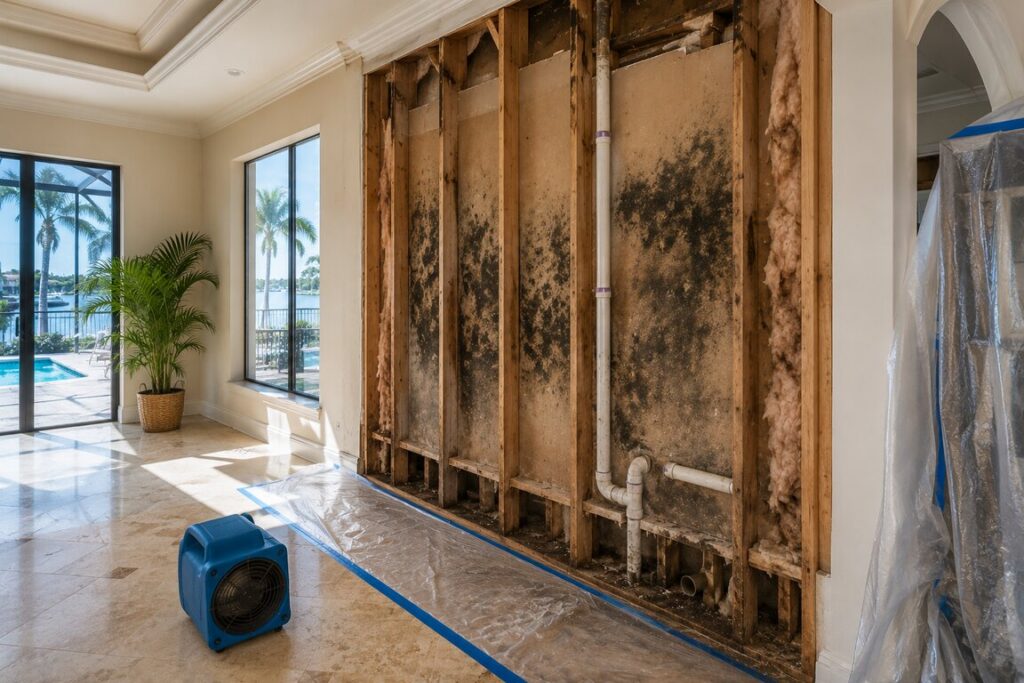
Mold does not always stay on the surface. It can hide behind paint, baseboards, trim, or large furniture. A small patch you see might be part of a larger problem behind the wall, especially in our humid climate, where mold can spread quietly.
When that happens, professional mold remediation in Naples, FL is often the safest way to handle it. Trained technicians can use tools to find hidden moisture, set up containment so spores do not spread, and use HEPA filtration and proper cleaning methods to address affected areas. Just wiping visible growth is not enough. The source of the moisture has to be found and corrected so it does not return.
At PuroClean of Naples, we work on mold, water damage, biohazard cleanup, and reconstruction after moisture problems. Our team responds at any time, day or night, to assess the situation, contain affected areas, remove damaged materials when needed, clean and dry the space, and share steps to help prevent the issue from coming back.
Get Started With Your Project Today
If you suspect mold in your home or business, we are ready to assess the situation and help you restore a healthier environment. At PuroClean of Naples, our team provides prompt, professional mold remediation in Naples, FL tailored to your specific property and concerns. Reach out today so we can inspect the affected areas, create a clear plan, and get your space back to normal as quickly and safely as possible.