Beyond the Leak: Why Water Damage Restoration Order Matters
Water inside your home never feels “small” for long. A slow drip after a fall storm can spread under flooring materials, into walls, and around trim before you even notice. In a warm, humid place like Naples, that extra moisture sticks around and quickly turns into bigger trouble for your home and your health.
We want to walk through the priorities that matter most with residential water damage restoration. When you know what to do first, what to leave to professionals, and how to think about the whole process, you can protect your property, your indoor air, and your peace of mind. As a local team, we see how late-season Gulf Coast rains and everyday plumbing issues hit homes here, and we know the order of steps makes all the difference.
First 24 Hours: Safety, Source, and Stabilization
The first day is all about safety and stopping the water. Before touching anything, think about what could hurt you, not what could damage your stuff.
Start with basic safety checks:
- Keep kids and pets away from wet areas
- Watch for slippery floors
- Do not step into standing water if electrical outlets or cords are nearby
If it is safe, shut off electricity to the affected rooms at the breaker panel. If you are unsure, wait for a professional. Avoid any water that might be coming from toilets, drain lines, or storm runoff. That kind of water can contain germs and chemicals.
Next, stopping the source should be the top priority. Depending on what you see, that might mean:
- Closing the main water valve if a pipe or supply line burst
- Turning off water to a single fixture, like a sink or washing machine
- Using buckets or plastic sheeting to catch roof or window leaks until repairs happen
Once the flow is under control, quick stabilization steps help reduce extra damage:
- Gently move electronics, documents, and soft items out of the wet area
- Lift area rugs and set them aside so they do not trap water under them
- If safe, slide aluminum foil or small blocks under furniture legs to limit staining and swelling
A homeowner can often handle simple steps in a small area. But when water spreads across several rooms, soaks walls, or involves questionable water, waiting to call a professional can turn a manageable cleanup into a larger reconstruction project. Fast action from a trained team helps set clear priorities and keeps damage from spreading.
Drying Comes First: Protecting Your Home’s Structure
Once the water is no longer flowing, drying is the foundation of any good residential water damage restoration plan. In Florida’s humid air, wet materials do not dry quickly on their own. Even if the surface feels dry, moisture can stay trapped inside.
Professional teams use tools and methods that go beyond what you can see or feel:
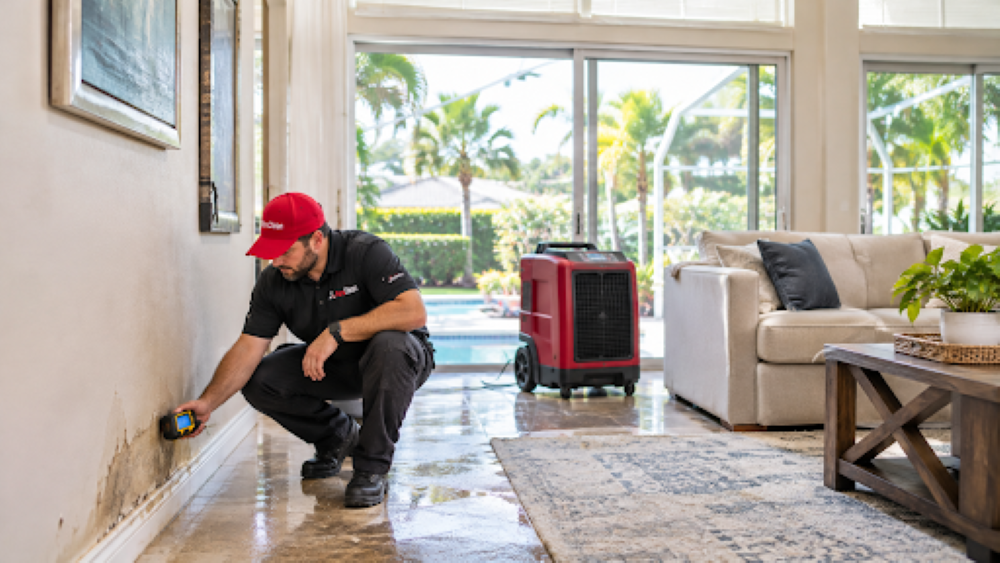
- Moisture meters and thermal cameras to “map” where water traveled
- Careful removal of materials that cannot be saved, such as waterlogged drywall or buckled trim
- High-volume air movers to push dry air across wet surfaces
- Dehumidifiers to pull moisture out of the air and speed up evaporation
Hidden moisture is one of the biggest risks after a leak. Water can sneak behind baseboards, into subfloor materials, and into insulation. If it stays there, it can lead to:
- Warped or soft walls and doors
- Lingering musty odors
- Long-term weakening of structural materials
Instead of guessing, professionals track daily moisture readings. This tells us when wood, drywall, and other materials have reached safe, dry levels. Skipping this step or relying only on household fans and open windows often leaves pockets of dampness that cause problems weeks or months later.
Health First: Mold and Contaminant Control
Where there is moisture and warmth, mold can start to grow quickly. In a place like Naples, indoor conditions are often perfect for mold if water is not removed and materials are not properly dried. That is why health stays at the center of any water damage response.
After a leak or indoor flooding, early signs of mold or other issues can include:
- A new or stronger musty smell, especially in closed rooms or closets
- Discoloration, spotting, or fuzzy growth on walls, ceilings, or trim
- More coughing, sneezing, or breathing trouble for people with allergies or asthma
Good mold and contaminant control is more than spraying a cleaner and hoping for the best. Professional steps often include:
- Sealing off affected rooms with plastic barriers to keep spores from spreading
- Using air scrubbers with HEPA filters to capture mold spores and fine particles
- Carefully removing porous materials, like some drywall and insulation, that cannot be fully cleaned
- Following safety rules for handling any water that might be contaminated
One common mistake is heavy DIY use of bleach. This can irritate eyes and lungs and may not reach deep into porous surfaces. Scrubbing visible mold without proper containment can push more spores into the air. That is especially concerning for children, older adults, and anyone with breathing issues. A planned approach helps keep your indoor air safer while the home is restored.
Restoring Comfort and Planning Ahead
Once everything is dry and clean, it is time to bring your home back to normal. This is where repairs and finishes come in. Depending on the damage, that might include:
- Replacing damaged drywall and trim
- Installing new flooring in affected rooms
- Repainting walls and ceilings for a uniform look
When the same team handles both the emergency response and the follow-up repairs, the process tends to be smoother. There is one plan, one timeline, and one group coordinating trades and any needed inspections. That helps you get back to your regular routine faster and with fewer surprises.
Water damage is also a chance to think about resilience. As you repair, you might:
- Choose more moisture-tolerant materials in bathrooms, kitchens, and laundry areas
- Add better sealants around windows and exterior doors
- Have plumbing lines, roof areas, and older fixtures checked for past small leaks
Since we live and work in Naples, we pay close attention to local storm patterns and how they affect homes here. Late fall is when many homeowners think about holiday plans, but it is also a smart time to prepare for heavy rains and windy days that can push water where it does not belong.
A simple home water emergency plan can include:
- Knowing where the main water shutoff and key fixture valves are located
- Keeping a short list of trusted emergency contacts posted in the kitchen
- Setting aside a small “grab-and-go” box for important papers and a few sentimental items
Planning before a leak or storm makes every decision easier when time is tight.
Residential Water Damage Restoration FAQs
In What Order Should I Handle Water Damage at Home?
Start by keeping everyone safe and staying clear of electrical hazards. Next, stop the water at the source if you can do so safely. Then protect valuables from the wet area and contact a professional for residential water damage restoration so thorough drying and cleanup can begin quickly.
How Fast Do I Need to Act After a Leak or Indoor Flooding?
You should act within hours, not days. Building materials can start to swell and break down soon after getting wet, and mold can begin developing within 24 to 48 hours in warm, moist spaces. A quick response helps limit damage and supports better indoor air quality.
Can I Just Use Fans and Open Windows to Dry My Home?
Household fans and open windows usually are not enough, especially in humid climates. They can help a little on surfaces but often leave hidden moisture behind walls and beneath finished flooring. Professional residential water damage restoration uses stronger air movers, dehumidifiers, and moisture meters to confirm that materials are truly dry.
Will My Homeowners Insurance Cover Water Damage Restoration?
Coverage depends on what caused the water damage and the details of your policy. Sudden problems, like a burst supply line, are often handled differently than slow, long-term leaks. It is important to review your policy, document all damage with photos and videos, and talk with your insurance company as soon as possible.
When Should I Call a Professional Instead of Cleaning It Myself?
Call a professional if more than a small area is affected, water has soaked into walls or flooring, or the water might be dirty, such as from plumbing backups or stormwater. Professionals have the training, equipment, and safety steps needed to protect your home’s structure and indoor air while handling residential water damage restoration.
Get Started With Your Project Today
When water disrupts your home, our team at PuroClean of Naples is ready to respond quickly and help you restore normal life. We provide comprehensive residential water damage restoration services tailored to the unique needs of your property. From initial assessment through cleanup and repairs, we communicate clearly so you always know what comes next. Call us today to schedule service and let us help protect your home from further damage.