


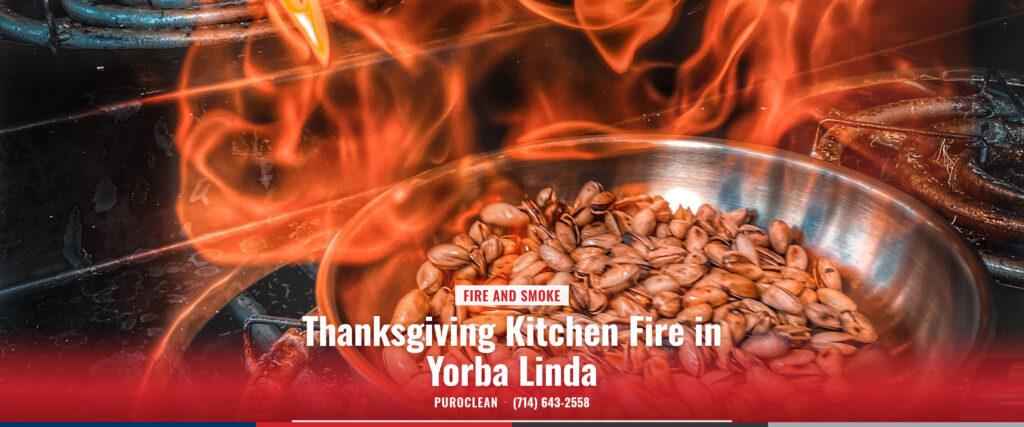
A kitchen fire is more likely on Thanksgiving than on any other day of the year. The National Fire Protection Association says Thanksgiving is the peak day of the year for home cooking fires in the U.S. On its Thanksgiving safety page, NFPA estimates 1,139 home cooking fires were reported to U.S. fire departments on Thanksgiving Day 2024, more than three times the daily average.
Most of those fires start small. A pan of oil gets too hot while someone answers the door, or a dish towel sits too close to a burner. Here’s how to keep a kitchen fire from starting in your Yorba Linda home, what to do in the first seconds if one does, and what the smoke leaves behind.
Why Thanksgiving is the busiest day for a kitchen fire
NFPA says unattended cooking is the leading contributing factor in home cooking fires and fire fatalities. In NFPA’s 2026 Thanksgiving release, Lorraine Carli said, “When people are preparing multiple dishes and entertaining guests, along with other distractions, it’s that much easier to lose sight of what’s on the stove or in the oven.” That describes a lot of Thanksgiving kitchens.
NFPA’s own numbers show how common it is. Its cooking safety page says that from 2020 to 2024, kitchen and cooking equipment was involved in an estimated 48 percent of home structure fires each year, and that ranges or cooktops account for over half (51 percent) of home cooking fire incidents. NFPA’s most recent full Home Cooking Fires report, which covers 2017 to 2021, found ranges or cooktops involved in 53 percent. Either way, the stovetop is where a kitchen fire most often starts.
It isn’t only a holiday problem. The U.S. Fire Administration says cooking is by far the leading cause of home fires and home fire injuries. In 2021, U.S. fire departments responded to an estimated 170,000 home cooking fires, which caused an estimated 135 deaths, 3,000 injuries and over $494 million in property loss.
7 kitchen fire safety tips from NFPA and USFA
- Stay with your cooking. NFPA says to never leave the kitchen while cooking on the stovetop, because some cooking, especially frying or sautéing with oil, needs continuous attention. If the turkey is roasting, stay home, check on it regularly and use timers for the long dishes.
- Watch the heat. USFA says fires start when the heat is too high. If you see any smoke or the grease starts to boil, turn the burner off.
- Dress for the stove. NFPA says to avoid long sleeves and hanging fabrics that can come in contact with a heat source.
- Keep oven mitts, wooden utensils, food wrappers and towels at least three feet from the cooking area.
- Turn pot handles toward the back of the stove so nobody bumps them. USFA’s short version is stand by your pan, and if you leave the kitchen, turn the burner off.
- Keep kids and pets at least three feet from the stove and from anywhere hot food is being carried.
- Keep a lid or a baking sheet next to the pan while you cook. USFA says covering a pan that catches fire will put it out.
NFPA also strongly discourages turkey fryers that use cooking oil, and suggests an infrared fryer, an air fryer or an electric turkey fryer instead. If someone in the family insists on frying, keep it outside and well away from the house.
Cooking with oil without starting a kitchen fire
Frying is where a lot of holiday cooking goes wrong. NFPA’s cooking safety guidance gives a few rules for oil:
- Heat the oil slowly to the temperature you need.
- Add food gently so the oil doesn’t splatter.
- Watch for wisps of smoke or an oil smell. NFPA calls smoke a danger sign that the oil is too hot. Turn off the burner or carefully move the pan off the heat.
- Keep a lid beside the pan the whole time.
NFPA adds one more that matters on a long holiday: if you’re sleepy or have been drinking, don’t use the stove. Hand the frying to someone else and help with the table instead.
The one habit that prevents the most kitchen fires
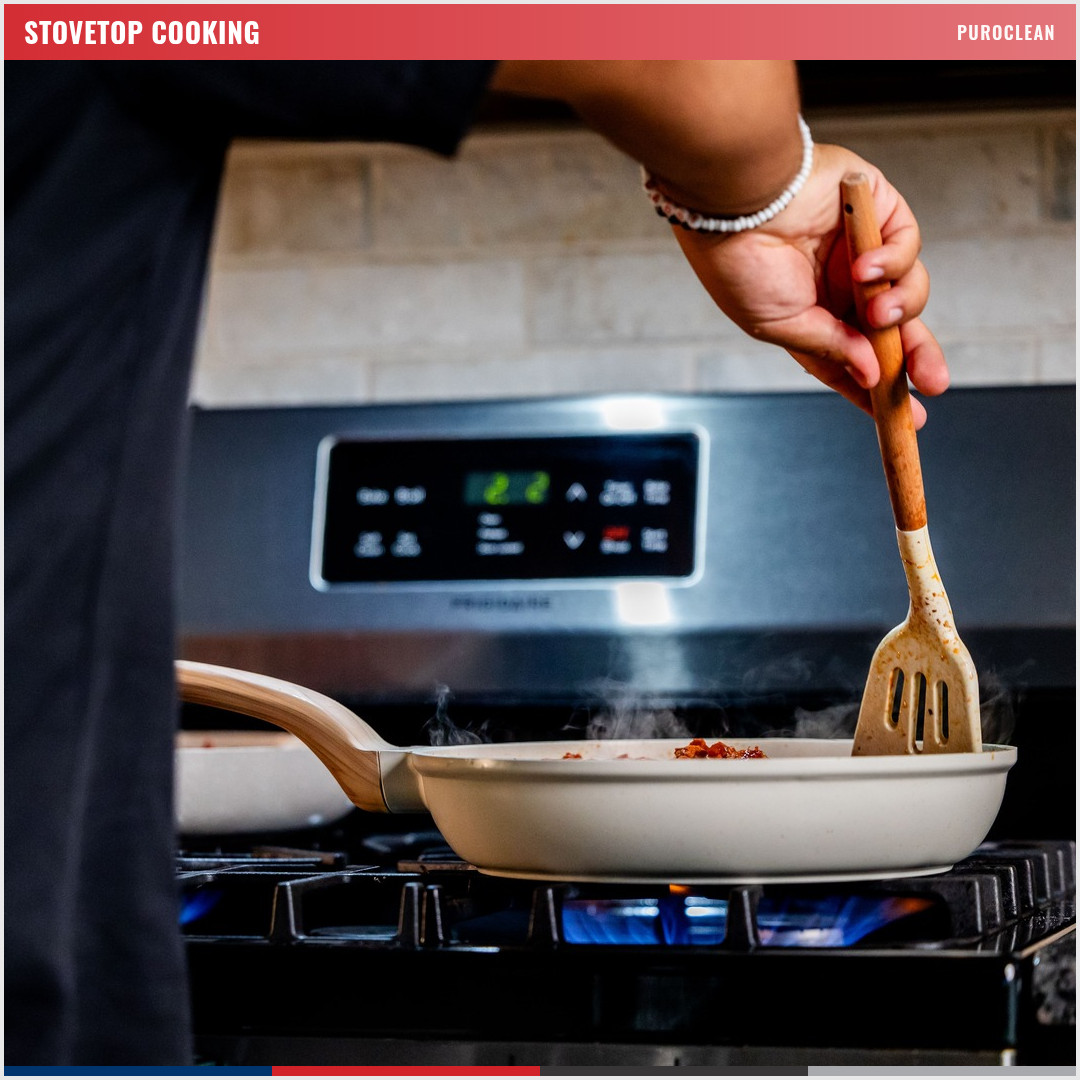
If you only remember one kitchen fire tip, make it this one. USFA reports that unattended equipment was the leading factor in nonconfined home cooking fires, at 37 percent.
On Thanksgiving the kitchen is crowded and the doorbell keeps ringing. Hand off the spatula before you walk away, or turn the burner off. A pan of oil can go from shimmering to smoking while you greet one guest.
What to do if a kitchen fire starts on the stove or in the oven
A grease fire in a pan
Slide the lid or a baking sheet over the pan and turn off the burner. Don’t move the pan, and leave the cover on until it’s completely cool, because NFPA says the fire could start again if you lift it. Never throw water on a grease fire. USFA says water will make it bigger.
A fire in the oven
Turn off the heat and keep the door closed. NFPA says to open it only once you’re confident the fire is out, standing to the side as you do. If you have any doubt, call the fire department.
When the fire isn’t going out
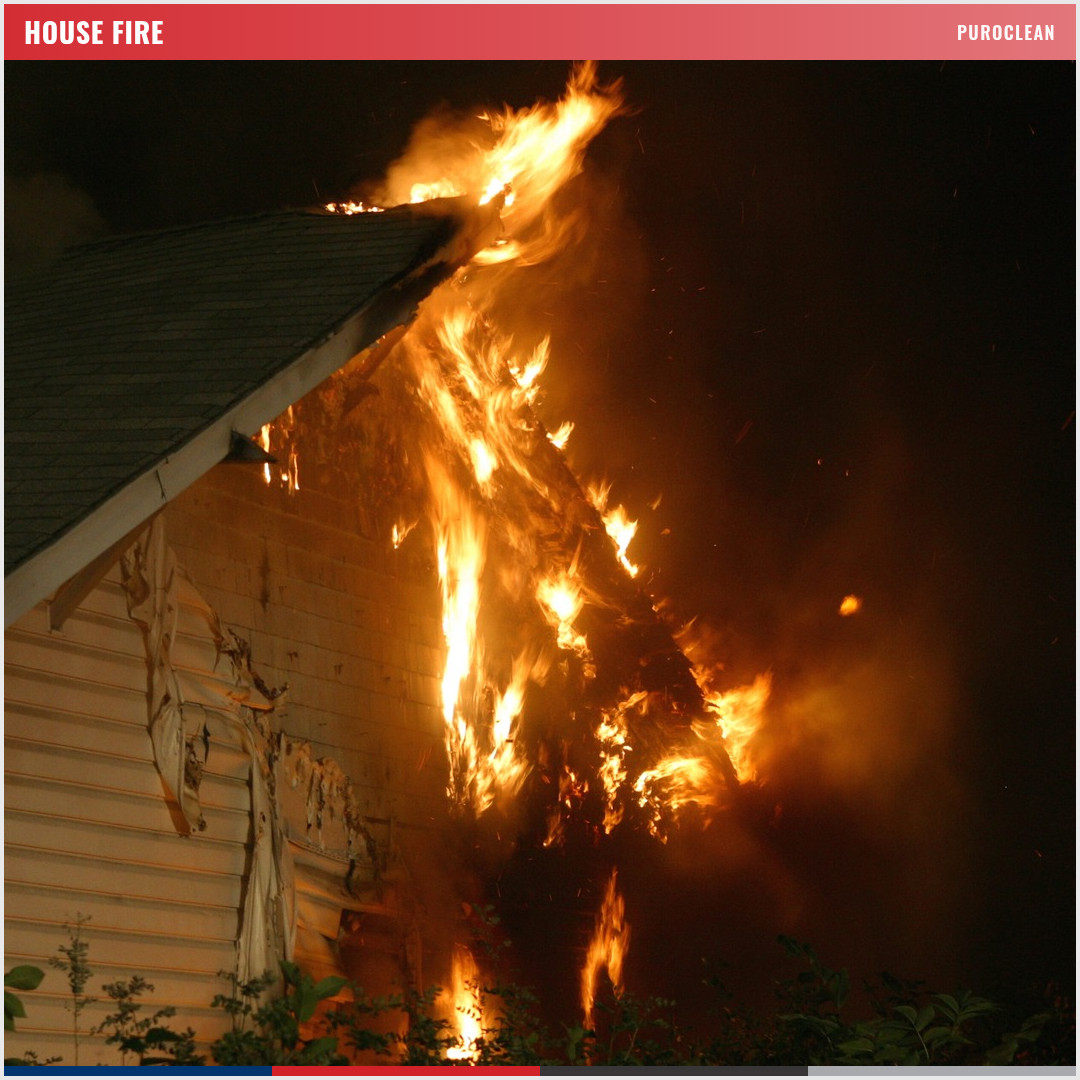
Get everyone out. NFPA’s advice is to just get out, close the door behind you to help contain the fire, and call 911 from outside. In Yorba Linda, the call goes to the Orange County Fire Authority. The city contracts with OCFA for all of its fire services, and Stations 10, 32 and 53 serve the city.
After a kitchen fire: smoke, soot and the rest of the house
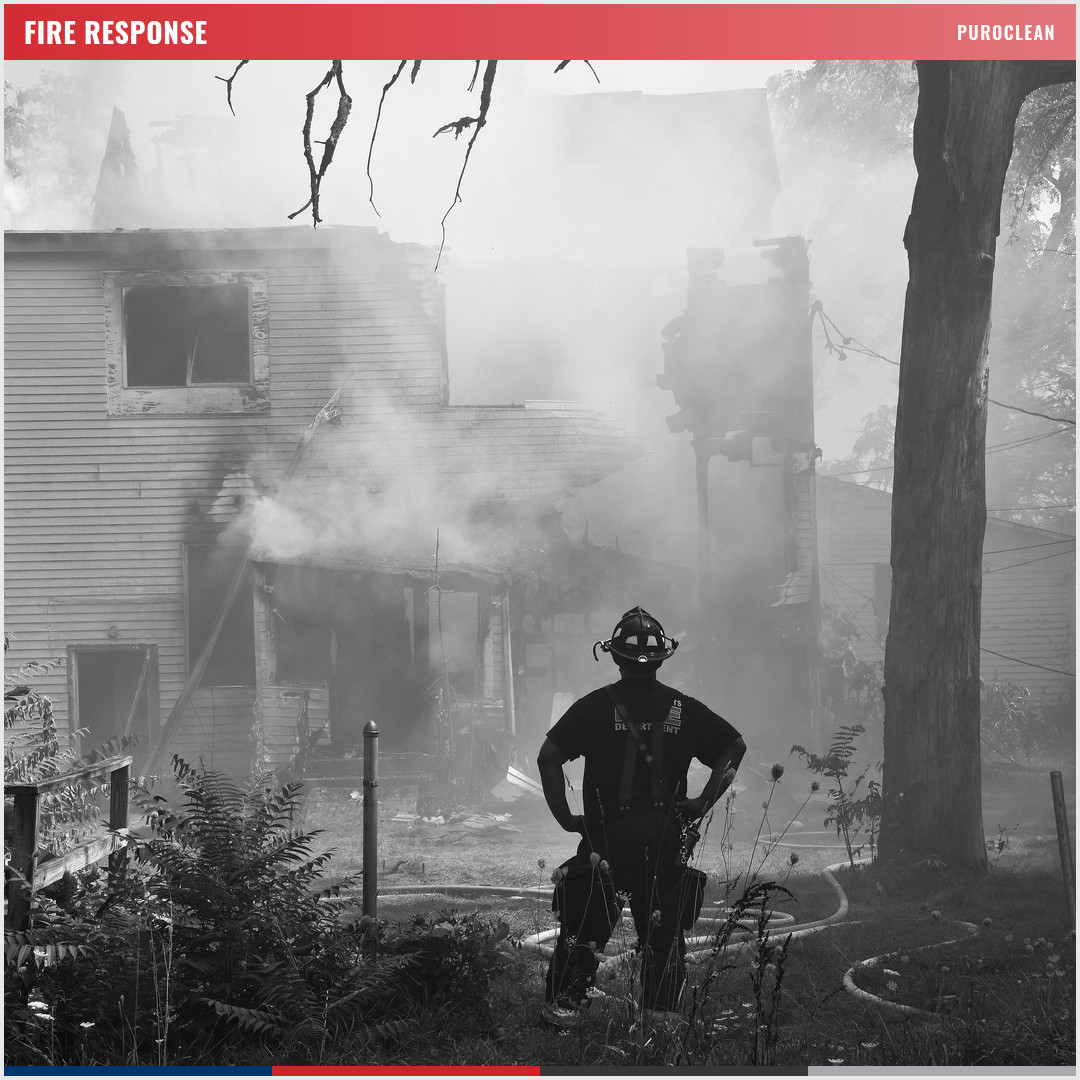
Once the fire department says it’s safe to go back in, the damage from a kitchen fire usually looks smaller than it is. The flames may have stayed on the stovetop, but smoke doesn’t. It rises, rolls along the ceiling and settles on cabinets, walls and anything in the next room. Grease smoke leaves a film that smears when you wipe it, and the smell can linger long after the kitchen looks clean.
The American Red Cross says smoke odors and soot are difficult to remove, so the work may be best handled by professional fire restorers. Its advice for the meantime:
- Avoid touching soot. It smears easily and will leave oily black stains on everything it touches.
- For smoke odors, ventilation is key. Open windows and run fans.
- Don’t forget the attic and other insulated spaces, since insulation often holds onto odors.
- For soft, washable items like clothing and bedding, first decide if each one is worth keeping. Multiple wash cycles may be needed.
If firefighters used water, that needs attention too. The Red Cross notes that water damage can come in the aftermath of a fire, and that the first task is to remove any water that remains and dry out waterlogged surfaces.
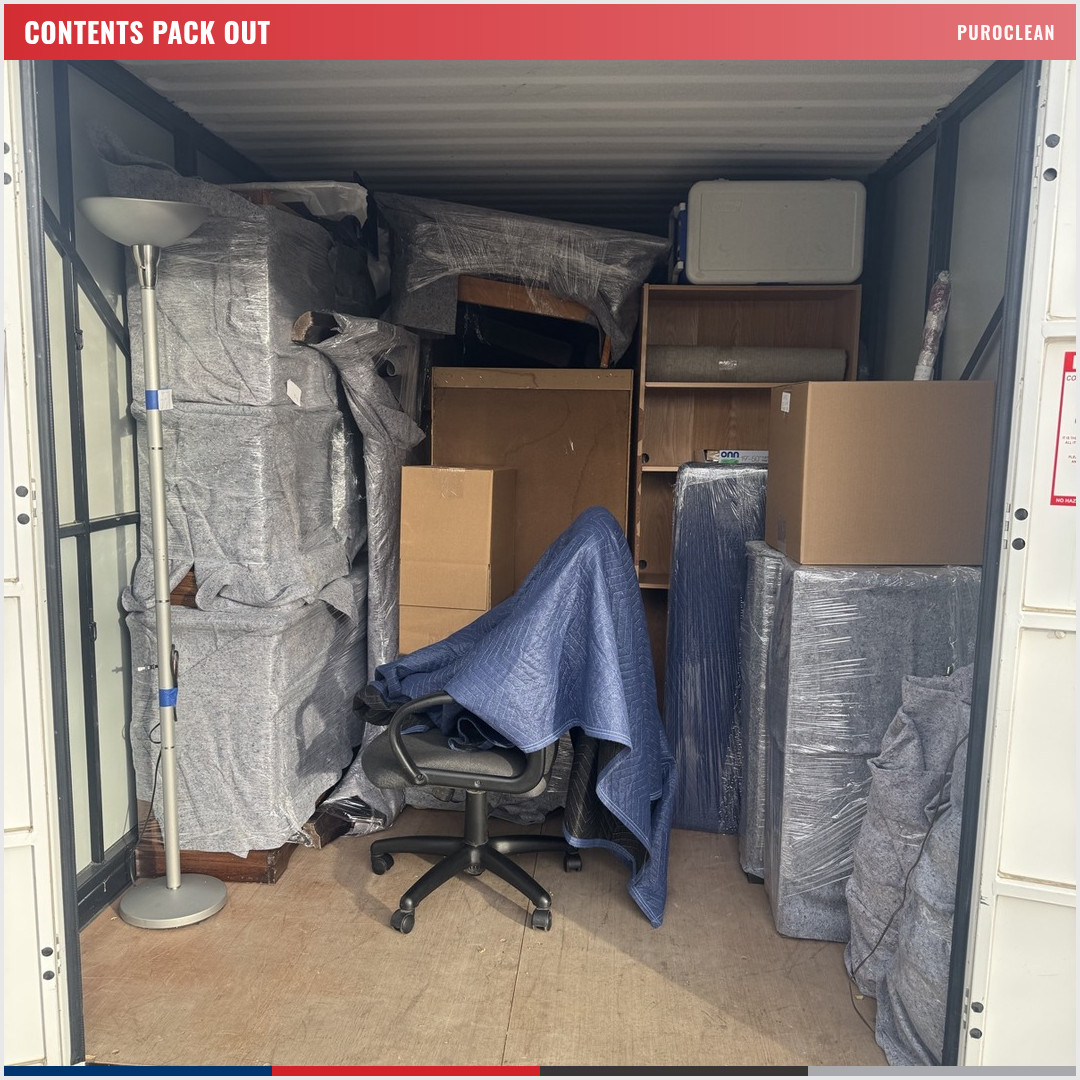
This is where we come in. Our IICRC certified technicians handle soot removal from walls, ceilings and cabinets. We remove smoke odor with foggers, ozone, hydroxyl or thermal fogging depending on the job, and we clean the contents that can be saved. If the kitchen needs a pack-out or board-up while it’s repaired, we do that too, along with the repairs and rebuilding. You can read more about our fire damage restoration service, and if water was used, our water damage restoration page explains the drying side.
What affects the cost of kitchen fire cleanup
Every kitchen fire is different, and we won’t guess at a number without seeing it. These are the things that move the cost:
- How far the smoke traveled. Smoke that stayed in the kitchen is a smaller job than smoke that reached the hallway, bedrooms or attic.
- What burned. Grease smoke leaves a film that takes more work to clean than light smoke.
- What surfaces are involved. Painted walls, cabinets, ceilings, fabrics and insulation each need their own approach.
- Whether water was used. Water from firefighting adds drying to the job.
- What has to be replaced. Cabinets, drywall or flooring that can’t be cleaned add repairs and rebuilding.
The assessment is free, and we bill your insurance company directly. When you compare estimates, ask what each one includes: soot removal, odor removal, contents cleaning and repairs.
Kitchen fire insurance checklist
Before you start scrubbing up after a kitchen fire, take photos of everything. The California Department of Insurance guide on what to do after a property loss adds a few more steps:
- Make temporary repairs to prevent further damage. The department says your insurance company will reimburse you for all reasonable costs to protect your property, as long as you save receipts for any materials you buy.
- Don’t make extensive permanent repairs until the adjuster has seen the damage.
- List damaged belongings, with brand names and model numbers for appliances.
- Don’t throw out damaged items until the adjuster tells you to.
- Keep copies of everything you send to or receive from your insurance company.
If smoke from a kitchen fire makes the house unsafe to stay in, the department says to keep receipts for relocation costs like shelter, clothing and food. Those extra costs may be covered under the loss of use part of your policy. Every policy is different, so call your agent.
Kitchen fire cleanup in Yorba Linda
We work across Yorba Linda, and our Yorba Linda page covers the water and fire damage work we do there. We also serve Anaheim, Anaheim Hills, Orange and Villa Park. Our post on what to do after a house fire covers a larger fire step by step, and our wildfire smoke damage post explains how smoke gets into a home from outside.
The assessment is free, we answer 24/7, and we bill your insurance company directly. If a kitchen fire leaves smoke or soot anywhere in your home, call us at (714) 643-2558.
PuroClean of Northeast Orange County
1250 North Lakeview Avenue, Suite D, Anaheim, CA 92807
Call (714) 643-2558 or request help online: https://www.puroclean.com/northeast-orange-county-ca/
The Paramedics of Property Damage®
Frequently Asked Questions
Can I put out a grease fire with water?
No. NFPA and the U.S. Fire Administration both say never to use water on a grease fire. Slide a lid or a baking sheet over the pan, turn off the burner, and leave it covered until it’s cool.
What should I do if my oven catches fire?
Turn off the oven and keep the door closed. Open it only once you’re sure the fire is out, standing to the side. If the fire spreads or you have any doubt, get everyone out and call 911 from outside.
Who responds to a fire in Yorba Linda?
The Orange County Fire Authority. The City of Yorba Linda contracts with OCFA for its fire services, and Stations 10, 32 and 53 serve the city.
Can I clean up after a kitchen fire myself?
Light smoke on a hard surface may wipe off. The American Red Cross warns that soot smears easily, and grease smoke can leave odor in cabinets, drywall and fabrics. Take photos first, call your insurance company, and call us for a free assessment before you start scrubbing.
Will insurance cover a kitchen fire?
Many homeowners policies cover sudden fire damage, but it depends on your policy. The California Department of Insurance lists fire and smoke among the perils typically covered by a homeowners policy and tells you to read the exclusions in your own contract. Check with your agent. We bill your insurance company directly.
How do I prevent a kitchen fire on Thanksgiving?
Stay in the kitchen while you fry or sauté, keep towels and packaging three feet from the stove, and keep a lid next to the pan. If you have to step away, turn the burner off.
About the Author
Gabriela Miszti, MBA, CFE, is co-owner of PuroClean of Northeast Orange County in Anaheim. As a Certified Fraud Examiner, she pays close attention to the documentation side of every insurance claim.
Smoke or soot from a kitchen fire? Call our 24/7 emergency line at (714) 643-2558.