 PuroClean of Northeast Sacramento
 7 Essential Steps for a Commercial Water Damage Checklist
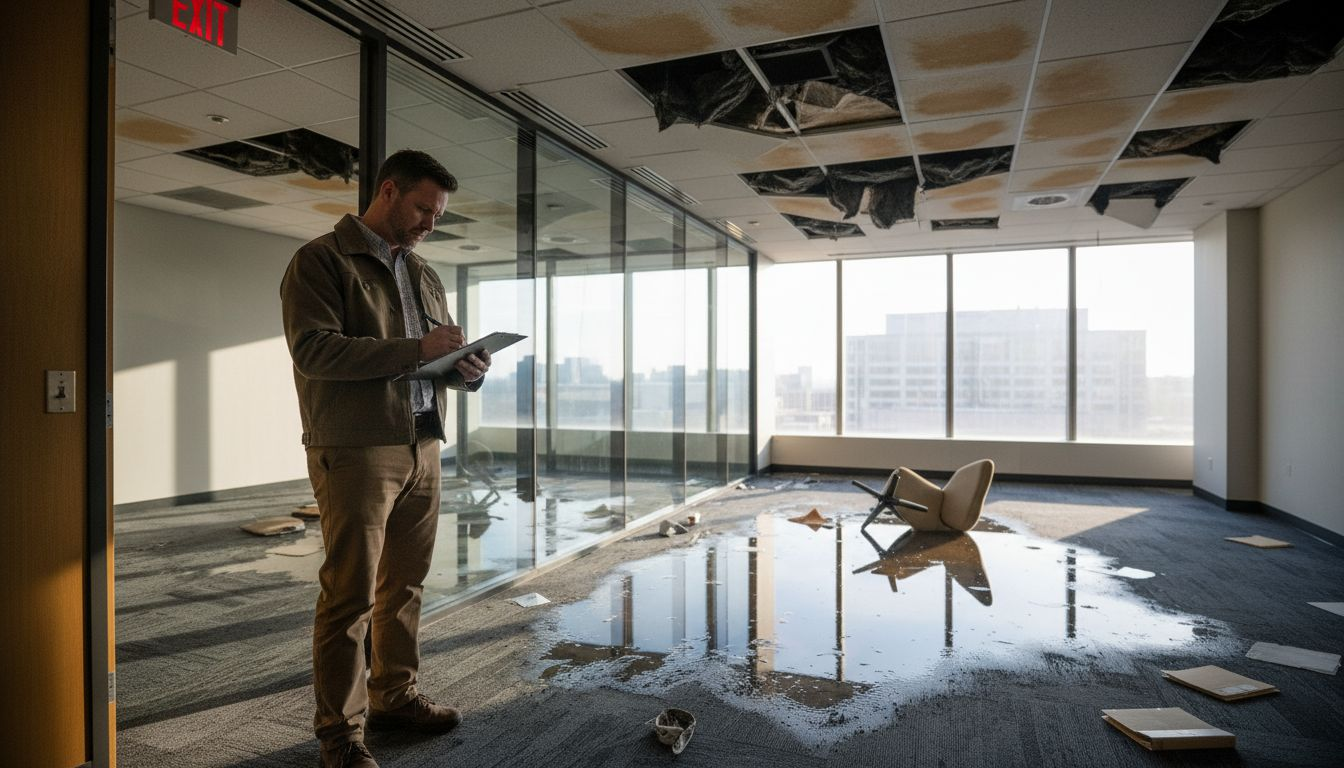
More than half of American commercial properties will face water damage at some point, putting Sacramento managers on constant alert. When a leak or flood hits without warning, even a short delay in response can mean costly repairs and disrupted business operations. Understanding what steps to take from the very first minute is crucial. This checklist will help property managers act decisively, document accurately, and protect both their tenants and investments when emergencies threaten.
Table of Contents
- 1. Assess Water Damage and Source Immediately
- 2. Ensure Safety by Shutting Off Utilities
- 3. Document Damage for Insurance Claims
- 4. Remove Standing Water Quickly
- 5. Dry and Dehumidify All Affected Areas
- 6. Inspect and Restore Building Structures
- 7. Communicate and Coordinate Repairs Efficiently
Quick Summary
| Takeaway | Explanation |
|---|---|
| 1. Assess water damage immediately | Quickly evaluate water intrusion sources to minimize structural and financial risks to your property. |
| 2. Shut off utilities to ensure safety | Cut off electricity, water, and gas supplies to prevent hazards during water damage scenarios. |
| 3. Document damage thoroughly for insurance | Capture detailed photos and inventory of all damaged areas to support your insurance claims effectively. |
| 4. Remove standing water as soon as possible | Use industrial-grade equipment to extract water quickly, preventing further structural damage and health risks. |
| 5. Dry and dehumidify affected areas | Implement strategic drying processes to avoid mold growth and ensure water elimination from all surfaces. |
1. Assess Water Damage and Source Immediately
When water damage strikes a commercial property, your first critical action is a comprehensive and swift damage assessment. Understanding the extent and origin of water intrusion can dramatically minimize potential long term structural and financial risks.
Begin by immediately identifying the water source to prevent further damage. This could stem from burst pipes, roof leaks, flooding, or mechanical system failures. Commercial property managers must act quickly to understand the precise water damage scenario before complications escalate.
Documentation is key during this initial assessment. Capture detailed photographic and video evidence of all affected areas both inside and outside the property. These visual records will prove crucial for insurance claims and restoration planning. Focus on documenting water spread patterns, affected materials, and potential structural vulnerabilities.
Pay close attention to water contamination levels. The ANSI/IICRC S500 Standard for Professional Water Damage Restoration categorizes water damage into three primary classifications based on contamination risk. Category 1 represents clean water from sanitary sources, Category 2 involves significant contamination, and Category 3 represents grossly unsanitary conditions that pose serious health risks.
Immediate safety checks are paramount. Assess electrical systems, check for potential hazards, and determine whether evacuation is necessary. Shut off primary water and electrical connections if there is any risk of electrical current interacting with standing water.
Pro tip: Create an emergency water damage response protocol in advance that outlines clear steps for immediate assessment and includes contact information for professional restoration services.
2. Ensure Safety by Shutting Off Utilities
Utility shutdown is a critical first response during commercial water damage scenarios. Protecting your property and personnel requires immediate action to prevent potential electrical hazards, gas leaks, or additional structural damage.
When water damage occurs, your primary objective is to minimize risk by cutting off potential sources of danger. How to shut off utilities during a disaster requires understanding the location and proper shutdown procedures for electrical, water, and gas systems.
Start with electrical systems. Water and electricity create a dangerous combination that can lead to electrocution. Locate your main electrical panel and shut off the primary breaker if water has infiltrated any electrical areas. Never attempt to handle electrical systems if standing water is present.
For water systems, locate the primary water shut off valve for your commercial property. This valve is typically found near the water meter or in the basement. Turn the valve completely off to prevent additional water from entering the building and potentially causing more extensive damage.
Gas systems require extreme caution. If you smell gas or suspect a potential leak, evacuate the building immediately and contact local authorities. Professional technicians should handle gas line shutoffs to ensure complete safety.
Document the utility shutdown process. Take photographs of breaker positions and valve locations for insurance purposes and to help restoration professionals understand your initial emergency response.
Pro tip: Create a clearly labeled utility shutdown map for your commercial property and train multiple staff members on emergency shutdown procedures to ensure rapid response during water damage incidents.
3. Document Damage for Insurance Claims
Documenting water damage thoroughly is a critical step in protecting your commercial property’s financial recovery. The evidence you collect will serve as the foundation for your insurance claim and determine the compensation you receive.
Proper documentation of water damage requires a systematic and comprehensive approach. Start by taking clear, high resolution photographs and videos of all affected areas. Capture wide angle shots that show overall damage and close up images that highlight specific damage details.
Photograph every impacted area including walls, floors, ceilings, electrical systems, and personal property. Pay special attention to documenting water intrusion points, moisture spread patterns, and structural compromises. Include timestamps on your visual documentation to establish a clear timeline of damage progression.
Maintain a detailed written inventory of all damaged items. Record the estimated value, purchase date, and condition of each item before water damage. Collect and preserve samples of damaged materials when possible. Keep all receipts related to emergency repairs, restoration work, and temporary relocation expenses.
Notify your insurance provider immediately after documenting the damage. Most insurance policies require prompt reporting to validate claims. Submit all collected documentation electronically and request confirmation of receipt.
Pro tip: Create a dedicated digital folder for your water damage documentation and backup files to multiple secure locations including cloud storage and external hard drives.
4. Remove Standing Water Quickly
Standing water represents an immediate threat to commercial property infrastructure and can cause catastrophic damage if not addressed rapidly. The longer water remains stationary, the greater the potential for structural deterioration and hazardous conditions.
Dealing with standing water requires strategic and swift action. Begin by selecting appropriate water extraction equipment such as submersible pumps, wet vacuums, or industrial water removal systems. Commercial properties demand high capacity removal tools capable of extracting large water volumes efficiently.
Start water removal from the lowest point of your property, systematically working toward exit points. This approach prevents water from spreading and minimizes additional damage. Prioritize electrical areas and avoid walking through standing water to prevent electrical shock risks.
Utilize industrial grade fans and dehumidifiers simultaneously with water extraction. These tools accelerate moisture evaporation and prevent secondary damage like mold growth. Proper air circulation is crucial in preventing long term structural compromises.
Pay close attention to porous materials like carpets, drywall, and wooden surfaces. These materials absorb water quickly and can become breeding grounds for bacteria and mold. Remove or treat these materials immediately to prevent permanent damage and potential health hazards.
Pro tip: Rent commercial grade water extraction equipment with high gallons per minute removal rates and schedule professional restoration services within 24 to 48 hours of water intrusion to maximize property recovery.
5. Dry and Dehumidify All Affected Areas
Drying and dehumidification are critical processes that prevent long term structural damage and mitigate potential health risks after water intrusion. Without proper moisture control, commercial properties can quickly become breeding grounds for mold and bacterial growth.
Best practices for using a dehumidifier involve strategic placement and understanding precise humidity reduction techniques. Professional grade dehumidifiers can extract significant moisture volumes from affected spaces, dramatically accelerating the drying process.
Position industrial air movers and dehumidifiers strategically to create optimal air circulation. Target areas behind walls, under flooring, and within ceiling cavities where moisture can accumulate undetected. These hidden zones often retain significant water and require specialized drying equipment.
Monitor humidity levels continuously using professional grade moisture meters. Your goal is to reduce relative humidity below 50% to prevent mold colonization. Different materials require specific drying approaches wood absorbs moisture differently than concrete or drywall.
Rotate and reposition drying equipment frequently to ensure comprehensive moisture removal. Some areas may require targeted heat application or specialized drying techniques depending on material composition and water exposure duration.
Pro tip: Rent commercial dehumidifiers with built in humidity sensors and document drying progress through digital moisture mapping to ensure complete and verifiable water damage restoration.
6. Inspect and Restore Building Structures
Structural inspection after water damage is a complex process that determines the long term safety and functionality of your commercial property. Professional assessment goes far beyond surface level observations to uncover hidden damage that could compromise building integrity.
Effective commercial damage restoration requires comprehensive evaluation of all structural components. Focus on critical areas like foundations, load bearing walls, electrical systems, and building envelope that might have sustained invisible water damage.
Begin with a systematic structural assessment examining materials for signs of water absorption, warping, or microbial contamination. Concrete may show hairline cracks, wooden structures could exhibit swelling or rotting, and drywall might indicate moisture penetration through discoloration or soft spots.
Prioritize HVAC system inspection as water damage can introduce contaminants into ventilation networks. Check ductwork, air handlers, and insulation for potential microbial growth or structural compromise. Professional testing can determine whether cleaning or complete replacement is necessary.
Document all findings meticulously. Photographs, moisture meter readings, and detailed written reports will support insurance claims and guide restoration strategies. Consider engaging certified structural engineers for comprehensive evaluations of extensive water damage scenarios.
Pro tip: Create a structured damage assessment template with checklist items for each building system to ensure consistent and thorough structural inspection during water damage restoration.
7. Communicate and Coordinate Repairs Efficiently
Effective communication is the cornerstone of successful water damage restoration for commercial properties. Streamlined coordination among property managers, insurance providers, restoration professionals, and contractors can dramatically reduce recovery time and minimize financial losses.
Systematic communication protocols ensure that all stakeholders remain informed and aligned throughout the restoration process. Create a centralized communication hub where real time updates, damage assessments, and repair strategies can be shared instantly.
Establish clear communication channels with your insurance provider. Document every interaction, photograph all damage, and maintain comprehensive records of restoration expenses. This detailed documentation expedites claim processing and helps secure appropriate compensation for repairs.
Schedule regular status meetings with restoration professionals to track progress, discuss potential challenges, and make informed decisions. Utilize project management tools that allow multiple stakeholders to access updated information simultaneously, reducing miscommunication and potential delays.
Prioritize transparency with all involved parties. Provide frequent updates to tenants, property owners, and relevant administrative personnel about restoration timelines, potential disruptions, and safety protocols. Clear communication reduces uncertainty and builds trust during challenging recovery periods.
Pro tip: Develop a standardized communication template with predefined information categories to ensure consistent and comprehensive updates during water damage restoration projects.
Below is a comprehensive table summarizing the major actions, insights, and recommendations for addressing commercial water damage situations as presented in the article.
| Main Step | Key Actions and Insights | Benefits/Outcomes |
|---|---|---|
| Assess Water Damage | Identify the source and scope of damage, document conditions, classify water contamination. | Prevent further damage, ensure accurate planning, support effective response. |
| Shut Off Utilities | Cut off electric, water, and gas utilities in affected areas. Keep records of shutoff procedures. | Maintain safety, prevent accidents, and limit cascading issues from utility involvement. |
| Document Damages | Take detailed photos and videos of affected areas. Maintain written records and collect samples. | Strengthen insurance claims and guide restoration efforts. |
| Remove Standing Water | Utilize industrial pumps and vacuums to extract stagnant water efficiently and safely. | Reduce structural weakening and minimize damage. |
| Dry and Dehumidify | Deploy high-capacity dehumidifiers and fans, monitor humidity levels, dry enclosed spaces. | Prevent mold growth and ensure full moisture removal. |
| Inspect and Restore Structures | Perform professional exams of structural components, HVAC systems, and load-bearing elements. | Ensure building safety and operational capacity. |
| Communicate Repairs Effectively | Coordinate with stakeholders and maintain ongoing communication about progress and needs. | Streamline restoration efforts and foster trust and transparency. |
Protect Your Commercial Property with Expert Water Damage Restoration
Water damage can disrupt your business and cause costly structural problems if not handled quickly and correctly. The article outlined urgent steps like assessing damage, shutting off utilities, and removing standing water to prevent long term issues such as mold growth and compromised building integrity. These critical tasks demand immediate professional support to ensure safety and comprehensive restoration.
At PuroClean of Northeast Sacramento, we specialize in fast emergency water damage response tailored for commercial properties. Our certified professionals use advanced technology to quickly dry, dehumidify, and restore your building while assisting with detailed insurance documentation. Don’t let water damage derail your operations or cause hidden risks – act now to protect your investment and peace of mind.
Contact us today to start your fast recovery with trusted commercial water damage restoration experts. Visit PuroClean of Northeast Sacramento and take the first step towards full restoration and safety for your property.
Frequently Asked Questions
What is the first step to take during commercial water damage?
Start by assessing the water damage and identifying the source as soon as possible. Act quickly to document the extent and origin of the water intrusion to minimize long-term risks.
How can I effectively remove standing water from my commercial property?
Use high-capacity water extraction equipment like submersible pumps and wet vacuums to remove standing water efficiently. Begin at the lowest point and work towards exit points to prevent further damage, ideally within 24 to 48 hours after the water intrusion.
Why is documentation important during a water damage incident?
Thorough documentation is vital for filing insurance claims and planning restoration. Capture detailed photographs, videos, and create a written inventory of damaged items for submission to your insurance provider.
How do I ensure safety when dealing with water damage?
Immediately shut off utilities such as electricity and gas to prevent hazards. Create a utility shutdown map and train staff on procedures before a water damage incident occurs.
What should I do to prevent mold growth after water damage?
Implement effective drying and dehumidification practices to keep humidity levels below 50%. Utilize industrial-grade air movers and dehumidifiers to accelerate this process, ideally rotating these tools for comprehensive coverage.
How can I communicate effectively with stakeholders during restoration?
Establish a centralized communication hub to share real-time updates about the restoration process. Schedule regular meetings with restoration professionals and provide consistent updates to all involved parties to ensure transparency.
Recommended
Water Damage Prevention: 12 Measures To Take To Safeguard Your Home From Flooding
Water Damage Checklist (What you Should Do Immediately)
How to Handle Water Damage: Step-by-Step Restoration Guide – PuroClean of Northeast Sacramento
 PuroClean of Northeast Sacramento