


Moisture Mapping Northeast Sacramento: Cut Mold Risk 60%
Many Northeast Sacramento homeowners believe that if they can’t see water stains, their home is safe after a leak or flood. This assumption is dangerous. Hidden moisture lurks behind walls, under floors, and in ceiling cavities, causing structural decay and mold growth long before visible signs appear. Moisture mapping uses advanced detection technology to locate up to 95% of hidden water damage, protecting your home and simplifying insurance claims.
Table of Contents
Introduction To Moisture Mapping
How Moisture Mapping Works: Technologies And Techniques
Common Misconceptions About Moisture Mapping
Benefits Of Moisture Mapping For Homeowners And Insurance Claims
Practical Steps: What Homeowners Can Expect During Moisture Mapping
Case Studies And Local Insights From Northeast Sacramento
Summary And Next Steps For Homeowners Facing Water Damage
Get Expert Moisture Mapping & Water Damage Restoration In Northeast Sacramento
Frequently Asked Questions About Moisture Mapping
Key Takeaways
| Point | Details | |——-|———|| | Detection Accuracy | Moisture mapping detects up to 95% of hidden water damage compared to only 50% with visual inspection alone. | | Technology Integration | Combining thermal imaging and moisture meters improves accuracy beyond what single tools can achieve. | | Mold Prevention | Early moisture mapping cuts mold growth risk by up to 60% after water damage events. | | Insurance Claims | Detailed moisture reports streamline the insurance claims process for Northeast Sacramento homeowners. |
Introduction to Moisture Mapping
Moisture mapping is a systematic process that detects and documents moisture levels throughout water-damaged properties. Unlike visual inspections that only identify obvious water stains, moisture mapping reveals hidden moisture trapped in building materials. This matters because water migrates through porous materials like drywall, insulation, and wood framing, often settling far from the original leak source.
Hidden leaks pose a greater long-term risk than visible water damage. When moisture remains undetected, it creates perfect conditions for mold spores to colonize within 24 to 48 hours. Structural materials weaken as wood absorbs water and drywall loses integrity. Metal fasteners corrode, electrical systems face short-circuit risks, and indoor air quality deteriorates.
Moisture mapping prevents these cascading problems by identifying all affected areas early. Restoration professionals use specialized equipment like thermal imaging cameras and moisture meters to create detailed maps showing exactly where moisture hides. This precision allows targeted drying efforts, reducing restoration time and preventing secondary damage that multiplies repair costs.
Key benefits of professional moisture mapping include:
Identifying moisture in wall cavities, under flooring, and above ceilings
Preventing mold growth by eliminating hidden moisture sources
Reducing structural damage through early intervention
Supporting insurance claims with documented evidence
Shortening restoration timelines by focusing drying equipment precisely
How Moisture Mapping Works: Technologies and Techniques
Professional moisture mapping relies on multiple detection technologies working together. Each tool serves a specific purpose, and their combined use delivers the accuracy needed to protect your Northeast Sacramento home.
Thermal imaging cameras detect temperature variations across surfaces. Wet materials appear cooler than dry areas because water absorbs heat differently than building materials. These cameras create visual heat maps that highlight moisture patterns invisible to the naked eye. Technicians scan walls, ceilings, and floors to identify cold spots indicating trapped moisture.
Moisture meters measure water content directly in building materials. Pin-type meters use electrodes inserted into materials to measure electrical resistance, which changes with moisture levels. Pinless meters use electromagnetic waves to scan surfaces without causing damage. Both types provide numerical readings showing exact moisture percentages, essential for tracking drying progress.
Hygrometers measure relative humidity in the air and within material pores. High humidity readings indicate moisture still evaporating from wet materials. Technicians place multiple hygrometers throughout affected areas to monitor atmospheric moisture levels and adjust drying strategies accordingly.
No single tool achieves complete accuracy alone. Environmental factors like room temperature, air movement, and material density affect readings. IICRC S500 standards ensure consistent and reliable moisture detection across restoration companies, requiring technicians to use multiple measurement methods and cross-verify results. This integrated approach pushes detection accuracy above 90%, far exceeding what visual inspection or single-tool methods achieve.
The following table shows how different detection methods compare:
Detection Method
Accuracy Rate
Primary Use
Limitations
Visual Inspection
40-50%
Surface damage identification
Misses hidden moisture entirely
Thermal Imaging
70-80%
Locating moisture patterns
Cannot quantify exact moisture content
Moisture Meters
85-90%
Measuring specific moisture levels
Requires direct material contact
Integrated Mapping
90-95%
Comprehensive moisture assessment
Requires professional expertise
Pro Tip: Request a copy of your moisture map report. This document becomes crucial evidence for insurance claims and helps you verify that restoration work addressed all affected areas before contractors close up walls.
Following a step-by-step restoration guide ensures moisture mapping occurs at the right time for maximum effectiveness.
Common Misconceptions About Moisture Mapping
Several myths prevent homeowners from seeking professional moisture mapping, often leading to expensive problems down the road. Understanding the truth helps you make informed decisions about protecting your property.
Only Large or Visible Water Damage Requires Moisture Mapping: Many homeowners assume small leaks or minor flooding need only quick cleanup. Research shows that 50% of secondary damage arises from undetected moisture in seemingly minor incidents. A small bathroom leak can saturate wall cavities, migrate to adjacent rooms, and cause widespread mold growth without visible surface evidence.
Visual Inspections Alone Suffice: The human eye detects only obvious water stains, warped flooring, or ceiling discoloration. Data shows visual inspections identify just 40 to 50% of moisture issues compared to 85 to 95% detection rates with proper moisture mapping. Water travels through building materials via capillary action, settling in hidden spaces that look completely dry from the outside.
Single Detection Tool Is Enough: Some restoration companies rely solely on moisture meters or thermal cameras. This approach misses critical moisture pockets because each technology has blind spots. Thermal imaging shows patterns but not precise moisture percentages. Moisture meters give exact readings but only at tested points. Multiple integrated technologies provide the complete picture needed for thorough restoration.
DIY Moisture Detection Works as Well: Consumer-grade moisture meters and smartphone thermal apps lack the calibration, sensitivity, and professional interpretation required for accurate assessment. Technicians trained in moisture science understand how different building materials retain water, how environmental conditions affect readings, and where moisture typically migrates based on home construction methods.
“Professional moisture mapping isn’t just about finding wet spots. It’s about understanding moisture behavior in complex building systems, predicting where water will travel next, and preventing damage before it becomes visible. Homeowners who skip this step often face repair bills three to five times higher than the original restoration would have cost.”
Benefits of Moisture Mapping for Homeowners and Insurance Claims
Moisture mapping delivers tangible advantages that protect both your home’s structural integrity and your financial investment. Understanding these benefits helps you appreciate why this process matters for every water damage event.
Accurate moisture detection prevents guesswork in restoration. Traditional methods involve opening random wall sections hoping to find all wet areas. Moisture mapping pinpoints exactly which materials need attention, reducing unnecessary demolition and preserving more of your original home structure. This precision cuts restoration costs significantly.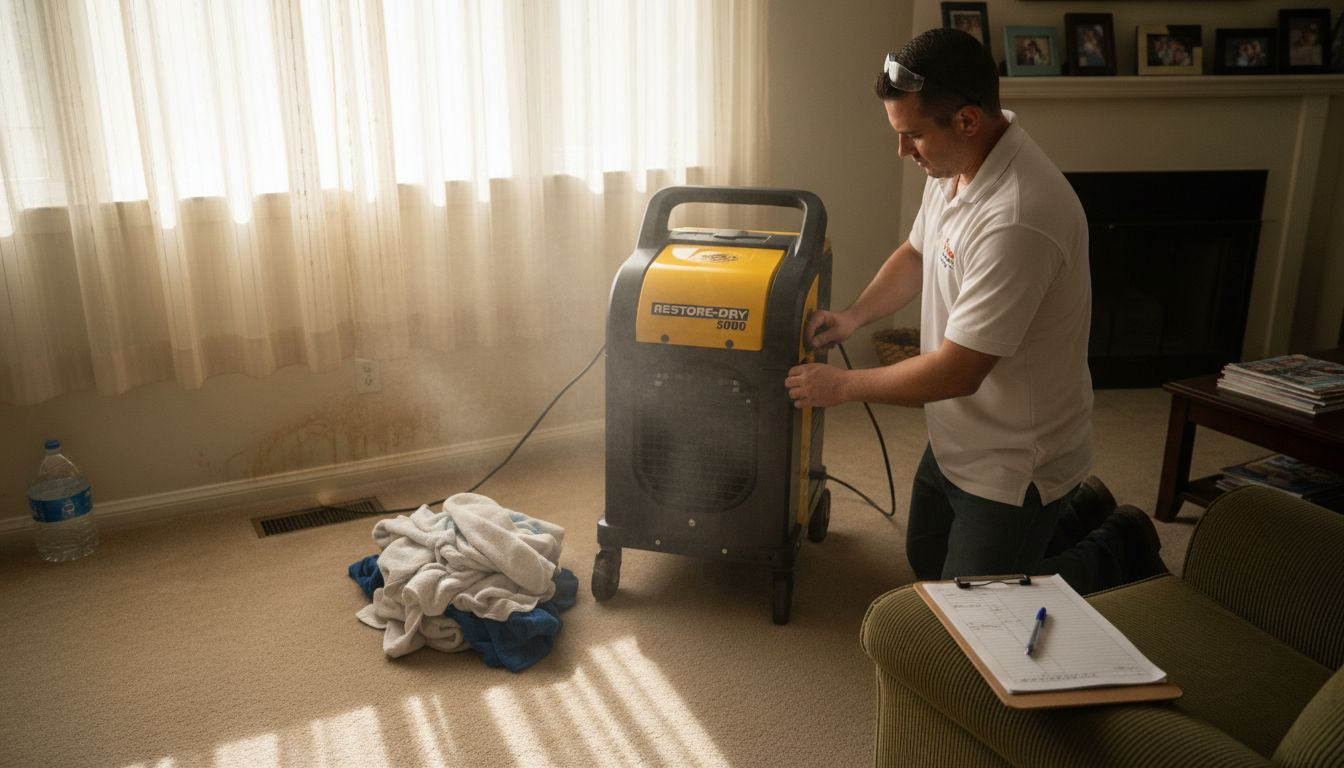
Targeted drying efforts based on moisture maps reduce restoration timelines. When technicians know precisely where moisture hides, they position dehumidifiers and air movers for maximum efficiency. This focused approach dries structures 30 to 40% faster than untargeted methods, getting your home back to normal quicker and reducing equipment rental costs.
Insurance companies increasingly require detailed moisture documentation for claim approvals. Over 70% of water damage insurance claims now require moisture mapping reports for streamlined approvals. These reports provide objective evidence of damage extent, eliminating disputes about which repairs are necessary. Adjusters use moisture maps to verify that restoration work addresses all affected areas, speeding claim processing and payment.
Moisture Mapping Significantly Reduces Mold Risk: Timely moisture mapping and drying reduces mold risk by up to 60% in damaged homes. Mold spores exist everywhere, but they only colonize in consistently moist environments. By identifying and eliminating all moisture sources within 48 hours, moisture mapping prevents conditions that allow mold growth. This protection saves thousands in potential mold remediation costs and protects your family’s health.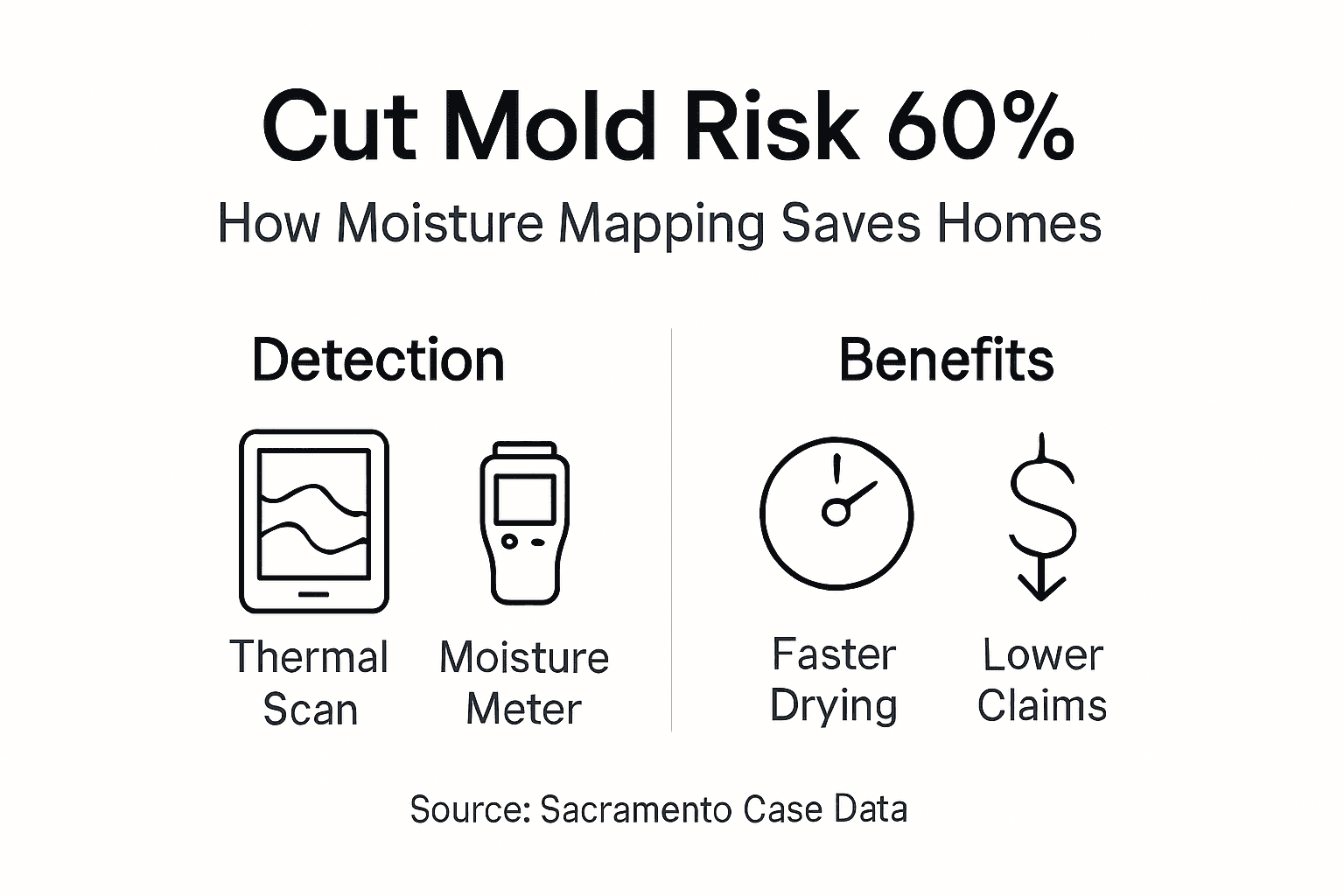
Compare outcomes with and without moisture mapping:
Aspect
Without Moisture Mapping
With Moisture Mapping
Detection Rate
40-50% of moisture found
90-95% of moisture found
Average Drying Time
7-10 days
4-6 days
Mold Growth Risk
High (60-70% of cases)
Low (10-20% of cases)
Insurance Claim Issues
Frequent disputes
Smooth approvals
Average Restoration Cost
$8,000-$12,000
$5,000-$7,000
Key benefits homeowners experience:
Documented proof of damage extent for insurance purposes
Faster return to normal living conditions
Lower overall restoration costs through targeted efforts
Elimination of hidden mold growth risks
Preservation of more original building materials
Clear verification that restoration work is complete
Practical Steps: What Homeowners Can Expect During Moisture Mapping
Understanding the moisture mapping process removes uncertainty and helps you prepare for restoration. Here’s what happens when professionals assess your Northeast Sacramento home after water damage.
Initial Visual Inspection: Technicians begin by documenting obvious water damage, noting wet spots, stains, and material deterioration. They identify the water source if still active, such as a burst pipe or roof leak, and stop further water intrusion. This baseline assessment guides where to focus advanced detection tools.
Thermal Imaging Scan: Using infrared cameras, technicians scan all potentially affected areas including walls, ceilings, and floors. The thermal images reveal temperature differences indicating moisture behind surfaces. They photograph these thermal patterns for your records and insurance documentation.
Moisture Meter Testing: Technicians take precise moisture readings at multiple points across affected and adjacent areas. They test various materials including drywall, wood framing, flooring, and insulation. Pin-type meters penetrate surfaces for deep readings while pinless meters scan without causing damage. Each reading is recorded with its exact location.
Humidity Measurement: Hygrometers measure atmospheric moisture throughout your home. High humidity readings indicate active evaporation from wet materials. Technicians establish baseline humidity levels in unaffected areas for comparison, helping them understand moisture distribution patterns.
Data Integration and Moisture Map Creation: All measurements combine into a comprehensive moisture map showing affected areas with exact moisture content percentages. This visual document highlights wet zones, borderline areas requiring monitoring, and dry zones. The map guides equipment placement and drying strategy.
Professional Reporting: You receive a detailed report explaining findings in clear terms. The document includes moisture percentages, thermal images, affected square footage, and recommended drying plan. This report goes to your insurance company as objective evidence supporting your claim.
Pro Tip: Ask technicians to walk you through the moisture map before they leave. Understanding which areas are most affected helps you make informed decisions about temporary relocation needs and gives you realistic expectations for restoration timelines.
Following effective water damage mitigation steps after moisture mapping ensures the best outcomes. The importance of water damage documentation cannot be overstated for protecting your insurance claim.
Case Studies and Local Insights from Northeast Sacramento
Real experiences from Northeast Sacramento homeowners demonstrate moisture mapping’s value in preventing costly damage and streamlining restoration.
A Citrus Heights family discovered a slow slab leak after noticing slightly elevated water bills. Visual inspection showed no obvious damage, but moisture mapping revealed extensive saturation in concrete and subfloor materials across 400 square feet. Early detection prevented structural damage to foundation supports and eliminated mold growth risks. The family’s restoration cost $4,200 compared to an estimated $15,000 if damage had progressed undetected for another month.
In Rancho Cordova, a homeowner experienced a dishwasher supply line failure overnight. Standing water was quickly extracted, but moisture mapping revealed water had wicked up wall cavities and saturated insulation in adjacent rooms. Without moisture mapping, this hidden moisture would have caused mold growth within days. Targeted drying based on the moisture map completed restoration in five days with no mold issues.
Northeast Sacramento’s climate presents unique moisture challenges:
Summer humidity levels averaging 50 to 70% slow natural drying
Winter rain events increase flooding and roof leak risks
Older homes with minimal vapor barriers allow moisture migration
Clay-rich soil common in the area holds moisture near foundations
These factors make professional moisture mapping especially important for local homeowners. Water doesn’t evaporate quickly in humid conditions, giving mold more time to establish. Moisture trapped in walls during winter rainy seasons can remain undetected until summer heat accelerates mold growth.
Homeowners consistently report that moisture mapping provided peace of mind during stressful restoration periods. One Folsom resident stated that seeing the moisture map helped her understand why certain repairs were necessary, eliminating concerns that contractors were recommending unnecessary work. Another homeowner credited detailed moisture documentation with getting his insurance claim approved without dispute, avoiding weeks of back-and-forth negotiations.
Summary and Next Steps for Homeowners Facing Water Damage
Moisture mapping stands as your most effective defense against hidden water damage that threatens your home’s value and your family’s health. The technology finds moisture that visual inspections miss, prevents mold growth, and provides documentation insurance companies need for smooth claim processing.
Every water damage event deserves professional moisture mapping, regardless of size. Small leaks cause big problems when moisture hides in building cavities. Early detection through moisture mapping saves thousands in potential repairs and protects indoor air quality.
Contact certified restoration experts immediately after discovering water damage. Time matters because mold begins growing within 24 to 48 hours. Professional moisture mapping completed quickly maximizes protection and minimizes restoration costs.
Key actions to take now:
Schedule moisture mapping within 24 hours of discovering water damage
Request detailed reports for your records and insurance claims
Follow professional recommendations for drying and restoration
Verify completion with follow-up moisture testing before repairs close walls
Pro Tip: Save your moisture mapping report permanently with your home maintenance records. If you sell your property, this documentation proves professional water damage restoration, protecting your sale and potentially increasing buyer confidence.
Get Expert Moisture Mapping & Water Damage Restoration in Northeast Sacramento
When water damage strikes your Northeast Sacramento home, fast and accurate moisture mapping protects your investment. PuroClean of Northeast Sacramento provides certified moisture detection and comprehensive water damage restoration services using industry-leading technology and IICRC-trained technicians.
Our team responds 24/7 to assess damage, create detailed moisture maps, and implement targeted drying strategies. We handle every restoration phase from initial assessment through final verification, ensuring your home returns to pre-loss condition.
We work directly with your insurance company, providing the detailed moisture documentation they require for smooth claim approvals. Our comprehensive reports eliminate disputes and speed the claims process, reducing your stress during an already difficult time. Whether you’re dealing with a burst pipe, slab leak, or flood damage, our moisture mapping expertise ensures nothing gets missed. Visit our water damage restoration guide or review our step-by-step restoration guide for more information. Contact PuroClean Northeast Sacramento today for immediate assistance with professional moisture mapping and complete water damage restoration.
Frequently Asked Questions About Moisture Mapping
What is moisture mapping and why is it necessary?
Moisture mapping is a systematic process using thermal imaging, moisture meters, and hygrometers to detect and document moisture in building materials after water damage. It’s necessary because water migrates through porous materials and hides in wall cavities, under flooring, and above ceilings where visual inspection cannot detect it. Without moisture mapping, hidden moisture causes mold growth and structural damage that costs significantly more to repair later.
How long does a moisture mapping inspection take?
A typical residential moisture mapping inspection takes one to three hours depending on your home’s size and damage extent. Technicians need time to thoroughly scan all potentially affected areas, take multiple moisture readings, and compile data into a comprehensive report. Larger homes or extensive water damage may require additional time for complete assessment.
Does moisture mapping damage my home?
Moisture mapping causes minimal to no damage. Thermal imaging is completely non-invasive, using infrared technology to scan surfaces without touching them. Pinless moisture meters also work without penetrating materials. Pin-type meters create tiny holes similar to pin pricks that are barely visible and cause no structural impact. Any minor marks disappear during normal restoration repairs.
Will moisture mapping be accepted by insurance companies?
Yes, insurance companies increasingly require moisture mapping reports for water damage claims. Over 70% of carriers now expect detailed moisture documentation showing damage extent and affected areas. These reports provide objective evidence that eliminates disputes about repair necessity and speeds claim approvals. Most adjusters prefer moisture maps because they clearly show what needs restoration.
How soon after water damage should I schedule moisture mapping?
Schedule moisture mapping within 24 hours of discovering water damage for best results. This timing allows accurate detection while preventing mold growth, which begins within 24 to 48 hours in moist conditions. Immediate moisture mapping also stops secondary damage progression, reducing overall restoration costs and protecting your home’s structural integrity. Early detection always costs less than delayed intervention.
Recommended
Mold Removal and Remediation in Roseville, CA
PuroClean 24/7 Mold Mitigation & Removal – PuroClean of Northeast Sacramento
Water Damage Restoration and Repair in Roseville, CA
Mold Remediation Process Guide: Effective Cleanup Steps – PuroClean of Northeast Sacramento