


What is contaminated water? Essential Northeast Sacramento guide
Nearly 40% of Northeast Sacramento homes experienced water damage in 2025, with over half involving contaminated water requiring professional intervention. Despite the prevalence, most homeowners misjudge contamination severity, risking health and property damage. This guide clarifies contamination categories, health risks, and urgent response steps to protect your family and investment.
Table of Contents
Understanding Contaminated Water: Definitions And Classifications
Health Risks Linked To Contaminated Water Exposure
Common Causes And Scenarios Of Water Contamination In Northeast Sacramento
Common Misconceptions About Contaminated Water
How Water Contamination Influences Restoration And Mitigation
Practical Steps For Immediate Response And Long Term Damage Control
Professional Contamination Restoration Services In Northeast Sacramento
Frequently Asked Questions
Key takeaways
Point
Details
Contaminated water categories
EPA classifies water damage into three categories: clean, gray, and black water based on contamination level and health risk.
Health risks escalate quickly
Gray water contains pathogens and chemicals; black water carries bacteria, viruses, and parasites causing severe illness.
Common local sources
Burst pipes, slab leaks, appliance failures, and flood intrusion are primary contamination causes in Northeast Sacramento properties.
Misconceptions delay action
Many believe gray water is safe or that discolored water always indicates danger, leading to improper responses.
Immediate response crucial
Isolate the source, avoid contact with contaminated water, and contact professionals within 24 hours to minimize damage and health risks.
Understanding contaminated water: definitions and classifications
Contaminated water refers to any water intrusion carrying substances that pose health risks or require specialized handling. The distinction matters because cleanup protocols, safety requirements, and health hazards differ dramatically based on contamination level. Homeowners who misidentify water categories often expose themselves to dangerous pathogens or waste resources on unnecessary precautions.
The EPA categorizes water damage into three levels based on contamination severity and associated health risks. Category 1, or clean water, originates from sanitary sources like broken supply lines or rainwater before ground contact. This water poses minimal health threats if addressed promptly but can degrade to Category 2 within 48 hours as bacteria multiply.
Category 2, known as gray water, contains contaminants that can cause discomfort or illness. Sources include washing machine discharge, dishwasher overflow, and toilet bowl water without feces. Gray water may harbor detergents, microorganisms, and chemical residues requiring protective equipment during cleanup.
Category 3, or black water, represents the most hazardous contamination level. This water contains pathogenic bacteria, viruses, parasites, and toxic substances from sewage backups, flooding that contacts ground surfaces, or prolonged stagnant gray water. Exposure to black water demands immediate medical attention and professional remediation.
Northeast Sacramento properties commonly experience these scenarios:
Clean water damage from burst copper pipes during winter freezes or failed water heater tanks
Gray water intrusion from overflowing washing machines or dishwasher leaks containing detergent residue
Black water emergencies from sewage line backups during heavy rains or toilet overflows with solid waste
Flood contamination carrying soil, debris, and bacteria from exterior sources
Recognizing these categories helps you respond appropriately and communicate clearly with restoration professionals and insurance adjusters.
Health risks linked to contaminated water exposure
Black water poses extreme health dangers due to pathogenic organisms thriving in sewage and contaminated floodwater. These waters contain E. coli, Salmonella, Hepatitis A virus, Giardia parasites, and numerous other disease causing agents. Direct contact with black water can result in severe gastrointestinal infections, skin rashes, respiratory problems, and in vulnerable individuals, life threatening complications.
Gray water carries significant health risks despite appearing less threatening than black water. Detergents, cleaning chemicals, and microbial contaminants in gray water cause skin irritation, allergic reactions, and digestive issues if ingested. Children, elderly adults, and immunocompromised individuals face heightened vulnerability to gray water pathogens.
Exposure symptoms manifest differently based on contamination type and contact duration:
Gastrointestinal distress including nausea, vomiting, diarrhea, and abdominal cramping
Skin reactions ranging from mild irritation to severe dermatitis and open sores
Respiratory complications such as coughing, wheezing, and difficulty breathing from airborne contaminants
Eye irritation, redness, and infection from splash contact
Fever and body aches indicating systemic infection
Research shows individuals exposed to untreated gray or black water face infection rates 300% higher than those experiencing clean water damage. The Centers for Disease Control reports that waterborne pathogen exposure accounts for thousands of emergency room visits annually in California alone.
“Many homeowners underestimate gray water dangers, treating it like clean water and exposing their families to preventable health risks. Professional assessment and proper protective equipment are non negotiable for any suspected contamination beyond Category 1.”
Long term consequences of contaminated water exposure include chronic respiratory conditions, persistent gastrointestinal problems, and sensitization to molds that develop in inadequately dried structures. Prompt professional intervention prevents these outcomes while protecting your family’s wellbeing.
Common causes and scenarios of water contamination in Northeast Sacramento
Physical failures in plumbing systems generate most residential water contamination incidents. Burst copper pipes occur when freezing temperatures cause water expansion, particularly in uninsulated exterior walls or attic spaces. Slab leaks develop beneath concrete foundations as pipes corrode over decades, often undetected until significant damage accumulates. Water heater failures release 40 to 80 gallons of water, potentially contaminated with sediment and bacteria from tank interiors.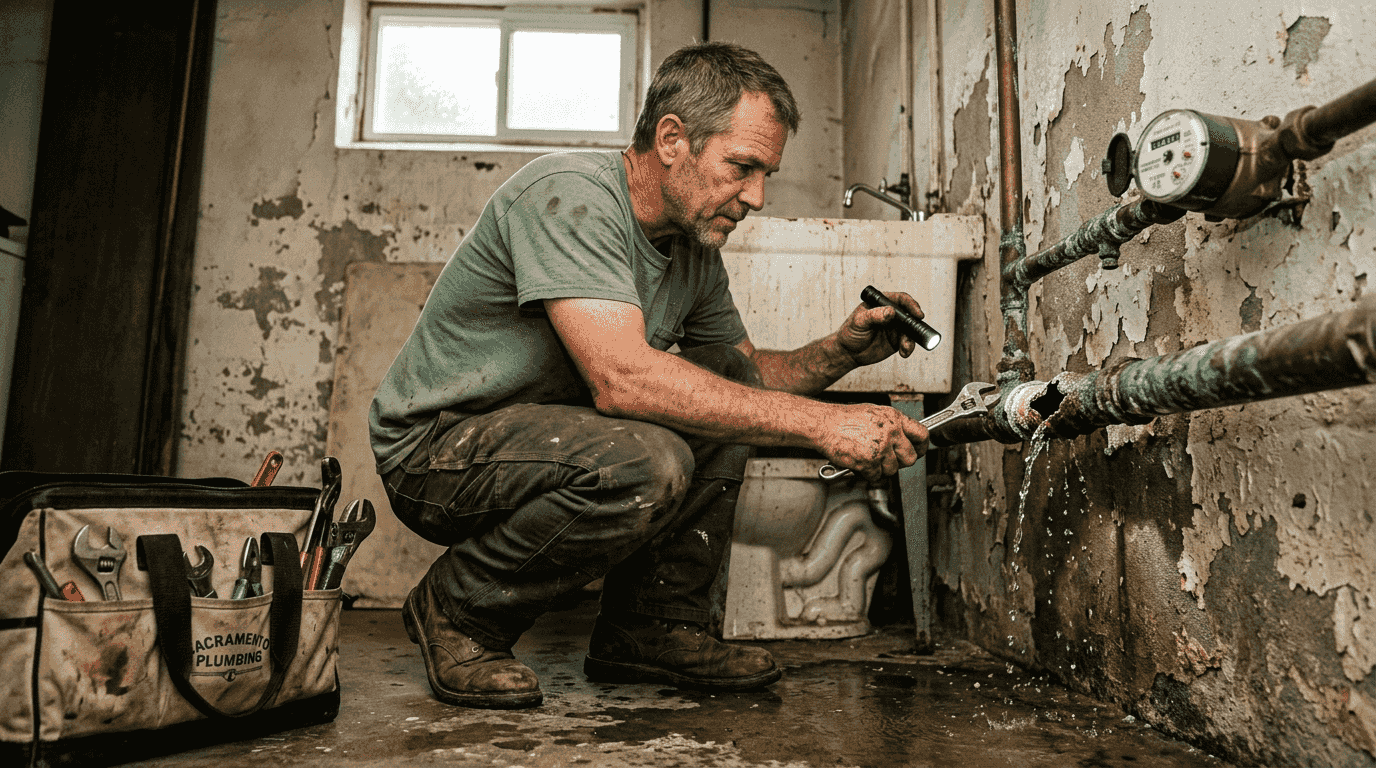
Appliance malfunctions create frequent contamination scenarios in modern homes. Washing machine supply line failures or drain hose disconnections release gray water containing detergents, lint, and biological materials. Dishwasher leaks introduce food particles, grease, and cleaning chemicals into flooring and cabinetry. Refrigerator ice maker lines crack or disconnect, causing hidden water accumulation behind appliances.
External events introduce the most dangerous contamination categories. Heavy rainfall overwhelms aging sewer systems in older Northeast Sacramento neighborhoods, causing sewage backups through floor drains and toilets. Flooding from the American River or local tributaries carries soil, animal waste, chemicals, and debris into ground level structures. These events create black water situations requiring extensive remediation.
Local data reveals contamination patterns specific to our region:
Source
Frequency
Typical Category
Primary Risk
Burst supply pipes
35% of incidents
Category 1 initially
Degrades to Category 2 within 48 hours
Appliance failures
28% of incidents
Category 2
Chemical and microbial contamination
Sewage backups
18% of incidents
Category 3
Pathogenic bacteria and viruses
External flooding
12% of incidents
Category 3
Multi source contamination
Slab leaks
7% of incidents
Category 1 to 2
Structural damage and mold growth
Understanding these scenarios helps you identify contamination risks in your property. Properties built before 1980 face higher slab leak probability, while homes in flood zones near waterways require additional preparedness for external contamination events. Regular maintenance of appliances and plumbing systems significantly reduces your exposure to these common causes.
Professional water damage restoration services address contamination sources quickly, preventing category escalation and secondary damage.
Common misconceptions about contaminated water
Many homeowners believe water discoloration automatically indicates severe contamination, but clear water can harbor dangerous pathogens while rusty water from corroded pipes may pose minimal health threats. Color, smell, and appearance provide limited contamination information. Only source identification and professional testing determine actual risk levels.
The assumption that gray water is relatively harmless causes dangerous exposure. Gray water contains detergents, pathogens, and chemicals requiring prompt treatment, yet homeowners frequently attempt cleanup without protective equipment. This misconception leads to skin contact, inhalation of contaminated aerosols, and cross contamination of clean areas through improper handling.
Another prevalent belief suggests minor water intrusions don’t require professional help. However, contamination categories escalate rapidly as standing water becomes a breeding ground for bacteria. Clean water transitions to gray water within 48 hours, and gray water degrades to black water status as microbial populations explode. DIY cleanup attempts often miss hidden moisture in wall cavities, subflooring, and insulation, creating long term mold and structural problems.
Some property owners think bleach or disinfectants adequately sanitize contaminated areas. While these products kill surface pathogens, they cannot address contamination absorbed into porous materials like drywall, carpet padding, and wood framing. Professional remediation includes material removal, structural drying, antimicrobial treatment, and verification testing to ensure complete decontamination.
Frequent misbeliefs corrected:
Believing faster drying eliminates contamination (pathogens remain in materials even after drying)
Assuming insurance won’t cover contaminated water damage (most policies include sudden accidental water damage)
Thinking masks and gloves provide adequate protection for black water cleanup (specialized PPE and training are required)
Expecting contaminated materials can be salvaged through cleaning (porous materials exposed to Categories 2 and 3 typically require disposal)
Pro Tip: When contamination category is uncertain, treat the water as the highest risk category and contact professionals immediately. This precautionary approach protects your health while preserving insurance coverage and property value. Expert assessment costs significantly less than medical treatment or extended remediation from delayed response.
How water contamination influences restoration and mitigation
Restoration approaches differ dramatically across contamination categories, with protocols becoming more complex and safety intensive as contamination severity increases. Category 1 clean water cleanup focuses on rapid extraction and structural drying using air movers, dehumidifiers, and moisture monitoring. Technicians wear minimal protective equipment, and salvageable materials include most building components and contents if dried within 48 hours.
Category 2 gray water restoration requires enhanced precautions and specialized treatment. Restoration protocols vary by contamination category with different PPE and equipment requirements. Technicians don protective gloves, boots, eye protection, and respirators during water extraction. Antimicrobial applications treat affected surfaces, and porous materials like carpet padding and insulation typically require removal. Structural drying takes longer due to contamination concerns, and air scrubbers with HEPA filters prevent airborne pathogen spread.
Category 3 black water demands the most intensive restoration approach. Full body suits, heavy duty gloves, face shields, and respirators protect workers from dangerous pathogens. All porous materials contacting black water must be removed and properly disposed of, including drywall, insulation, carpeting, and often wooden subflooring. Structural members require thorough cleaning, antimicrobial treatment, and encapsulation. The entire affected area undergoes negative air pressure containment to prevent contamination spread to clean zones.
Category
Contamination Level
Health Risk
Key Restoration Steps
Required PPE
1 Clean
Minimal
Low
Rapid extraction, structural drying, moisture monitoring
Basic gloves and boots
2 Gray
Moderate
Medium to High
Enhanced extraction, antimicrobial treatment, material removal, HEPA filtration
Gloves, boots, eye protection, respirator
3 Black
Severe
Extreme
Complete material removal, containment, antimicrobial treatment, disposal protocols
Full body suit, heavy gloves, face shield, respirator
Restoration timelines extend with contamination severity. Category 1 projects typically complete within 3 to 5 days for standard residential losses. Category 2 restoration requires 5 to 10 days including material removal and enhanced drying. Category 3 black water projects often span 10 to 21 days due to extensive demolition, treatment, and verification requirements.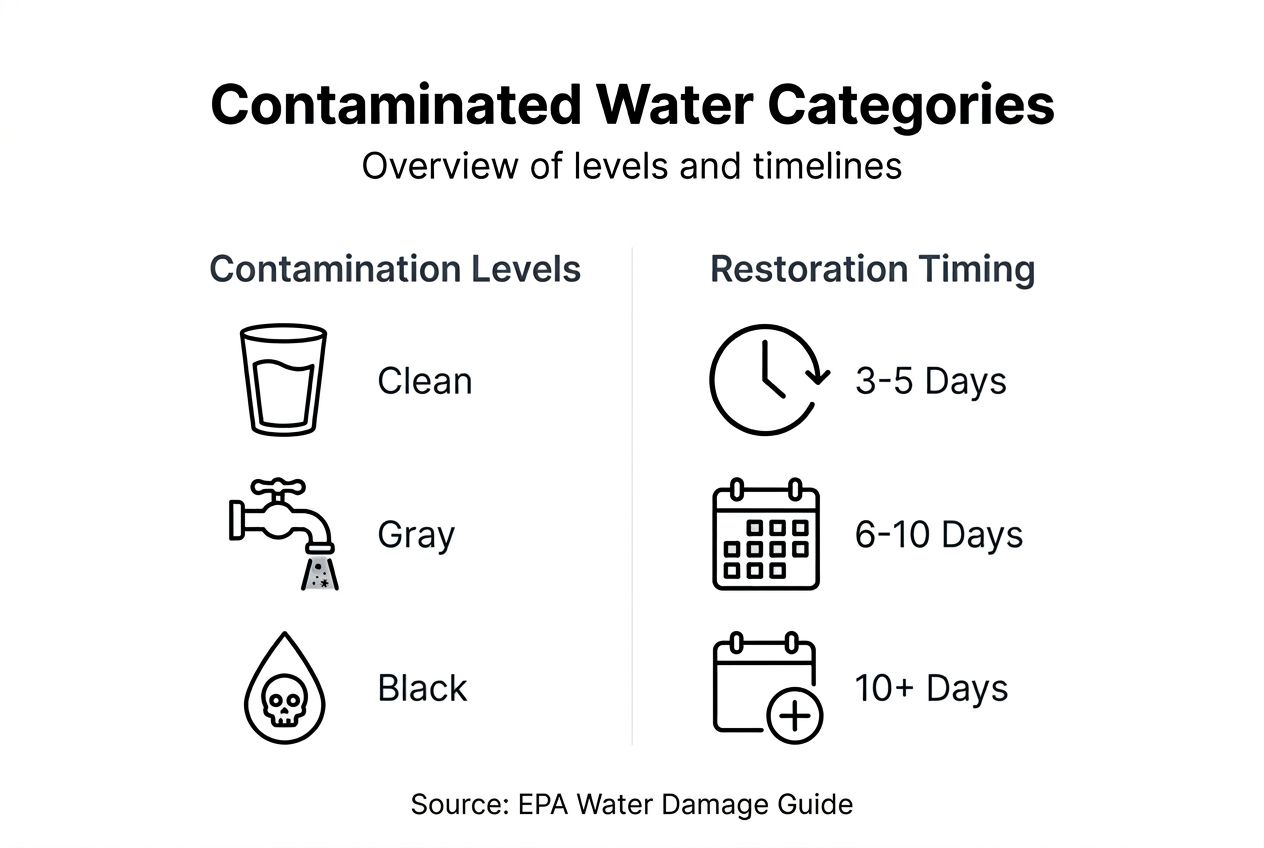
Costs escalate similarly, with Category 3 restoration running 300% to 500% higher than comparable Category 1 damage due to disposal expenses, specialized equipment, extended labor, and material replacement. Insurance coverage varies, making prompt professional documentation critical for claim approval.
Pro Tip: Early identification and proper category classification dramatically reduce both restoration costs and health hazards. Calling professionals within the first 24 hours prevents category escalation, limits material losses, and typically results in insurance covered mitigation that costs far less than delayed DIY attempts requiring complete remediation later.
Practical steps for immediate response and long term damage control
Immediate response determines contamination outcome, property damage extent, and health risk exposure. Follow these steps the moment you discover water intrusion:
Shut off the water source if possible by closing supply valves, turning off the main water line, or unplugging malfunctioning appliances.
Cut electrical power to affected areas at the circuit breaker to prevent shock hazards, but never enter standing water before disconnecting power.
Evacuate people and pets from contaminated areas, especially if sewage or flooding is visible.
Document damage immediately with photos and videos for insurance claims before any cleanup begins.
Contact professional restoration services within the first hour to prevent category escalation and secondary damage.
Avoid contact with contaminated water, particularly if gray or black water is suspected, and wash thoroughly if exposure occurs.
Open windows and doors to ventilate the area if weather permits and no security concerns exist.
Remove unaffected valuables from the impacted zone to prevent further damage.
Timing determines restoration success. Water wicks into porous materials at alarming rates, with drywall absorbing moisture several feet vertically within hours. Microbial growth begins within 24 to 48 hours in damp environments, transitioning clean water to gray water status. Black water contamination spreads pathogens throughout structures as residents track contaminated water into clean areas.
Professional restoration services provide critical benefits homeowners cannot replicate. Specialists identify hidden moisture using thermal imaging and moisture meters that detect water behind walls and beneath flooring. Industrial extraction equipment removes water 100 times faster than shop vacuums, preventing absorption into structural materials. Professional documentation supports insurance claims with detailed moisture mapping, contamination assessment, and photographic evidence.
Essential do’s and don’ts during contaminated water events:
Do contact restoration professionals immediately for Categories 2 and 3
Do wear protective equipment if you must enter contaminated areas
Do preserve all damaged materials until insurance adjusters complete inspections
Don’t use household vacuums on contaminated water
Don’t turn on HVAC systems until professionals assess contamination spread risk
Don’t attempt Category 3 cleanup yourself under any circumstances
Don’t delay professional contact hoping the situation improves on its own
Following effective water damage mitigation steps prevents minor incidents from becoming major disasters. A comprehensive water damage checklist for homeowners guides you through the critical first hours when quick decisions protect your property and family.
Professional contamination restoration services in Northeast Sacramento
When contaminated water threatens your property, local expertise makes the critical difference between successful restoration and extended damage. PuroClean of Northeast Sacramento specializes in all categories of water contamination, from clean water extraction to hazardous black water remediation. Our certified technicians respond 24/7 to emergencies throughout Folsom, Rancho Cordova, and Citrus Heights with specialized equipment and proven protocols.
We understand Northeast Sacramento’s unique challenges, from aging infrastructure causing sewage backups to seasonal flooding affecting riverside properties. Our team provides complete water damage restoration services including contamination assessment, safety containment, material removal, structural drying, and antimicrobial treatment. Property managers benefit from our rapid response and detailed documentation supporting insurance claims and tenant safety requirements through our dedicated property restoration programs.
Don’t risk your health or property value with delayed response or inadequate cleanup. Contact PuroClean of Northeast Sacramento immediately when contamination strikes your property.
Frequently asked questions
What causes water to become contaminated in my home?
Burst pipes, faulty appliances, flood intrusion, and sewage backups are the most common contamination sources in Northeast Sacramento properties. Supply line failures initially release clean water that becomes contaminated as it contacts building materials, while appliance overflows introduce detergents and chemicals immediately. Sewage backups and flooding create the most dangerous Category 3 black water situations requiring professional remediation. Understanding these sources helps you identify risks and respond with appropriate urgency based on the contamination category involved.
How quickly should I act if I suspect contaminated water in my property?
Immediate action within 24 hours is critical to prevent health issues and property damage escalation. Contamination categories worsen rapidly as microbial populations explode in standing water, transitioning clean water to gray water within 48 hours. Contacting restoration experts quickly improves cleanup success, reduces material losses, and preserves insurance coverage. Avoid direct contact with suspected contaminated water and evacuate vulnerable individuals until professionals assess the situation and establish safety protocols.
What are some common misconceptions about contaminated water safety?
Many homeowners believe all cloudy or discolored water indicates severe contamination, but appearance alone doesn’t determine risk level. Gray water is not harmless despite seeming less threatening than sewage, as it contains pathogens and chemicals requiring protective equipment and professional treatment. Another dangerous misconception suggests minor intrusions don’t need expert help, yet delayed response allows contamination escalation and hidden moisture damage that costs far more to remediate later. When uncertain about contamination category, always treat water as higher risk and contact professionals immediately for accurate assessment and appropriate response.
Can I clean up contaminated water myself or should I hire professionals?
Category 1 clean water might be manageable for small incidents if addressed immediately, but Categories 2 and 3 require professional restoration due to health hazards and specialized equipment needs. DIY attempts often miss hidden moisture, spread contamination to clean areas, and expose you to dangerous pathogens without proper protective equipment. Professionals provide thermal imaging to detect hidden water, industrial extraction equipment, antimicrobial treatment, and documentation supporting insurance claims. The cost of professional restoration typically proves far less than medical treatment, extended damage from inadequate cleanup, or insurance claim denials resulting from improper handling.
How does contaminated water affect my insurance coverage?
Most homeowner policies cover sudden and accidental water damage, including contamination from burst pipes and appliance failures, though coverage specifics vary by policy and contamination source. Flood damage typically requires separate flood insurance, while gradual leaks or maintenance related failures may face coverage limitations. Immediate professional documentation proves critical for claim approval, as restoration companies provide detailed assessments, moisture mapping, and photographic evidence insurance adjusters require. Delayed response or inadequate cleanup attempts can jeopardize coverage, making prompt professional contact essential for both property protection and insurance claim success.
Recommended
Water Damage Restoration and Repair in Roseville, CA
Crime Scene Cleanup – PuroClean of Northeast Sacramento
Blood & Bodily Fluid Remediation – PuroClean of Northeast Sacramento
Deodorization & Odor Control – PuroClean of Northeast Sacramento