Commercial Fire Damage Restoration: A Guide for Property Owners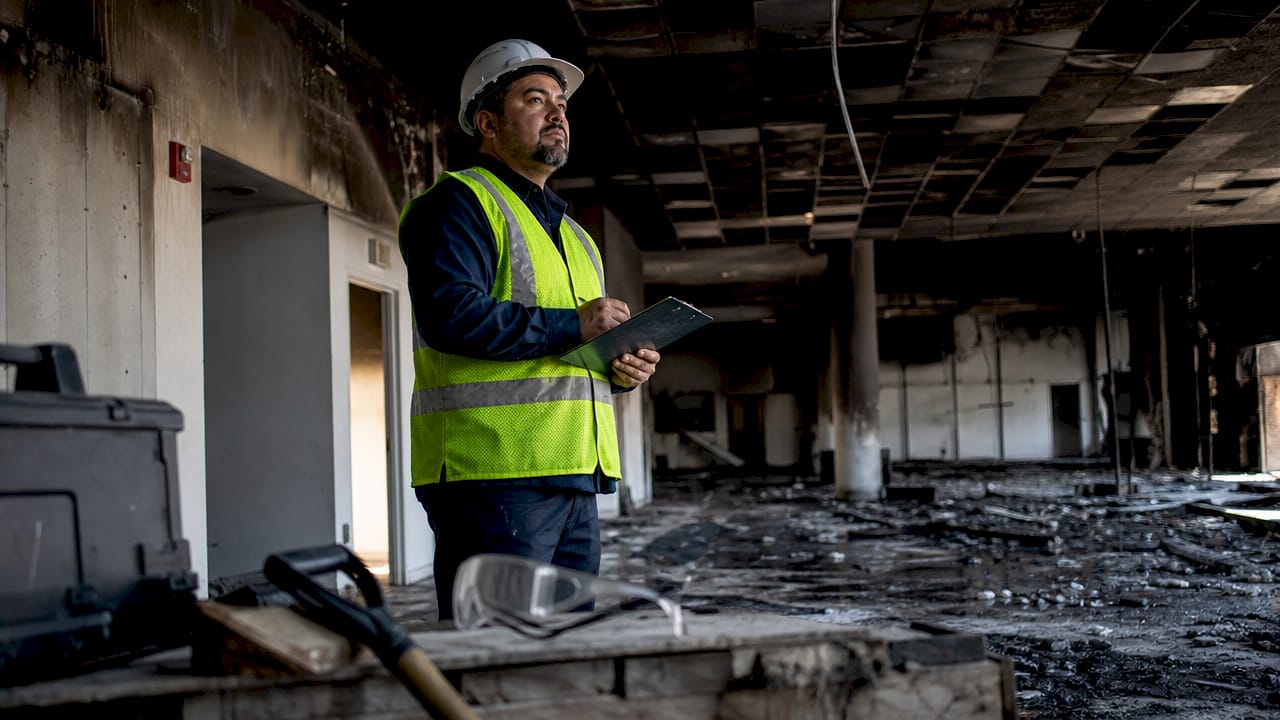
TL;DR:
Commercial fire damage restoration is a structured process involving assessment, mitigation, repair, and insurance documentation. Rapid action within 24–48 hours is crucial to prevent secondary damage from water and soot, which can worsen losses. Choosing certified and well-equipped restoration providers ensures faster recovery and stronger insurance claims.
Commercial fire damage restoration is the professional process of assessing, mitigating, and rebuilding commercial properties after a fire to restore structural safety and business operations. It covers far more than charred walls and burned contents. The full scope includes smoke and soot remediation, fire suppression water extraction, structural repair, and insurance documentation. Property managers who understand this process recover faster and avoid costly mistakes that extend downtime. This guide walks you through every phase, from the first assessment to final reconstruction, so you can make informed decisions when it matters most.
What does commercial fire damage restoration actually involve?
Commercial fire damage restoration is the industry term for a structured, multi-phase recovery process governed by standards set by the Institute of Inspection, Cleaning and Restoration Certification, known as the IICRC. The process does not begin with repairs. It begins with a thorough fire damage assessment that determines the true scope of loss before a single contractor swings a hammer.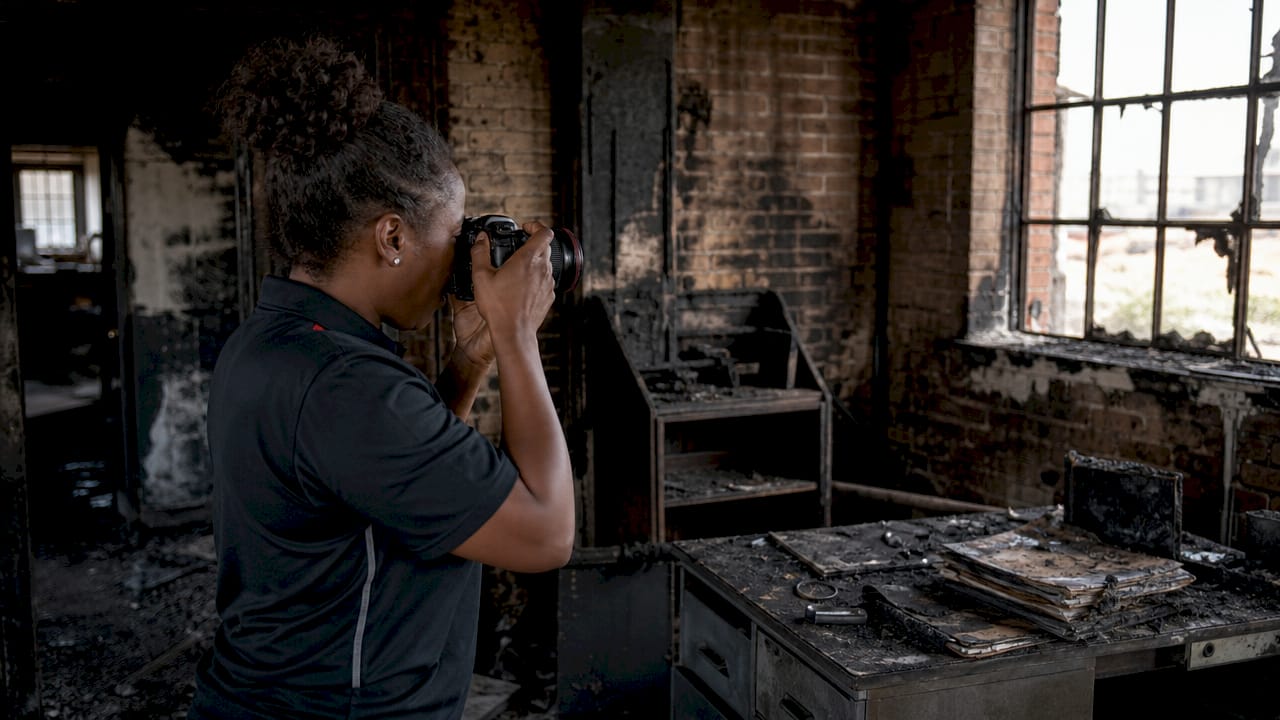
Structural integrity can be compromised even where damage is not visually obvious. That finding changes how every competent restoration team approaches a fire scene. What looks like surface scorching on a steel beam may indicate heat exposure that has altered the metal’s load-bearing capacity. Relying on visual inspection alone produces incomplete damage estimates and exposes property owners to liability.
The assessment hierarchy moves through four stages:
Visual inspection: Identify obvious charring, collapse risk, and access hazards.
Structural analysis: Evaluate load-bearing elements, connections, and foundations for heat-related compromise.
Hazardous residue testing: Sample soot, ash, and airborne particulates to classify contamination levels.
Documentation: Photograph every affected area, map damage zones, and classify loss severity for insurance and contractor use.
Accurate damage documentation includes photo evidence, damage mapping, and classification to support insurance claims and contractor bids. Without this foundation, restoration estimates are guesswork and insurance negotiations stall.
Total loss vs. partial restoration
A total loss determination in commercial fire damage typically occurs when damage exceeds 50% of the property’s structural value, though thresholds vary by jurisdiction and insurance policy. Knowing this threshold matters because it determines whether you rebuild or replace. Partial restoration is more common and more complex, requiring precise scope documentation to justify every line item in the repair estimate.
Assessment Stage
Primary Purpose
Visual inspection
Identify immediate hazards and access risks
Structural analysis
Detect heat-compromised load-bearing elements
Residue testing
Classify soot and smoke contamination levels
Damage documentation
Support insurance claims and contractor bids
How is emergency fire restoration handled to minimize secondary damage?
Speed is the defining variable in emergency fire restoration. The hours immediately after a fire are when secondary damage accelerates fastest, and secondary damage often costs more than the fire itself.
Fire suppression water causes microbial growth and corrosion if not promptly mitigated, and those secondary losses can outpace the original fire damage costs. Water from sprinkler systems and fire hoses saturates flooring, wall cavities, and insulation. If that moisture is not extracted and dried within 24–48 hours, mold colonizes structural materials and the remediation scope expands significantly.
The first actions a qualified restoration team takes on site include:
Property securing: Board windows, tarp the roof, and restrict access to prevent vandalism and weather intrusion.
Water extraction: Deploy industrial extractors and desiccant dehumidifiers to remove standing water and reduce ambient moisture.
Soot containment: Seal HVAC systems immediately. Soot residues bond quickly to surfaces and improper cleaning can spread contamination through air handling systems, turning a localized problem into a building-wide one.
Content protection: Move salvageable equipment and inventory to a clean, dry area or initiate a pack-out to an off-site facility.
For a broader view of how these steps fit into a full commercial property emergency plan, the recovery sequence matters as much as the individual actions.
Pro Tip: Request that your restoration provider seal all HVAC registers before any cleaning begins. Soot particles are fine enough to travel through ductwork and recontaminate cleaned areas within hours.
IICRC-certified professionals follow documented protocols for each of these steps. Certification is not a marketing credential. It signals that technicians have been trained to the industry’s published standards for fire and smoke restoration, which directly affects both the quality of work and the defensibility of insurance documentation.
What does the full fire damage cleanup and repair process include?
Full fire damage cleanup and repair moves through three distinct phases: cleaning and decontamination, structural repair, and final reconstruction. Each phase builds on the last, and skipping steps in one phase creates problems in the next.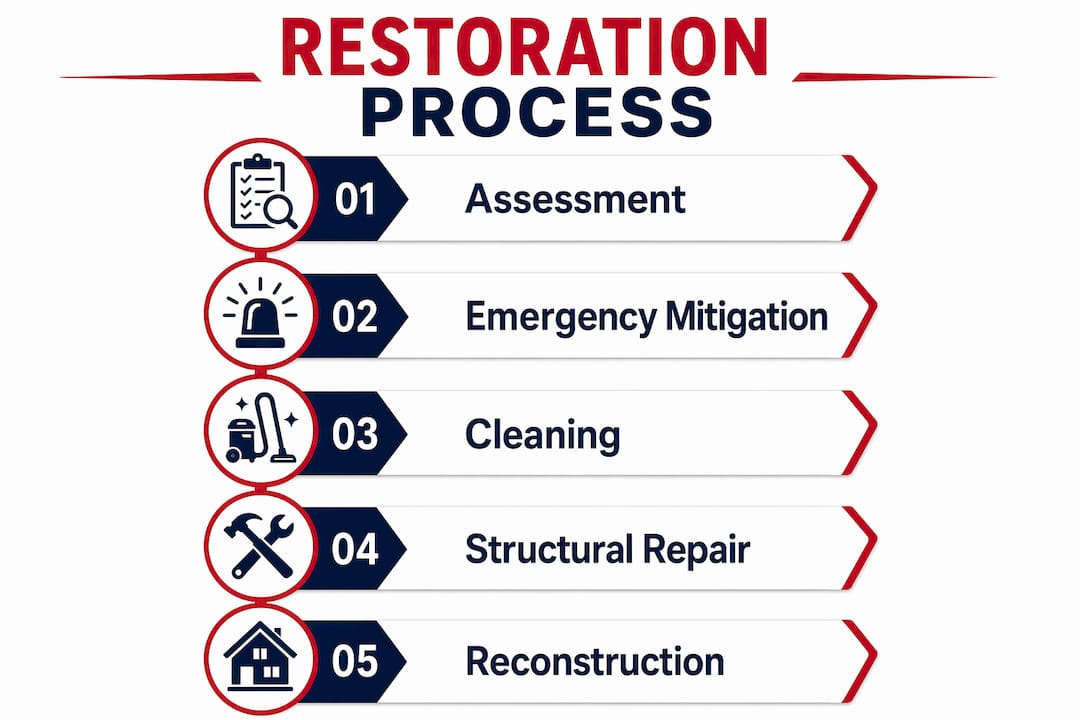
Phase 1: Cleaning and decontamination
Soot is acidic. Left on metal surfaces, it causes pitting within hours. Left on drywall or wood, it permanently stains and off-gases odor compounds that no paint can seal. Professional technicians use dry chemical sponges for loose soot, alkaline cleaning agents for bonded residue, and thermal fogging or ozone treatment for smoke odor. The seven types of fire restoration services cover this spectrum in detail, from surface cleaning to full content decontamination.
Phase 2: Structural repair
Structural repair addresses drywall replacement, joist sistering or replacement, subfloor removal, and any compromised masonry or steel. Contractors work from the restoration firm’s damage map, which specifies exactly which materials must be removed and which can be treated. This precision prevents over-demolition, which wastes money, and under-demolition, which leaves contaminated materials inside wall cavities.
Phase 3: Reconstruction and content restoration
Comprehensive restoration involves pack-out and content cleaning, full structural repairs, and final rebuilding to pre-loss condition. Content cleaning covers office equipment, furniture, inventory, and documents. Items that cannot be restored are cataloged and valued for replacement claims. Final reconstruction returns the space to its pre-loss condition, including finishes, fixtures, and systems.
The numbered sequence below reflects the order in which these steps must occur to avoid rework:
Complete water extraction and structural drying.
Remove all unsalvageable materials and document removals.
Clean and decontaminate salvageable surfaces and contents.
Perform structural repairs per the damage assessment map.
Rebuild and restore finishes to pre-loss condition.
Conduct final air quality testing before reoccupancy.
How do you choose the right restoration provider and handle insurance claims?
Choosing the wrong restoration firm after a commercial fire is the single most common reason property owners face extended downtime and underpaid claims. The right provider brings three things: IICRC certification, surge capacity, and insurance-compatible documentation.
IICRC-certified restoration professionals providing insurance-ready documentation from the outset facilitate smoother claims and minimize payout delays. That documentation includes itemized damage reports, photo logs, moisture readings, and scope-of-work estimates formatted for adjuster review.
Surge capacity matters in large-loss events. Firms with surge capacity and industry-standard software accelerate restoration timelines and claims processing. Restoration firms that use estimating platforms like Xactimate produce line-item estimates that match the format insurance adjusters use internally. That alignment reduces back-and-forth and speeds claim reconciliation.
Key criteria for evaluating a restoration provider:
IICRC certification for fire and smoke restoration technicians.
24/7 emergency response capability with documented response time commitments.
Surge capacity to scale crews and equipment for large commercial losses.
Insurance documentation proficiency, including use of adjuster-compatible estimating software.
Full-service scope covering cleaning, structural repair, and reconstruction under one contract.
Pro Tip: Ask your restoration provider to walk your insurance adjuster through the damage documentation before any work begins. This single step prevents scope disputes that delay claim payments by weeks.
Knowing the right questions to ask your insurer after a fire puts you in a stronger position during the claims process. Restoration experts recommend choosing firms that serve as strong insurance claim partners by providing timely, detailed documentation to prevent claim delays.
Many commercial property owners mistakenly believe visible fire damage reflects the total loss. Water and microbial damage from fire suppression often cause greater lasting harm than the fire itself. A provider who addresses only what burned leaves the rest of the damage to compound.
Key Takeaways
Commercial fire damage restoration requires a structured, multi-phase approach covering assessment, emergency mitigation, cleanup, structural repair, and insurance documentation to achieve full property recovery.
Point
Details
Assessment comes first
Structural and residue analysis must precede any repair work to capture the full damage scope.
Secondary damage is the hidden threat
Fire suppression water and soot cause ongoing harm if not mitigated within 24–48 hours.
IICRC certification matters
Certified technicians follow documented standards that protect both restoration quality and insurance claims.
Documentation drives claims
Photo evidence, damage mapping, and adjuster-compatible estimates directly determine claim outcomes.
Provider selection is critical
Choose firms with surge capacity, full-service scope, and insurance documentation proficiency.
The part most property owners get wrong
After working through dozens of commercial fire losses, the pattern that stands out most is not the fire itself. It is what happens in the 48 hours after the fire department leaves. Property owners who wait for their insurance adjuster to authorize work before calling a restoration firm routinely face mold, corrosion, and soot etching that would have been preventable. By the time the adjuster arrives, the secondary damage has already compounded the loss.
The other misconception I see repeatedly is that visible damage equals total damage. A building can look relatively intact and still have compromised steel, saturated wall cavities, and soot-coated HVAC ductwork that will contaminate the space for months if not addressed. The structural assessment hierarchy exists precisely because visual inspection is not enough.
My strongest recommendation is to treat the restoration provider selection as seriously as you treat contractor selection for new construction. Certification, documentation capability, and surge capacity are not optional features. They are the difference between a 6-week recovery and a 6-month one. Puroclean’s approach of pairing IICRC-certified technicians with insurance-ready documentation reflects exactly the standard commercial property owners should demand from any firm they hire.
Stay involved throughout the process. Review the damage documentation before it goes to your adjuster. Ask for moisture readings at each drying checkpoint. The property owners who recover fastest are the ones who treat restoration as an active management responsibility, not a task to hand off and forget.
— Visual
Puroclean of Northeast Sacramento: ready when you need it most
A fire at your commercial property cannot wait for business hours. Puroclean of Northeast Sacramento provides 24/7 emergency response with IICRC-certified technicians who arrive ready to assess, contain, and begin mitigation immediately.
Puroclean handles the full scope of commercial fire damage restoration, from emergency water extraction and soot containment through structural repair and final reconstruction. The team produces insurance-ready documentation from day one, reducing adjuster disputes and accelerating claim payments. Serving Northeast Sacramento, Folsom, Rancho Cordova, and Citrus Heights, Puroclean is the restoration partner built for commercial losses that cannot afford delays. Call now to speak with a certified technician.
Find Puroclean of Northeast Sacramento on Google Maps for directions and local service details.
FAQ
What is commercial fire damage restoration?
Commercial fire damage restoration is the professional process of assessing, mitigating, and rebuilding commercial properties after a fire. It covers fire, smoke, soot, and water damage under a single coordinated recovery plan.
How long does commercial fire damage restoration take?
Timeline depends on damage severity, but partial restorations typically take several weeks while major structural losses can take months. Firms with surge capacity and insurance-compatible documentation consistently complete work faster.
Does fire damage restoration cover water damage from sprinklers?
Yes. Fire suppression water is a standard part of the restoration scope. Extraction and structural drying must begin within 24–48 hours to prevent mold and corrosion from compounding the loss.
How does fire damage restoration support insurance claims?
IICRC-certified firms produce photo documentation, damage maps, and adjuster-compatible estimates that justify the full restoration scope. This documentation is the foundation of a successful fire damage insurance claim.
What is a total loss in a commercial fire?
A total loss determination typically occurs when fire damage exceeds 50% of the property’s structural value, though the exact threshold varies by jurisdiction and insurance policy terms.
Recommended
Fire Damage Cleanup Guide: Restore Property Safely and Fast – PuroClean of Northeast Sacramento
Role of Restoration After Fire: Complete Guide – PuroClean of Northeast Sacramento
Fire Damage Restoration Explained: Complete Process Guide – PuroClean of Northeast Sacramento
7 Essential Fire Restoration Tips for Property Owners – PuroClean of Northeast Sacramento