


The Water Extraction Process: A Homeowner’s Guide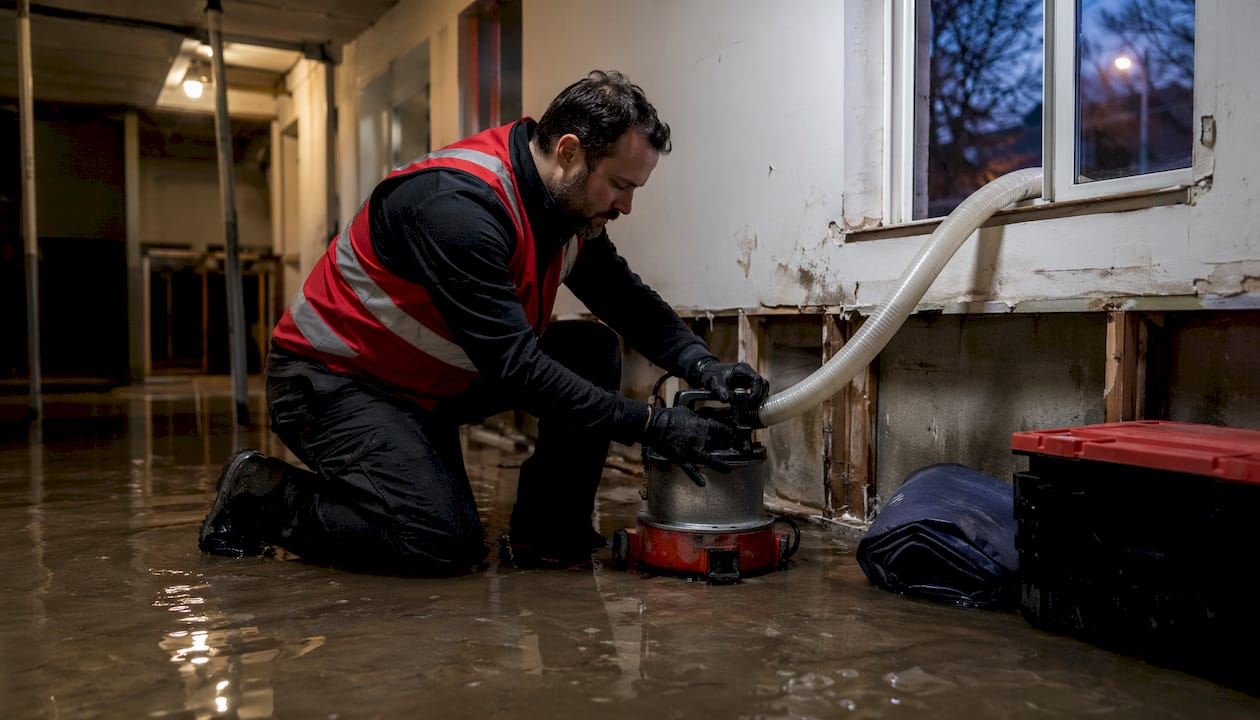
TL;DR:
Professional water extraction involves removing standing and absorbed water promptly to prevent mold and structural damage. It follows strict standards, uses advanced equipment, and requires careful monitoring to ensure thorough drying and mold prevention. Early professional intervention significantly reduces restoration time and costs.
The water extraction process is the professional removal of standing and absorbed water from a building to stop structural damage and prevent mold growth. Certified restorers follow the IICRC S500 standard, which defines five distinct phases: assessment, extraction, structural drying, daily moisture monitoring, and final inspection. Each phase has a specific purpose, and skipping any one of them leads to hidden moisture, mold, and costly repairs down the road. Mold can begin growing within 24–48 hours on damp materials, which is why speed and method both matter from the first minute.
What equipment does the water extraction process require?
Professional water removal depends on tools that most homeowners simply do not own. The gap between professional gear and a household shop vac is not a matter of preference. It is a matter of physics and capacity.
Extraction equipment
Truck-mounted extractors pull water at over 500 gallons per hour, far beyond what any portable unit can match.
Submersible pumps handle deep standing water in basements or crawl spaces before truck-mounted units take over.
Portable extractors reach areas a truck hose cannot, such as upper floors or tight closets.
Weighted extraction wands press firmly into carpet and pad, removing up to 90% of water in a single pass.
Drying and detection equipment
Once bulk water is gone, the real work begins. Residual moisture hides inside walls, under flooring, and in ceiling cavities.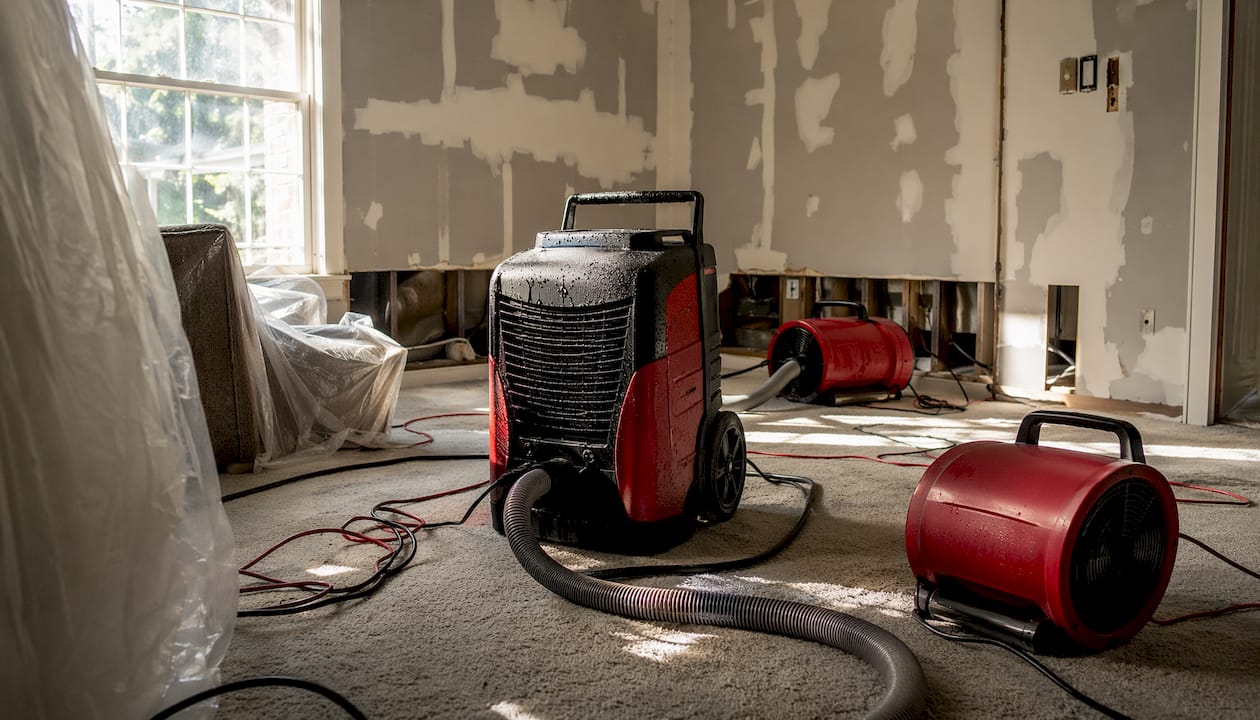
Equipment
Function
Air movers
Accelerate evaporation from surfaces and materials
LGR dehumidifiers
Pull moisture vapor from the air and maintain low humidity
Air scrubbers
Filter airborne contaminants during Category 2 or 3 jobs
Moisture meters
Measure water content inside walls, floors, and ceilings
Thermal imaging cameras
Detect hidden moisture pockets behind surfaces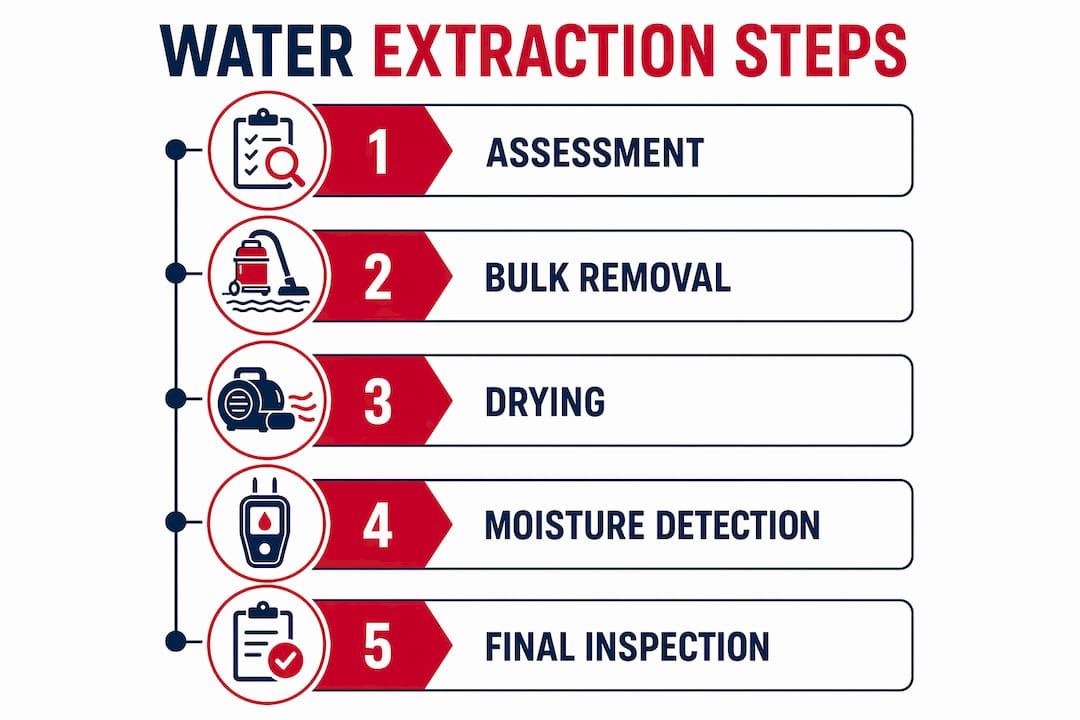
Thermal imaging and moisture meters are the tools that separate a thorough job from a surface-level cleanup. Hidden water detection prevents the mold and rot that shows up weeks later when a homeowner thinks the problem is solved.
Pro Tip: Run all drying equipment continuously, 24 hours a day. Turning machines off at night to reduce noise stalls the drying timeline and raises the risk of microbial growth.
How does the water extraction process work, step by step?
The water removal process follows a defined sequence. Each step feeds directly into the next, and cutting corners at any stage forces rework later.
Initial assessment (30–60 minutes). A technician inspects the property, identifies the water source, and classifies the damage. Water is categorized as Category 1 (clean water from a supply line), Category 2 (gray water from appliances or sinks), or Category 3 (black water from sewage or flooding). The category determines safety protocols, required protective equipment, and which materials can be saved.
Water category and class classification. Beyond category, damage is also assigned a class (1–4) based on how much material has absorbed water. Water damage classification by category and class directly guides the drying strategy and determines whether controlled demolition is needed for contaminated or unsalvageable materials.
Bulk water extraction (2–6 hours). Truck-mounted extractors and submersible pumps remove standing water first. Weighted wands then work through carpet and pad. This phase does not end when the floor looks dry. It ends when extraction equipment stops pulling measurable water.
Structural drying setup (begins same day, runs 3–5 days typically). Air movers and LGR dehumidifiers are placed according to a calculated drying plan. The plan accounts for the volume of the space, the materials affected, and the ambient temperature and humidity. Structural drying is a dynamic process, not a set-and-forget operation.
Daily moisture monitoring and equipment adjustment. Technicians return each day to take moisture readings using meters, thermohygrometers, and infrared cameras. Equipment is repositioned or added based on readings. Every visit is documented, which creates a record for insurance claims.
Controlled demolition when required. Category 2 or 3 water damage often means drywall, insulation, or flooring must be removed. Leaving contaminated materials in place creates a mold and health hazard. Removal follows IICRC protocols to contain contamination.
Final inspection and dry standard verification. The job is complete only when moisture readings match the dry standard for the specific materials and region. A final report documents the outcome and confirms the property is ready for repairs or reconstruction.
The timeline comparison below shows why early response changes everything.
Response timing
Typical restoration time
Water addressed within 2 hours
Approximately 3 days
Water addressed after 48 hours
Up to 2 weeks
A delayed extraction does not just extend the timeline. It multiplies the scope of damage as moisture migrates into adjacent walls, subfloors, and framing.
What mistakes slow down the water extraction process?
Most restoration failures trace back to a handful of predictable errors. Knowing them helps you avoid making the situation worse while waiting for professionals to arrive.
Waiting too long to call. Every hour after a water event increases the depth of moisture penetration. A leak addressed within 2 hours may resolve in 3 days. The same leak left for 48 hours can require 2 weeks of work.
Assuming visible dryness means the job is done. Surfaces dry faster than the materials beneath them. A floor that feels dry to the touch can hold significant moisture inside the subfloor or wall cavity.
Turning off drying equipment. Stopping drying equipment overnight prolongs drying and increases microbial growth risk. Equipment must run continuously until moisture targets are met.
Skipping moisture mapping. Treating only the visible wet area misses moisture that has migrated beyond the original damage zone. Professionals map the full extent of moisture before setting equipment.
Ignoring water category. Category 2 and 3 water carries bacteria and contaminants. Treating it like clean water without proper protective equipment and containment creates a health risk for occupants and workers.
Pro Tip: If water damage occurs, shut off the source immediately, move valuables and electronics off wet floors, and call a certified restorer. Do not use household fans as a substitute for professional air movers. They circulate air but do not dehumidify, which can spread mold spores to dry areas.
Reviewing the 7 key steps in water mitigation gives homeowners a clear picture of what proper damage control looks like from start to finish.
Why is professional water extraction better than DIY?
Professional water extraction is not just faster. It is fundamentally different in capability, safety, and documentation.
Equipment power. A shop vac leaves significant moisture in carpet and pad after a single pass. A weighted extraction wand removes up to 90% of water in the same pass. The difference in residual moisture determines whether mold grows.
Hidden moisture detection. Professionals use thermal imaging cameras and moisture meters to find water inside walls and under floors. DIY methods rely on touch and visual inspection, which miss the moisture that causes the most damage.
Safety with contaminated water. Category 2 and 3 water requires protective equipment, containment, and proper disposal. DIY sewage cleanup carries serious health risks that most homeowners are not equipped to manage.
Insurance documentation. Professionals document every moisture reading, equipment placement, and drying result. That record is what insurance adjusters need to process a claim accurately and efficiently.
IICRC S500 compliance. Professional restorers follow IICRC S500 guidelines, which define the accepted standard for water damage restoration in the United States. Compliance protects both the property and the homeowner’s insurance claim.
“Extraction is only the first step. Rigorous drying and documentation are what complete a restoration. Without both, moisture remains, mold follows, and the repair bill grows. The IICRC S500 standard exists precisely because surface-level cleanup is not restoration.”
Cost efficiency is the clearest argument for professional work. Proper mitigation prevents the secondary damage, such as mold remediation, structural repairs, and flooring replacement, that results from incomplete extraction. Spending on the right process once costs far less than fixing what a partial effort leaves behind.
Key Takeaways
Professional water extraction follows a defined, standards-based process, and every hour of delay increases both the scope of damage and the cost of restoration.
Point
Details
Speed determines scope
Water addressed within 2 hours typically resolves in 3 days; after 48 hours, restoration can take 2 weeks.
Equipment capacity matters
Truck-mounted extractors remove over 500 gallons per hour; shop vacs cannot match that output.
Drying runs 24/7
Turning off air movers and dehumidifiers at night stalls drying and raises mold risk.
Water category guides decisions
Category 1, 2, and 3 classifications determine safety protocols, salvageable materials, and demolition needs.
Documentation protects claims
Daily moisture logs and drying records are required for accurate insurance claim processing.
What I’ve learned from watching homeowners underestimate water damage
The most common mistake I see is treating water damage as a cleaning problem rather than a structural one. A homeowner mops up standing water, runs a box fan overnight, and assumes the job is done. Three weeks later, they are dealing with mold behind the drywall and a repair bill that dwarfs what professional extraction would have cost.
The IICRC S500 standard exists for a reason. It codifies decades of field experience into a repeatable process that protects both the property and the people living in it. When a certified technician follows that standard, they are not being overly cautious. They are applying the minimum threshold of care that the science of drying demands.
The part that surprises most homeowners is the monitoring phase. They expect professionals to set up equipment and leave. What actually happens is daily return visits, fresh moisture readings, and equipment adjustments based on real data. That process is what separates a dry building from a building that looks dry. Taking mold prevention steps seriously starts with understanding that extraction and drying are two separate, equally critical phases.
My honest advice: call a certified restorer within the first hour of any water event. The cost of that call is always lower than the cost of the damage that accumulates while you wait.
— Visual
Puroclean is ready when water damage strikes
Water damage does not wait for business hours, and neither does Puroclean. The team at Puroclean of Northeast Sacramento responds 24/7 with IICRC-certified technicians and professional-grade extraction and drying equipment. Whether you are dealing with a burst pipe in Folsom, a slab leak in Rancho Cordova, or flooding in Citrus Heights, Puroclean handles the full process from initial assessment through final inspection.
Puroclean also works directly with insurance carriers, documenting every step of the restoration to support your claim. Property managers can count on commercial restoration services built for multi-unit and commercial properties. Call Puroclean now to get certified help on-site fast.
FAQ
What is the water extraction process?
The water extraction process is the professional removal of standing and absorbed water from a building using truck-mounted extractors, submersible pumps, and specialized wands. It is the first phase of water damage restoration under the IICRC S500 standard.
How long does water extraction take?
Bulk water extraction typically takes 2–6 hours, depending on the volume of water and the size of the affected area. Structural drying that follows runs continuously for 3–5 days on average.
Can I do water extraction myself?
DIY methods like shop vacs and household fans leave significant residual moisture and cannot detect hidden water inside walls or floors. Professional equipment removes up to 90% of water from carpet and pad in a single pass, which DIY tools cannot replicate.
When does mold become a risk after water damage?
Mold can begin growing within 24–48 hours on damp materials. Rapid professional extraction within the first hour of a water event greatly reduces mold risk and overall restoration costs.
What does water damage category mean?
Water damage is classified as Category 1 (clean water), Category 2 (gray water with contaminants), or Category 3 (black water from sewage or flooding). The category determines safety protocols, required equipment, and which materials must be removed rather than dried.
Find Puroclean of Northeast Sacramento on Google Maps for directions and local service details.
Recommended
Property Restoration Process Guide: Steps for Success – PuroClean of Northeast Sacramento
Property Restoration Process Guide: Steps for Success – PuroClean of Northeast Sacramento
Restoration Process Explained: Step-by-Step Property Recovery – PuroClean of Northeast Sacramento
How to Handle Water Damage: Step-by-Step Restoration Guide – PuroClean of Northeast Sacramento