


Common Fire Hazards Every Homeowner Should Know
TL;DR:
Fire hazards such as unattended cooking, faulty wiring, and improper storage significantly increase fire risks. Most residential fires are caused by cooking, with portable heaters being a disproportionately deadly factor. Regular maintenance, safe habits, and practiced evacuation plans are essential for effective fire prevention and safety.
Common fire hazards are conditions or items that significantly increase the risk of fire in homes and workplaces, including unattended cooking, faulty wiring, and improperly stored flammable materials. The U.S. Fire Administration recorded about 344,600 residential fires in 2023, with cooking as the leading cause, representing 48.7% of all incidents. That single statistic tells you where to focus first. The National Fire Protection Association (NFPA) consistently identifies cooking equipment, heating appliances, and electrical malfunctions as the top fire risk factors across both residential and commercial properties. Understanding these hazards is the first step toward preventing them.
1. What are the most common fire hazards in homes and commercial properties?
Fire hazards in residential and commercial settings fall into several well-documented categories. Knowing which ones cause the most damage helps homeowners and property managers prioritize their prevention efforts.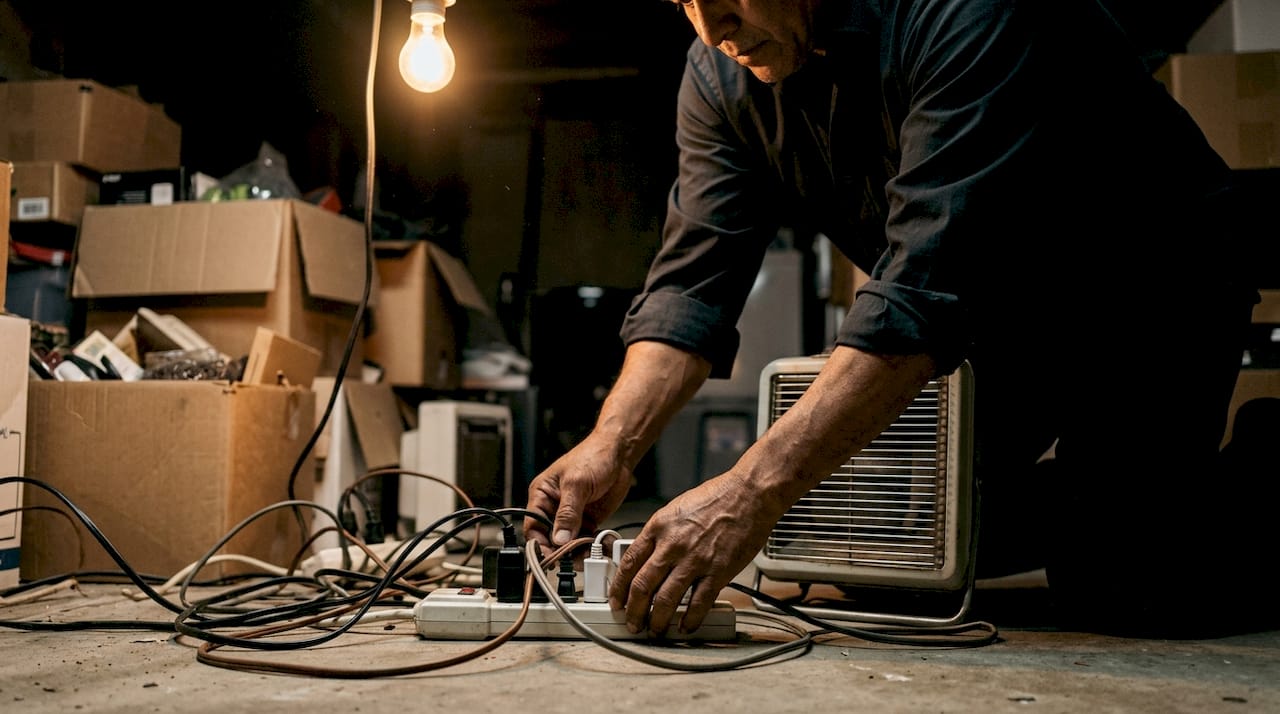
Cooking equipment is the single largest fire risk in any home. Cooking causes 48.7% of residential building fires in the U.S. Leaving a stovetop unattended, cooking at high heat, or placing flammable items near a burner are the most common triggers.
Heating appliances rank second in frequency. Portable heaters are especially dangerous: they cause only 3% of heating fires but account for 41% of fatal heating-related residential fires. That gap between frequency and lethality makes portable heaters one of the most underestimated indoor fire dangers.
Electrical malfunctions include overloaded outlets, damaged extension cords, and faulty wiring inside walls. These fires often start hidden from view, making them harder to detect before they spread. Plugging high-wattage appliances like space heaters or microwaves into power strips instead of direct wall outlets is a leading electrical fire cause.
Smoking materials remain a leading cause of fire fatalities, particularly when cigarettes are not fully extinguished before disposal. Candles left burning in unoccupied rooms create a similar risk. Both are entirely preventable with consistent habits.
Flammable liquids stored improperly in garages, basements, or utility rooms add fuel to any nearby ignition source. Gasoline, paint thinner, and aerosol cans all qualify as flammable materials that require proper, ventilated storage away from heat sources.
2. How to prevent the most common fire causes at home
Preventing fire hazards does not require expensive equipment. Most fire prevention strategies come down to consistent habits and basic maintenance.
Safe cooking practices:
Stay in the kitchen whenever something is cooking on the stovetop.
Keep dish towels, paper bags, and plastic utensils away from open flames and hot burners.
Turn pot handles inward so they cannot be knocked off the stove.
Clean grease buildup from stovetops and oven interiors regularly. Grease is a highly flammable material that ignites quickly at high temperatures.
Electrical safety:
Inspect cords on appliances, lamps, and chargers for fraying or cracking at least twice a year.
Plug high-wattage devices directly into wall outlets, not power strips or extension cords.
Never run extension cords under rugs or through doorways, where foot traffic damages the insulation over time.
Review your home electrical safety practices annually, especially in older properties with outdated wiring.
Heating appliance safety:
Keep at least 3 feet of clearance between portable heaters and any combustible material, including curtains, bedding, and clothing.
Never fill or move a portable heater while it is operating or still hot.
Turn off space heaters before leaving a room or going to sleep.
For seasonal guidance, winter fire safety tips cover heating-specific risks in detail.
Smoke alarm maintenance:
Smoke alarms reduce residential fire death risk by 60% when properly installed and maintained.
Test alarms monthly, replace batteries annually, and replace the entire unit every 5–10 years.
Install alarms on every level of the home, inside bedrooms, and outside sleeping areas.
Pro Tip: Place a smoke alarm inside the basement as well as on the ceiling of every floor. Most homeowners skip the basement, but fires starting near electrical panels or water heaters there can spread silently before anyone smells smoke.
3. Surprising fire hazards most people overlook
The most obvious fire risks get the most attention. The ones below are just as dangerous and far less discussed.
Clothes dryers are a significant but underappreciated fire source. Lint accumulates in the exhaust duct over time and ignites when heat builds up. Cleaning the lint trap after every single load is the minimum standard. The full exhaust duct should be professionally cleaned once a year. For more on appliance fire prevention, the risks extend beyond the dryer to dishwashers and refrigerators as well.
Cluttered storage areas turn ordinary spaces into fire accelerants. Garages, basements, and utility closets filled with cardboard boxes, old furniture, and paper materials give any small fire the fuel it needs to spread rapidly. The more clutter, the faster a fire grows.
Overloaded power strips are one of the most common electrical fire causes in both homes and offices. A single power strip running a television, gaming console, space heater, and laptop simultaneously draws far more current than the strip is rated to handle. The result is overheating, melted insulation, and ignition.
Candles in bedrooms combine an open flame with the highest-risk room in the house. A candle left burning while someone falls asleep is a direct path to a bedroom fire. The candle fire safety guidelines from Puroclean cover this in depth, including safe placement and extinguishing practices.
Refrigerators and dishwashers cause fires less frequently than dryers but are still documented fire sources. Electrical faults in the motor or heating element are the usual culprits. Running these appliances overnight or while away from home increases the risk because no one is present to respond early.
4. How human behavior and environment increase fire risk
Fire risk is a complex interplay of human, environmental, and mechanical factors rather than a single cause. Understanding that interaction changes how you approach fire hazard awareness.
Human behavior drives the majority of preventable fires. Distraction during cooking is the most documented example. Multitasking while food is on the stove, answering a phone call, or leaving the kitchen to handle something else are all behaviors that fire safety experts identify as leading risk factors. Alcohol use compounds the problem significantly, as it slows reaction time and reduces awareness of developing hazards.
Environmental conditions also shape how quickly a fire spreads. Dry weather, low humidity, and wind all accelerate fire behavior outdoors. Inside a building, structural design plays a larger role than most people realize.
Modern energy-efficient buildings are built airtight to conserve heat and reduce energy costs. That same airtightness traps heat and smoke more aggressively during a fire, causing temperatures to rise faster and giving occupants less time to exit safely. Fire spreads faster in these structures than in older, less insulated buildings.
Vertical shafts, open stairwells, and HVAC systems also act as pathways that carry smoke and heat through a building in minutes. Property managers overseeing multi-unit buildings need to account for these structural fire risk factors when developing evacuation plans.
Fatal fires often allow as little as 2–3 minutes to exit safely. Regular fire escape plan drills close the gap between knowing your exit route and actually using it under stress. Practice matters more than most homeowners acknowledge.
Pro Tip: Run your fire escape drill at night at least once a year. Most fatal residential fires occur while occupants are asleep, and a route that feels obvious in daylight can become disorienting in darkness and smoke.
For a broader look at unexpected fire causes that catch homeowners off guard, Puroclean has documented several that fall outside the standard checklists.
You can also find Puroclean’s Northeast Sacramento location and service area on Google Maps for quick reference during an emergency.
Key takeaways
The most effective fire prevention strategy combines hazard awareness, consistent maintenance, and practiced emergency readiness across every room and season.
Point
Details
Cooking is the top hazard
Cooking causes 48.7% of residential fires; never leave a stovetop unattended.
Portable heaters are disproportionately fatal
They cause 41% of fatal heating fires despite being involved in only 3% of heating incidents.
Smoke alarms save lives
Properly installed and maintained alarms reduce fire death risk by 60%.
Hidden hazards matter
Dryers, cluttered storage, and overloaded power strips cause fires that most homeowners do not anticipate.
Behavior and structure both drive risk
Distraction, airtight building design, and lack of drills all increase fire danger beyond the hazard itself.
Why fire hazard awareness is never a one-time task
Most homeowners treat fire safety as a checklist they complete once and forget. That approach fails because the conditions in a home change constantly. A new appliance, a rearranged room, a seasonal heater pulled out of storage, a dryer duct that has not been cleaned in two years. Each of these shifts the risk profile of the property.
What I have observed working in property restoration is that the fires that cause the most damage are rarely the dramatic ones. They are the slow, hidden ones: a dryer duct clogged with lint, a power strip quietly overheating behind a piece of furniture, a smoke alarm with a dead battery that no one noticed. The damage from those fires is not just structural. It is the disruption, the displacement, and the cost of restoration that follows.
The other misconception I see regularly is that fire hazard awareness is only about the kitchen. Electrical fires, heating fires, and appliance fires combined account for a substantial share of residential incidents, and none of them involve a stovetop. A home fire safety checklist that covers every room, every season, and every appliance is the only kind worth using.
Fire preparedness also means knowing what to do after a fire starts, not just before. Practiced escape routes, working smoke alarms on every level, and a clear plan for where your household meets outside are not optional extras. They are the difference between a fire that damages a room and one that costs lives.
— Visual
Puroclean is ready when fire damage happens
Fire damage does not wait for a convenient time, and neither does Puroclean. When a fire affects your home or commercial property in Northeast Sacramento, Folsom, Rancho Cordova, or Citrus Heights, the restoration process needs to start fast to limit smoke damage, structural loss, and secondary water damage from firefighting efforts.
Puroclean’s fire damage restoration team responds 24/7 with certified technicians, professional equipment, and a clear process for getting your property back to pre-loss condition. Property managers can also access dedicated restoration support for commercial properties across the greater Sacramento area. Call Puroclean the moment fire damage occurs. Fast response limits the total loss.
FAQ
What is the leading cause of residential fires in the U.S.?
Cooking equipment is the leading cause, responsible for 48.7% of residential building fires in 2023 according to the U.S. Fire Administration. Unattended stovetops are the most common trigger.
How deadly are portable heaters compared to other heating sources?
Portable heaters cause only 3% of heating fires but account for 41% of fatal heating-related residential fires. Their lethality comes from placement near combustibles and use during sleep.
Where should smoke alarms be installed for maximum protection?
Smoke alarms perform best when installed on ceilings inside every bedroom, outside sleeping areas, and on every level of the home including the basement. Test them monthly and replace units every 5–10 years.
What are the most overlooked indoor fire dangers?
Clothes dryers with clogged lint ducts, overloaded power strips, and cluttered storage areas are among the most overlooked indoor fire dangers. These hazards develop gradually and are easy to miss during routine home inspections.
How much time do occupants have to escape a house fire?
Fatal fires often allow as little as 2–3 minutes to exit safely. Practicing a fire escape plan and maintaining working smoke alarms on every level are the most effective ways to use that time.
Recommended
The Ultimate List Of Fire Prevention Tips From Today’s Safety Experts – PuroClean
5 Unexpected Home Fire Causes – PuroClean
Home Fire Safety Checklist: How to Prevent House Fires
Winter Fire Safety Tips – PuroClean