Effective smoke odor removal process after fire damage
Fire damage leaves more than visible destruction. Smoke odor embeds itself into walls, fabrics, and HVAC systems, creating persistent discomfort that affects both property value and quality of life. For homeowners and property managers in Northeast Sacramento, understanding the smoke odor removal process is essential to restoring safe, comfortable living spaces. This guide walks you through preparation, execution, and verification steps that ensure thorough odor elimination and prevent recurrence.
Table of Contents
Key takeaways
Preparing your home for smoke odor removal
Executing the smoke odor removal process step by step
Verifying successful smoke odor removal and preventing recontamination
Professional smoke odor removal and fire restoration services in Northeast Sacramento
Frequently asked questions
Key Takeaways
Point
Details
Preparation is critical
Before any restoration begins, assess damage, secure the space, and plan both visible and hidden areas to guide the cleanup.
Professional tools matter
Using specialized equipment and cleaning methods ensures deeper removal of soot particles and odors.
Inspection and ventilation
Inspect all rooms for smoke penetration and establish safe cross ventilation before cleaning to limit spread.
Verification and prevention
A final check confirms odor removal and prevents recurrence, documenting results for records.
Preparing your home for smoke odor removal
Proper preparation, including inspection and initial cleaning, is essential for effective smoke odor removal. Before beginning restoration work, you need to assess the full extent of smoke penetration and create a safe working environment. This foundation determines the success of all subsequent steps.
Start with a comprehensive damage assessment. Walk through every room, noting visible soot deposits, discoloration, and areas where smoke odor concentrates. Check inside closets, cabinets, and the HVAC system, as smoke particles travel through air ducts and settle in hidden spaces. Document everything with photos for insurance purposes and restoration planning.
Remove loose debris and damaged materials that trap odor particles. Dispose of heavily smoke-damaged items that cannot be salvaged, including porous materials like carpet padding, insulation, and drywall with severe penetration. These materials act as odor reservoirs and will continue releasing smell even after surface cleaning. Bag and remove all debris promptly to prevent further contamination.
Ventilate the property by opening windows and doors to reduce airborne smoke particles. Position fans to create cross-ventilation that pushes contaminated air outside. However, avoid running ceiling fans or the HVAC system before cleaning, as this spreads particles to unaffected areas. Fresh air circulation helps but cannot replace thorough cleaning.
Pro Tip: Shut off your HVAC system immediately and keep it off until ducts and filters receive professional cleaning. Running the system before cleaning spreads smoke particles throughout your home, making removal exponentially harder.
Wear appropriate protective equipment when handling soot and debris. Use N95 masks to avoid inhaling fine particles, gloves to protect skin from acidic residues, and safety glasses to shield eyes from airborne contaminants. Smoke residue contains harmful chemicals that irritate respiratory systems and skin, so protection is not optional.
Create a cleaning plan that addresses both visible and hidden damage. Prioritize areas with heavy soot accumulation and rooms where occupants spend the most time. Understanding why cleaning HVAC systems after fire matters helps you allocate resources effectively and prevent system-wide recontamination.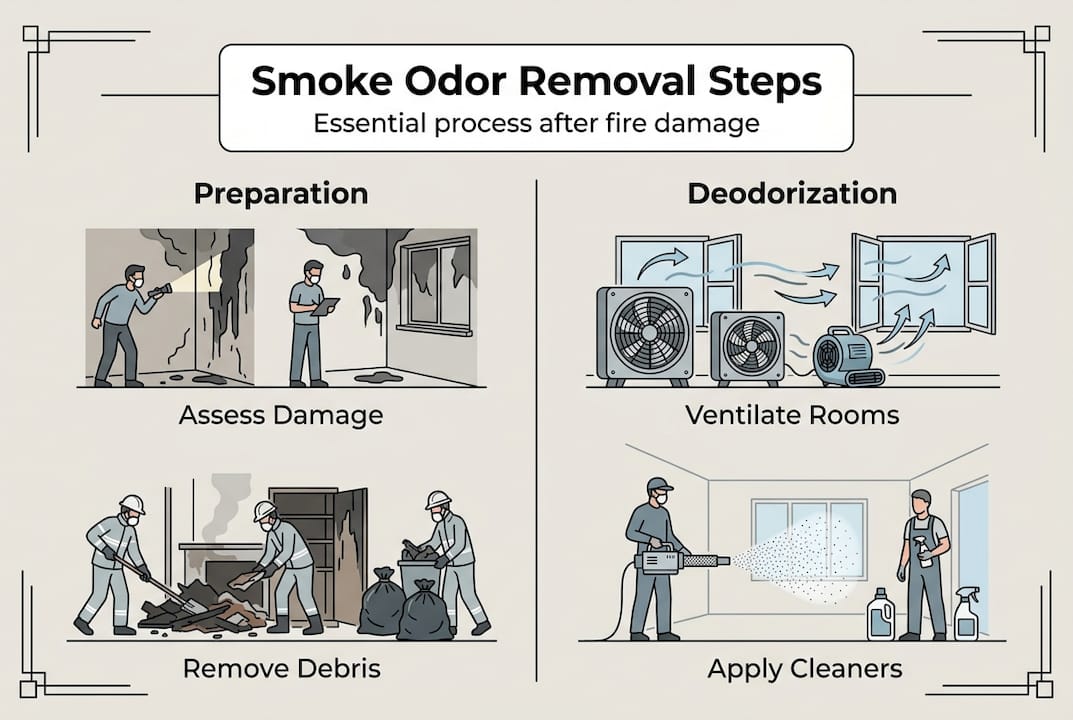
Executing the smoke odor removal process step by step
Professional smoke odor removal involves cleaning, deodorization, and advanced treatments for complete odor elimination. Each step builds on the previous one, creating a comprehensive approach that addresses surface contamination and embedded particles.
Clean all smoke-damaged surfaces using appropriate methods for each material. Wash walls and ceilings with specialized cleaning solutions that break down soot without damaging paint or wallpaper. Use dry cleaning sponges on porous surfaces before wet cleaning to lift maximum residue. Clean hard surfaces like countertops, appliances, and fixtures with degreasing agents that cut through oily smoke film.
Treat fabrics and upholstery with professional-grade cleaning or ozone exposure. Launder washable textiles multiple times with odor-neutralizing detergents. Send delicate items and heavy fabrics like curtains and furniture to professional cleaners experienced in smoke damage restoration. Some materials may require disposal if odor penetration is too severe.
Apply chemical sealants to surfaces where cleaning alone cannot eliminate embedded odors. Primers and sealants create barriers that lock in residual smoke particles, preventing them from releasing odor into the air. This step is particularly important for wood, drywall, and other porous building materials that absorb smoke deeply.
Deploy ozone generators or thermal fogging equipment for advanced deodorization. Ozone treatment oxidizes odor molecules at a molecular level, while thermal fogging uses heated deodorizing agents that penetrate the same pathways smoke traveled. These smoke odor removal techniques reach hidden areas that manual cleaning cannot access.
Install HEPA filtration systems and activated charcoal filters to purify indoor air continuously. These systems capture microscopic particles and absorb odor molecules, improving air quality during and after the restoration process. Run air scrubbers for several days to ensure thorough particle removal.
Deodorization method
Effectiveness
Cost range
Best application
Pros
Cons
Ozone treatment
Very high
$500-$2000
Entire home
Reaches all surfaces
Requires evacuation
Thermal fogging
High
$300-$1500
Targeted areas
Penetrates deeply
Limited coverage
HEPA filtration
Moderate
$200-$800
Ongoing air quality
Safe during occupancy
Addresses airborne only
Chemical sealants
High
$400-$1200
Porous surfaces
Permanent barrier
Does not remove source
Activated charcoal
Moderate
$100-$400
Supplemental
Natural, safe
Slow acting
Pro Tip: Always test deodorization chemicals and sealants on small, inconspicuous areas first to ensure they won’t damage finishes or cause discoloration. This simple precaution prevents costly mistakes on visible surfaces.
The fire damage cleanup process requires patience and thoroughness. Rushing through steps or skipping treatments leaves residual odor that resurfaces over time. Professional restoration teams follow proven protocols that ensure complete elimination while protecting your property.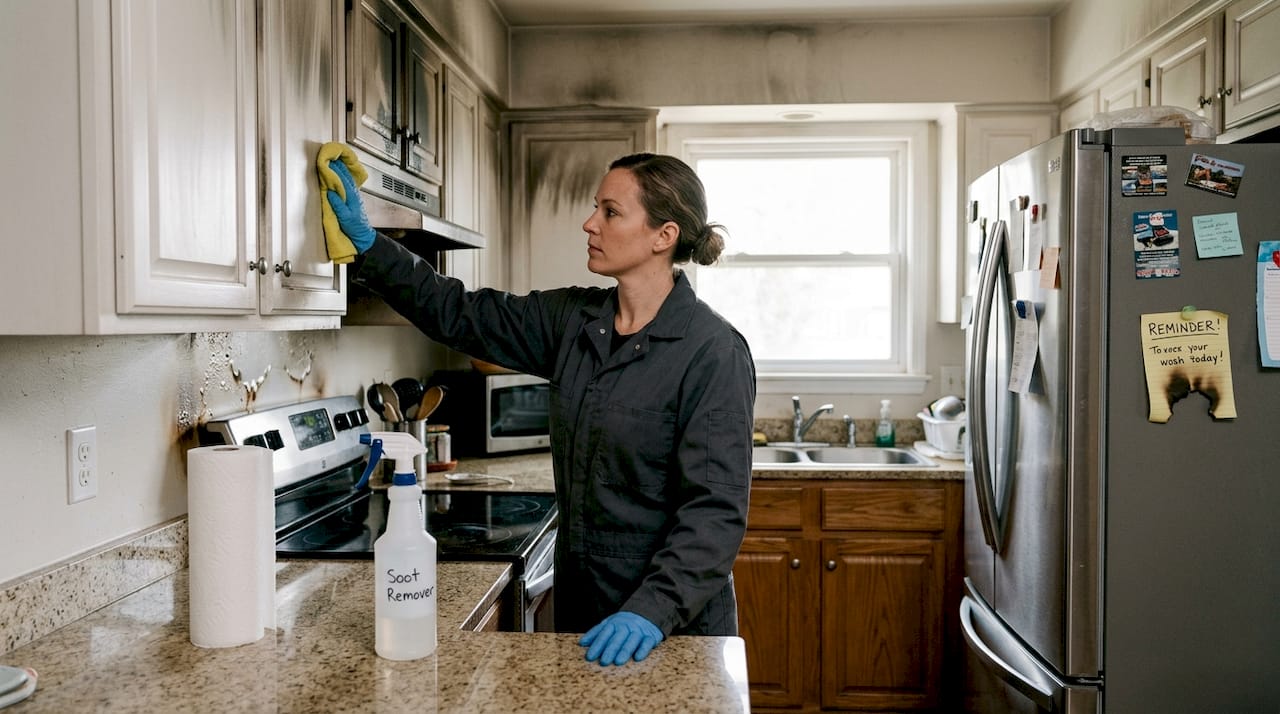
Verifying successful smoke odor removal and preventing recontamination
Verification and follow-up cleaning are essential to prevent smoke odor recontamination. After completing deodorization treatments, systematic testing confirms whether odor elimination succeeded and identifies any areas requiring additional attention.
Perform thorough odor walkthroughs once all treatments have dried and equipment has been removed. Visit the property at different times of day and in various weather conditions, as temperature and humidity changes can reveal hidden odor sources. Bring someone unfamiliar with the property for an objective assessment, as occupants may experience nose blindness to persistent smells.
Check every room systematically, including closets, bathrooms, and storage areas
Inspect HVAC vents and returns for any lingering smoke smell
Test areas near the fire origin more carefully, as these typically harbor the strongest odors
Document any locations where odor persists for targeted retreatment
Schedule follow-up cleaning of HVAC systems and textiles that may have trapped residual particles. Even after initial cleaning, ductwork and fabric items can release odor as they settle or experience temperature changes. Professional duct cleaning removes particles lodged in system components, while additional textile treatments address fibers that absorbed smoke deeply.
Maintain proper ventilation and humidity control to inhibit odor return. Keep indoor humidity between 30-50% to prevent moisture from reactivating smoke particles embedded in materials. Use exhaust fans in kitchens and bathrooms to remove cooking odors and steam that might interact with residual smoke compounds. Good air circulation prevents stagnant pockets where odor can concentrate.
Use odor neutralizers periodically as preventive maintenance rather than waiting for smells to return. Place activated charcoal bags in closets, basements, and other enclosed spaces. Consider running air purifiers with carbon filters in main living areas. These measures provide ongoing protection against minor odor recurrence.
Thorough verification and preventive maintenance ensure your home remains comfortable and safe long after restoration completes. Investing time in proper testing now prevents costly retreatment later and protects your property value.
Implementing these fire restoration tips helps you maintain odor-free living spaces. Understanding the types of fire restoration services available empowers you to make informed decisions about professional support when needed.
Professional smoke odor removal and fire restoration services in Northeast Sacramento
When smoke odor persists despite your best efforts, professional intervention ensures complete elimination while protecting your health and property investment. PuroClean of Northeast Sacramento provides expert fire and smoke damage restoration designed specifically for homeowners and property managers facing challenging recovery situations.
Our certified technicians use advanced deodorization methods including ozone treatment, thermal fogging, and hydroxyl generation to eliminate odors at the molecular level. We handle everything from initial assessment through final verification, ensuring thorough restoration that meets industry standards. Services extend beyond odor removal to include structural cleaning, mold mitigation, and complete fire damage repair.
Property managers benefit from our rapid response capabilities and insurance coordination support. We understand the urgency of restoring rental properties quickly while maintaining quality standards that protect tenant health and satisfaction. Our 24/7 emergency availability means we begin mitigation immediately, preventing secondary damage that increases costs and extends downtime. With specialized equipment and proven protocols, we deliver results that DIY methods cannot match, helping you reclaim comfortable, safe living spaces efficiently.
Frequently asked questions
How long does the smoke odor removal process take?
Typical smoke odor removal takes three to seven days depending on fire severity, home size, and material penetration depth. Properties with light smoke damage may complete restoration in 48-72 hours, while severe cases requiring multiple treatment cycles can extend to two weeks. Professional services accelerate the timeline significantly by deploying specialized equipment like industrial ozone generators and commercial-grade air scrubbers that work faster than consumer alternatives. Understanding the smoke remediation steps helps you set realistic expectations for your specific situation.
Can I remove smoke odor myself, or should I hire professionals?
Small, localized smoke incidents with minimal penetration may be manageable through DIY cleaning using proper techniques and safety equipment. However, professional smoke odor removal ensures complete elimination for moderate to severe fire damage by accessing specialized equipment and proven protocols that homeowners cannot replicate. Professionals identify hidden contamination in HVAC systems, wall cavities, and subfloors that DIY efforts miss, preventing odor recurrence that requires expensive retreatment. The investment in professional restoration protects both health and property value while delivering guaranteed results.
Is smoke odor harmful to health if not removed properly?
Lingering smoke odor indicates the presence of harmful particulates and chemical compounds that irritate respiratory systems, trigger allergies, and exacerbate asthma symptoms. Incomplete removal leaves carcinogenic residues on surfaces that family members contact daily, creating ongoing exposure risks. Children, elderly individuals, and those with compromised immune systems face heightened vulnerability to these contaminants. Complete professional removal supports a safe indoor environment by eliminating not just the smell but the dangerous particles causing it, as explained in guidance about why cleaning HVAC systems after fire protects occupant health.
How can I prevent smoke odor from returning after removal?
Regular HVAC maintenance including filter changes every 30-60 days and annual duct inspections prevents particle buildup that reactivates odors. Ensure proper ventilation by running exhaust fans during cooking and bathing to remove moisture that can release trapped smoke compounds from materials. Use odor neutralizers like activated charcoal or baking soda in enclosed spaces as preventive measures rather than waiting for smells to resurface. Following these essential fire restoration tips maintains the odor-free environment achieved through professional treatment and protects your long-term investment in restoration work.
Recommended
Smoke Odor Removal: Restoring Homes After Fire – PuroClean of Northeast Sacramento
Smoke Remediation Steps for Complete Odor Removal – PuroClean of Northeast Sacramento
Fire and Smoke Odor Removal: Complete GuideComplete Guide to the Mold Inspection Process – PuroClean of Northeast Sacramento
Fire Damage Restoration – PuroClean of Northeast Sacramento