


Fire and Smoke Remediation: A Complete Recovery Guide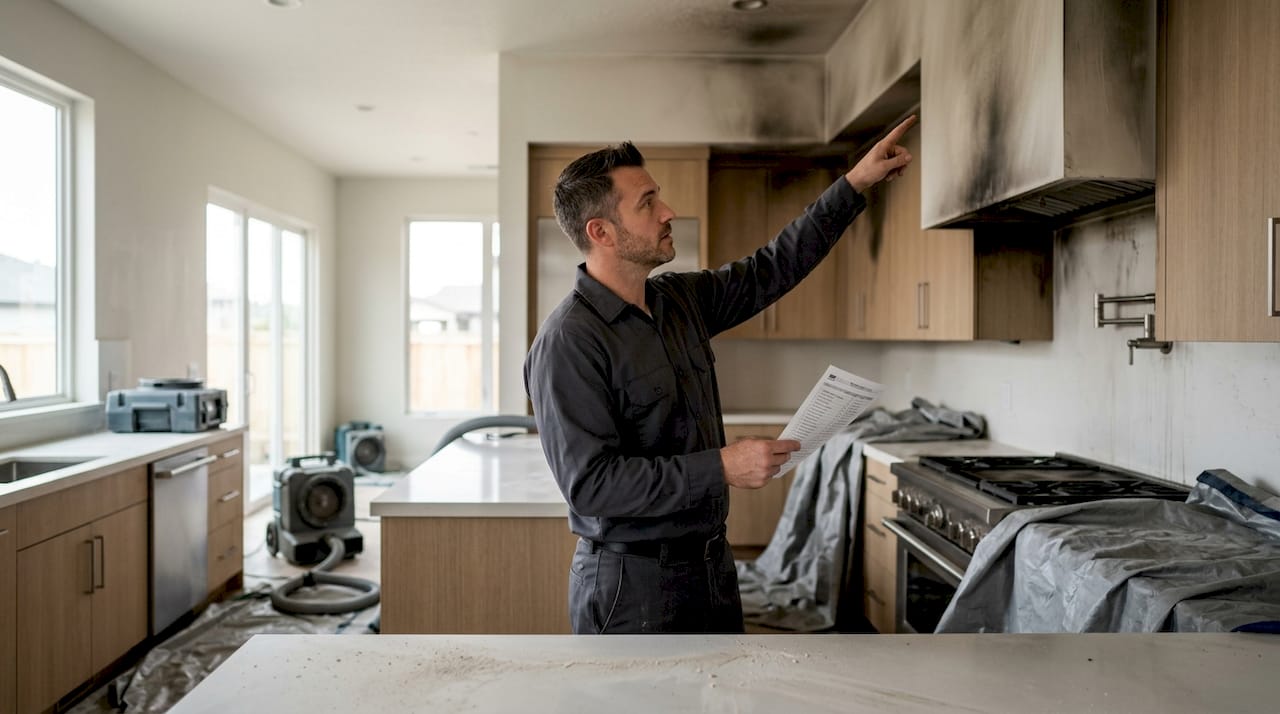
TL;DR:
Fire and smoke remediation involves removing soot, odors, and damage to restore properties safely and thoroughly. Strict procedures guided by industry standards ensure complete cleaning, deodorization, and verification before reconstruction. Proper identification of smoke residues and HVAC cleaning are essential to prevent permanent odors and costly repairs.
Fire and smoke remediation is the professional process of removing soot, smoke residues, and odors while repairing fire damage to restore a property safely and completely. The industry standard term for this work is “fire damage restoration,” governed by ANSI/IICRC S700 and IICRC S520 standards. These frameworks define every phase, from the first safety assessment to final reconstruction. Whether you own a home in Northeast Sacramento or manage a commercial building, understanding this process helps you make faster, smarter decisions after a fire.
What is the process of fire and smoke remediation?
Fire and smoke remediation follows a strict sequence. Skipping or reordering steps causes incomplete cleaning, odor recurrence, and costly callbacks. IICRC S520 standards cover assessment, cleaning, deodorization, and documentation to guide contractors and insurance adjusters through every phase.
Here is the correct order of operations:
Damage assessment and structural safety evaluation. Professionals identify structural hazards, smoke migration paths, and contaminated zones. Smoke travels through HVAC systems and wall cavities, contaminating areas with no visible burn damage. This step determines the full scope of work.
Emergency board-up and property securing. Broken windows, damaged doors, and open roof sections get sealed immediately. This prevents weather intrusion and unauthorized entry, both of which worsen losses.
HVAC system inspection and remediation. ANSI/IICRC S700 2025 requires a NADCA-qualified specialist to inspect and clean HVAC systems before any other cleaning begins. Soot circulating through ductwork recontaminates cleaned surfaces.
Dry cleaning of soot and smoke residues. Technicians use HEPA vacuuming and chemical sponges before any wet methods. Applying water or soap too early pushes soot deeper into porous materials, making removal nearly impossible later.
Wet and chemical cleaning. After dry methods remove loose residue, wet cleaning addresses embedded soot and staining on hard surfaces.
Deodorization using specialized technology. Thermal fogging, hydroxyl generators, and ozone treatments neutralize odor molecules in materials that surface cleaning cannot reach.
Odor verification before reconstruction. Professionals and clients confirm odor absence before any walls are closed. Sealing residual odor behind drywall is the leading cause of permanent odor entrapment.
Pro Tip: Ask your restoration contractor for written documentation of each completed phase. This protects you during insurance claims and gives you proof that ANSI/IICRC standards were followed.
How do costs and timelines vary for fire and smoke remediation projects?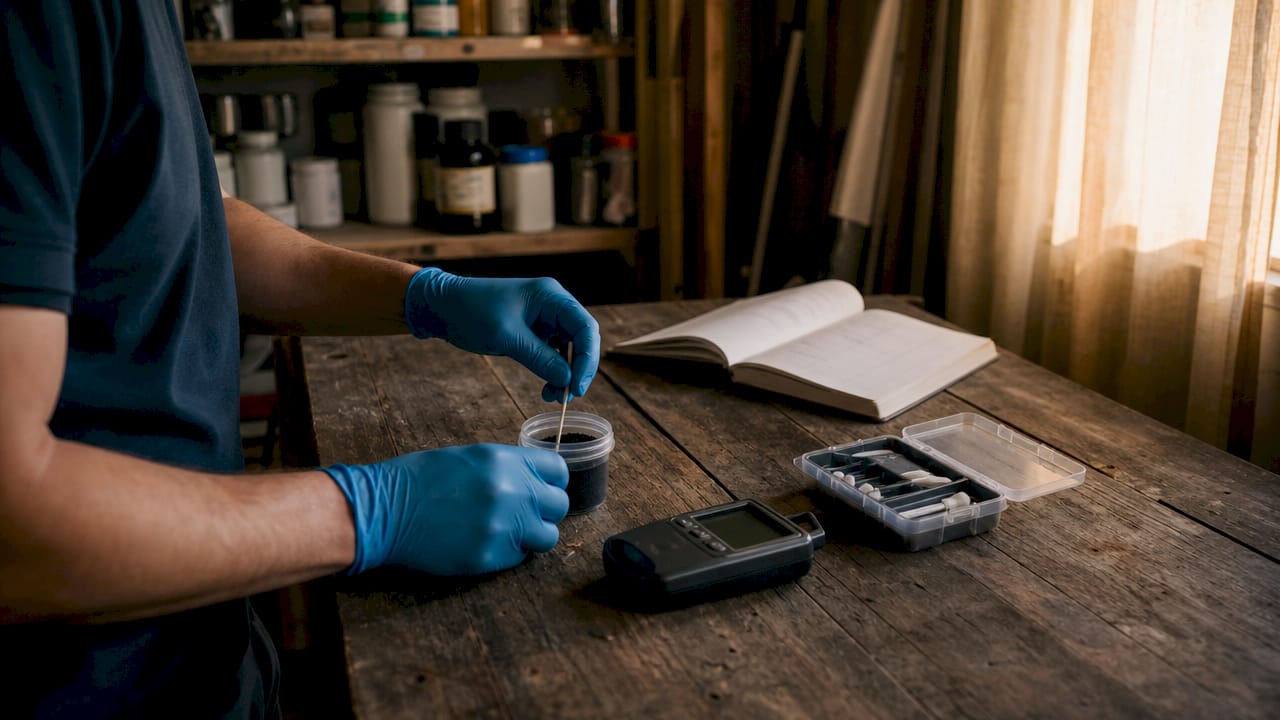
Cost and duration depend almost entirely on how much of the structure the fire and smoke affected. Minor events cost far less and resolve quickly. Major structural fires demand months of work and significant financial resources.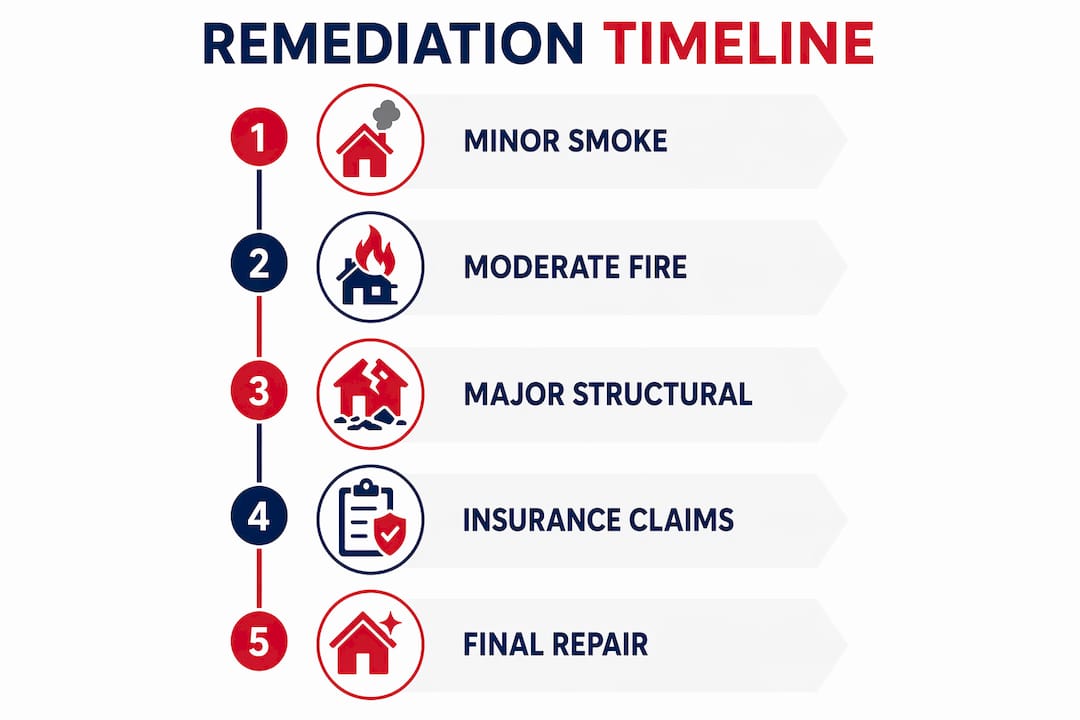
Damage level
Typical cost range
Estimated timeline
Minor smoke only
$3,000–$8,000
1–2 weeks
Moderate fire (multi-room)
$8,000–$25,000
1–2 months
Significant fire (major systems affected)
$25,000–$75,000
2–4 months
Major structural rebuild
$75,000–$150,000+
6–12 months
Restoration timelines depend on severity: minor smoke events take 1–2 weeks, moderate fires 1–2 months, and major structural rebuilds often last 6–12 months. Most residential jobs complete within 2–4 months. That range assumes no major delays in insurance processing.
Insurance processing adds 1–3 months to total project duration. Homeowners insurance typically covers fire and smoke damage restoration including structure repair, deodorization, and content cleaning, depending on policy terms. Fire is a standard covered peril, but coverage limits vary widely by policy.
Hidden costs catch many property owners off guard. HVAC cleaning, odor remediation beyond surface treatment, temporary housing, and content pack-out services all add to the final bill. Get a detailed scope of work in writing before signing any restoration contract.
Using an IICRC-certified contractor following S520 and S700 standards improves insurance claim outcomes through thorough scope writing and reduces restoration disputes. That certification is not just a credential. It is a financial protection tool.
Why is proper smoke residue identification critical?
Different smoke types require completely different cleaning chemistries. Using the wrong method does not just fail to clean. It permanently sets the residue.
The four main residue types each behave differently:
Dry smoke residue comes from fast-burning, high-temperature fires. It is powdery and easier to remove with dry methods.
Wet smoke residue results from slow-burning, low-temperature fires. It is sticky, smears easily, and has a strong odor.
Protein residue comes from burning food or organic matter. It is nearly invisible but produces an extremely pungent odor and bonds tightly to surfaces.
Fuel oil residue results from furnace puffbacks. It is thick, black, and requires specialized chemical degreasers.
Odor recurrence after cleaning is usually caused by residue misidentification or failure to remediate HVAC systems. That is why a trained technician must identify residue type before selecting any cleaning product or method.
HVAC ductwork is the primary distribution path for soot and odors after a fire. A system left uncleaned will spread contaminants to every room in the building every time it runs. ANSI/IICRC S700 mandates HVAC inspection and cleaning by a NADCA specialist precisely because of this risk.
Pro Tip: If your property smells like smoke weeks after cleaning, the HVAC system is almost always the source. Request a dedicated duct inspection before assuming the surface cleaning failed.
For a deeper look at why this step matters, Puroclean’s guide on HVAC cleaning after fire explains the contamination pathways and what proper remediation involves.
What are the best practices for structural repair and odor sealing?
Structural repair is the final phase of fire smoke restoration, and it carries the highest risk of error. Rushing into reconstruction before full deodorization is verified creates permanent problems.
The table below compares correct versus incorrect approaches to common structural decisions:
Decision point
Correct approach
Incorrect approach
Char removal
Follow IICRC S520; remove all charred material
Leave char in place and paint over it
Odor sealing
Use shellac-based primers after verified deodorization
Apply standard latex primer before odor is confirmed gone
Drywall installation
Install only after odor verification is complete
Install drywall while odor is still present
Surface cleaning
Use dry methods first, then chemical cleaning
Apply household cleaners directly to soot
Reconstruction timing
Begin only after structural safety is confirmed
Begin framing repairs before hazard assessment
Standard household cleaners can permanently set smoke residue. Professionals use specialized dry-cleaning methods first to avoid embedding soot deeper into porous materials. This is one of the most common and costly DIY mistakes.
Shellac-based primers seal smoke and char odors into wood framing effectively. They create a barrier that prevents odor molecules from migrating through new drywall. Standard latex primers do not provide this barrier.
Sealing residual smoke odor behind drywall before full deodorization is verified is the leading cause of callbacks in fire restoration. Professionals require client confirmation of odor absence before reconstruction to avoid permanent odor entrapment. That confirmation step protects both the contractor and the property owner.
Reconstruction scope typically includes framing repairs, drywall installation, flooring replacement, electrical updates, and code compliance upgrades. Code upgrades are often required when permits are pulled, which adds cost but also improves the property’s long-term safety. Learn more about assessing smoke damage before reconstruction begins.
Key Takeaways
Effective fire and smoke remediation requires strict sequencing, correct residue identification, HVAC cleaning, and verified deodorization before any reconstruction begins.
Point
Details
Follow the correct sequence
HVAC remediation and dry cleaning must precede wet cleaning and reconstruction.
Identify residue type first
Dry, wet, protein, and fuel oil residues each require different cleaning chemistries.
Clean HVAC systems early
Uncleaned ductwork redistributes soot and odors to every room in the building.
Verify odor before closing walls
Sealing odor behind drywall is the leading cause of permanent odor entrapment.
Use IICRC-certified contractors
Certification under S520 and S700 standards improves insurance outcomes and reduces disputes.
What I’ve learned after years of watching fire restoration go wrong
The most expensive mistake in fire smoke restoration is not the fire itself. It is the decision to move fast when the job demands patience. Property owners under pressure from insurance timelines, temporary housing costs, and emotional stress push contractors to close walls before the odor is gone. That decision turns a $15,000 job into a $40,000 one.
The second most common mistake is treating all smoke damage the same way. Protein residue from a kitchen fire looks like almost nothing on the wall. But it smells like everything. A technician who does not recognize it will apply the wrong chemistry, declare the job done, and leave you with an odor that gets worse in summer heat.
I have also seen property owners use the wrong language with insurance adjusters and lose scope items they were entitled to. ANSI/IICRC frameworks exist partly for this reason. When a contractor writes a scope using S520 and S700 terminology, adjusters have a much harder time disputing line items. That is not a technicality. It is leverage.
The uncomfortable truth about fire damage restoration is that thoroughness costs more upfront and saves far more over time. Cutting corners on HVAC cleaning or deodorization does not save money. It defers a larger bill. The smoke odor removal process is not optional. It is the foundation everything else is built on.
— Visual
Puroclean is ready when fire damage strikes
Fire and smoke damage does not wait for business hours, and neither does Puroclean. The Northeast Sacramento team responds 24 hours a day, 7 days a week, to fire and smoke damage events across Folsom, Rancho Cordova, Citrus Heights, and the surrounding area.
Puroclean follows ANSI/IICRC S700 and IICRC S520 standards on every project, from initial assessment through final reconstruction. The team handles HVAC inspection coordination, soot removal, deodorization, and insurance documentation. That documentation matters. It reduces claim disputes and keeps your project on schedule. For immediate help with fire damage restoration, contact Puroclean now. For all emergency restoration needs, 24/7 response services are available right now.
You can also find Puroclean’s Northeast Sacramento location and service area on Google Maps.
FAQ
What does fire and smoke remediation include?
Fire and smoke remediation includes damage assessment, HVAC cleaning, soot removal using dry and wet methods, deodorization with thermal fogging or hydroxyl generators, and structural repairs following IICRC S520 standards.
How long does fire damage restoration take?
Minor smoke events take 1–2 weeks, moderate fires take 1–2 months, and major structural rebuilds take 6–12 months. Insurance processing adds 1–3 months to the total timeline.
Does homeowners insurance cover smoke damage remediation?
Homeowners insurance typically covers fire and smoke damage restoration including structure repair, deodorization, and content cleaning, subject to policy limits and terms.
Why does smoke odor come back after cleaning?
Odor recurrence is almost always caused by residue misidentification or an uncleaned HVAC system that continues distributing soot and odor molecules throughout the property.
Can I clean smoke damage myself?
Standard household cleaners can permanently set smoke residue, making professional removal much harder. Dry-cleaning methods using HEPA vacuums and chemical sponges must come first, and these require professional equipment and training.
Recommended
Restoration After House Fire: Complete Step-by-Step Recovery – PuroClean of Northeast Sacramento
Fire and Smoke Odor Removal: Complete GuideComplete Guide to the Mold Inspection Process – PuroClean of Northeast Sacramento
Fire Damage Cleanup Guide: Restore Property Safely and Fast – PuroClean of Northeast Sacramento
Smoke Remediation Steps for Complete Odor Removal – PuroClean of Northeast Sacramento